Red light therapy for wrinkles and collagen, explained in detail. This guide shows you what it is, how it works on the skin, and how to use it safely to stimulate collagen, smooth fine lines, and improve firmness.
In short
- Red/near IR light activates photobiomodulation: more ATP, less inflammation, and stimulation of collagen and elastin.
- Typical wavelengths: 630–660 nm (red) and 810–850 nm (near infrared).
- Gradual results: improved texture and radiance in 2–4 weeks; improved firmness and reduced wrinkles in 6–12 weeks with consistent use.
- Short, frequent sessions work best at the beginning (8–20 min, 3–5 days/week).
- It is safe for most; avoid unprotected eyes, photosensitizers, and use on active lesions.
What is red light therapy and how does it work?
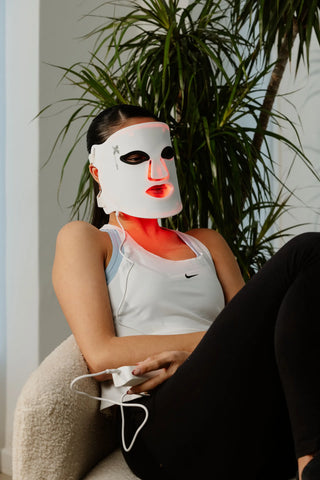
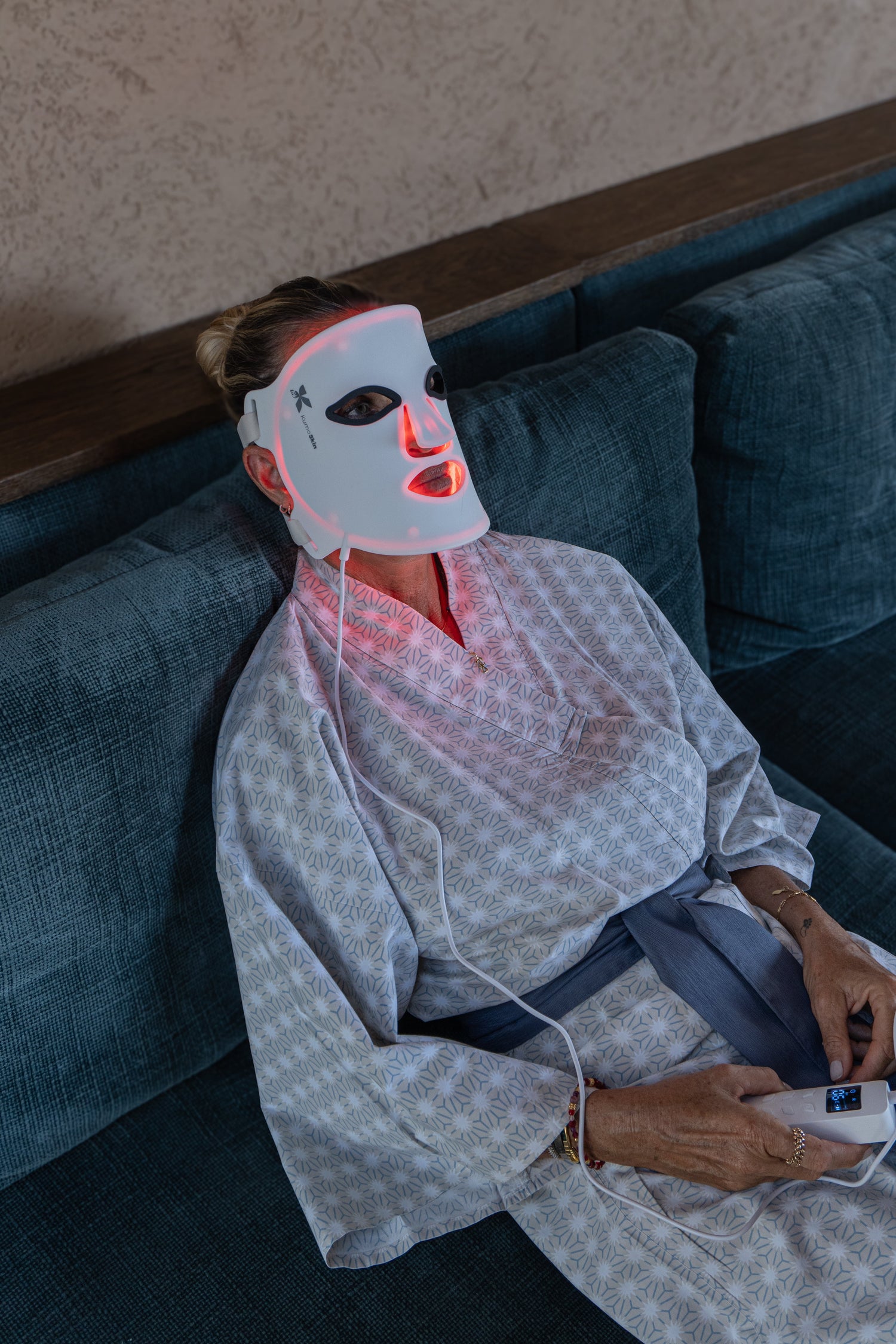
Red light therapy (also called photobiomodulation or PBM) uses red and near-infrared LEDs for non-thermal purposes to modulate cellular processes. The light is absorbed by chromophores such as cytochrome c oxidase in mitochondria, promoting ATP production and redox signaling.
Red & infrared light
Recover faster, at home
★★★★★ 4,8/5 · rated by verified customers
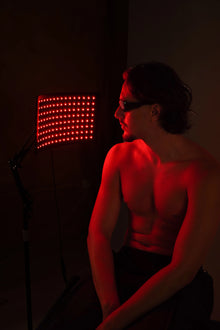
The KumoLux panel supports muscle recovery with full-body red and infrared light.
- 660 nm red + 850 nm infrared light
- Full-body muscle recovery
- Clinically validated biohacking protocols
€399,00€499,00
−10% on your 1st order when you subscribe to the newsletter

This bioenergetic boost can translate into tissue regeneration, reduction of oxidative stress, and inflammatory modulation—key factors for skin health and collagen synthesis. A 2018 review describes these mechanisms and their clinical relevance in soft tissue and skin (2018 review on photobiomodulation ). For an overview of home and professional use, see the AAD guide on LED devices and the Cleveland Clinic clinical summary.
Benefits for wrinkles and collagen
Stimulation of collagen and elastin
- Mitochondrial activation promotes the synthesis of type I and III collagen and the reorganization of the extracellular matrix.
- Red light (≈633 nm) and near-infrared (≈830–850 nm) have been used in rejuvenation protocols to improve firmness and elasticity. DermNet summarizes wavelengths and dermatological uses in LED DermNet: LED phototherapy.
Smoothing of wrinkles and fine lines
- By improving cell turnover and dermal support, gradual reductions in periocular lines and fine creases are observed.
- Clinical studies have documented improvements in texture and wrinkles with series of non-ablative LED sessions; the effect is cumulative and depends on consistent use. Cleveland Clinic: Overview.
Tone, texture and luminosity
- PBM can modulate microinflammation and support barrier function, contributing to skin with improved radiance and uniformity.
- In skin sensitized by intense training or dry weather, red light helps gentle tissue recovery without downtime. DermNet: fundamentals and wavelength ranges.
Tip: The most visible changes come when you combine consistent use, daily sun protection, and a simple routine (gentle cleansing + moisturizer).
Personalized protocol · included with your purchase
Want us to tell you how to use it in your case?
With your purchase, our experts set up your red and infrared light sessions for your sport and goal.
Message us on WhatsAppOur experts reply · no obligation
Key parameters: wavelengths, dose, and frequency
- Wavelengths: visible red 630–660 nm; near infrared 810–850 nm (greater tissue penetration).
- Energy/dosimetry: PBM uses low (non-thermal) densities and short treatment times per area. For dosage references, consult the recommendations of the World Association for Photobiomodulation Therapy (WALT) .
- Distance and angle: follow the manufacturer's instructions; perceived intensity decreases as distance increases.
- Frequency: more short sessions at the beginning (3–5/week) and, after 8–12 weeks, maintenance (2–3/week).
Quick guide chart for use on leather
| Main objective | Typical wavelength | Area | Time per session | Initial frequency | Maintenance |
|---|---|---|---|---|---|
| Fine wrinkles around the eyes | 630–660 nm | Eye contour (protecting eyes) | 8–12 min | 4–5/week (6–8 weeks) | 2–3/week |
| Firmness and facial collagen | 630–660 + 810–850 nm | Face/neck | 10–15 min | 3–5/week (8–12 weeks) | 2–3/week |
| Texture and luminosity | 630–660 nm | Full face | 8–10 min | 3–4/week (4–6 weeks) | 1–2/week |
| Post-workout recovery (stressed skin) | 810–850 nm | Face/neck | 10–15 min | 3–4/week (4–6 weeks) | 1–2/week |
Note: This is a guideline. Adjust according to skin tolerance and device specifications. For general clinical information on LEDs and skin, see DermNet.
How to integrate it into your routine (step by step)
Preparation
- Cleanse and dry your face. Avoid photosensitizing products (e.g., retinoids) immediately beforehand.
- Remove makeup and apply eye protection if the device requires it.
During the session
- Place the device at the recommended distance, covering the target area.
- Keep your skin relaxed and breathe calmly; you don't need pressure or heat.
After
- Moisturize with a simple fragrance-free cream.
- Daily sun protection: essential to preserve collagen and results.
To understand the scientific basis for these steps, review the AAD 's 2018 review on PBM mechanisms and practical approach to LED devices in the home.
Safety, contraindications and side effects
Red LED therapy is considered low-risk when used properly. Possible transient effects: mild redness, dryness, or a warming sensation. Precautions:
on your first order when you join the newsletter
We send you the code instantly. No spam.
- Eyes: Wear eye protection if indicated by the device; avoid looking directly at the LEDs.
- Avoid using it on active skin lesions, infections, unevaluated open wounds, or skin cancer.
- Consult if you are pregnant, taking photosensitizing drugs, or have eye disorders.
- Introduce gradually if you are using retinoids or acids.
The Cleveland Clinic and the AAD offer safety and best practice lists for home use.
Smart combinations to boost results
- Collagen support cosmetics: peptides, niacinamide, vitamin C in the morning and SPF 30–50.
- Lifestyle: Restful sleep, adequate protein, and stress management promote collagen synthesis.
- Global recovery: Integrating wellness technologies can create sustainable habits. Be inspired by how KUMO integrates aesthetics, technology, and performance into its KUMO Balance daily recovery approach.
To understand the relationship between skin aging, collagen, and habits, you can review educational resources such as MedlinePlus: Skin Aging .
When will I see results and how can I measure them?
- Short term (2–4 weeks): improved luminosity, calmer skin and a more even texture.
- Medium term (6–12 weeks): increased firmness and smoothing of fine lines; the change is usually subtle but cumulative.
- Long term (3–6 months): collagen maintenance if you maintain the routine and photoprotection.
How to measure:
- Photos with the same light/angle every 2–4 weeks.
- Simple scales of texture and firmness (0–10).
- Observe your skin's response: if you notice dryness, reduce the time or frequency.
For a mechanistic and clinical basis of time horizons in PBM, see this 2018 scientific review and the DermNet practical compendium.
Frequently Asked Questions
Does red light therapy really increase collagen?
Evidence suggests that red and near-infrared light can stimulate fibroblast activity and collagen synthesis by improving mitochondrial function (more ATP) and modulating inflammatory signaling. It is not an ablative or immediate treatment: changes are gradual and depend on consistency, proper dosage, and complementary care (SPF, hydration). Clinical reviews describe improvements in firmness and fine wrinkles with multi-week protocols. For rationale and safety, consult the AAD and this mechanistic review .
Which wavelength is better for wrinkles: red or near-infrared?
Both wavelengths can be useful and are often combined. Red light (≈630–660 nm) interacts well with more superficial layers and dermal signals, while near-infrared light (≈810–850 nm) penetrates more deeply and can support the dermal matrix. The choice depends on the treatment area and the device. Facial protocols frequently use 633 nm and/or 830–850 nm. For wavelengths and applications, see DermNet: LED Phototherapy and the WALT recommendations.
How many times a week should I use it to see results?
As a general guideline, 3–5 weekly sessions for 6–12 weeks usually show signs of improvement, followed by 2–3 weekly maintenance sessions. Keep sessions between 8–20 minutes per area, depending on the device. Adjust if your skin shows signs of sensitivity. Remember that consistency and daily sun protection are crucial. The Cleveland Clinic and the AAD provide practical guidance on home use.
Can I combine red light with retinoids or vitamin C?
Yes, but with a strategy. Avoid applying retinoids right before the session to minimize sensitivity; use them at night and red light at another time of day. Vitamin C in the morning and red light in a separate routine often work well together. Always monitor your skin's tolerance and prioritize hydration and SPF. If you are undergoing dermatological treatments, confirm the plan with your professional. General clinical references: AAD.
Is it safe for all skin tones and types?
Red LED therapy is non-ablative and generally safe for all skin types and phototypes when used as directed. However, caution is advised for highly reactive skin, active skin conditions, use of photosensitizing medications, or special situations (pregnancy, eye conditions). Eye protection and gradual progression help minimize risks. For more details, consult DermNet and the Cleveland Clinic.
The essentials
- Red/near IR light boosts cellular processes that support collagen, firmness, and smoothing of fine wrinkles.
- Typical wavelengths: 630–660 nm and 810–850 nm; short and frequent sessions at the beginning.
- Gradual results in 6–12 weeks, sustained with maintenance and sun protection.
- High safety with proper use: protect your eyes and avoid photosensitizers before the session.
- Integrate recovery and skincare habits to enhance results.
Ready to turn recovery into a smart and aesthetic habit? Discover KUMO's technological wellness philosophy here: KUMO Balance .

Red & infrared light
KumoLux Panel – Red and Infrared LED Panel
★★★★★ 4,8/5 · rated by verified customers
- 660 nm red + 850 nm infrared light
- Full-body muscle recovery
- Clinically validated biohacking protocols
€399,00€499,00· pay in installments with seQura or Klarna