

The label is key.
In Spain, food supplements are considered food, not medicines, and their placement on the market is subject to specific rules on composition, labelling, advertising, and notification. Understanding them helps avoid confusing purchases and messages that should not appear on the packaging. (aesan.gob.es)
Red & infrared light
Recover faster, at home
★★★★★ 4,8/5 · rated by verified customers
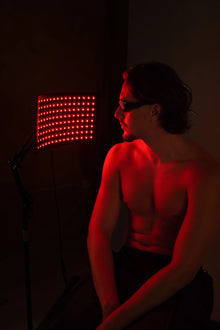
The KumoLux panel supports muscle recovery with full-body red and infrared light.
- 660 nm red + 850 nm infrared light
- Full-body muscle recovery
- Clinically validated biohacking protocols
€399,00€499,00
−10% on your 1st order when you subscribe to the newsletter

If you learn to read the packaging carefully, you will know how to distinguish reliable information from an unreliable commercial promise. And that matters both in physical stores and in online sales. (food.ec.europa.eu)
Regulatory framework in Spain and the European Union
The European basis is Directive 2002/46/EC, which harmonises food supplements in the European Union. In Spain, this basis is developed mainly through Royal Decree 1487/2009, which sets rules on composition, labelling, advertising, and notification. In addition, nutrition and health claims are regulated by Regulation (EC) 1924/2006, and general consumer information by Regulation (EU) 1169/2011. (eur-lex.europa.eu)
Personalized protocol · included with your purchase
Want us to tell you how to use it in your case?
With your purchase, our experts set up your red and infrared light sessions for your sport and goal.
Message us on WhatsAppOur experts reply · no obligation
The Spanish rule in one sentence
"Food supplements are not medicines and are not intended to prevent or treat diseases."
That sentence very well summarises the legal and health approach: a food supplement cannot be presented as if it were a treatment. It also cannot imply that a balanced diet does not provide sufficient nutrients, nor can it be attributed the ability to prevent, treat, or cure diseases. (boe.es)
In practice, this means that the packaging must describe the product accurately, without exaggeration, and that the person responsible for marketing must notify the competent authority of its placement on the market before or at the same time as the first sale.
on your first order when you join the newsletter
We send you the code instantly. No spam.
- The legal designation must be food supplement.
- Advertising and labelling cannot suggest that a normal diet is insufficient on its own.
- Properties of prevention, treatment, or cure of diseases cannot be attributed.
- Marketing must be accompanied by notification to the competent authority.
What to check on the label before buying
The label of a food supplement is not just an aesthetic matter. It must allow you to know what product it is, how much can be taken, what it contains, and what warnings must be read before using it.
Quick label checklist
| What to check | What should appear | Regulatory basis |
|---|---|---|
| Product designation | It must literally say food supplement. | Royal Decree 1487/2009 and AESAN. |
| Recommended daily dose | It must indicate the daily dose and warn not to exceed it. | Royal Decree 1487/2009. |
| Correct use | It must state that it does not replace a balanced diet and that it should be kept out of reach of young children. | Royal Decree 1487/2009. |
| Amount of nutrients or substances | It must be declared numerically per daily dose, and for vitamins and minerals also with the units and, where appropriate, the reference percentage. | Royal Decree 1487/2009. |
| Ingredients, allergens, and packaging data | The list of ingredients, allergens, net quantity, best before or expiry date, batch, and responsible operator are part of the mandatory food information. | Regulation (EU) 1169/2011 and AESAN guidelines. (food.ec.europa.eu) |
If the product is sold online, the mandatory information must be available before purchase, not just when it arrives at home. That is why it is advisable to also check the site's legal notice, to clearly identify who is responsible for the website and the published information. (food.ec.europa.eu)
In addition, do not rely only on the front of the packaging. Important information is usually on the back or side panel, where the dose, ingredients, warnings, and operator data appear. (eletiquetadocuentamucho.aesan.gob.es)
Health claims: what a supplement can and cannot say
In the European Union, nutrition and health claims can only be used if they are authorized. The EU Register contains the permitted, authorized, and unauthorized claims and their conditions of use. The basic rule is clear: the information must be truthful, accurate, and based on scientific evidence.
- Only nutrition claims included in the annex of Regulation 1924/2006 can be used. (food.ec.europa.eu)
- Health claims must be authorized and comply with their conditions of use. (food.ec.europa.eu)
- A food cannot be attributed the prevention, treatment, or cure of a human disease.
- Even a brand or a commercial name can be considered a claim if it suggests a specific benefit. (aesan.gob.es)
Before accepting a promise about collagen, oral hyaluronic acid, L-theanine, peptides, or glycine, you must verify if there is an authorized claim for that substance and for that condition of use. If it does not appear in the EU Register, that promise should not be used in the labelling or advertising.
It is also worth remembering that not all substances on the market have the same legal fit. Some may be subject to restrictions, others to the novel food condition, and others, as happens with melatonin in certain doses, may fall into the medicine category.
Substances and doses that require double checking
Not all ingredients are assessed equally. Vitamins and minerals have their own framework, while other substances may depend on the annex of the Royal Decree, the novel food condition, or, in some cases, their possible classification as medicine.
- Melatonin: the AESAN guide consulted with AEMPS sets the threshold at less than 2 mg per daily dose to continue being called a food supplement; from 2 mg, it is considered medicine. (aesan.gob.es)
- Creatine: AESAN takes 3 g per day as the maximum daily reference amount for a food supplement with creatine monohydrate. (aesan.gob.es)
- Vitamin C: EFSA has not established an upper tolerable limit, so it is not advisable to invent a figure if there is no official UL. (efsa.europa.eu)
The importance of these limits is not theoretical. In 2026, AESAN reported the withdrawal of a food supplement with 5 mg of melatonin due to its high content, which could produce adverse reactions of varying severity. (aesan.gob.es)
There have also been alerts for pharmacologically active substances not declared in food supplements, such as sibutramine or sildenafil, which reinforces the need to read the label carefully and always check the traceability of the product. (aesan.gob.es)
If you are pregnant or breastfeeding, if the product is to be taken by a minor, or if you live with a kidney, liver, or heart disease, or take medication, greater caution is required. AESAN insists on following the instructions on the packaging and seeking medical advice when necessary, and health organizations remind that supplements can interact with medicines and are not always well studied in these stages or situations. (aesan.gob.es)
Online shopping and signs of trust
Buying through authorized channels helps, but does not replace reading the packaging. AESAN recommends acquiring food supplements through authorized distribution channels or in pharmacies, and especially monitoring the doses, warnings, and origin of the product. (aesan.gob.es)
If you want to expand this reading with editorial content related to wellness and recovery habits, you can also save the news section as a follow-up reference.
The clearest warning signs are usually very simple:
- It promises to prevent, treat, or cure a disease.
- It hides the daily dose or invites you to exceed the recommended dose.
- It does not clearly identify the responsible party, the batch, or the best before date.
- It includes ingredients or substances that are not declared.
Transparency is not a minor detail. Food information must be clear, understandable, and sufficient so that the consumer can decide with judgment. (aesan.gob.es)
FAQ
How are they regulated in Spain and what European rules apply?
The basis is Directive 2002/46/EC, which harmonises food supplements in the EU. In Spain, Royal Decree 1487/2009 develops it, which regulates composition, labelling, advertising, and notification. In addition, when the product is packaged and marketed to consumers, the general rules of food information of Regulation 1169/2011 come into play, and, for claims, Regulation 1924/2006. (eur-lex.europa.eu)
What information must appear on the label?
The designation food supplement, the recommended daily dose, the warning not to exceed it, the indication that it does not replace a balanced diet, and the mention of keeping it out of reach of young children must appear. The nutrients or substances must also be declared numerically per daily dose, and the list of ingredients, allergens, net quantity, date, batch, and responsible operator must remain visible.
Can they make claims about health or diseases?
Yes, but only if they are authorized. The EU Register brings together the permitted claims and their conditions of use. What cannot be done is to imply that the product prevents, treats, or cures diseases, nor to rely on ambiguous phrases that convey that idea. Even a brand or a commercial name can be considered a claim if it suggests a specific benefit.
Who must notify marketing in Spain and to which authority?
The person responsible for marketing in Spain, who can be the manufacturer, the person responsible for the first placement on the market, or the importer, must notify the national placement before or at the same time as the first sale. The notification is submitted to the competent authority of the autonomous community and these communications are forwarded to AESAN for its knowledge.
What substances and ingredients are authorized or prohibited?
Vitamins and minerals can only be used in the forms permitted by Directive 2002/46/EC, and other substances must respect the specific conditions of Royal Decree 1487/2009 and, where appropriate, the novel food regulations. If a substance does not have an authorized claim, or if its dose turns it into medicine, it should not be presented as a food supplement. Melatonin and creatine are good examples that dose and legal context matter a lot.
And now what?
If you are going to read a package or compare the information of a product, start with the Kumo Balance home page to orient yourself within the site and continue browsing easily.
If you have any specific doubts about this reading or about navigation, contact Kumo Balance and ask your question from the contact page.

Red & infrared light
KumoLux Panel – Red and Infrared LED Panel
★★★★★ 4,8/5 · rated by verified customers
- 660 nm red + 850 nm infrared light
- Full-body muscle recovery
- Clinically validated biohacking protocols
€399,00€499,00· pay in installments with seQura or Klarna