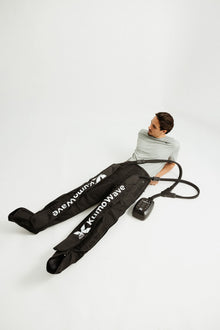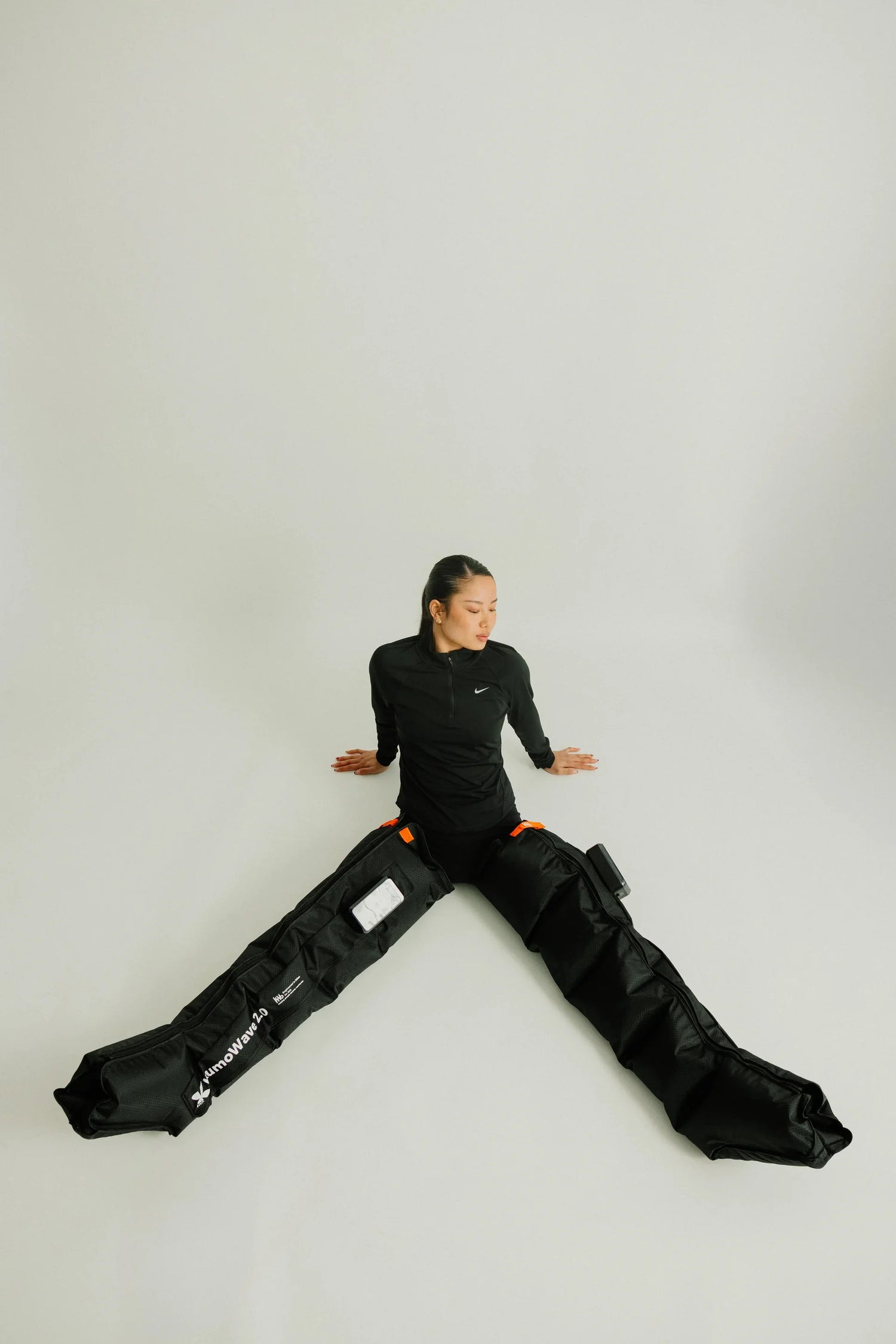
Tingling during pressotherapy is perplexing.
In most cases, this “tingling sensation” (paresthesia) appears due to excessive compression, poor boot fit, or a pinched nerve, and can be resolved with simple changes. But if the tingling is painful, accompanied by numbness, or does not disappear, it is advisable to stop and investigate the cause. In this Kumo guide, you will find signs to distinguish what is normal from what is concerning and a clear correction plan.
Pressotherapy at home
End the day with light legs
★★★★★ 4,8/5 · rated by verified customers
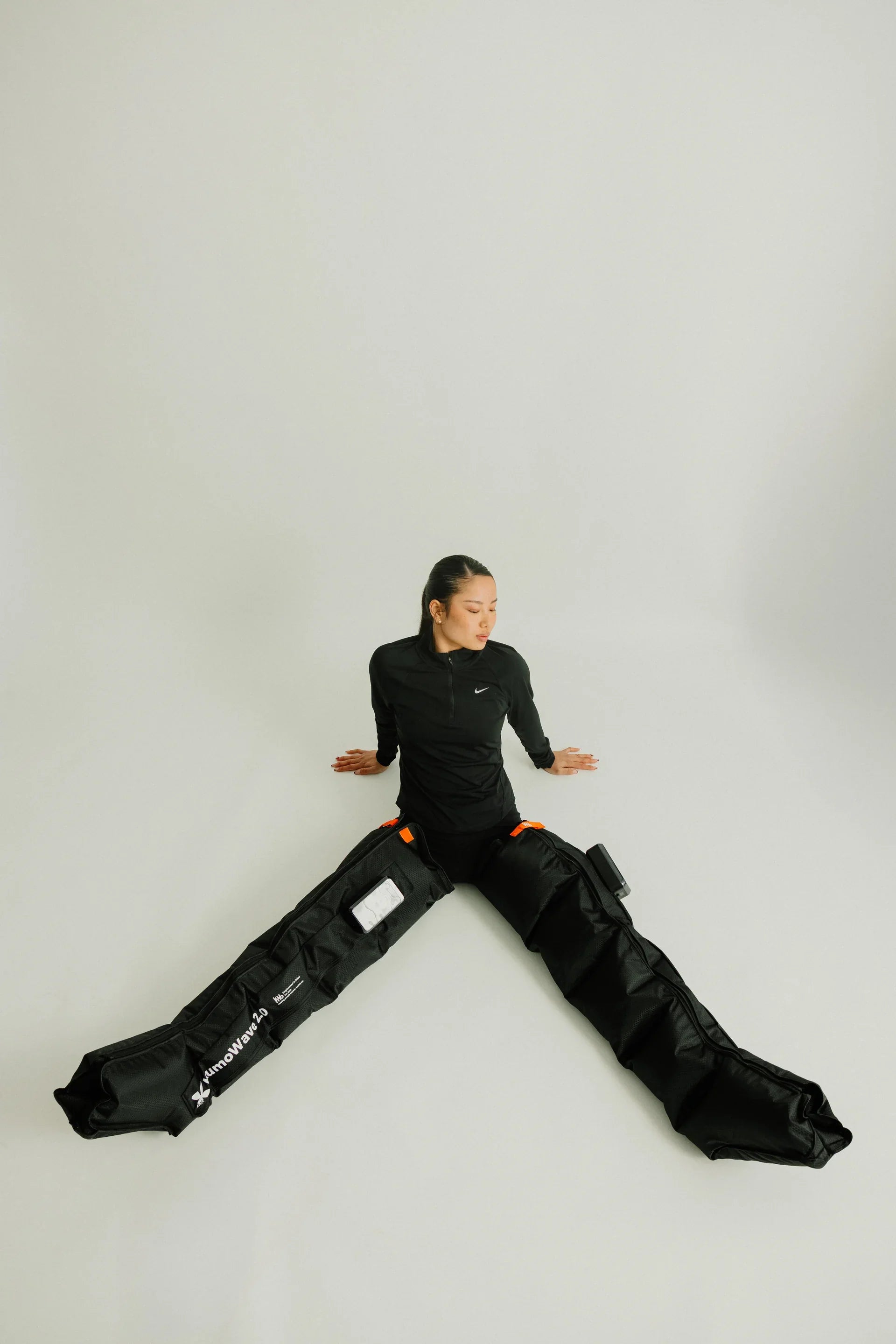
KumoWave pressotherapy boosts circulation and helps drain fluid with sequential compression, in 20-minute sessions at home.
- Boosts circulation and helps drain fluid
- Chamber-based compression, adjustable to you
- Sequential compression that mimics manual drainage
€799,00€999,00
−10% on your 1st order when you subscribe to the newsletter

Is it normal to feel tingling during pressotherapy?
When it might be expected
Pressotherapy applies intermittent compression. This “squeeze-release” action can generate noticeable sensations, especially in the feet and ankles, where the skin is more sensitive. In general, it can be considered “expected” if:
- It is mild and only appears during part of the cycle.
- There is no pain, strong cramps, or an “electric shock” sensation.
- It disappears shortly after the session ends.
- You don't notice any concerning changes in color, temperature, or strength in your foot.
When it should NOT occur (or when it needs immediate adjustment)
It is advisable to stop and correct (or seek medical evaluation) if any of the following appear:
Personalized protocol · included with your purchase
Want us to tell you how to use it in your case?
With your purchase, our experts prepare a personalized usage protocol for your case: sport, circulation, fluid retention, pregnancy or lipedema.
Message us on WhatsAppOur experts reply · no obligation
- Numbness (loss of sensation), not just tingling.
- Increasing, sharp pain or a “stinging” sensation under a specific area of the cuff.
- Marked coldness of the foot or noticeable color change (pale/bluish/purplish).
- Tingling that recurs in every session even if you reduce intensity or adjust placement.
- Symptoms that persist or easily return in your daily life (outside of pressotherapy).
As a general reference, “pins and needles” that last or recur frequently are considered a reason to consult.
How pressotherapy works (and why it can cause tingling)
Intermittent pneumatic compression: the mechanism in 30 seconds
Pressotherapy boots are based on the principle of intermittent pneumatic compression (IPC): air chambers that inflate and deflate to promote venous return and fluid movement. In clinical settings, IPC devices are used, for example, to help prevent thrombosis in people with reduced mobility, precisely because compression helps to "move" blood in the legs.
The red line: “strange” sensation vs. compression that irritates a nerve
Tingling usually appears due to one (or a combination) of these factors:
on your first order when you join the newsletter
We send you the code instantly. No spam.
- Mechanical pressure on superficial nerve endings (especially near the ankle, instep, or head of the fibula).
- Localized compression due to folds, seams, or irregular placement (pressure points).
- Transient changes in perfusion (if you are cold, dehydrated, or have been sitting for a long time).
Important: a “well-tolerated” IPC can feel like a rhythmic massage and pressure, but it should not hurt. Clinical information on IPC describes that, rarely, pressure injury or even nerve damage can occur, which reinforces the idea of not ignoring intense or persistent symptoms.
Most frequent causes of tingling in pressotherapy (and how to recognize them)
1) Intensity too high or progression too fast
This is the most common cause. If you switch to a high level without adaptation, the compression can exceed your “comfortable threshold” and the body responds with tingling, numbness, or localized pain.
- Typical clue: tingling appears early and increases with each cycle.
- What usually helps: lowering intensity, choosing a gentler program, or shortening the exposure (according to the device manual).
2) Irregular placement, folds, or inadequate sizing
An internal fold or a misaligned boot does not distribute pressure; it concentrates it. This can compress a specific area more (ankle, instep, calf) and cause localized tingling “in one spot.”
- Typical clue: tingling always in the same spot (for example, toes or outer side of the leg).
- What usually helps: repositioning the boot, smoothing the fabric, checking socks (avoiding thick seams), and ensuring symmetry between both legs.
3) Compression on a superficial nerve (posture + anatomy)
Some nerves are especially sensitive to external pressure. A classic example of paresthesias due to nerve compression is meralgia paresthetica (compression of a sensory nerve), described by medical societies as caused by pressure or narrowing along the nerve's path. Although meralgia usually affects the thigh, the concept is the same: sustained pressure on a nerve = tingling/numbness. To delve deeper, you can consult the AAOS explanation of meralgia paresthetica.
- Typical clue: tingling associated with a specific posture (knee very extended, ankle very flexed, rotated leg).
- What usually helps: changing posture, supporting the leg well, avoiding crossing legs before/during the session.
4) Cold, vasoconstriction, or previous “asleep leg”
If you start the session with cold feet or after sitting for a long time, it's easier to notice “pins and needles” sensations. The NHS describes this phenomenon as linked to a temporary reduction in nerve supply, which usually reverses when the situation changes.
5) Overload, cramps, dehydration, or high post-workout sensitivity
After intense training, muscles can be reactive (fatigue, tension, micro-irritation). If there is also dehydration or lack of salts, the tingling sensation can be amplified. Here, a "step down" strategy usually works: more conservative intensity and prioritizing tolerance.
6) Pre-existing conditions: neuropathy, diabetes, sciatica, etc.
If you already experience tingling in daily life, pressotherapy is not the “root cause”: it only makes it more evident. This is especially relevant in people with diabetes, as diabetic neuropathy can cause tingling, pain, or loss of sensation. Organizations like NIDDK estimate that between one-third and half of people with diabetes have peripheral neuropathy, and the American Diabetes Association also indicates that neuropathy affects a very significant proportion of people with diabetes.
Furthermore, diabetes is very common: NIDDK reports figures of 38.4 million people with diabetes in the U.S. (estimate published by the institute), which makes this point more common than it seems.
Practical solutions: what to do if tingling appears (step by step)
Quick checklist (without overcomplicating things)
- Pause the program as soon as you notice uncomfortable or progressive tingling.
- Observe the foot and leg: color, temperature, pain, numbness sensation.
- Reposition the boot: smooth out folds, center the foot well, avoid thick sock seams.
- Reduce the intensity or choose a milder mode.
- Restart and re-evaluate: if it returns within a few cycles, it's a sign that there is still a pressure point or the level is still too high.
- If it persists outside the session, or is accompanied by pain/numbness, stop use and consult a professional.
Usage adjustments that usually resolve 80% of cases
- Less intensity, more consistency: it is preferable to tolerate repeatable sessions well than to “force” high levels.
- Symmetry: place both boots with the same attention (height, closure, heel alignment).
- Avoid extra compression: do not wear garments that already compress (very tight socks, compression stockings) unless indicated by a professional.
- Protected skin: dry skin well, avoid very slippery creams just before (they can promote folds), and check for chafing.
If you have reduced sensitivity (for example, neuropathy)
The key is safety: if your perception of pressure/pain is altered, you might not notice a pressure point in time. In peripheral neuropathy, foot care and monitoring for unnoticed injuries are emphasized. In this context, pressotherapy should be used with special caution and, if possible, with medical guidance.
When to stop and seek medical help (warning signs)
Kumo's Rule of Prudence: If tingling turns into numbness, intense pain, weakness, or lasts longer than usual after the session, do not normalize it. Stop, review, and consult.
Common precautions and contraindications (in pneumatic compression)
In medical literature and documentation for pneumatic compression devices, problems such as active thrombosis, untreated acute infection, decompensated heart failure, or severe peripheral arterial disease are cited as contraindications or situations requiring special caution (depending on the clinical context).
This does not mean that a recovery boot “causes” these problems, but that if they exist, compression may be inappropriate without supervision. If you have a history of vascular, cardiac, or lymphatic conditions, or are undergoing medical treatment, it is safest to seek professional advice before using pressotherapy.
Urgent attention if you suspect a clot (DVT/PE) or other complication
If you experience symptoms consistent with deep vein thrombosis, such as swelling, pain in the leg (often in the calf), warmth, or change in color, it is a reason to consult quickly. The Mayo Clinic describes these symptoms and warns of signs of pulmonary embolism (sudden shortness of breath, chest pain, etc.) as an urgency. The NHS also offers a clear guide to symptoms and when to seek help.
Quick guide to identifying the cause (table)
Table of causes, signs, and solutions
| Probable Cause | How it manifests | What to do now | When to consult |
|---|---|---|---|
| Intensity too high | Increasing tingling, appears early and recurs | Pause, lower intensity, switch to gentler mode | If there is numbness or severe pain, or if it persists after the session |
| Fold or pressure point | Localized tingling (instep/ankle/toes), “in one spot” | Reposition, smooth, check sock and heel alignment | If there is a deep mark, blister, loss of sensation |
| Nerve compression (posture) | “Electric shock,” numbness depending on position | Change posture, avoid hyperextension/rotation, readjust | If there is weakness or persistent neurological symptoms |
| Cold feet or previously “asleep” leg | Mild tingling at the beginning, improves after a while | Warm up the environment, move ankles beforehand, start gently | If it recurs daily outside of pressotherapy |
| Neuropathy/diabetes or other underlying condition | Tingling even without a session; reduced pain sensitivity | Use conservative levels or avoid; prioritize safety | Medical evaluation for cause and safe guidelines |
How to incorporate Kumo pressotherapy into a recovery routine (without irritating nerves)
The idea: less aggressive, more complete
If the goal is well-being and recovery, an “integrated” strategy often works better than relying solely on high pressure:
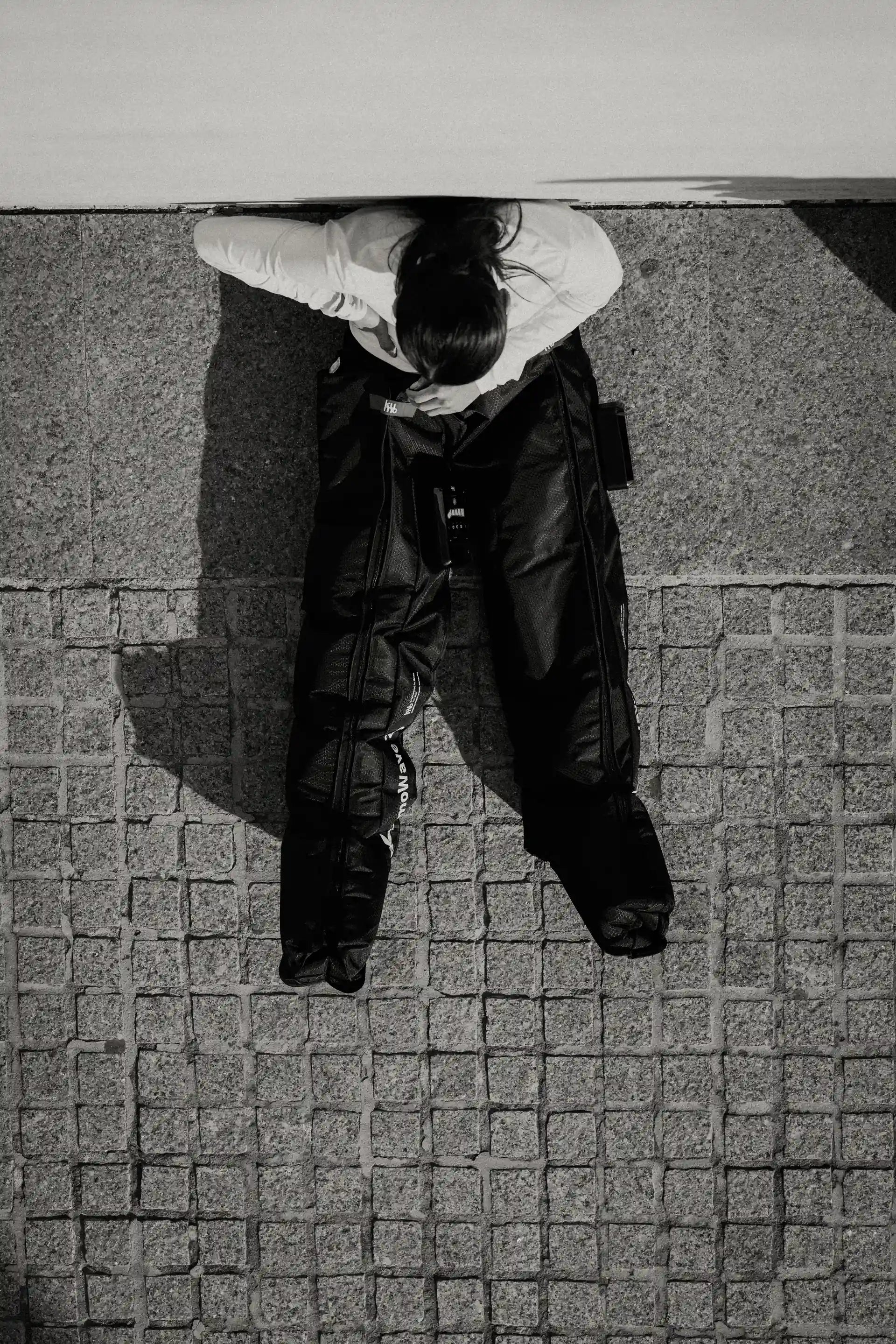
- Pressotherapy with progression: if you are exploring options, you can view pressotherapy boots as a supportive tool, prioritizing comfort and proper placement over intensity.
- Localized muscle release: a massage gun can help reduce specific tension (calf, soleus, plantar fascia) without compressing the entire limb. At Kumo, you can explore the KumoPulse Air for targeted work.
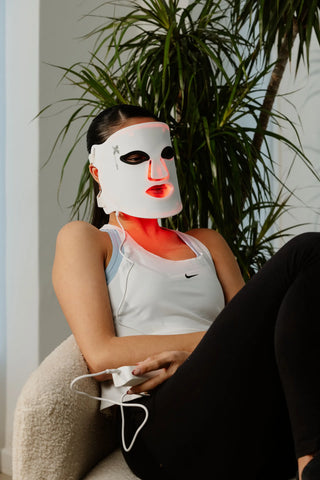
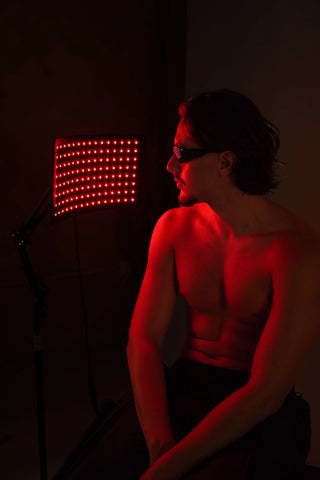
- Red/LED light as a complement: for those seeking a gentler approach, LED light therapy can be integrated into recovery, sleep, and tissue care habits, without direct mechanical pressure.
FAQ: frequently asked questions about tingling and Kumo pressotherapy
Why do I feel tingling in my feet with Kumo pressotherapy boots?
Most commonly, the pressure is too high for your tolerance or there is a "pressure point" on your foot (internal fold, sock with a thick seam, poorly seated heel). Always start with a conservative setting and prioritize impeccable placement: centered foot, smoothed fabric, and no areas that "bite." If the tingling turns into numbness, if there is pain, or if the sensation persists after the session, it is prudent to stop and seek professional guidance.
Is it normal for tingling to last a while after the session?
Mild, brief tingling can occur, but it should not last long or recur easily. If it lasts longer than reasonable or appears with numbness, it is a sign that there was too much compression or nerve irritation. Reduce intensity, check for folds and posture, and see if it improves in subsequent sessions. If you also have risk factors (for example, diabetes with possible neuropathy), it is better to err on the side of caution: your perception may be altered and you might not notice a pressure injury in time.
Can I use Kumo pressotherapy if I have diabetes or neuropathy?
In diabetic neuropathy, tingling, pain, or loss of sensation may occur, and this changes the safety rules: you might not notice excessive compression. Institutions like NIDDK and ADA point out that neuropathy is a common complication in diabetes, so it should be treated as a "special case." In practice: if your doctor approves it, use conservative intensities, check your skin before and after, and avoid sessions if you notice numbness. If in doubt, consult for individualized guidance.
What do I do if tingling always appears in the same spot on my leg?
When tingling is "always there," it is usually a pressure point or compression of a superficial nerve. Practical solution: pause, remove the boot, and check if there are folds or an area that coincides with the symptom; when repositioning, smooth the fabric and slightly change your posture (for example, avoid overextending your knee or pointing your foot). If it still recurs session after session, or if persistent weakness or numbness appears, it is advisable to stop use and seek evaluation to rule out nerve entrapment or other causes.
What now?
If you want to make recovery a comfortable habit (and not a "put up with it" session), at Kumo you can explore tools that complement each other: leg pressotherapy, targeted massage, and LED light for a gentler approach. And if you have questions about which option best suits your case, you can contact us through the contact page.
KumoWave pressotherapy
Choose your at-home pressotherapy
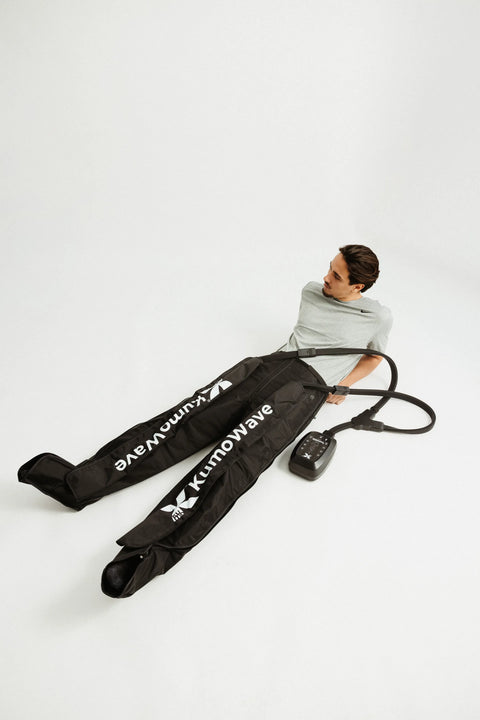
KumoWave Elite – Pressotherapy Pants
Full-coverage trousers. Ideal for lipedema, fluid retention and intensive use.
€799,00 €999,00
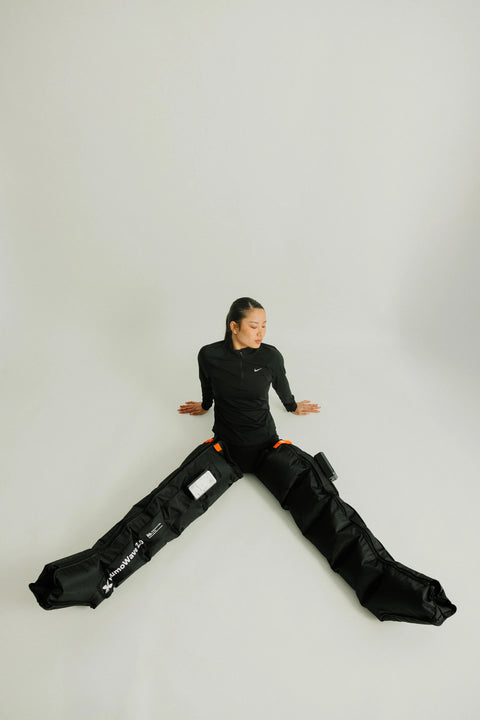
KumoWave 2.0 - Wireless Pressotherapy
Wireless, lightweight boots. Perfect for daily use and recovery.
€499,00 €599,00