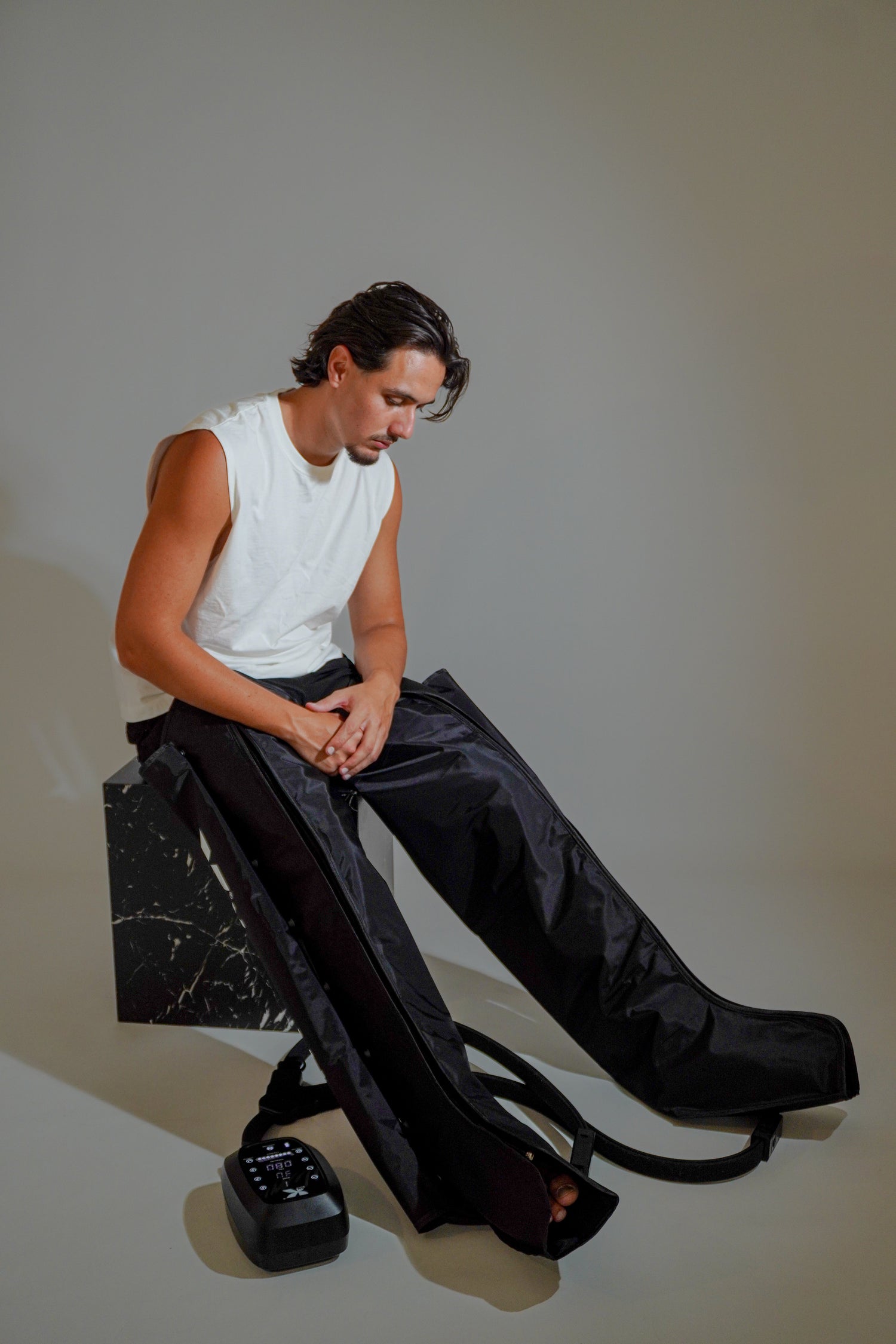
Compression therapy boots have become a recovery essential in 2025. In this article, you'll see how to integrate them into a complete, safe, and effective routine to care for your legs and optimize your daily well-being.
The goal is simple: to understand what these pneumatic compression boots actually do, what the scientific evidence says, how to use them before and after exercise, how to combine them with other recovery technologies, and what precautions you should take. All so you can build your own 2025 recovery routine with compression boots and maintain it as a genuine lifestyle habit.
Pressotherapy at home
End the day with light legs
★★★★★ 4,8/5 · rated by verified customers
KumoWave pressotherapy boosts circulation and helps drain fluid with sequential compression, in 20-minute sessions at home.
- Boosts circulation and helps drain fluid
- Chamber-based compression, adjustable to you
- Sequential compression that mimics manual drainage
€799,00€999,00
−10% on your 1st order when you subscribe to the newsletter

Why compression boots will make a difference in 2025
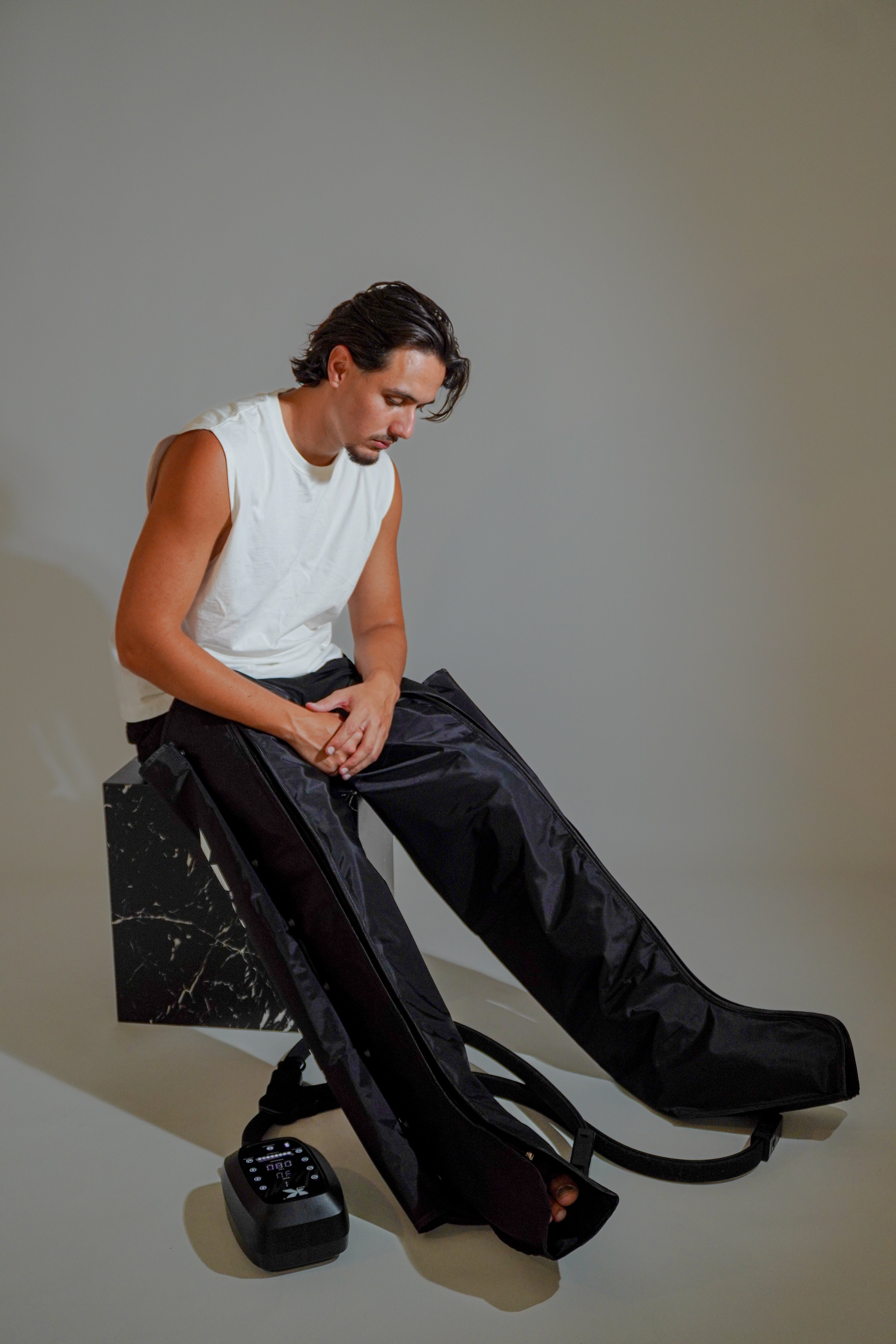
Compression therapy boots apply sequential pressure to the feet, ankles, and legs to promote venous and lymphatic return. They are essentially intermittent pneumatic compression devices designed to improve circulation and reduce the sensation of heaviness or swelling in the lower extremities. ( hopkinsmedicine.org )
In the medical field, they have been used for years to prevent deep vein thrombosis because they help mobilize blood and prevent it from pooling in the veins of the legs. ( hopkinsmedicine.org ) In the context of sports recovery and wellness, this same principle translates into:
Personalized protocol · included with your purchase
Want us to tell you how to use it in your case?
With your purchase, our experts prepare a personalized usage protocol for your case: sport, circulation, fluid retention, pregnancy or lipedema.
Message us on WhatsAppOur experts reply · no obligation
- Promote the drainage of fluids and metabolites after exercise.
- To accelerate the return to cardiovascular calm after intense exertion. ( pubmed.ncbi.nlm.nih.gov )
- Decreasing the perception of fatigue and muscle soreness in some users, according to studies on compression techniques. ( pubmed.ncbi.nlm.nih.gov )
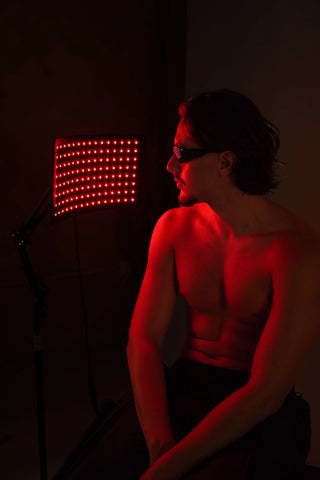
What's interesting in 2025 is not just the technology itself, but its integration into daily recovery routines alongside other tools such as LED light therapy, localized pressotherapy, or massage guns, which brands like KUMO have made accessible for home use.
How compression boots work: science in simple language
What exactly are they doing on your legs?
The compression boots surround the leg with several air chambers that inflate and deflate in a controlled manner. This movement:
- It compresses the superficial and deep veins, pushing the blood back towards the heart.
- It stimulates lymphatic return, helping to mobilize accumulated fluids.
- It partially mimics the action of the calf muscle pump when you walk. ( pubmed.ncbi.nlm.nih.gov )
Between compression cycles, the chambers deflate, allowing fresh, oxygen-rich blood to enter. This rhythmic flow can help relieve the feeling of heavy legs and promote recovery after prolonged periods of sitting, long journeys, or strenuous exercise.
on your first order when you join the newsletter
We send you the code instantly. No spam.
Potential benefits supported by evidence
Although research is still evolving, several lines of evidence help to understand the potential of compression therapy boots:
- Laboratory studies show that intermittent pneumatic compression increases limb blood flow during exercise and recovery . ( pubmed.ncbi.nlm.nih.gov )
- A 2023 study observed that, following a protocol of intense sprints, cardiovascular recovery (blood pressure and peripheral vascular resistance) was faster with pneumatic compression than with passive recovery. ( pubmed.ncbi.nlm.nih.gov )
- Meta-analyses of compression garments (not boots, but with similar principles) indicate a moderate reduction in delayed onset muscle soreness (DOMS) and a somewhat faster recovery of strength and power after exercise. ( pubmed.ncbi.nlm.nih.gov )
It's important to note that not all studies find improvements in objective performance, but a pattern of better perceived recovery and less muscle soreness does emerge, which in practice can help you train more consistently. ( pubmed.ncbi.nlm.nih.gov )
Limitations and what we don't yet know
A recent review of pneumatic compression boots for post-exercise recovery analyzed studies available between 2000 and 2021 and concluded that there is no clear superiority of the boots over other recovery methods (such as passive rest or massage), although no negative effects were observed either. ( pubmed.ncbi.nlm.nih.gov )
Other more recent controlled trials show that pneumatic compression can reduce pain perception , but without significant changes in neuromuscular function (jumping, maximum strength). ( pubmed.ncbi.nlm.nih.gov )
In summary: compression boots are an interesting tool within a broader recovery ecosystem , not an isolated magic solution.
2025 recovery routine with compression boots
Below you will find an example of how to organize your day and week to get the most out of pressotherapy, adapting it to your activity level (from people who spend hours sitting down to athletes who train daily).
Before training: gentle activation (optional)
Wearing boots before exercise is not essential, but it can be helpful in certain cases:
- If you've been sitting for many hours and your legs feel heavy.
- On days of low workload, to activate circulation without tiring the muscles.
General recommendations:
- Duration: 10–15 minutes.
- Pressure: low to medium, prioritizing the feeling of a pleasant "hug", never pain.
- Objective: to arrive at the warm-up with less stiff legs and a better feeling of lightness.
After training: the foundation of your routine
This is the perfect time to integrate your compression boots.
-
Immediate phase (0–2 hours post-training)
- Hydration and recovery food.
- Gentle stretching or joint mobility exercises.
- Shower (ideally warm or gentle contrasts if you feel comfortable). -
Session with pressotherapy boots
- Usual duration: 20–30 minutes for most healthy users. - Pressure: medium, always comfortable; if you notice intense tingling or pain, lower one level. - Position: lying down or semi-reclined, legs relaxed.
- Ideal time: between 30 and 120 minutes after exercise, once you have cooled down. -
Synchronize with other recovery technologies
- If you are also interested in pampering your facial skin, you can combine the leg session with an LED light mask for regeneration and luminosity, available in the LED light therapy section.
- In areas with heavy tension (for example, buttocks, calves or back), you can alternate with a brief use of a massage gun such as the KUMOPulse Air , always avoiding passing directly over joints or acutely painful areas.
Days of working from home, being on your feet all day, or long journeys
You don't have to be an athlete to benefit from pressotherapy. If you spend many hours:
- Sitting in front of the computer,
- Standing (hospitality, commerce, health),
- Or on long trips,
You can plan 20–30 minute sessions at the end of the day , focused on relieving heaviness and improving the feeling of light legs.
In these cases, the boots act as a circulatory "reset" that counteracts prolonged immobility. It is always advisable to combine them with active breaks (walking for a few minutes, climbing stairs, gentle stretching).
Integrate pressotherapy into your sleep routine
Recovery doesn't end when you take off your boots. A good 2025 strategy is to integrate:
- Pressotherapy session in the late afternoon or early evening.
- Red light or near-infrared light routine to relax the nervous system and promote rest , available in the KUMO LED therapy range.
- Sleep hygiene: reduce bright screens, regulate schedules and practice deep breathing.
This way you align muscle, circulatory and nerve recovery in the same nightly ritual.
Example of a weekly routine with compression boots
Table: Proposed typical recovery week
| Day | Main objective | Session with pressotherapy boots | Suggested KUMO accessories |
|---|---|---|---|
| Monday | Recover after a hard workout | 25 min post-training, medium pressure | KUMOPulse Air pistol for specific points |
| Tuesday | Telecommuting | 20 minutes at the end of the day, low pressure | 10 min of breathing + soft red light |
| Wednesday | Moderate training | 20 minutes at night | LED face mask during the session |
| Thursday | Standing for long periods | 25–30 min upon arriving home | Posterior chain stretches |
| Friday | Intense session (legs) | 30 min 1–2 h after training | Pressotherapy + gentle contrast shower |
| Saturday | Light activity (walking) | 15–20 min mid-afternoon (optional) | Synergy with red light for relaxation |
| Sunday | Rest and comprehensive care | 25 minutes in the afternoon | Complete skin ritual + LED + pressotherapy |
Use this table as inspiration and adjust it to your own needs: training frequency, work schedule, fatigue level, etc. If you'd like to explore home equipment options, you can check out KUMO's pressotherapy section.
Safety, contraindications and good practices
Who should always consult a healthcare professional?
Although many people find compression boots safe, there are situations where it is essential to consult a doctor beforehand :
- History or suspicion of deep vein thrombosis (DVT) or pulmonary embolism.
- Significant peripheral arterial disease.
- Decompensated heart failure.
- Active infections or open wounds on the legs.
- Significant alterations in sensitivity (neuropathies, poorly controlled diabetes).
Pneumatic compression devices used in hospitals list these conditions among their main contraindications. ( hopkinsmedicine.org )
If you are pregnant, taking anticoagulant medication, or have any concerns about your circulation, always discuss the use of pressotherapy with your healthcare professional.
Warning signs during a session
Stop the session and consult a professional if:
- You feel sharp pain or burning under the boot.
- Sudden swelling appears on one side or abrupt changes in color.
- You notice intense dizziness, shortness of breath, or abnormal heart palpitations.
For home use, the rule is simple: comfort, absence of pain, and a feeling of gradual relief . Always adjust the pressure starting at low levels and only increase it if you feel comfortable.
How to get the most out of your compression boots
Recommended duration and frequency
In healthy individuals, a common guideline is:
- 20–30 minutes per session.
- 3–6 days per week, depending on your activity level.
The available evidence suggests that applications of about 20–30 minutes after exercise are sufficient to assess whether you notice subjective improvements in your recovery. ( pubmed.ncbi.nlm.nih.gov )
More time doesn't always mean more benefit: listen to your body and if you get up from the session with light legs and no discomfort, you're in the right range.
Combining pressotherapy with other recovery tools
An “ecosystem” approach, consistent with KUMO ’s philosophy, might look like this:
- Pressotherapy on legs to promote circulation and relieve heaviness.
- KUMOPulse Air massage gun for targeted work on tension points in the buttocks, back or feet, avoiding acute painful areas.
- LED therapy for skin care and circadian rhythm regulation with specific ranges of red or infrared light.
- Basic habits: sufficient sleep, nutrition adapted to the effort, hydration and daily movement.
The key is regularity : moderate but constant sessions are better than very intense and sporadic peaks.
Frequently asked questions about compression therapy boots
How long should I wear the compression boots in each session?
For most healthy people, a range of 20 to 30 minutes per session is a good starting point. Several studies on pneumatic compression and recovery after exercise use similar times, so this is a reasonable reference point. ( pubmed.ncbi.nlm.nih.gov ) If you're new to this, start with 15–20 minutes and see how you feel over the next few hours. If you notice lighter legs, without tingling or discomfort, you can maintain that time or increase it slightly. Remember that consistency (3–5 times per week) is usually more important than lengthening a single session.
Is it better to use compression boots before or after exercise?
If your main goal is to improve recovery , the most effective time is usually after exercise , once you've cooled down and adequately hydrated. ( pubmed.ncbi.nlm.nih.gov ) In this context, compression therapy can help mobilize fluids and reduce the feeling of fatigue. Before training, it can be beneficial on days with significant stiffness or after many hours of sitting, as a gentle activation method, using low pressure and short sessions (10–15 minutes). Ideally, you should try both approaches and choose the one that feels best overall.
Do pressotherapy boots help you lose weight or eliminate cellulite?
Compression boots are not a weight-loss treatment or a specific solution for cellulite. Their action focuses on improving venous and lymphatic return and relieving heaviness or swelling in the legs. ( hopkinsmedicine.org ) You may notice a slightly more even appearance by reducing fluid retention and improving the feeling of lightness, but body composition (fat, muscle mass) depends primarily on diet, physical activity, and hormonal factors. If your aesthetic priority is cellulite, it is advisable to combine strength training, healthy habits, and specific professional advice.
Can I wear compression boots every day?
In healthy individuals, many wellness routines include almost daily use of compression therapy without problems, provided that the body's signals are respected and there are no medical contraindications. ( pubmed.ncbi.nlm.nih.gov ) That said, it's not essential to use it every day to reap benefits; 3–5 times a week may be more than enough if your goal is to improve recovery after training or relieve heaviness after intense workdays. If you decide to use it daily, maintain comfortable pressure, observe your response for several weeks, and if you experience any unusual discomfort, reduce the frequency and consult a professional.
Who shouldn't use compression therapy boots?
It is not recommended to use compression boots without medical supervision if you have a history of deep vein thrombosis, significant arterial disease, decompensated heart failure , or if you have active infections, open wounds, or acute inflammation in your legs. ( hopkinsmedicine.org ) Caution is also important in cases of sensory impairment (e.g., diabetic neuropathy) because you may not perceive excessive pressure. If you are pregnant, taking blood thinners, or have a known circulatory condition, it is best to discuss the use of these devices with your doctor before incorporating them into your recovery routine.
So what now?
If you want to take the next step and make recovery as natural a habit as training or working, you can discover the options for compression boots and complementary technologies in the KUMO compression therapy shop, explore the range of LED therapy , or complement your routine with tools like the KUMO Pulse Air pistol.
If you have specific questions about your case or need guidance in choosing, you can contact the team through the contact page. And if you want a comprehensive overview of the KUMO recovery system, start on the homepage .
KumoWave pressotherapy
Choose your at-home pressotherapy
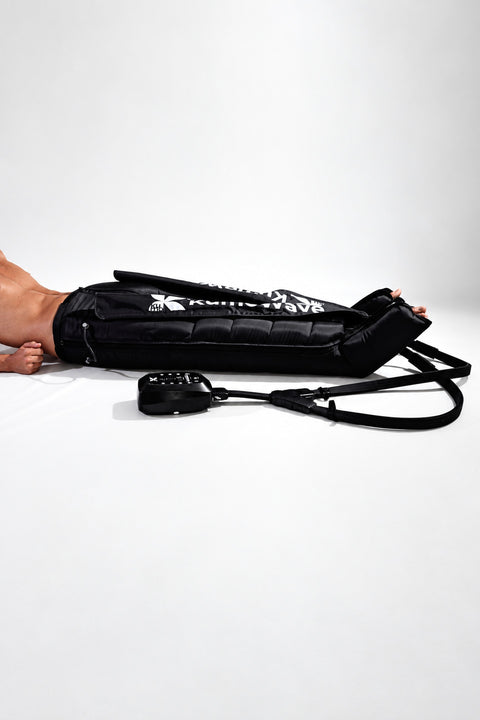
KumoWave Elite – Pressotherapy Pants
Full-coverage trousers. Ideal for lipedema, fluid retention and intensive use.
€799,00 €999,00
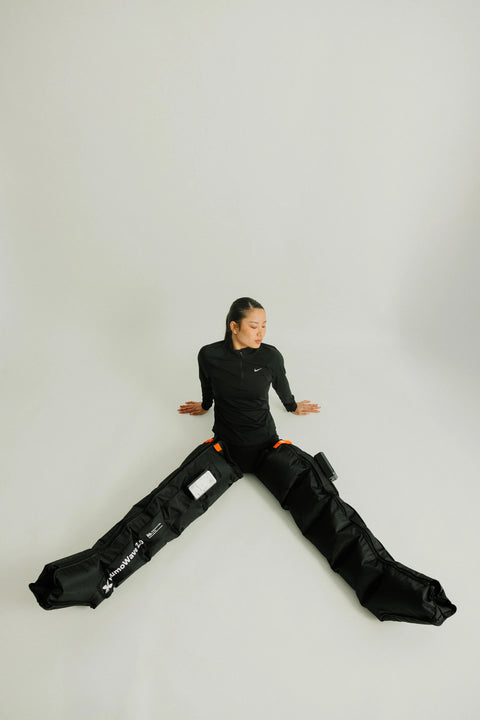
KumoWave 2.0 - Wireless Pressotherapy
Wireless, lightweight boots. Perfect for daily use and recovery.
€499,00 €599,00