
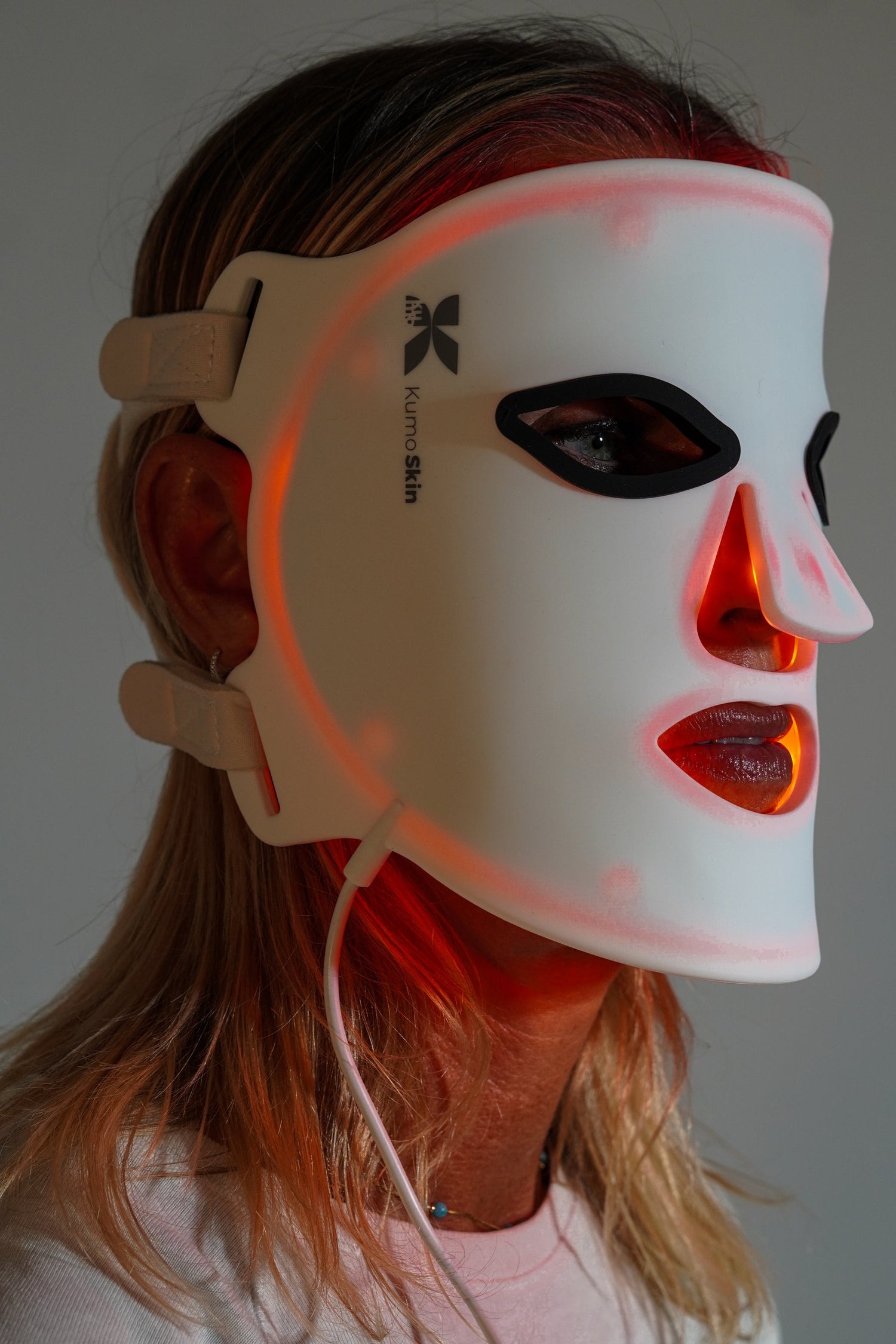
The nighttime routine with an LED mask does matter. When the skin is clean, dry, and free of product overload, the session is more comfortable and more consistent with what dermatologists and manufacturers recommend for this type of therapy. (aad.org)
When used correctly, LED light can support skin with acne, redness, or signs of aging, but it does not replace a basic routine or a medical check-up if there is photosensitivity, sensitizing medication, or persistent discomfort. (my.clevelandclinic.org)
Facial red light
Bring your skin back to life
★★★★★ 4,8/5 · rated by verified customers
The KumoSkin LED mask helps repair and calm your skin in short sessions at home.
- 250 LEDs in flexible medical silicone
- Red light to boost collagen and glow
- 4 lights: red, infrared, blue and yellow
€299,00€429,00
−10% on your 1st order when you subscribe to the newsletter

What LED light actually does to the skin
Photobiomodulation uses low-intensity visible light, not ultraviolet. Cleveland Clinic explains that red light is associated with reducing inflammation and supporting collagen production, while blue light is more often used for acne; additionally, home devices come in many different formats, from masks to panels.
The most useful sequence is simple: cleanse, treat, and moisturize. When the skin is clean and there are no unnecessary barriers, the session is more comfortable and the risk of irritation decreases.
Personalized protocol · included with your purchase
Want us to tell you how to use it in your case?
With your purchase, our experts prepare the ideal LED protocol for your skin type and goal (acne, wrinkles, dark spots...).
Message us on WhatsAppOur experts reply · no obligation
If you want to delve into the technical aspects and the type of results this treatment usually offers, the guide on how an LED face mask works and what results to expect will help you set realistic expectations. (my.clevelandclinic.org)
Nighttime routine with LED mask: essential steps
- Cleanse your face with a gentle product. A delicate cleanser helps remove oil, dirt, and makeup without adding unnecessary friction; the AAD recommends avoiding aggressive routines when the skin is easily irritated.
- Dry your skin thoroughly before starting. The LED mask is used on a clean face without makeup; Cleveland Clinic also indicates that, before the session, the skin must be clean for the device to be applied correctly.
- Place the mask and protect your eyes. The FDA warns that light can injure the eyes and that, in certain cases, photobiomodulation is not recommended if there is photosensitivity or photosensitizing medication. (fda.gov)
- Respect the manufacturer's time and frequency. More time does not mean more benefits. Cleveland Clinic notes that some home devices are used for minutes a day, while others require longer and repeated sessions over several weeks.
- Finish with simple hydration. After the session, a moisturizer helps retain water in the skin and reduce the feeling of tightness; the AAD also reminds that treatment products can dry out and irritate if too many steps are layered. (aad.org)
If you're looking for a more detailed example of the sequence, the nighttime facial routine with an LED mask step-by-step protocol expands on each phase with an easy-to-follow order.
Practical table: what goes before and what goes after the LED mask
| Element | Ideal time | Why it matters |
|---|---|---|
| Gentle cleanser | Before the session | Helps remove oil and makeup without adding friction. |
| Makeup or heavy creams | Not before the mask | Cleveland Clinic advises using a clean, makeup-free face before the device. |
| Moisturizer | After the session | Helps seal in moisture and reduce feelings of dryness. |
| Retinoids and potent exfoliants | On alternate nights, if your skin is sensitive | The AAD reminds that too many anti-aging products can irritate and some treatments dry out the skin. |
Which products should be separated from that night's routine
If your routine includes retinoids, exfoliating acids, or benzoyl peroxide, start with caution. The AAD notes that these treatments can dry out and irritate the skin, and also warns that using too many anti-aging products at once can make irritation more visible; therefore, for sensitive skin, it is often better to reserve the most potent active ingredients for alternate nights.
on your first order when you join the newsletter
We send you the code instantly. No spam.
As a practical rule, your LED mask night should feel light, not overloaded. If you notice burning, tightness, or flaking, simplify: cleanse, use the light, and finish with a basic cream. This guideline is usually more helpful than mixing many steps in the same session.
Safety and contraindications you should not ignore
Before using it regularly, review the list of contraindications and the manufacturer's guidelines. The FDA advises against photobiomodulation in people with photosensitivity disorders or taking photosensitizing medication, and also reminds that light can injure the eyes; Cleveland Clinic adds that there are cases where it is advisable to consult beforehand, such as a history of skin cancer or certain eye diseases.
If you want to delve deeper into this point, the guide on LED mask safety and contraindications clearly summarizes the most important warning signs.
Discontinue the session if hives, pain, inflammation, persistent redness, or a reaction that does not disappear quickly appear. Cleveland Clinic recommends contacting a professional if symptoms like these arise after LED therapy.
When to expect real results
Consistency matters more than intensity. Cleveland Clinic explains that some home devices are used for minutes a day, while others require repeated sessions over several weeks; therefore, it doesn't make sense to judge the routine after just one night.
It is also important to have realistic expectations about what does and does not improve. LED light can help with acne, redness, or texture, but Cleveland Clinic notes that it is not useful for acne cysts, blackheads, or whiteheads; if you want to delve deeper into the logic of the treatment, the guide on facial routine with LED mask: essential steps complements this vision very well.
Common mistakes that ruin the session
- Using the mask over makeup or a too-heavy cream, because this complicates a clean and comfortable session.
- Mixing too many active ingredients on the same night, which can increase irritation in sensitive skin.
- Forgetting eye protection or improvising with the usage time instead of following the device's manual.
- Expecting immediate change and abandoning the routine before completing several weeks of consistent use.
Frequently asked questions about the nighttime LED mask routine
Should the LED mask be used before or after serum?
It is safest to use it on clean, dry skin, before heavy creams or serums. Cleveland Clinic indicates that the face should be clean and makeup-free, and the AAD recommends applying treatments right after cleansing and then moisturizing. In practice, this means the mask usually comes before the moisturizing close of the routine. If your serum is very light and the manufacturer allows it, you can incorporate it afterward, but it is not advisable to apply heavy layers before the session.
Can I use retinol on the same night as the LED mask?
It depends on how your skin responds. The AAD reminds that retinoids can be drying and that too many anti-aging products at once can cause irritation. Therefore, if you notice sensitivity, it is usually better to alternate nights: one for the LED mask and another for retinol. If your dermatologist gave you specific instructions, that indication should take precedence over any general routine. The idea is not to prohibit retinoids, but to avoid a combination that adds unnecessary irritation.
How many nights a week should it be used?
There is no universal number valid for all models. Cleveland Clinic notes that some home devices are used daily for a few minutes, while others require longer and repeated sessions; additionally, the duration depends heavily on the device. The most sensible approach is to start with the frequency recommended by the manufacturer and adjust only if your skin tolerates it well. More time or more repetitions do not automatically mean better results, especially if the skin becomes red or dry.
Is it safe if I have sensitive skin?
It can be in some cases, but not for everyone. The AAD warns that if you take medications that increase light sensitivity, red light may not be a good option; the FDA also advises against photobiomodulation in people with photosensitivity or taking photosensitizing drugs. If your skin reacts easily, start with a very simple routine, observe how it responds, and consult beforehand if you have rosacea, a history of light reactions, or concerns about your treatment. (aad.org)
When can I expect results from an LED mask?
It's normal to think in terms of weeks, not just one night. Cleveland Clinic explains that many home devices require repeated use over several weeks, and the AAD reminds that home equipment varies greatly in duration and frequency. If the routine works well for you, changes are usually gradual: less redness, fewer breakouts, or slightly more even texture. If pain, hives, or redness that doesn't go away appears, stop using it and seek professional evaluation.
What now?
If you want to turn this routine into a clear and easy-to-repeat habit, start with the nighttime facial routine with an LED mask step-by-step protocol and also review the safety and contraindications of the LED mask. And if you want to learn more about the wellness and recovery approach that inspires this type of care, visit Kumo Balance.

Facial red light
KumoSkin Mask – LED Facial Mask
★★★★★ 4,8/5 · rated by verified customers
- 250 LEDs in flexible medical silicone
- Red light to boost collagen and glow
- 4 lights: red, infrared, blue and yellow
€299,00€429,00· pay in installments with seQura or Klarna