

LED face mask: real results and timelines. If you're wondering when you'll see results and what to expect, here's a clear, evidence-based, and practical guide.
Used consistently, an LED light therapy mask can begin to calm redness and brighten the complexion in 1–2 weeks; improve acne breakouts in 2–4 weeks; smooth fine lines and texture in 6–8 weeks; and even out skin tone in 8–12 weeks. The key is regularity (10–20 minutes, 3–5 days per week) and combining it with smart skincare habits.
Red & infrared light
Recover faster, at home
★★★★★ 4,8/5 · rated by verified customers
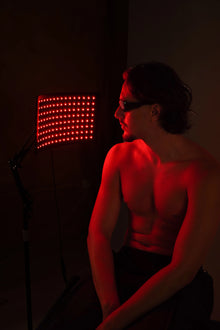
The KumoLux panel supports muscle recovery with full-body red and infrared light.
- 660 nm red + 850 nm infrared light
- Full-body muscle recovery
- Clinically validated biohacking protocols
€399,00€499,00
−10% on your 1st order when you subscribe to the newsletter

In a little while
- Initial results: calmer and more radiant skin in 1–2 weeks with regular use.
- Acne: less inflammation and papules in 2–4 weeks; consolidation in 8–12 weeks.
- Wrinkles and firmness: gradual improvements in 6–8 weeks, progressive up to 12 weeks.
- Spots and mild hyperpigmentation: visible changes in 8–12 weeks with daily photoprotection.
- Recommended frequency: 10–20 min per session, 3–5 times/week for 6–8 weeks; then maintenance.
How the LED mask works: brief and useful science
The LED facial mask emits specific wavelengths that activate cellular processes without heat or UV radiation. This effect, called photobiomodulation, stimulates mitochondrial energy and modulates inflammatory pathways, promoting tissue repair.
- Red (≈630–660 nm): stimulates collagen and improves texture/wrinkles.
- Near infrared (≈810–850 nm): penetrates deeper, aids recovery and calms.
- Blue (≈405–470 nm): reduces Cutibacterium acnes and inflammation of the outbreak.
Clear sources for further study:
Personalized protocol · included with your purchase
Want us to tell you how to use it in your case?
With your purchase, our experts set up your red and infrared light sessions for your sport and goal.
Message us on WhatsAppOur experts reply · no obligation
- Principles and clinical safety of LED therapy Cleveland Clinic.
- Mechanisms and applications in skin (scientific review) PubMed .
- Dermatological description of DermNet LED therapy.
Photobiomodulation is not instant magic: it is physiology repeated consistently.
What results to expect and how long will it take?
Treatment times vary depending on the target device, power/wavelength, skin type, and adherence. However, consistent patterns are found in the literature and in clinical practice.
Inflammatory and comedogenic acne
- What you'll see: less redness, flatter papules, less pain; over time, fewer outbreaks.
- When: changes in 2–4 weeks; stabilization in 8–12 weeks.
- Why: Blue reduces the bacteria involved, and red calms inflammation.
- Evidence: Light therapy shows modest to moderate benefits as an adjunct in acne according to the AAD and systematic reviews such as Cochrane 2016 .
Fine lines, texture and firmness
- What you'll see: more elastic skin with a better texture, optically finer pores.
- When: initial improvements in 6–8 weeks; progression up to 12 weeks and maintenance.
- Why: Red and near-infrared light stimulate collagen and modulate the extracellular matrix.
- Evidence: Reviews on cutaneous photobiomodulation document improvements in photoaging with repeated PubMed protocols, and clinical guidelines recommend several cycles.
Tone and spots (mild post-inflammatory hyperpigmentation)
- What you'll see: a more even tone, less post-burst halo.
- When: 8–12 weeks, always with daily sun protection.
- Why: Red/infrared light modulates inflammation and repair, facilitating resolution.
- Note: For melasma or other dyschromias, a combined approach and dermatological supervision are usually necessary.
Sensitivity and redness
- What you'll see: better tolerance and less reactive skin.
- When: 2–4 weeks of constant use, depending on individual tolerance.
- Why: anti-inflammatory and barrier effect of red/near-infrared light.
Recommended routine and frequency of use
At home
on your first order when you join the newsletter
We send you the code instantly. No spam.
- Cleanse and dry your skin.
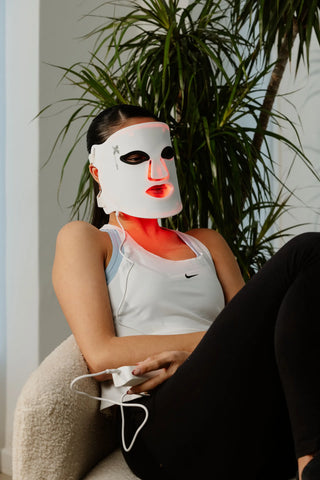
- Put on the mask as instructed.
- 10–20 minutes per session.
- 3–5 times per week for 6–8 weeks.
- Maintain 1–3 times per week to preserve results.
In consultation
- Sessions of 20–30 minutes, 1–2 times per week, in cycles of 4–6 weeks, with higher power controlled by a professional.
Good practices
- Combine with daily SPF 50+ sunscreen, a gentle cleanser and compatible active ingredients (e.g., niacinamide, peptides).
- If you use retinoids or acids, alternate days at the beginning to avoid irritation.
- More practical details are available at Cleveland Clinic and in the DermNet patient guide.
Factors that accelerate or delay results
- Consistency and optimal dosage: regular sessions outweigh sporadic “marathons”.
- Suitable wavelength: red/infrared for rejuvenation; blue for acne.
- Phototype and age: more mature skin types usually need more weeks.
- Synergies: photoprotection and a restorative routine accelerate improvements; smoking and lack of sleep slow them down.
- Safe and validated power: devices with clear parameters offer greater predictability.
- Initial skin condition: intense active outbreaks or melasma require complementary strategies.
Safety: What you should know
LED therapy does not emit UV and is generally well-tolerated by most skin types. Even so:
- Possible temporary effects: mild redness, dryness or headache in light-sensitive individuals.
- Protect your eyes: avoid looking directly at the LEDs and use the included eye protection.
- Precautions: Photosensitivity, light-sensitive migraine, photosensitive epilepsy, pregnancy, or photosensitizing medication require prior evaluation.
- Safety recommendations and warnings in the AAD and risk/benefit review in Harvard Health.
What is realistic to expect?
- Gradual changes, not an immediate “filter effect”.
- Cumulative improvements with maintenance.
- More visible results are achieved when LED lighting is integrated into a consistent routine and used at the correct dose.
- Expectations focus on texture, redness, and inflammation; for deep scars or melasma, consult with dermatology for combined plans.
Table: Indicative timeline of results with an LED face mask
| Aim | Useful wavelengths | Recommended frequency | First changes | Notable results | Maintenance | Evidence/Notes |
|---|---|---|---|---|---|---|
| Inflammatory acne | Blue 405–470 nm + Red 630–660 nm | 10–20 min, 3–5/week | 2–4 weeks | 8–12 weeks | 1–3/week | AAD guidelines and Cochrane review on light therapy for acne. AAD, Cochrane |
| Fine lines/elasticity | Red 630–660 nm + NIR 810–850 nm | 10–20 min, 3–5/week | 6–8 weeks | 8–12 weeks | 1–3/week | Review of cutaneous photobiomodulation PubMed , DermNet |
| Mild tone/PIH | Red + NIR | 10–20 min, 3–5/week | 6–8 weeks | 8–12 weeks | 1–3/week | Requires consistent SPF; gradual results Cleveland Clinic |
| Sensitivity/redness | Red + NIR | 10–15 min, 3–4/week | 2–3 weeks | 4–8 weeks | 1–2/week | DermNet progressive anti-inflammatory approach |
Practical examples of progress
- Week 1–2: skin with less post-cleansing tightness and a healthy glow after regular sessions.
- Week 3–4: In mild acne, breakouts are less frequent and papules are flatter.
- Week 6–8: more homogeneous texture; first improvements in fine lines around the contour.
- Week 8–12: more even tone in post-inflammatory marks if SPF is maintained.
If you're looking to integrate technology aesthetically and effectively into your wellness routine, discover KUMO's proposal for intelligent daily recovery: KUMO Balance .
FAQ
How long does it take for a home-used LED face mask to take effect?
With 10–20 minutes of use, 3–5 times per week, many users notice calmer, more radiant skin within 1–2 weeks. For specific goals, typical timelines are: acne in 2–4 weeks, fine lines in 6–8 weeks, and a more even skin tone in 8–12 weeks. These ranges depend on the device's power/wavelength, consistency, and your skin type. Clinical guidelines emphasize that LED therapy is cumulative: improvement builds session by session and requires maintenance.
How many times a week should I use the mask to see results?
The most common protocol for home devices is 3–5 sessions per week for 6–8 weeks, with 10–20 minutes per session. Afterward, reduce to 1–3 times per week for maintenance. In medical settings, more intensive protocols are used, 1–2 times per week for 4–6 weeks. Adjust according to tolerance and goal, and always follow the manufacturer's instructions. Sources such as the Cleveland Clinic offer similar ranges.
Does the LED mask work for hormonal acne?
It can help as an adjunct by reducing inflammation and bacterial load with blue and red light, thus lessening the severity of outbreaks. However, moderate to severe hormonal acne usually requires a combination strategy (e.g., topical retinoids, antiandrogens, or systemic treatments). The American Academy of Dermatology considers light therapy a useful tool within a comprehensive treatment plan, not a substitute for medical therapy when it is necessary.
Is the LED mask safe for eyes and skin?
LED phototherapy does not emit UV light and is generally safe for most skin types when used correctly. Even so, avoid looking directly at the lights and use the included eye protection. People with photosensitivity, light-sensitive migraines, photosensitive epilepsy, who are pregnant, or who are taking photosensitizing medications should consult a doctor beforehand. Transient effects such as mild redness or dryness may occur. Review safety recommendations on DermNet and Harvard Health.
Are red and near-infrared light better than blue light?
It's not "better" in absolute terms; it depends on the goal. Blue light (≈405–470 nm) is useful for active acne because of its effect on C. acnes and inflammation. Red light (≈630–660 nm) and near-infrared light (≈810–850 nm) are preferable for rejuvenation, texture, redness, and tissue recovery. Many protocols combine wavelengths to address multiple layers and processes. Review the fundamentals and applications in the Cleveland Clinic's review of cutaneous photobiomodulation and clinical brief.
To remember
- The changes are gradual: 1–2 weeks for “glow” and calm; 2–4 for acne; 6–8 for lines; 8–12 for tone.
- Consistency is key: 10–20 minutes, 3–5/week for 6–8 weeks, then maintenance.
- Choose wavelengths according to your goal (blue for acne; red/NIR for rejuvenation).
- Combine with SPF, good habits and complementary active ingredients to accelerate results.
- High safety when used correctly; protect your eyes and consult if you have photosensitivity or are taking photosensitizing drugs.
- Ready to integrate aesthetic technology and performance into your routine? Discover more at KUMO Balance .

Red & infrared light
KumoLux Panel – Red and Infrared LED Panel
★★★★★ 4,8/5 · rated by verified customers
- 660 nm red + 850 nm infrared light
- Full-body muscle recovery
- Clinically validated biohacking protocols
€399,00€499,00· pay in installments with seQura or Klarna