Recovering well means training better.
If you're an amateur athlete, your biggest challenge isn't usually "training more," but fitting recovery into a realistic week: work, family, irregular sleep, and limited time. In this guide, I propose a practical and sustainable weekly plan , supported by home recovery technologies like those developed by Kumo , so you can make recovery a habit (without overcomplicating things or "living for sport").
Red & infrared light
Recover faster, at home
★★★★★ 4,8/5 · rated by verified customers
The KumoLux panel supports muscle recovery with full-body red and infrared light.
- 660 nm red + 850 nm infrared light
- Full-body muscle recovery
- Clinically validated biohacking protocols
€399,00€499,00
−10% on your 1st order when you subscribe to the newsletter

To learn about the brand's approach and its wellness and performance solutions, you can start with the Kumo Balance homepage.
Why recovery is the “invisible training” (and the most forgotten)
Performance improvement doesn't happen during the session, but afterward : when the body repairs tissues, adjusts the nervous system, and consolidates adaptations. If you string together weeks with little rest, the classic amateur "package" usually appears: tired legs , poor sleep, a feeling of stagnation, and a greater risk of discomfort.
Personalized protocol · included with your purchase
Want us to tell you how to use it in your case?
With your purchase, our experts set up your red and infrared light sessions for your sport and goal.
Message us on WhatsAppOur experts reply · no obligation
A good weekly recovery plan is based on three pillars:
- Get enough sleep : In adults, sleeping at least 7 hours is considered a public health recommendation. ( cdc.gov )
- Load management : alternate demanding days with easy days (or active rest).
- Tools that facilitate consistency : home technologies that reduce friction (time, logistics, accessibility).
Principles for planning a realistic week (without living "on a time diet")
1) Start with the minimum effective: consistency > perfection
The general physical activity recommendations for adults (2020) provide a good framework: 150–300 min/week of moderate-intensity aerobic activity (or 75–150 min/week of vigorous-intensity aerobic activity) and strength training at least 2 days/week . ( pmc.ncbi.nlm.nih.gov )
For an amateur, that can translate into something very sustainable:
on your first order when you join the newsletter
We send you the code instantly. No spam.
- 2 days of strength training (30–45 min).
- 2–3 days of cardio (30–60 min depending on goal).
- 1 easy day (mobility + walk) or total rest.
2) Put the “key days” first
Identify 2-3 sessions that truly matter (e.g., leg strength, long runs, intervals). The rest of the week is designed to ensure you're fresh for those sessions and can absorb the training.
3) Use a simple traffic light (without gadgets)
- Green : adequate sleep, muscle soreness < 4/10, normal motivation → planned training.
- Yellow : mediocre sleep, heavy legs, high stress → low volume or intensity.
- Red : high pain, very poor sleep, joint discomfort → rest or very gentle session + recovery.
Home recovery technologies: what they offer and when they are appropriate
Technology doesn't "replace" sleep or a good routine, but it can help improve how you feel , reduce stiffness , and make it easier to repeat habits. The key is to use it with a purpose: what problem do I want to solve today (heavy legs, stiffness, sleep, skin stressed from training/sun/outdoors, etc.)?
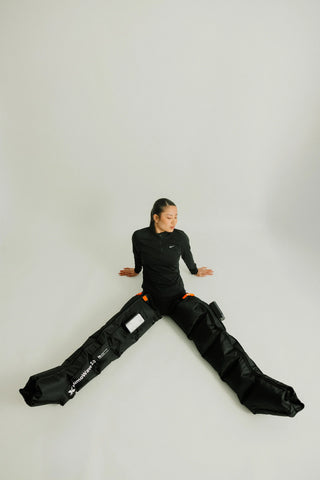
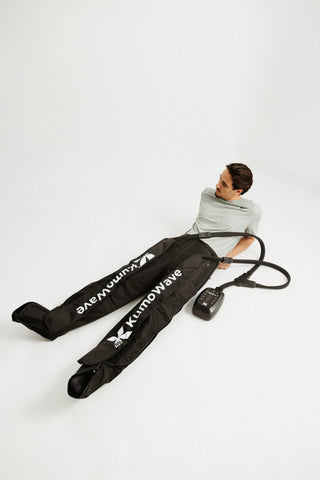
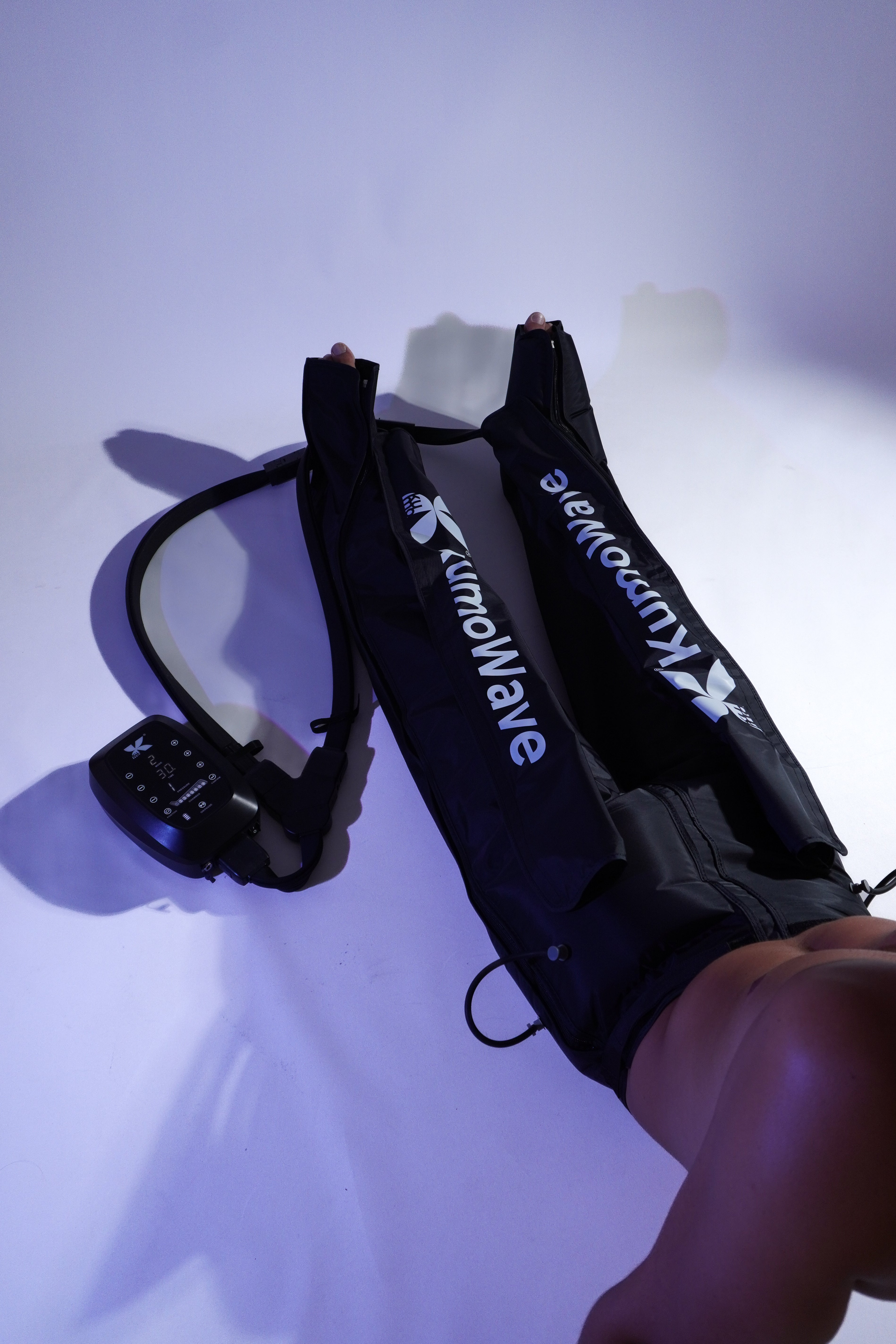
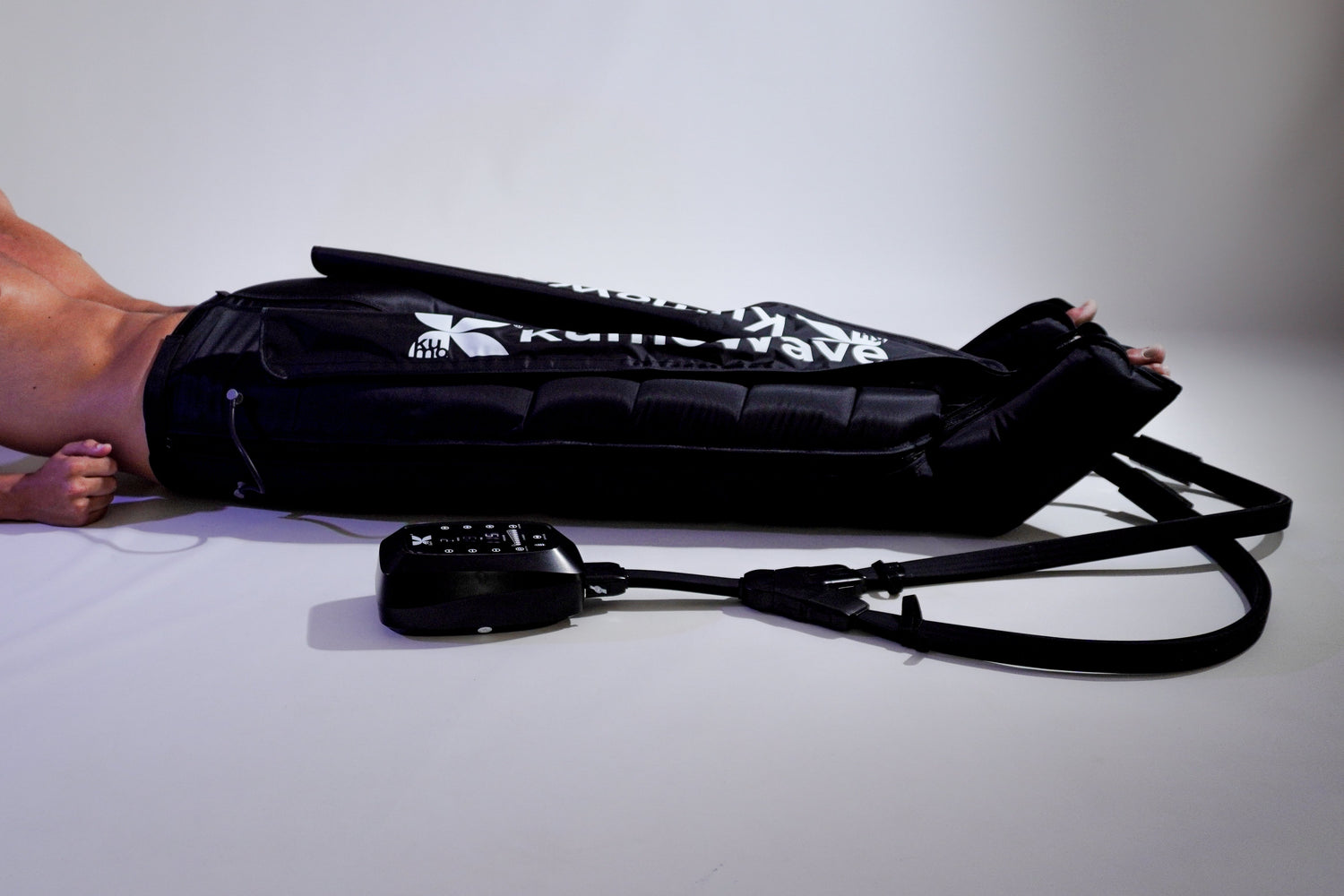
Pressotherapy (intermittent pneumatic compression): lighter legs without wasting time
Intermittent pneumatic compression (IPC) is used in sports as a post-exercise strategy. A systematic review and meta-analysis published in 2024 (17 studies, 319 participants) found a negligible to small benefit on muscle function and a negligible to moderate effect on perceived pain/soreness; it also describes that 20–30 minute protocols and pressures around 80 mmHg are among the most commonly used in the literature. ( pmc.ncbi.nlm.nih.gov )
When is it a best fit ?
- After sessions with a heavy load on the legs (sets, hills, lower body strength).
- In weeks with many hours of standing or traveling.
- On "yellow" days when you want to recover without adding more stress.
If you want to integrate this technology into your routine, you can see the specific category in Kumo's pressotherapy collection .
Red light therapy / LED photobiomodulation: an interesting support (with nuances)
Photobiomodulation (PBM) with red and near-infrared light has been studied for years. A systematic review with meta-analysis (published in 2018 , 39 trials, 861 participants) observed effects favoring phototherapy in variables such as time to exhaustion and repetitions, but also highlights the wide variability in protocols and the very low to moderate quality of evidence, which necessitates caution regarding "miracle" promises. ( pubmed.ncbi.nlm.nih.gov )
More recently, a review (published in 2025 ) on whole-body photobiomodulation concluded that it may improve sleep quality in some studies, but found no benefits in biomarkers of fatigue or performance in the available studies. ( pubmed.ncbi.nlm.nih.gov )
What to realistically expect :
- It can be a complementary tool for a calming routine and sleep hygiene (especially if you use it consistently).
- In muscle recovery, the evidence depends heavily on the protocol and the context; it should be used as support , not as a substitute for rest and nutrition.
To explore wellness-oriented LED light options (including red light), see Kumo's LED light therapy section .
Massage gun (percussion): useful for stiffness and range of motion (without overdoing it)
Massage guns have become popular due to their ease of use. A systematic review (2023) on massage guns concludes that they can help improve range of motion and flexibility in the short term and certain recovery-related outcomes, but also indicates that the evidence is limited and there is no consensus on parameters (frequency, duration, cadence). ( pmc.ncbi.nlm.nih.gov )
When is it a best fit ?
- Before training: 30–60 seconds per muscle group to “wake up” tissue (without pain).
- Afterwards: 60–180 seconds per area to reduce the feeling of stiffness (especially in the calves, quadriceps, and glutes).
- On desk days: 2–5 minute micro-sessions to download backchain.
If you're looking for an option focused on home use, you can check out KumoPulse Air (the brand's massage gun).
LED mask for skin: recovery is also about “caring for the barrier”
Many amateur athletes train outdoors, travel, sweat daily, or are exposed to temperature changes—all of which impact the skin. In dermatology, LED therapies are being studied for various indications. A meta-analysis (published in 2023 ) on the use of LEDs in skin therapies included 31 studies and found favorable results for acne with red and blue light (reporting a statistically significant overall effect), as well as consistent rejuvenation results in certain analyses. ( pubmed.ncbi.nlm.nih.gov )
Realistic approach for athletes :
- Prioritize consistency and safety: a short routine, without irritating the skin.
- Think of it as part of your "total recovery": rest, hydration, and skin care.
Typical weekly plan (7 days): training + recovery with home technology
This example is designed for an amateur who trains 4–5 days/week. Adjust the intensity according to your sport (running, gym, cycling, padel, cross-training) while maintaining the logic: alternate stimuli and recover intentionally .
Example of a realistic weekly plan
| Day | Training (45–75 min) | Recovery (10–30 min at home) | Goal of the day |
|---|---|---|---|
| Monday | Strength (full body, leg emphasis) | Massage gun (5–8 min) + gentle walk 15 min | Build strength without ending up "broken" |
| Tuesday | Light cardio (easy zone) | Red light/LED (short routine) + sleep hygiene | Recover and prepare for the next day |
| Wednesday | Key session (intervals / tempo / sport) | Pressotherapy 20–30 min | Performance + light legs |
| Thursday | Rest or mobility + core (20–30 min) | LED mask (if you tolerate it) + gentle stretching | Reduce stress without “adding burden” |
| Friday | Strength (upper body + stability) | Localized massage gun (5 min) if there is stiffness | Progress without overloading your legs |
| Saturday | Long session (filming / bike ride / match) | Pressotherapy 20–30 min + sleep routine (priority) | Assimilate volume |
| Sunday | Active rest (walking, mobility) | Red/LED light (soft) + week preparation | Physical and mental reset |
Quick protocols (10–30 min) for days with little time
After a tough leg session (strength or intervals)
- Pressotherapy : 20–30 min (post-exertion or in the afternoon/evening).
- Massage gun : 60–120 seconds per area (calf, quadriceps, gluteus), always without acute pain.
- Bonus 2 min : slow nasal breathing (to lower activation).
The "compression + unloading" combination is usually the most viable when you're short on time and want to improve your performance for the next day. ( pmc.ncbi.nlm.nih.gov )
“Yellow” day: general tiredness + stress
- 10–20 min of gentle walking (if you can).
- Short red LED light routine as a signal to "slow down" (consistency is better than long sessions).
- Prioritize sleep: minimum goal ≥ 7 h . ( cdc.gov )
Before bed (your most cost-effective recovery routine)
- Low lights, phone off or in night mode.
- Warm shower and 5 minutes of gentle stretching.
- If it helps you create a habit, a short red/LED light session focused on relaxation (without replacing sleep hygiene).
In athletes, special attention to sleep is generally recommended; ranges of 7–9 hours are common in evidence-based information for athletes, adjusting to individual needs. ( sleepfoundation.org )
Safety and good practices (so that it adds up and doesn't subtract)
Pressotherapy: when to avoid or seek medical advice
- If you have a history or suspicion of thrombosis , relevant vascular problems, or unusual pain/swelling in one leg, consult a healthcare professional before using compression.
- Don't use pressure haphazardly: higher isn't always better (the literature shows a lot of variability, and common protocols are described around 80 mmHg). ( pmc.ncbi.nlm.nih.gov )
LED light / red light
- Protect your eyes if the device indicates it and avoid direct eye exposure.
- If you are taking photosensitizing medication or have a specific skin condition, consult your doctor beforehand.
- Remember the context: in PBM there is mixed evidence depending on the modality and protocol; avoid unrealistic expectations. ( pubmed.ncbi.nlm.nih.gov )
Massage gun
- Avoid passing over joints, prominent bones, or areas with acute pain.
- Better to be "tolerable and progressive" than aggressive: the goal is to reduce stiffness , not to leave the area irritated.
- There is no consensus on parameters; use short timeframes and evaluate response (24 h). ( pmc.ncbi.nlm.nih.gov )
How to know if your plan works (without buying anything extra)
For 2–3 weeks, record 4 simple signals:
- Hours of sleep (and whether you wake up rested).
- Muscle soreness upon waking (0–10).
- Energy before training (0–10).
- Key session quality : Do you maintain rhythm, repetitions, or technique?
If you improve in 2 out of 4 indicators (for example: less stiffness and better energy), you're on the right track. Effective recovery is more noticeable in consistency than in a single "peak".
FAQ: Frequently asked questions about home recovery with Kumo
How many times a week does it make sense to use pressotherapy if I'm an amateur?
For most amateur athletes, a realistic approach is to use it 2–4 times per week , especially after demanding leg sessions or on weeks with a lot of standing. Available evidence in sports suggests small effects on recovery and improved pain/soreness sensations with typical 20–30 minute protocols. The important thing is consistency and fitting it into your routine: if you can only manage 2 days, make sure they coincide with your key training days (intervals, long runs, leg strength). ( pmc.ncbi.nlm.nih.gov )
Is it better to use the Kumo red/LED light after training or before going to sleep?
It depends on the goal. After training, photobiomodulation has been studied for performance/recovery, but results vary by protocol and the quality of evidence isn't always high. Before bed, it can fit well as part of a wind-down routine (no screens, soft ambient light, breathing exercises), and there are recent reviews that have observed possible sleep improvements with whole-body PBM, although it's not guaranteed. If you're unsure, prioritize the nighttime slot due to adherence and habit. ( pubmed.ncbi.nlm.nih.gov )
Is the KumoPulse Air massage gun better for warming or recovery?
It can be used for both, with some nuances. As a "warm-up," a brief application (30–60 seconds per muscle) can help improve the feeling of mobility without causing fatigue. For "recovery," it is typically used to reduce stiffness and improve range of motion in the short term. Scientific literature indicates benefits, especially in ROM/flexibility , but also notes that there is no consensus on parameters and that, in explosive or immediate performance tasks, it doesn't always improve (sometimes it can even worsen). Keep sessions short, pain-free, and observe your response. ( pmc.ncbi.nlm.nih.gov )
Does an LED mask make sense if I train a lot or outdoors?
Yes, if you approach it as part of a comprehensive recovery plan rather than an isolated treatment. Frequent training, sweating, frequent showers, and sun/wind exposure can all affect the skin barrier. Reviews and meta-analyses on LED therapy describe favorable results for conditions like acne with red/blue light, and some analyses also show signs of rejuvenation benefits. The key is consistency and your skin's tolerance: a short, non-irritating routine complemented with hydration, sun protection, and rest. ( pubmed.ncbi.nlm.nih.gov )
So what now?
If you want to make this planning a comfortable habit, you can use technologies designed for everyday life: leg compression therapy, LED light therapy, and muscle release tools. And if you have any questions about which solution best suits your routine, you can contact us through our contact page for guidance.

Red & infrared light
KumoLux Panel – Red and Infrared LED Panel
★★★★★ 4,8/5 · rated by verified customers
- 660 nm red + 850 nm infrared light
- Full-body muscle recovery
- Clinically validated biohacking protocols
€399,00€499,00· pay in installments with seQura or Klarna