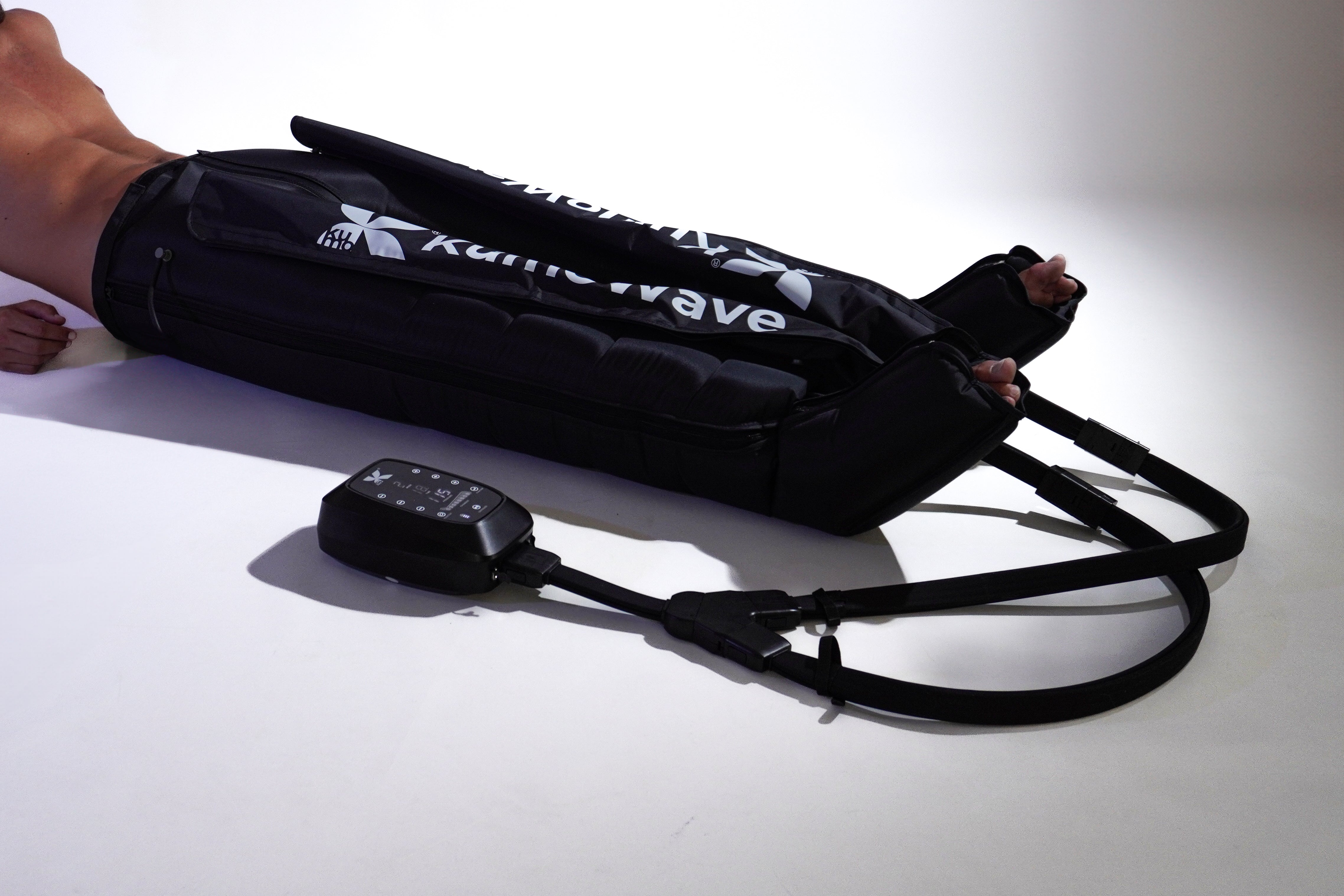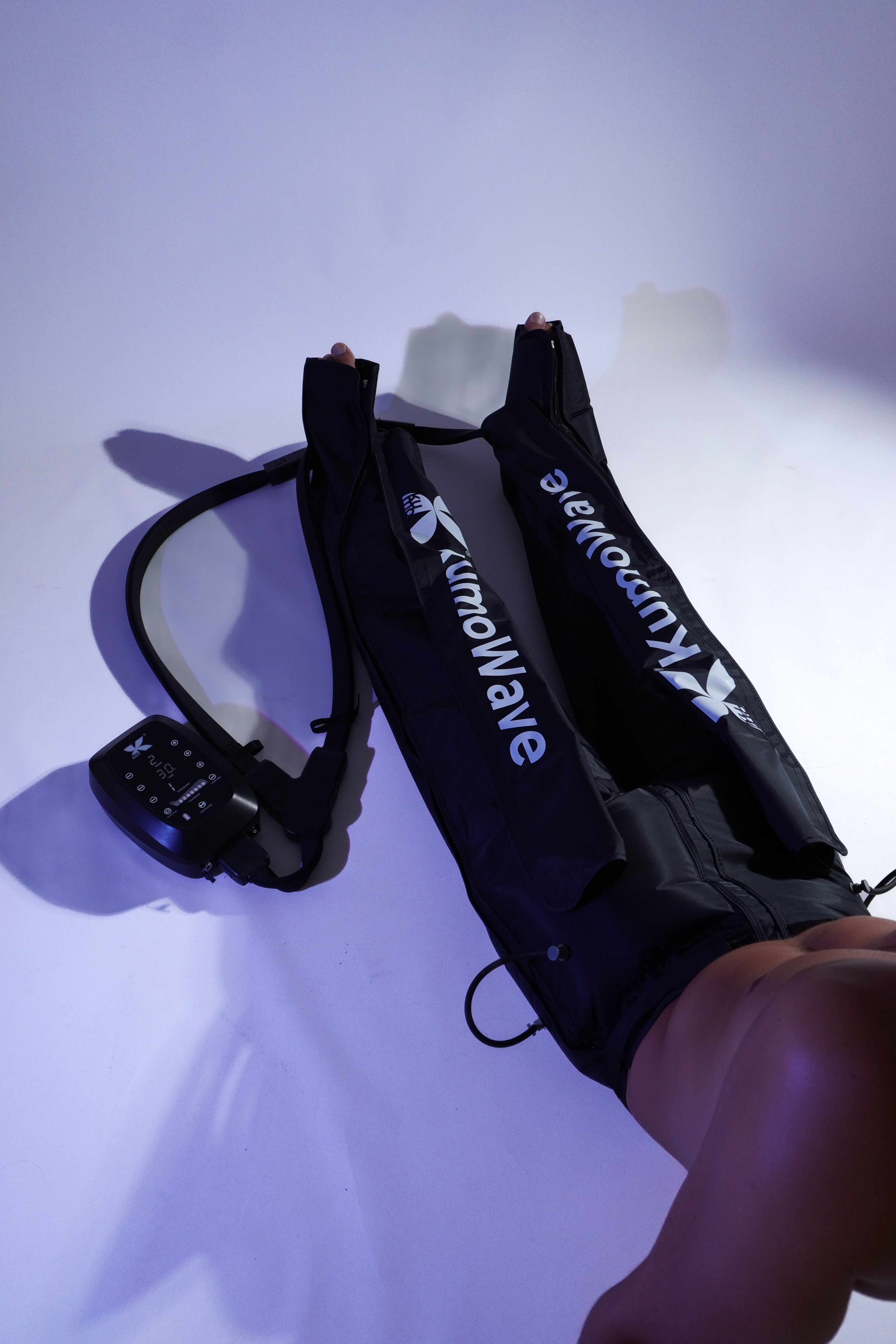
Recovery can also be trained.
If you're unsure between active and passive recovery, the key isn't "which is better," but rather what your body needs today based on the type of workout you did (strength, HIIT, endurance) and your actual level of fatigue (muscular, nervous, mental, and sleep-related). This guide will teach you how to decide quickly, with concrete examples, and how to complement your routine with Kumo 's recovery technologies.
Pressotherapy at home
End the day with light legs
★★★★★ 4,8/5 · rated by verified customers
KumoWave pressotherapy boosts circulation and helps drain fluid with sequential compression, in 20-minute sessions at home.
- Boosts circulation and helps drain fluid
- Chamber-based compression, adjustable to you
- Sequential compression that mimics manual drainage
€799,00€999,00
−10% on your 1st order when you subscribe to the newsletter

What is active recovery and what is passive recovery (without confusion)
Active recovery: moving to accelerate the "return to normal"
Active recovery is gentle, controlled activity (low intensity) after exertion: walking, easy cycling, very comfortable jogging, joint mobility exercises, diaphragmatic breathing, gentle stretching, or a light "zone 1-2" workout. Its main goal is not to "train more," but to improve circulation , help tolerate stiffness, and make it easier for you to feel functional again the next day.
In repeated intense efforts, active recovery typically accelerates the reduction of lactate compared to complete rest, and in some contexts helps maintain performance in subsequent repetitions. ( acefitness.org )
Personalized protocol · included with your purchase
Want us to tell you how to use it in your case?
With your purchase, our experts prepare a personalized usage protocol for your case: sport, circulation, fluid retention, pregnancy or lipedema.
Message us on WhatsAppOur experts reply · no obligation
Passive recovery: resting to repair (when moving is too much)
Passive recovery involves reducing demands : sleep, napping, complete rest, relaxation, and also supportive habits (nutrition, hydration, stress management). It's the smart choice when your system is "overloaded": accumulated fatigue, poor sleep, worsening discomfort, or clear signs that your body needs to slow down.
Why it matters: what changes in your body when you choose well
After training, your body manages several "tasks" at once: replenishing energy, repairing micro-damage in the muscles, regulating inflammation, and recovering the nervous system. Not everything can be solved with the same solution.
- Metabolic effort (HIIT, intervals, changes of pace): usually benefits from a gentle, active cool-down .
- Muscle damage (eccentric, heavy legs, strength/hypertrophy): DOMS (delayed onset muscle soreness) may occur, typically starting at 12–24 hours and itching may occur between 24–72 hours. ( pmc.ncbi.nlm.nih.gov )
- Nervous system and sleep fatigue: passive recovery is key here. Acute sleep loss is associated with declines in performance across multiple physical qualities (meta-analysis, 2022). ( pubmed.ncbi.nlm.nih.gov )
How to decide in 2 minutes: your fatigue level rules
Before you choose, do this quick (honest) check:
on your first order when you join the newsletter
We send you the code instantly. No spam.
- Sleep : Did you sleep well for 2-3 nights in a row or are you experiencing frequent cuts?
- Pain : Is it tolerable stiffness or pain that changes your technique when you move?
- Mental energy : Do you feel sparked or "switched off" even for easy tasks?
- Heart rate/HRV (if measured) : Do you have a tendency towards worse recovery compared to your baseline?
Practical rule:
- If you feel “tired but functional” → prioritize active recovery .
- If you feel “exhausted, clumsy, have poor sleep, or pain that impairs movement” → prioritize passive recovery .
Choose according to the type of training (with clear examples)
After HIIT or interval training (high metabolic rate)
Best first option: very gentle active recovery 10–20 min (easy cycling, walking, comfortable jogging) + nasal/diaphragmatic breathing.
Furthermore, evidence suggests that using active recovery after demanding sessions can accelerate lactate clearance compared to complete rest; and a trial in well-trained athletes found no evidence that regular active recovery after HIIT “blocks” training adaptations. ( acefitness.org )
After strength/hypertrophy (muscle damage and DOMS)
It depends on the degree of muscle soreness and fatigue:
- Mild/moderate DOMS → active : 20–40 min walk, mobility, gentle cycling.
- High DOMS + poor sleep + falling performance → passive (real rest) and low workload 24–48 h.
After long runs / endurance (peripheral load + systemic stress)
A combination of gentle active exercise (walking for 10–20 minutes or very easy cycling) to "loosen up" plus passive exercise (prioritizing sleep, elevating legs, relaxing) usually works very well. If you're coming from a high-volume workout, sleep is the deciding factor: if it's disrupted, passive exercise wins.
In weeks with consecutive training sessions (4–6 days/week)
Your goal is to maintain continuity without accumulating invisible fatigue. Alternate:
- 1–3 days/week of active recovery (very comfortable zone + mobility).
- 1-2 “microdays” of passive recovery when the body asks for it (nap, rest, disconnection).
Practical protocols (the minimum effective)
Active recovery: 3 protocols that almost always work
- 10–20 min of easy cardio : at an intensity where you can speak in full sentences (approx. 40–60% of your maximum heart rate as a general guideline). ( acefitness.org )
- Mobility + “reset” (8–12 min): hip, ankle, back, slow breathing (long exhalation).
- Post-workout “Flush” (5–8 min): gentle walking + light, pain-free stretching.
Passive recovery: what gives the highest return
- Sleep more and better : Sleep interventions (naps, extended sleep, hygiene) are among the most promising strategies for performance/recovery in recent reviews. ( pmc.ncbi.nlm.nih.gov )
- Short nap (when you can't make it): 20–30 min can be a useful "patch" without disrupting the night.
- Nutrition and hydration : especially after long or sweaty sessions (don't overcomplicate things: eat enough and regularly).
- Mental unwind : 10 minutes without a screen and with slow breathing sometimes recovers more than "something else" extra.
How Kumo's recovery technologies fit into active vs. passive
Kumo's tools do not replace rest or sleep, but they can improve the quality of your recovery: lower the perception of stiffness, facilitate relaxation and help you maintain the habit (which is usually the most difficult thing when you are tired).
Compression therapy boots: “passive” support for heavy legs
Intermittent pneumatic compression boots are often used for passive rehabilitation : you rest while the device performs sequential work. Scientific evidence is mixed : some trials show no clear improvement in function or pain after 48 hours, while others do show improvement in pain and muscle parameters after several sessions. ( pmc.ncbi.nlm.nih.gov )
When to choose them: after days of heavy legs, travel, weeks of high volume, or when you find it hard to "stop" but need recovery with low load.
If you're interested in this approach for the lower body, you can check out Kumo's pressotherapy collection.
Red light / LED therapy: complement to delayed onset pain and rest routine
Photobiomodulation (red and near-infrared light, according to protocol) has been studied for DOMS and recovery. A systematic review with meta-analysis (2025) found improvements in pain at 72–96 hours and in strength at 24–48 hours compared with placebo, although results may vary depending on parameters (wavelength, dose, time) and not all trials find benefits. ( pmc.ncbi.nlm.nih.gov )
How to integrate it without complicating things: Use it as part of your recovery routine (especially on demanding blocks), and see if your perception of muscle soreness/sleep improves over 2–3 weeks.
To explore this category, visit Kumo's LED light therapy .
Massage gun: an “active” tool (you control the dose and areas)
The massage gun is more like active recovery: it requires your participation and judgment (duration, pressure, area). A systematic review on massage guns discusses potential benefits and also compiles precautions and contraindications (e.g., avoid injuries, bruising, thrombosis, sensitive areas, and prolonged aggressive use). ( pmc.ncbi.nlm.nih.gov )
Furthermore, a randomized trial (2025) in physically active men observed improvements in DOMS recovery variables with longer percussion sessions (40 min in that study) compared to static stretching. ( pmc.ncbi.nlm.nih.gov )
Practical use (safety rule): 30–90 seconds per muscle group, moderate pressure, avoiding bone and tendon; a total of 5–10 minutes is usually sufficient for most people.
At Kumo, you can find this format in the KumoPulse Air .
LED mask: aesthetic recovery (skin) that also adds to the habit
The LED mask fits perfectly into passive recovery days: it's a form of wellness routine (skincare, self-care, disconnecting). It's not a "muscle" tool per se, but it can help solidify the ritual: when recovery becomes a habit, your training reflects that.
Quick decision table: active vs. passive (and how to use Kumo to help you)
Practical matrix according to scenario and signals
| Scenery | Typical signs | Main choice | Example (10–30 min) | Kumo support (optional) |
|---|---|---|---|---|
| HIIT/series | Heavy legs, heavy breathing, "burning" | Gentle activation | Easy bike ride 15 min + mobility 10 min | Red light as a post-block routine (depending on tolerance) |
| Strength (leg) with mild DOMS | Stiffness when going down stairs, without sharp pain | Activate + dose | 25 min walk + breathing | Massage gun (short time, moderate pressure) |
| Strength with high DOMS | Pain that changes your technique, poor rest | Passive | Rest + short nap | Pressotherapy for heavy legs (if it suits you) |
| Long print run / weekly volume | General fatigue, sensitive sleep | Mixed | Walk for 10–15 min + disconnect | Pressotherapy + red light as a nighttime “ritual” |
| Travel day / work stress | Few hours of sleep, swollen legs | Priority liability | Leg raises + breathing | Pressotherapy for circulation and perceived relief |
Typical mistakes that make you choose poorly
- Confusing “active” with “intense” : if the goal is recovery, the intensity must be really low (otherwise, you add fatigue).
- Use tools to "cover up" signals : if pain changes your movement pattern, first reduce the load.
- Forgetting sleep : When rest is lacking, almost everything else suffers. The negative impact of sleep loss on performance is well documented in evidence syntheses. ( pubmed.ncbi.nlm.nih.gov )
- Looking for a one-size-fits-all solution : what works well for you after HIIT doesn't necessarily work well after heavy eccentric training.
FAQ: Frequently Asked Questions about Recovery and Kumo
Can I use Kumo pressotherapy on the same day I train legs?
Yes, many people use it the same day for passive recovery , especially if their legs feel heavy or they've been on their feet for a long time. The key is not to use it to justify more work if you're very fatigued: prioritize sleep and how you move the next day. Evidence on intermittent pneumatic compression for recovery is mixed (some studies show positive results, while others show no clear changes), so the most helpful approach is to observe your response for 2–3 weeks and adjust the frequency accordingly. ( pmc.ncbi.nlm.nih.gov )
Does Kumo's red light therapy help more with muscle soreness (DOMS) or with sleep?
It depends on the goal and the time of day. For DOMS, photobiomodulation has been studied with generally favorable results in some reviews (e.g., improvements in pain at 72–96 hours and in strength at 24–48 hours), although not all trials show benefits, and the parameters matter a lot. For sleep, it often fits as part of a nightly "wind-down" routine (less screen time, more calm). If you're looking for consistency, use it as a ritual and assess changes in 2–3 weeks. ( pmc.ncbi.nlm.nih.gov )
When is it advisable to use the KumoPulse Air after training?
Use it when you notice localized stiffness or want a quick release without a long session: for example, after strength training (quadriceps/glutes), running (calves), or a day with many hours of sitting. Keep the session short and controlled: 30–90 seconds per area and moderate pressure is usually sufficient. Avoid bony areas, wounds, recent bruising, or especially sensitive areas, and do not use it aggressively for too long on the same spot. These precautions align with reviews that compile contraindications and potential adverse effects of percussion devices. ( pmc.ncbi.nlm.nih.gov )
If I'm very fatigued, wouldn't active recovery be "forcing" the body even more?
Good point: active recovery is only truly active if it's very easy . If your fatigue is high (poor sleep, apathy, pain that alters your technique), then yes: moving around can be "more of a burden," and it's best to switch to passive recovery. When fatigue is moderate, a walk or gentle cycling can help you feel looser without adding significant stress. If you measure sleep and notice a drop in performance due to lack of rest, prioritize sleep and reduce intensity: evidence shows negative effects of sleep loss on physical performance. ( pubmed.ncbi.nlm.nih.gov )
So what now?
If you want to make recovery a habit (not just a temporary fix), explore the Kumo ecosystem: from compression therapy for tired legs and LED therapy to integrate into your wellness routines, to KumoPulse Air for targeted relief. And if you need guidance in choosing your recovery routine, you can contact us.
KumoWave pressotherapy
Choose your at-home pressotherapy
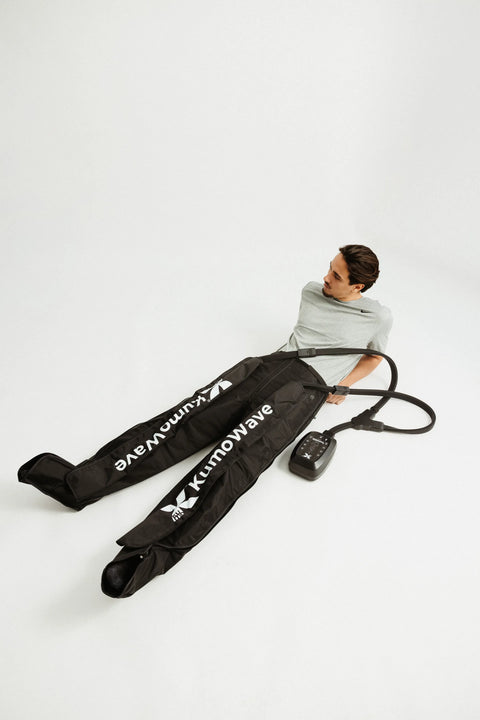
KumoWave Elite – Pressotherapy Pants
Full-coverage trousers. Ideal for lipedema, fluid retention and intensive use.
€799,00 €999,00

KumoWave 2.0 - Wireless Pressotherapy
Wireless, lightweight boots. Perfect for daily use and recovery.
€499,00 €599,00