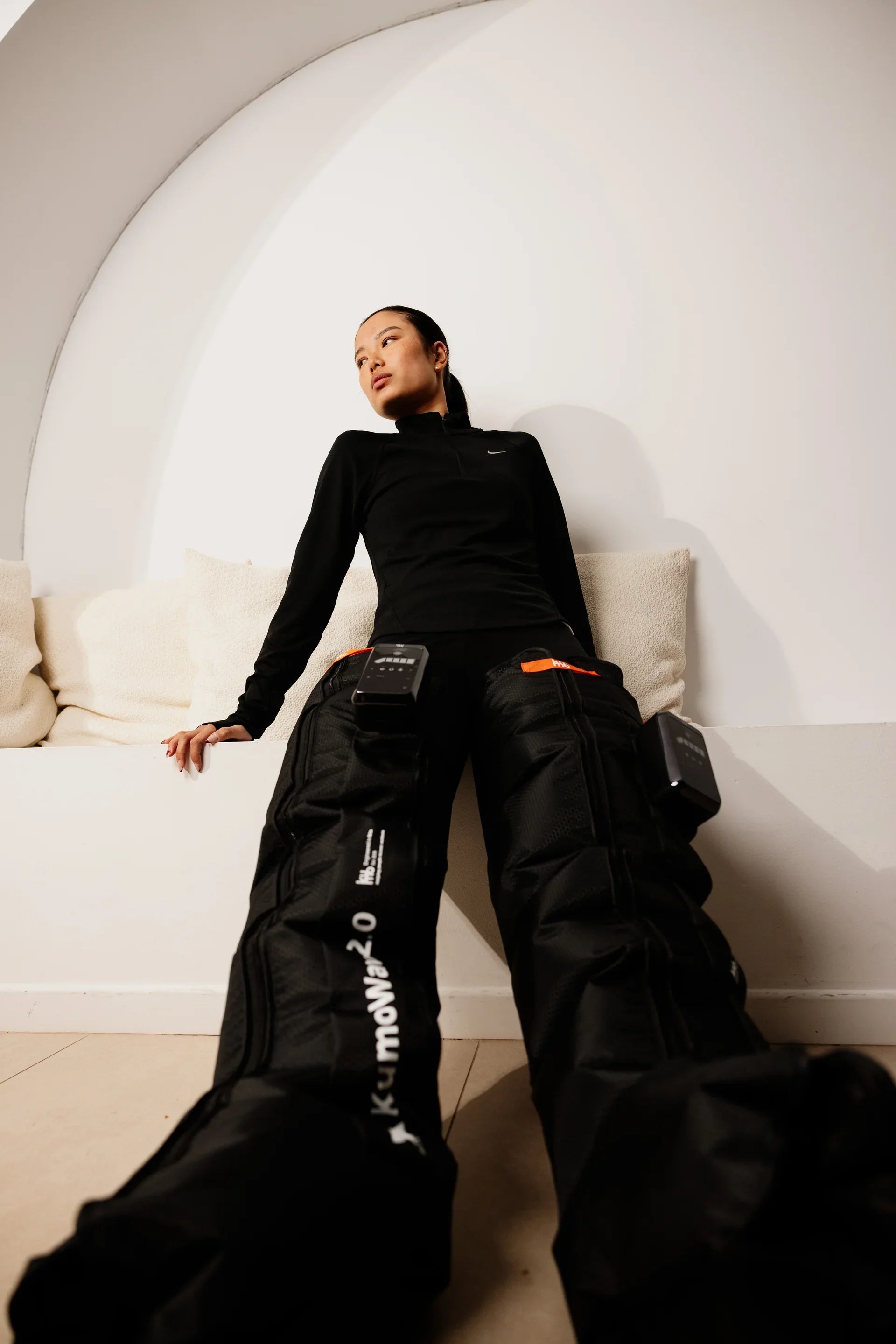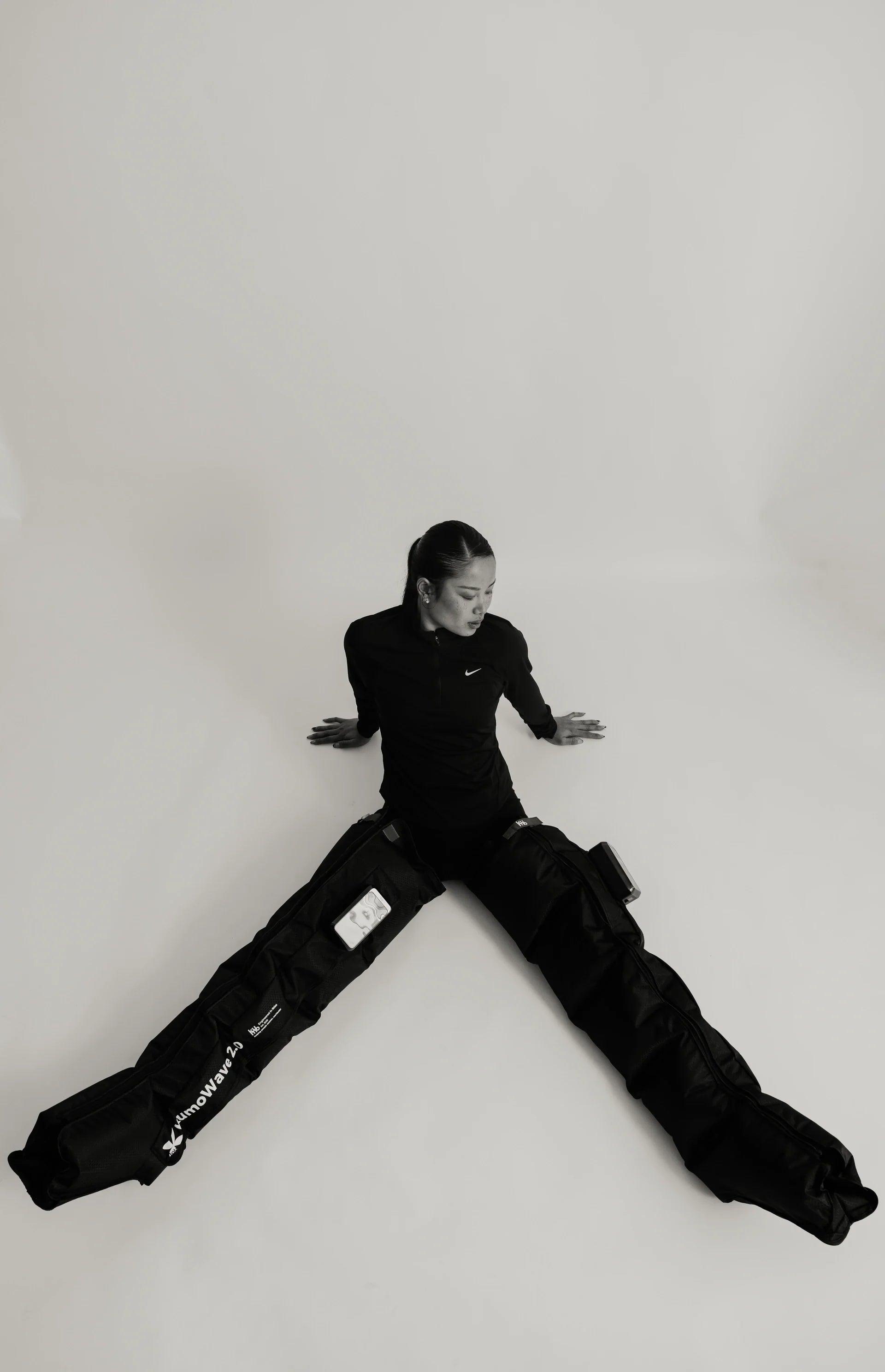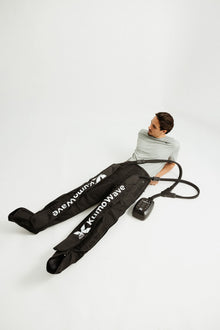

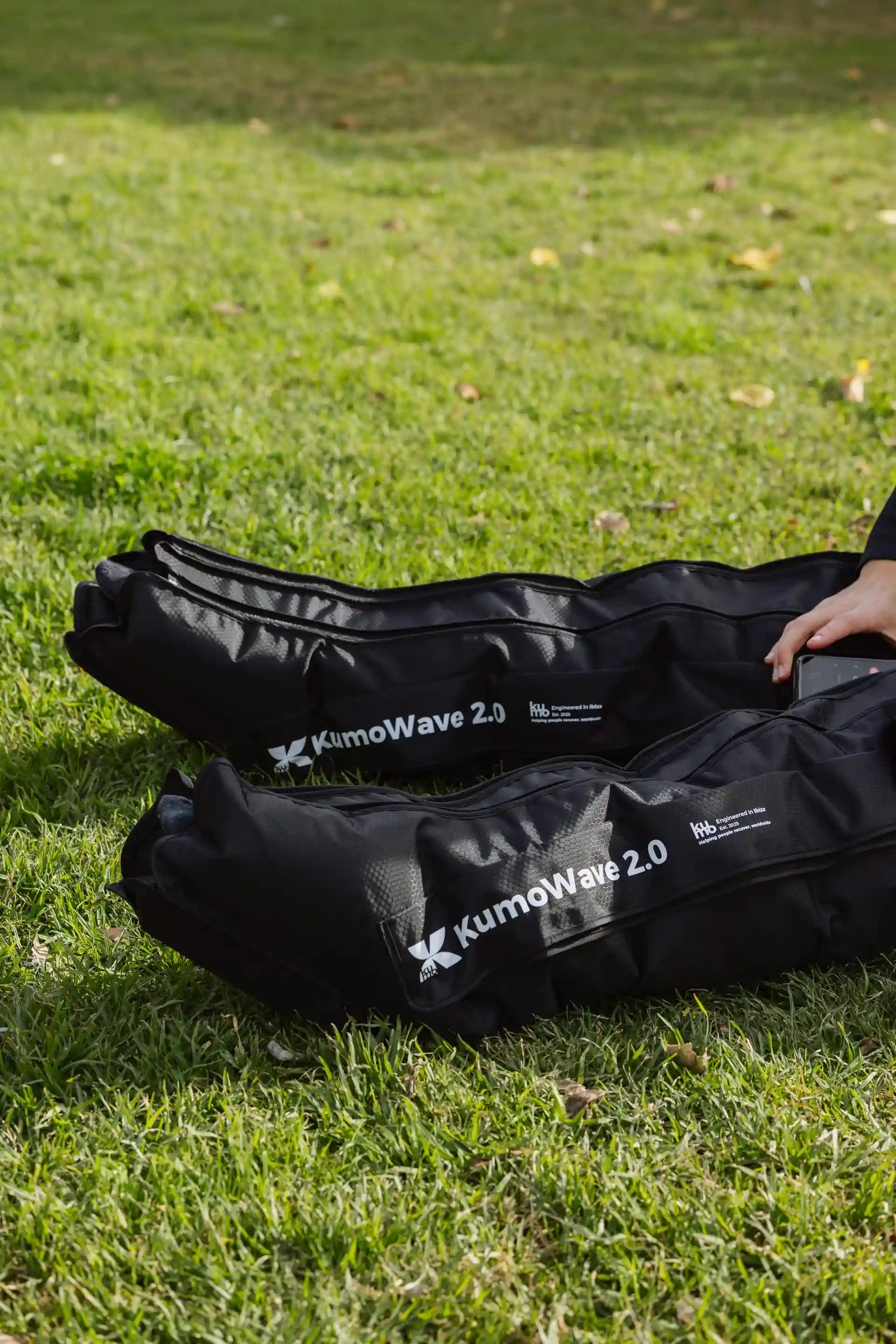
Your pressotherapy session doesn't end when you take off the boots.
What you do in the 30–60 minutes afterwards (and during the next 24–48 hours) can make the difference between "feeling light for a while" and turning pressotherapy into a truly effective active recovery routine. In this practical guide, you will learn what to do after pressotherapy, what to avoid, how to recognize warning signs, and how to consistently integrate Kumo recovery technology.
Pressotherapy at home
End the day with light legs
★★★★★ 4,8/5 · rated by verified customers
KumoWave pressotherapy boosts circulation and helps drain fluid with sequential compression, in 20-minute sessions at home.
- Boosts circulation and helps drain fluid
- Chamber-based compression, adjustable to you
- Sequential compression that mimics manual drainage
€799,00€999,00
−10% on your 1st order when you subscribe to the newsletter

What happens in your body after a pressotherapy session (simply put)
Pressotherapy (also known as intermittent pneumatic compression) applies pressure cycles to the legs (or other areas) to promote venous return and the drainage of fluids associated with circulation and the lymphatic system, depending on the indication and protocol. In a clinical setting, intermittent pneumatic compression is used in contexts such as thrombosis prophylaxis, edema management, and venous/lymphatic disorders. (pubmed.ncbi.nlm.nih.gov)
In recovery and wellness, the idea is more "physiological" than "magical":
Personalized protocol · included with your purchase
Want us to tell you how to use it in your case?
With your purchase, our experts prepare a personalized usage protocol for your case: sport, circulation, fluid retention, pregnancy or lipedema.
Message us on WhatsAppOur experts reply · no obligation
- Less feeling of heavy legs (especially after sitting/standing for many hours).
- Better comfort and perception of recovery after intense training (although scientific evidence shows mixed results depending on the measured objective).
- A perfect window to top off with active recovery: gentle movement, breathing, hydration, and sleep.
Key principle: pressotherapy can "kickstart" circulation, but what consolidates recovery is what you do afterwards: move, hydrate, nourish, and rest.
What to do immediately afterwards (first 30 minutes): simple and effective routine
1) Do an active "cool-down": 5–10 minutes of very gentle movement
After the session, avoid remaining completely still. A gentle walk, very light pedaling, or basic mobility helps maintain blood flow and "normalize" the return to activity. The American College of Sports Medicine (ACSM) suggests an active cool-down with low-intensity aerobic exercise (e.g., walking or gentle cycling) for 5 to 10 minutes. (cardiacrehab.ucsf.edu)
- Walk around the house or outside at a comfortable pace.
- Do 1–2 rounds of ankle mobility (flexion-extension), hip, and thoracic spine, without forcing it.
- If you've been training hard, keep this part in "recovery mode": no sets, no intensity.
2) Breathe to calm down (yes, that's also recovery)
Spend 2–3 minutes on slow nasal or diaphragmatic breathing. The goal is to facilitate the "shift" to a more parasympathetic state (rest), especially if your nervous system is accelerated from training or daily stress.
on your first order when you join the newsletter
We send you the code instantly. No spam.
3) Hydrate (without obsession, with intention)
Pressotherapy and active recovery work best when accompanied by hydration: water and, if you've sweated, electrolytes. You don't need to "drink like crazy"; the key is to replenish what you've lost and maintain a regular pace for the rest of the day.
4) If you're going to stretch, do it methodically: 60 seconds per muscle group
Once your heart rate has dropped, you can do gentle stretches. ACSM recommends stretching each muscle group for at least 60 seconds (accumulated in blocks of 10–30 seconds). (cardiacrehab.ucsf.edu)
Active recovery vs. total rest: when each is appropriate
More rest does not always mean better recovery. After pressotherapy, the optimal point is usually:
- Relative rest if you are very fatigued or feel heavy: move, yes; train hard, no.
- Active recovery if your goal is to relieve heavy legs, improve comfort, and feel better the next day.
A cross-over study in 2022 with workers who spent more than 8 hours a day standing compared different protocols (rest, compression stockings, intermittent pneumatic compression, combinations) and observed improvements in pain and edema with the intervention, including with pneumatic compression. In that study, the pneumatic compression protocol was applied for 60 minutes (30 min in circular mode + 30 min sequential) with a pressure of 90–120 mmHg, and the authors note that there is no standard international consensus on frequency, pressure, and duration. (pmc.ncbi.nlm.nih.gov)
Practical translation: don't look for "the perfect number". Look for consistency, comfort, and an intensity that does not cause pain or numbness, and always combine it with active recovery habits.
What to do afterwards depending on your goal (real cases)
If you use it for heavy legs (travel, sedentary lifestyle, standing work)
- Walk 5–15 minutes after the session (ideal if you've been sitting for a long time).
- Leg elevation 10 minutes later (for example, at night).
- Ankle mobility: 20–30 gentle repetitions per side (calf pump).
- Next day's plan: introduce micro-breaks (2–3 minutes every hour) to get up and move.
If you've been training (strength, running, HIIT): how to "close" the session
Here it's worth being honest with the evidence: intermittent pneumatic compression can help reduce the perception of muscle soreness in some contexts, but it doesn't always improve performance or neuromuscular function measures.
- In a randomized trial (2025) with exercise-induced muscle damage, a 30-minute application of intermittent pneumatic compression showed a trend towards reducing perceived pain, but did not improve recovery kinetics in jumps or maximal strength compared to placebo. (pubmed.ncbi.nlm.nih.gov)
- Another trial (2025) on DOMS applied pneumatic compression for 15 minutes after exercise and repeated the intervention on subsequent days (24, 48, 72 h), reporting improvements in pain and some muscle parameters compared to control. (pubmed.ncbi.nlm.nih.gov)
What to do (without complicating things):
- Pressotherapy (if it feels good and you use it regularly).
- Active cool-down 5–10 min (walking/gentle cycling). (cardiacrehab.ucsf.edu)
- Recovery meal: prioritize quality protein and carbohydrates according to your training.
- Mobility or stretching (without pain, without forcing ranges).
If your priority is well-being and sleep: create a nightly "ritual"
Recovery is not just muscular: it's also nervous. If you do pressotherapy in the late afternoon or evening, you can turn it into a transition to rest: soft light, light dinner, breathing, and consistent sleep habits.
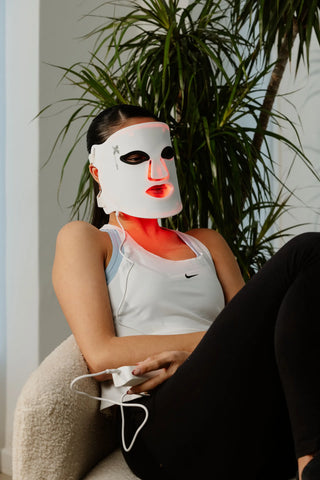
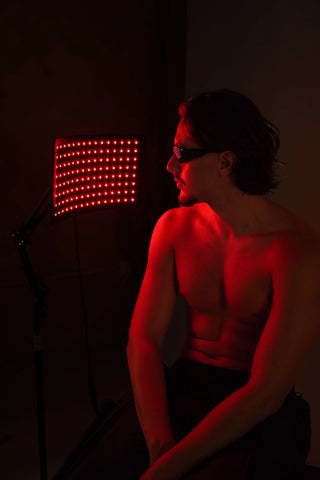
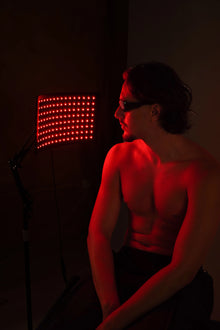
Regarding red light/light therapy, there is research (for example, a study on basketball players) where 30 minutes of red light illumination was applied every night for 14 days, and improvements in sleep quality (PSQI) and changes in melatonin were observed in that specific group. It is a study with a small sample and a specific population, but it is interesting as a line of evidence. (pubmed.ncbi.nlm.nih.gov)
If you are interested in exploring this approach in a recovery routine, you can check out the LED light therapy options within the Kumo ecosystem.
Post-pressotherapy nutrition (especially if you train): the minimum that works
If pressotherapy is part of your sports recovery, nutrition is the "silent multiplier." The International Society of Sports Nutrition (ISSN) indicates that, for most active individuals, a daily protein intake of 1.4–2.0 g/kg/day is usually sufficient, and that as a reference per serving, 0.25 g/kg or 20–40 g of high-quality protein is managed, depending on the context. (pubmed.ncbi.nlm.nih.gov)
- If you trained: try to have a complete meal in the following hours (you don't need a stopwatch, but regularity).
- If you didn't train: focus on hydration, fiber, micronutrients, and a dinner that promotes sleep (light and easy to digest).
What to avoid after a pressotherapy session (common mistakes)
- Increasing intensity "because you feel light": that lightness doesn't always mean the tissue is ready for another heavy load.
- Ignoring unusual signs (sharp pain, tingling, numbness): comfort is a safety criterion.
- Immediate extreme heat (very hot sauna/very hot bath) if you notice inflammation or heaviness: prioritize normalization first.
- Dehydrating yourself (lots of coffee/alcohol and little water) on a recovery day: it can "bring back" the feeling of heaviness.
Warning signs and contraindications: when to stop and consult
Important: this article is for informational purposes and does not replace medical advice. Compression (including compression therapy in general) requires common sense and, in some cases, professional evaluation.
An international consensus on the risks and contraindications of medical compression recommends screening for risk conditions and considers contraindications/precautions in situations such as severe peripheral arterial disease (e.g., very low ABPI), severe heart failure (e.g., NYHA IV), severe diabetic neuropathy with sensory loss, material allergies, etc. (pmc.ncbi.nlm.nih.gov)
Additionally, if pain, swelling, or striking changes appear in one leg, it should be taken seriously: deep vein thrombosis can cause pain or swelling in the affected leg, as well as warmth/tenderness. (mayoclinic.org) The CDC includes symptoms such as swelling and redness as signs of blood clots, and if there are symptoms consistent with pulmonary embolism (e.g., chest pain, shortness of breath), urgent medical attention is required. (cdc.gov)
- Stop and consult if you have acute pain, shortness of breath, marked asymmetrical swelling, intense redness, or localized heat.
- Do not "compensate" by increasing pressure if you notice numbness or tingling: seek adjustment, comfort, and/or advice.
How to integrate Kumo into a complete active recovery (without overloading your routine)
The key with recovery technology is that it fits into your life. Kumo is committed to making recovery a habit: simple, enjoyable, and sustainable. Here's a practical way to integrate their solutions without falling into the "all at once" trap.
- Pressotherapy for circulation and leg comfort: explore the collection of pressotherapy boots.
- Localized massage when you feel tension points (without "crushing" painful areas): you can complement it with a device like KumoPulse Air.
- LED light as part of your night ritual (skin/wellness) or global recovery, according to your routine: review LED light therapy.
If you have questions about how to fit everything according to your profile (athlete, standing job, travel, etc.), the safest option is to ask for guidance: contact the team.
Table: post-pressotherapy plan (0–48 h) for active recovery
| Time | What to do (checklist) | Goal | Avoid |
|---|---|---|---|
| 0–30 min |
|
Consolidate circulation and reduce activation | Staying still or "returning to intense training" |
| 2–6 h |
|
Tissue and energy recovery | Dehydrating / excess alcohol |
| Night |
|
Nervous system recovery | Intense screens until late |
| 24–48 h |
|
Return to performance without relapses | Ignoring acute pain or marked asymmetries |
FAQ: pressotherapy, active recovery, and Kumo
How long should I rest after using Kumo pressotherapy boots?
In practice, the most useful thing is not to "rest for many hours," but to make an intelligent transition: 5–10 minutes of gentle movement (walking or light cycling) and then normal life without immediate high intensity. ACSM proposes this active cool-down of 5–10 minutes as part of effective recovery. (cardiacrehab.ucsf.edu) If you're coming from a hard workout, save demanding sessions for another time of day (or the next day) and prioritize hydration, recovery food, and sleep.
Is it better to do pressotherapy before or after training?
For most, it makes more sense after if your goal is comfort and perceived recovery. In studies of exercise-induced muscle damage, a post-application (e.g., 30 minutes) can reduce the perception of pain in some cases, although it doesn't always improve performance or neuromuscular function compared to placebo. (pubmed.ncbi.nlm.nih.gov) If you use it before, do it gently and without replacing active warm-up: the pre-workout priority is still to warm up with specific movement.
I work many hours on my feet: can pressotherapy help tired legs?
There is research in people who work many hours on their feet that suggests improvements in pain and measures related to edema after compression and rest interventions. In a cross-over study (2022) in workers with more than 8 hours daily of standing, a 60-minute (90–120 mmHg) intermittent pneumatic compression protocol was associated with reductions in pain and edema after the workday, although the authors emphasize that there is no standard consensus on parameters. (pmc.ncbi.nlm.nih.gov) Always complement with active breaks and walking.
What should I do if I notice tingling, pain, or numbness during or after the session?
Stop the session and don't normalize it. Tingling or numbness usually indicates excessive pressure, poor placement, or a situation that requires caution. An international consensus on medical compression emphasizes the importance of screening for risk factors and considering contraindications (e.g., severe peripheral arterial disease, advanced heart failure, severe neuropathy with sensory loss). (pmc.ncbi.nlm.nih.gov) If symptoms persist, are intense, or worrying signs appear (marked swelling, severe pain, warmth/redness), consult a professional.
What now?
If you want to make recovery a habit (and not an exception), build your routine with intention: circulation + gentle movement + sleep + consistency. Discover the world of recovery from Kumo, explore the pressotherapy boots, and if you need guidance to choose a consistent routine, you can contact the team.
KumoWave pressotherapy
Choose your at-home pressotherapy
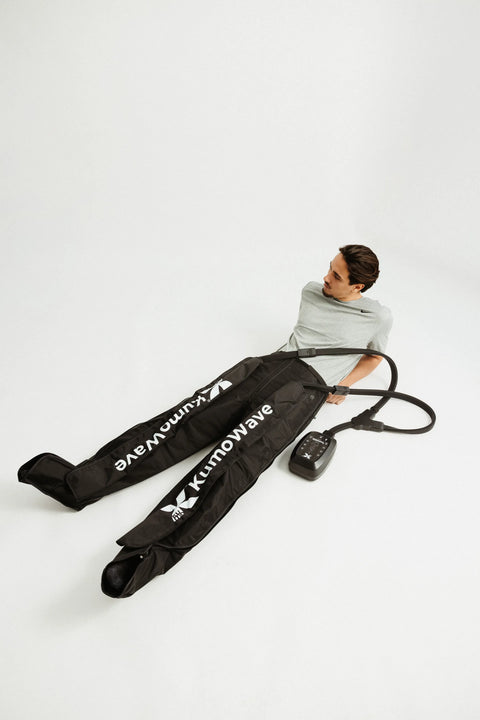
KumoWave Elite – Pressotherapy Pants
Full-coverage trousers. Ideal for lipedema, fluid retention and intensive use.
€799,00 €999,00
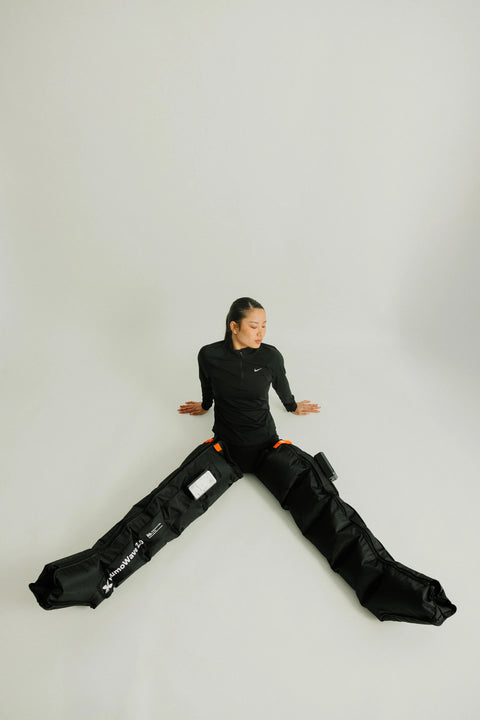
KumoWave 2.0 - Wireless Pressotherapy
Wireless, lightweight boots. Perfect for daily use and recovery.
€499,00 €599,00