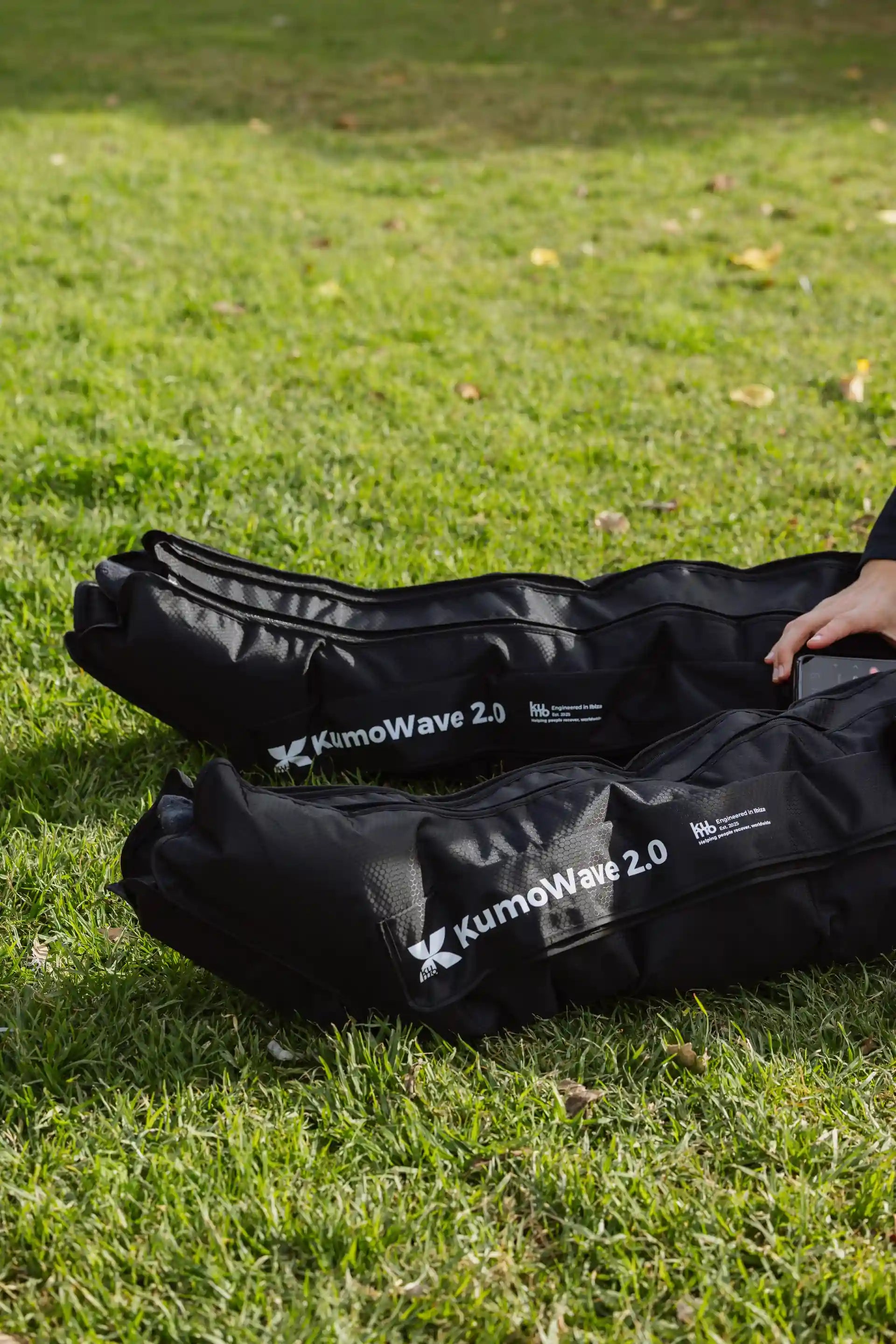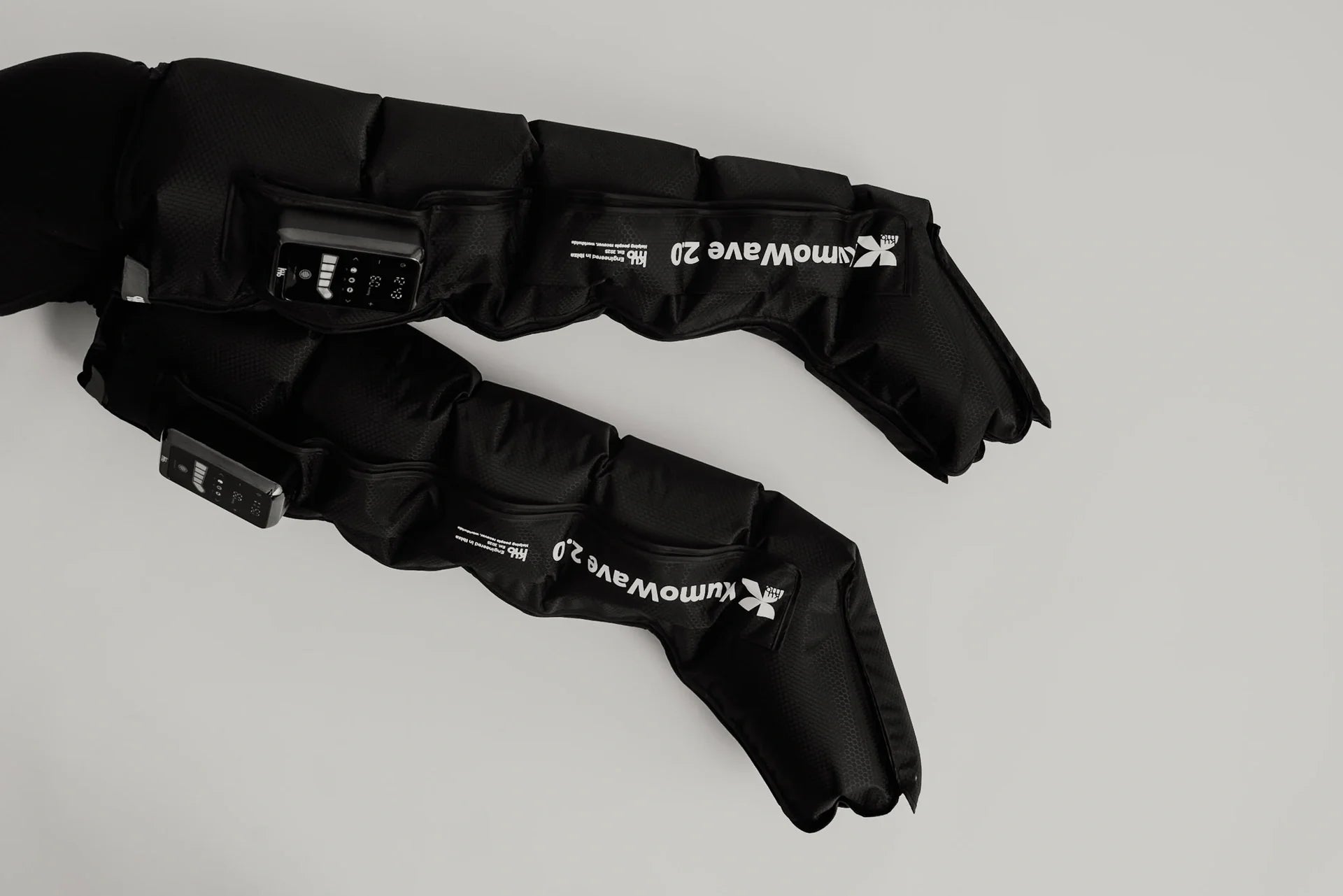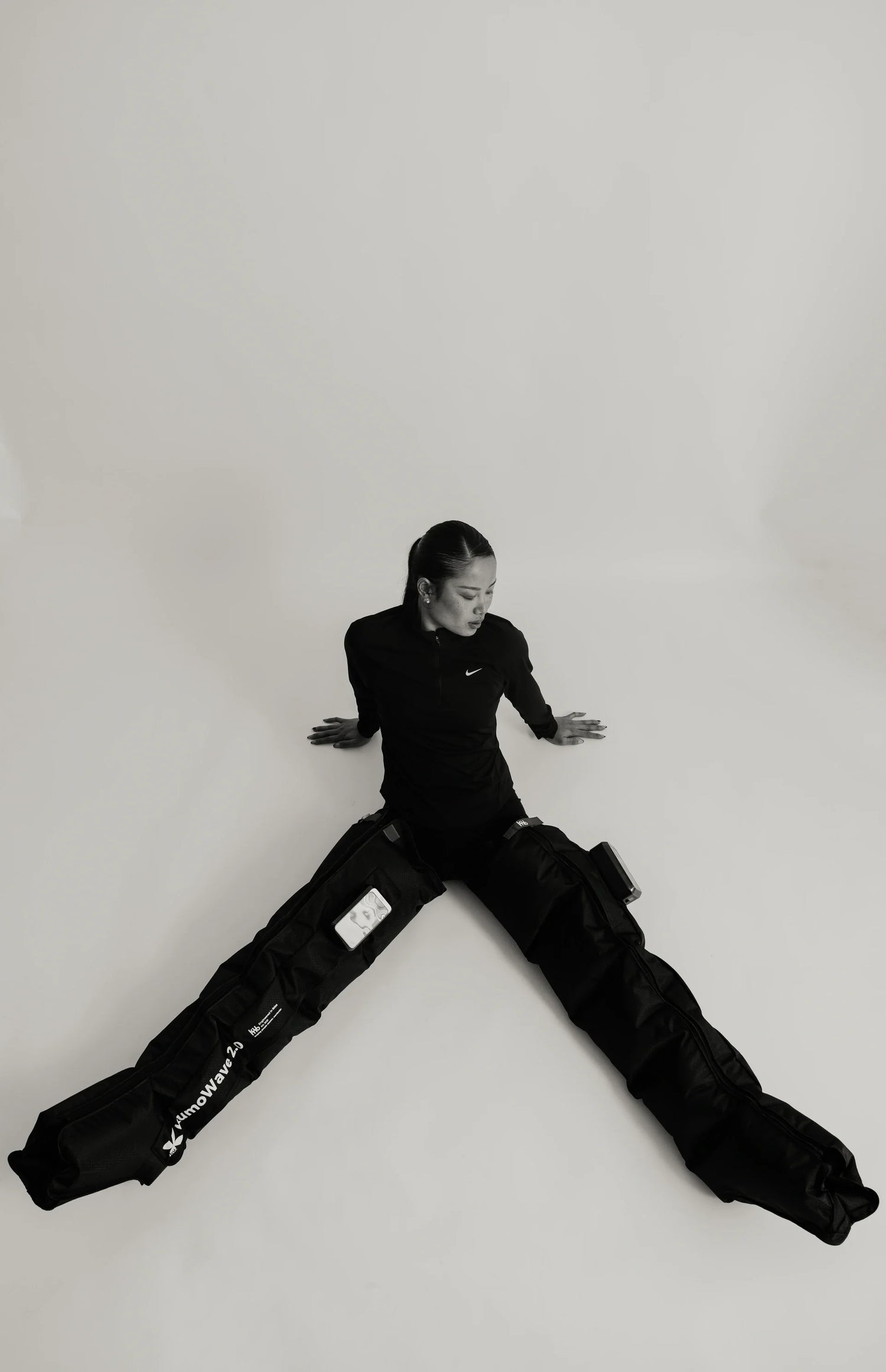
Heavy squats don't just tire you out: they "load" your legs.
If after a tough session you feel heaviness, stiffness in your quadriceps and calves, or that "swollen legs" sensation, pressotherapy (also called intermittent pneumatic compression) can be a useful tool to unload and improve the perception of recovery. In this article, I explain what it does, what the evidence says, and how to realistically integrate it after heavy squats, with a premium recovery approach aligned with Kumo.
Pressotherapy at home
End the day with light legs
★★★★★ 4,8/5 · rated by verified customers
KumoWave pressotherapy boosts circulation and helps drain fluid with sequential compression, in 20-minute sessions at home.
- Boosts circulation and helps drain fluid
- Chamber-based compression, adjustable to you
- Sequential compression that mimics manual drainage
€799,00€999,00
−10% on your 1st order when you subscribe to the newsletter

Why heavy squats leave your legs feeling "maxed out"
Squats with heavy loads (e.g., work close to your 3–6RM or demanding sets at RPE 8–10) combine:
- High mechanical tension in quadriceps, glutes, and adductors.
- Metabolic stress (pump) due to metabolite accumulation and the large volume of muscle involved.
- Muscle microdamage, especially if there's a strong eccentric component (controlled lowering) or if you change volume/exercise.
The practical result is often: DOMS (muscle soreness) the next day, temporary loss of "spark," and a feeling of heavy legs that can last 24–72 hours (sometimes longer).
Personalized protocol · included with your purchase
Want us to tell you how to use it in your case?
With your purchase, our experts prepare a personalized usage protocol for your case: sport, circulation, fluid retention, pregnancy or lipedema.
Message us on WhatsAppOur experts reply · no obligation
Key idea: "Unloading" doesn't mean erasing the training stimulus; it means helping you get back to moving well, sleeping better, and performing with less of a burdened feeling sooner.
What is pressotherapy (and what exactly does it "unload")
Pressotherapy uses air chambers (usually in the form of boots) that inflate and deflate in cycles. This compression pattern is designed to promote venous return and fluid movement in the limbs.
What benefits are sought after heavy squats
- Decrease the feeling of heaviness and "congested legs."
- Improve the perception of recovery within 24–72 hours afterward.
- Relax (at a sensory level) fatigued tissue: many people notice subjective relief and greater lightness upon finishing.
What you should NOT expect
- It is not a shortcut that replaces sleep, nutrition, and training programming.
- It doesn't always improve objective performance the next day: evidence is mixed depending on protocol, population, and placebo.
Scientific evidence: what research says about intermittent pneumatic compression
Intermittent pneumatic compression (IPC) has been used for years in clinical settings (e.g., to help prevent thrombosis in people with reduced mobility) and its basic operation is well explained in medical sources such as Johns Hopkins Medicine and Cleveland Clinic.
on your first order when you join the newsletter
We send you the code instantly. No spam.
What results have been observed in sports (overview)
In sports research, results usually focus on: perceived pain, indirect markers of muscle damage (such as creatine kinase/CK), and performance (jumps, strength, power).
- A systematic review with meta-analysis on IPC in sports recovery included 17 studies (14 in meta-analysis) and reported a "good" overall methodological quality (mean PEDro ~6.3), but highlighted limitations such as blinding and placebo effect control: PMC (full article).
- A meta-analysis published in Strength & Conditioning Journal (2025) reported small effects on pain/soreness (effect size ~-0.45) and variable results on performance, which is consistent with practical experience: it can help "feel better" without guaranteeing large, consistent improvements in performance: LWW (text).
Specific protocol examples (with years and results)
- Controlled trial (2025): in a study with untrained young males, IPC was applied for 15 minutes immediately after exercise and also at 24, 48, and 72 hours. The work concluded that IPC could mitigate DOMS, with greater effects observed around 48–72 hours: PubMed (PM&R, 2025).
- Randomized controlled trial (registered 2021): after 100 drop jumps, 30-minute sessions of IPC (immediate, 24 and 48 h) were compared against placebo. No significant differences between groups were observed in biochemical or functional markers in that specific protocol: PMC (RCT).
Practical reading: it's not magic or smoke and mirrors. Pressotherapy tends to be more consistent for subjective sensation (lightness, comfort, "loose leg") than for universally improving performance. And timing (especially 24–72 h) and frequency seem to matter.
How to use pressotherapy after heavy squats: practical protocol (without overcomplicating)
If your goal is "leg unloading," think of pressotherapy as one piece of the puzzle: it reduces the noise (heaviness/stiffness) so you can walk, sleep, and train better.
Table: quick guide based on time after training
| Timing | Main objective | Approximate duration | How it should feel | What to avoid |
|---|---|---|---|---|
| 0–2 h post-squats | "Cooling down" and comfort | 10–20 min | Gentle relief, relaxation | Aggressive pressures if there's unusual pain or numbness |
| 24 h | Managing initial stiffness/DOMS | 15–30 min | More lightness when walking | Using it instead of moving (still walk) |
| 48–72 h | Typical "peak" of soreness for many people | 15–30 min | Improved feeling of heavy legs | Ignoring warning signs (stabbing pain, strong asymmetries) |
| High-volume days (tough week) | Accumulate perceived recovery | 2–4 sessions/week | Easy routine to sustain | Relying only on devices and neglecting sleep/food |
"Express unload" routine (20–30 minutes) for squat day
- 5–10 min cool-down: gentle walking or very light cycling. The goal is circulation, not to get more tired.
- Hydration + real food: especially if you sweated (salts, water, carbs, and protein according to your plan).
- Pressotherapy 10–20 min: comfortable intensity (you should be able to relax, not "endure").
- 5 min gentle mobility: ankles, hips, and diaphragmatic breathing.
"Day 2" routine (48 h): when you wake up with "concrete" legs
- 10–15 min walk (yes, even if you don't feel like it).
- Pressotherapy 15–30 min to improve the feeling of heaviness.
- Optional: gentle massage on quadriceps/calves (without "pummeling" the tissue).
How Kumo fits into a complete recovery strategy
Recovery works best when it is simple, enjoyable, and repeatable. That's where a brand like Kumo becomes relevant: wellness technology designed to make recovery a habit.
- If you are looking for a solution focused on circulation and tired legs, explore Kumo's pressotherapy boots.
- To complement (especially in loading phases), LED light therapy can be integrated as part of a rest and care routine.
- If your problem is more about "knots" and localized tension (gluteus medius, adductors, calves), a massage gun like KumoPulse Air can fit very well into short, specific sessions.
Safety and common sense: when to avoid pressotherapy
Although perceived as a "recovery" tool, pressotherapy is still a physical compression intervention. It is advisable to be cautious, especially if you have a history of vascular issues or medical problems.
Common contraindications and precautions (documented examples)
Clinical brochures and guides for IPC list contraindications and situations where caution is recommended. For example, an NHS leaflet for IPC (lymphedema) mentions contraindications such as acute cellulitis/skin inflammation, severe uncontrolled heart/kidney/liver failure, ischemic vascular disease, pulmonary edema, or open wounds: NHS (PDF).
Additionally, medical sources describe potential (though rare) risks such as discomfort, skin problems, or pressure injury, and recommend correct adjustment and supervision if there is pathology: Johns Hopkins Medicine.
Quick checklist before putting them on
- Do not use if you have unusual pain, strong local heat, marked redness, or asymmetrical swelling (consult a professional).
- Do not use over open wounds or active skin infections.
- Start gently: if your device allows intensity adjustment, prioritize comfort and progression.
- If numbness, tingling, or stabbing pain occurs: stop the session.
FAQ: pressotherapy, heavy squats, and Kumo
When to use Kumo pressotherapy after heavy squats?
- the same day, as part of the cool-down (10–20 minutes) to reduce the feeling of congestion; and (
- between 24 and 72 hours, when stiffness and soreness usually appear. In research, there are protocols that repeat sessions at 24/48/72 h and observe effects especially towards 48–72 h in perceived pain. The practical rule: use it when it helps you move better and regain comfort, without making it a substitute for walking and sleeping
Does Kumo pressotherapy eliminate quadriceps soreness (DOMS)?
It's not appropriate to promise to "eliminate." Evidence suggests that intermittent pneumatic compression can provide small improvements in pain/soreness and perceived recovery, but it is not consistent across all studies and does not guarantee large improvements in performance. The most realistic expectation is subjective unloading (lighter legs) and improved daily tolerance (climbing stairs, walking), especially if combined with gentle movement, hydration, and a good training plan.
Can I combine Kumo pressotherapy with red light or LED on the same day?
Yes, as a wellness routine, it can make sense if you keep it simple: first some gentle movement, then pressotherapy for legs, and if it fits your schedule, a short block of light therapy aimed at relaxation/recovery. The important thing is not to "stack" due to anxiety: prioritize what has the most impact (sleep, food, daily steps) and use technology as support. If you're looking for options, Kumo brings both lines together in its ecosystem: pressotherapy and LED light therapy.
What intensity should I choose to unload legs without overdoing it?
The safest reference is sensation: it should be a firm but comfortable compression that allows you to relax. If you're "enduring" the session, it's probably too much. Start at a low or medium level (if your device allows it), observe how you respond for 24 hours, and adjust. For athletes, tolerance and the goal dictate: unloading is not punishing the tissue. And if you have a history of vascular issues, atypical pain, or strange symptoms, the responsible thing is to consult a healthcare professional first.
What now?
If you want to make recovery a habit (and not a chore), you can start by exploring pressotherapy to unload your legs after heavy squats and complement it with LED light or targeted tissue work with KumoPulse Air. And if you need guidance on how to fit these tools into your routine, you can contact Kumo to resolve usage questions and choose a coherent approach.
KumoWave pressotherapy
Choose your at-home pressotherapy
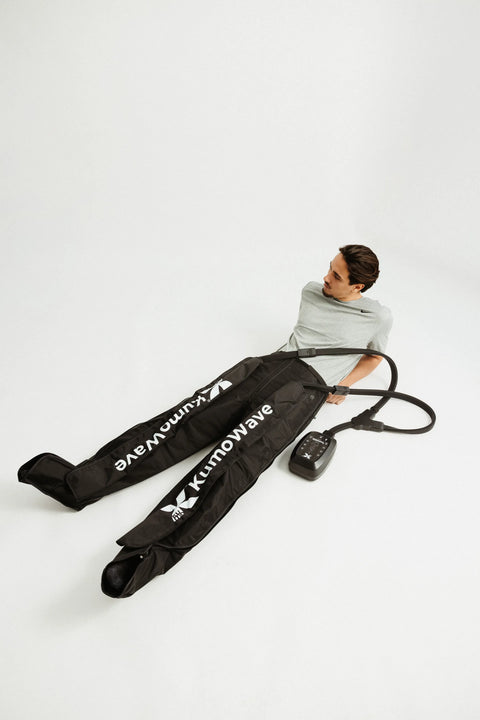
KumoWave Elite – Pressotherapy Pants
Full-coverage trousers. Ideal for lipedema, fluid retention and intensive use.
€799,00 €999,00

KumoWave 2.0 - Wireless Pressotherapy
Wireless, lightweight boots. Perfect for daily use and recovery.
€499,00 €599,00