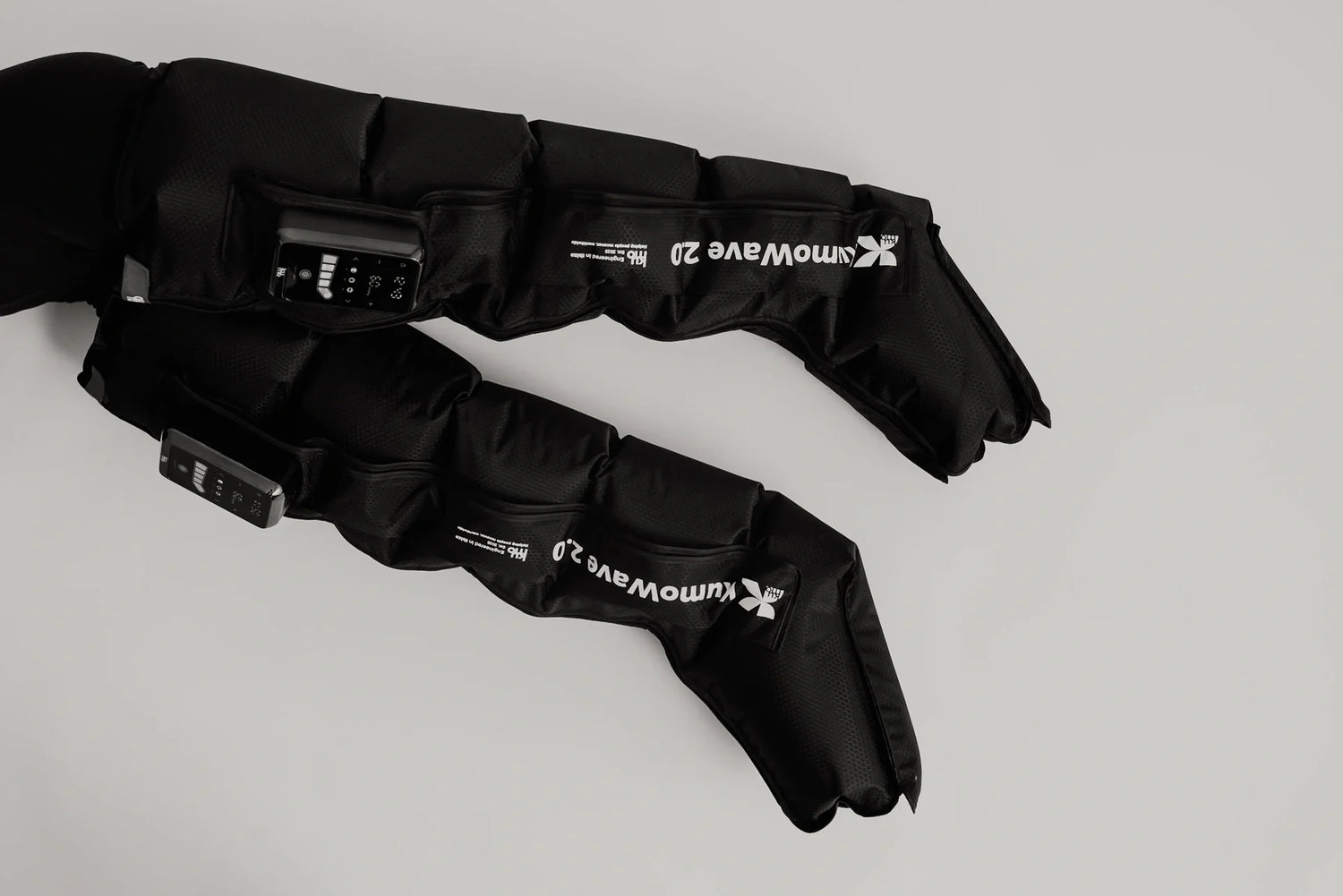
Properly storing your boots matters.
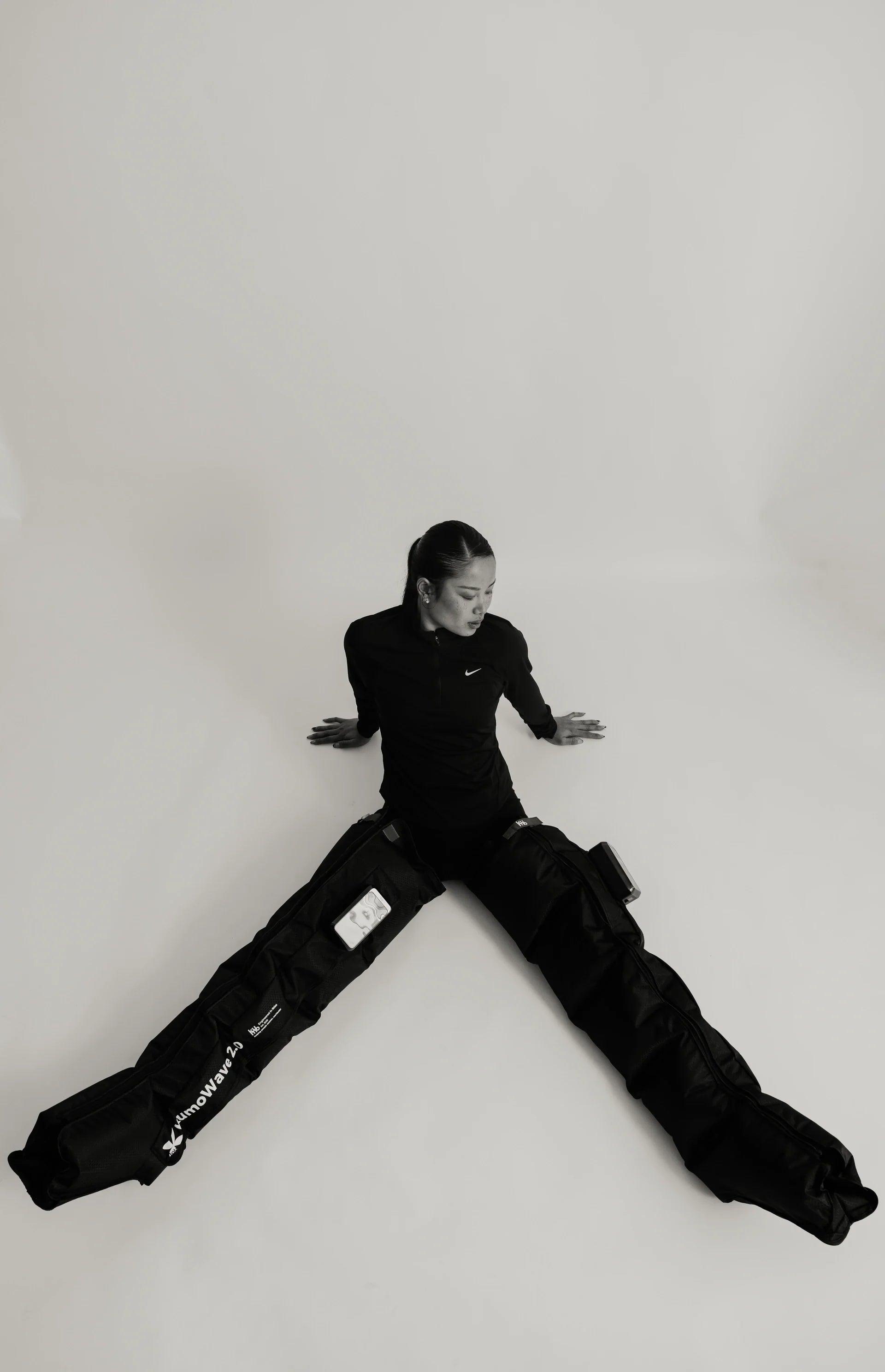
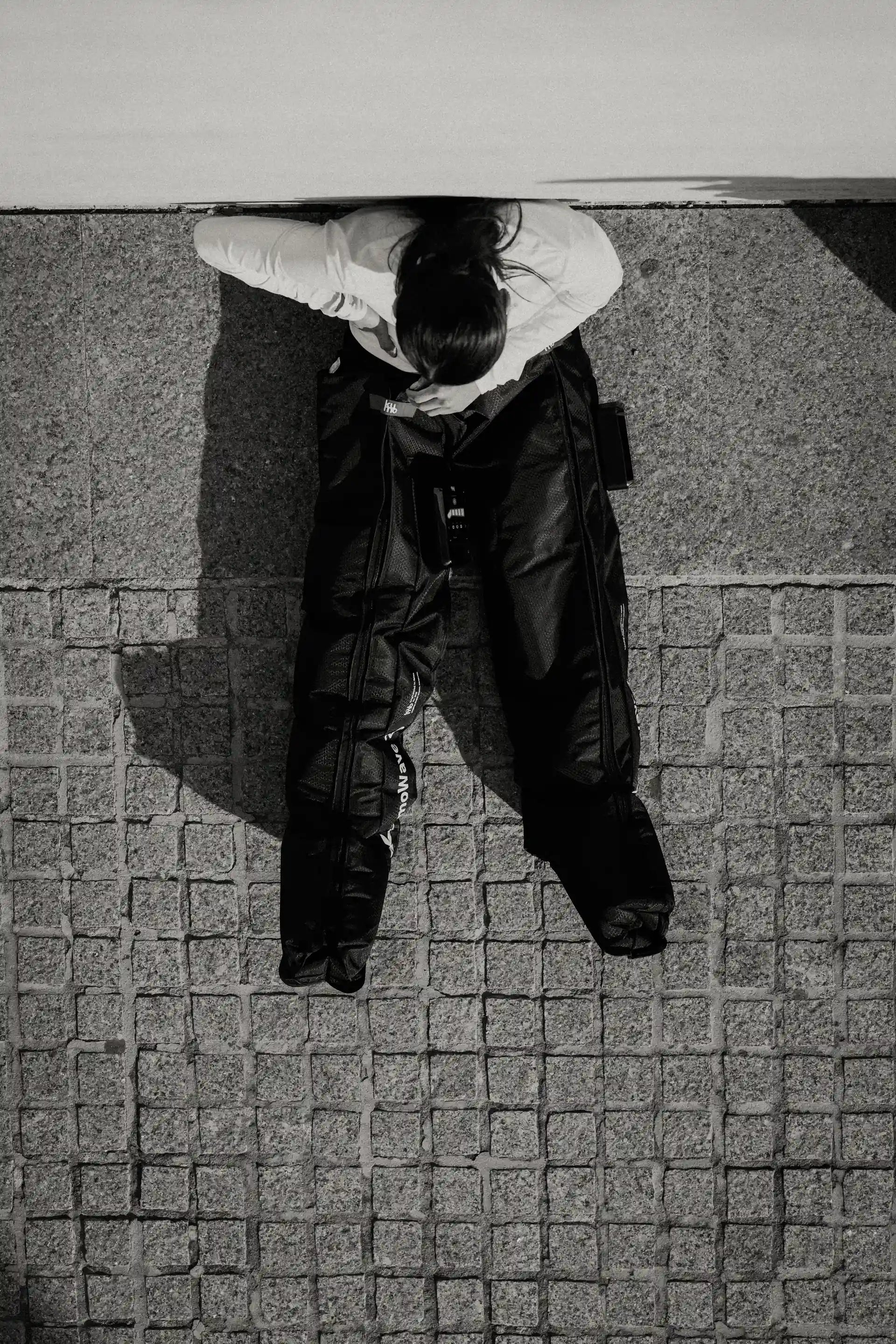
If you want your compression boots (like those from Kumo) to avoid deforming, the key is simple: ensure they are completely dry, avoid "angled" creases over the areas where the air chambers are located, and store them without weight on top, in a place with stable humidity and temperature. In this guide, I'll explain how to do this step-by-step, with realistic methods for home and travel.
Pressotherapy at home
End the day with light legs
★★★★★ 4,8/5 · rated by verified customers
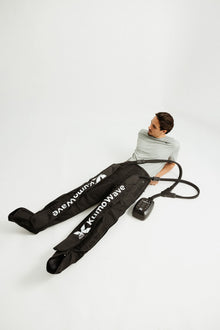
KumoWave pressotherapy boosts circulation and helps drain fluid with sequential compression, in 20-minute sessions at home.
- Boosts circulation and helps drain fluid
- Chamber-based compression, adjustable to you
- Sequential compression that mimics manual drainage
€799,00€999,00
−10% on your 1st order when you subscribe to the newsletter

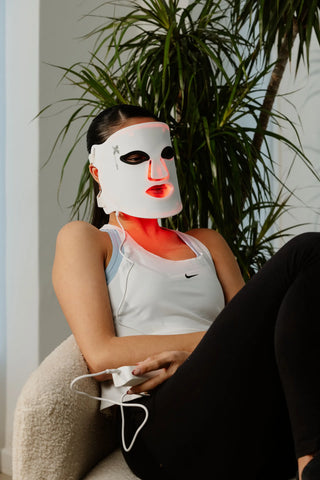
If you're looking for recovery boots or accessories, you can view Kumo's compression therapy collection or visit the Kumo homepage.
Why compression boots deform (and which parts get damaged first)
A compression boot is not "just fabric": it usually combines technical materials, reinforcements, seams, zippers/Velcro, and internal air chambers (the compartments that inflate). Over time, deformation primarily occurs due to:
Personalized protocol · included with your purchase
Want us to tell you how to use it in your case?
With your purchase, our experts prepare a personalized usage protocol for your case: sport, circulation, fluid retention, pregnancy or lipedema.
Message us on WhatsAppOur experts reply · no obligation
- Repeated creases at the same point: these create "memory" of shape, mark the outer fabric, and can stress the internal structure.
- Residual moisture: promotes odor, mold, and degradation of fibers and coatings. In the preservation of organic materials, it is emphasized to keep moisture under control because high levels increase biological risks (mold/insects). Conservation guides indicate that ≥70% RH increases the risk of mold. Source (Museum WA).
- Weight on top (suitcases, boxes, other devices): flattens padded areas, deforms the pattern, and can "flatten" parts that should remain flexible.
- Abrupt temperature and humidity changes: in textile conservation, minimizing fluctuations is sought; even for collections, reference values are managed (e.g., the Smithsonian aims for environments around 45% RH and ~21°C) as part of its preservation strategy. Source (Smithsonian MCI).
Basic principles for storing them without deforming them
1) First: dry, always
Before folding or storing, make sure there is no moisture left (from sweat, condensation, or cleaning). A practical criterion: dry to the touch inside and out and no damp "cold" on the lining.
For reference, compression garment care instructions recommend mild detergent, avoiding bleach, and air drying out of direct sunlight. Source (Mayo Clinic Store, care guide).
2) Avoid "hard creasing" (better to curve than to fold)
Think about this: a boot can be curved (wide radius) but it's best to avoid folding it "in half" with a sharp angle, especially in areas where you feel internal channels/chambers.
on your first order when you join the newsletter
We send you the code instantly. No spam.
Golden rule: if you see a distinct line when folding, you're creating the type of deformation you want to avoid. Switch to a wide roll or flat storage.
3) Mind the storage "climate" (temperature + humidity)
Without turning your home into a museum, you can apply a sensible range:
- In conservation guides, reference values such as 20 °C and 50% RH have been used for years, and recommendations such as 15–25 °C and 45–55% RH (interim guidelines published in 2014 by AICCM, included in a 2017 conservation manual) are also cited. Source (Museum WA, 2017; AICCM 2014).
- For textiles, the Smithsonian mentions target stability of around 45% RH (±8) and 70°F / 21°C (±4°F). Source (Smithsonian MCI).
What does this mean in practice? Avoid storing them in bathrooms, near windows with direct sunlight, in damp storage rooms, or next to radiators. If you live in a humid area, a dehumidifier or desiccant packets (without direct contact with the fabric) can help.
Quick routine after each session (5–10 minutes)
- Disconnect calmly: turn off the equipment, disconnect hoses by pulling the connector (not the tube), and avoid twisting.
- Immediate airing: open zippers/Velcro and leave the boots "open" to allow internal moisture to escape.
- Gentle cleaning if necessary: if there's sweat, wipe with a slightly damp cloth with water and neutral soap (without soaking). Compression garment guides emphasize mild detergent and avoiding bleach/chlorine. Source (Mayo Clinic Store).
- Air drying: allow to dry out of direct sunlight. The goal is for the interior to be completely dry before folding.
- "Anti-deformation" check: ensure you haven't left any tubes bent at an angle or Velcro caught in a delicate area.
3 safe ways to store your compression boots (choose according to your space)
Method A (recommended): flat storage, no creases
Ideal if you have a large drawer, shelf, or spacious box.
- Lay each boot as flat as possible.
- If stacking them, place a soft layer between them (clean cloth) and don't put anything heavy on top.
- Avoid zippers or connectors being pressed against a hard corner.
Method B: wide rolling (to avoid "marking")
Useful if you have limited space but want to avoid creases.
- Instead of folding in half, roll with a large radius (like a blanket).
- If the boot tends to collapse, gently stuff it with a non-staining material. In textile conservation, acid-free tissue paper is used as a support/protection element. Source (Smithsonian MCI).
- Secure the roll with a soft strap (without tightening) to keep it from unraveling.
Method C: hanging (only if done "wide" and without pinching)
Hanging can work, but avoid having the weight pull on a narrow point.
- Use a wide support (padded hanger or covered bar), never a thin hook that will leave marks.
- Do not hang by the hoses or a zipper.
- Leave the boots "loosely" closed (without tension) to maintain their shape, but without compressing.
How to store hoses, connectors, and control unit (without cable fatigue)
Many "invisible" deformations start in tubes and connectors. Practical rules:
- Coil hoses in wide circles (without knots). A good test: if the tube "rebounds" and wants to spring back, you're forcing it.
- Do not leave weight on top of connections.
- Store cables and accessories in a separate bag so they don't "bite" the boot fabric.
- The control unit is best kept on a stable, clean, and dry surface, away from dust. Avoid storing it on garage/storage room floors where dust and humidity are more common.
Storage for travel (suitcase, backpack, car)
Travel is when they deform the most, because we tend to fold quickly and pack suitcases tightly. To minimize this:
- Use a breathable bag or a cover that doesn't retain moisture. Avoid completely airtight bags if you're not 100% sure they're dry.
- Prioritize wide rolling and place the boots at the top of the suitcase.
- Fill gaps with soft clothing (t-shirt) so they don't get crushed.
- Upon arrival, take them out and air them for 15–30 minutes before storing them again.
Common mistakes that deform boots (and the quick fix)
- Storing them with "minimal" moisture: solution: always air with zippers/Velcro open and store only when dry.
- Folding in 2 or 3, always at the same spot: solution: alternate the method (flat/rolled) or change the bending point.
- Leaving hoses twisted: solution: wide coiling and separate storage.
- Damp storage room: solution: move storage to an indoor closet; conservation emphasizes that high humidity increases the risk of mold (e.g., ≥70% RH). Source (Museum WA).
- Direct sunlight or heat: solution: dry in the shade and store out of light; compression care recommends air drying out of direct sunlight. Source (Mayo Clinic Store).
Quick guide in a table to avoid mistakes
Reference table: how to store your boots according to your situation
| Situation | Best method | What to avoid | Extra tip |
|---|---|---|---|
| Daily home use | Flat storage | Repeated creases and weight on top | Allow to air dry before storing |
| Limited space | Wide rolling | "Half-fold" with distinct line | Soft stuffing to maintain shape |
| Humid environment | Indoor closet + humidity control | Bathroom, storage room, airtight bag with moisture | Aim for stability; high RH increases mold risk (e.g., ≥70% RH) Source |
| Travel / suitcase | Wide rolling on top of everything | Squashing them between shoes/hard objects | Upon arrival, air for 15–30 min |
| Long-term storage (weeks) | Flat in a spacious box | Fixed fold + abrupt temperature changes | Check every 2–4 weeks |
FAQ: frequent questions about storing Kumo compression boots
Can I store Kumo compression boots folded in half?
You can, but it's not ideal if you want to avoid deformation. A "half-fold" usually creates a hard crease that repeatedly forms in the same area, and over time can mark the exterior and stress the interior. Instead, prioritize flat storage or wide rolling (large radius). If you absolutely need to fold them, try to make the curve gentle, alternate the folding point, and never store them this way if they are not completely dry.
What should I do if the boots smell damp after storing them?
This usually indicates that they were stored with residual moisture or in a place that was too humid. Take out the boots, open them completely, and let them ventilate and air dry out of direct sunlight. Check the storage location: conservation guides warn that high relative humidity increases the risk of mold (for example, it is mentioned that ≥70% RH increases the risk). Source (Museum WA). If the odor persists, gently clean them according to your model's instructions and ensure they are completely dry before storing again.
How often should I clean the boots and how do I dry them without damaging them?
It depends on use and sweat, but as a routine: light cleaning when you notice sweat/odor and a periodic check if you use them daily. As a conservative guideline, use neutral soap and avoid aggressive products. Compression garment care recommends mild detergent and air drying out of direct sunlight, avoiding bleach and wringing the garment. Source (Mayo Clinic Store). For compression boots, apply the same principle: clean without soaking and dry with sufficient ventilation.
Is it better to store them in a bag or a box?
To avoid deformation, the most important factors are space (so they aren't folded with distinct lines) and environmental stability (no trapped moisture). A spacious box is usually better for flat storage and to prevent them from being crushed. A bag works if it is breathable and the boots are completely dry. In textile conservation, boxes and support materials (e.g., acid-free tissue) are used to minimize abrasion and fluctuations. Source (Smithsonian MCI).
How do I store the compressor/controller and cables to make them last longer?
Store it in a dry, clean place with stable temperature, avoiding cold/damp floors and dust. Coil the cables with wide curves (no knots) and avoid bending them always at the same point to reduce fatigue. Separate cables and accessories from the boots so that connectors/plugs don't press on the fabric. If your equipment has specific storage instructions, prioritize them; as a general rule, humidity and temperature stability help preserve mixed materials (textile + components). For more complementary recovery options, you can check out Kumo's LED light therapy.
Now what?
If you want to integrate recovery as a habit, you can explore Kumo's compression therapy for your leg routines, combine it with LED light, or add a deep massage with KumoPulse Air. And if you need help choosing or maintaining your equipment, contact the team via the contact page.
KumoWave pressotherapy
Choose your at-home pressotherapy
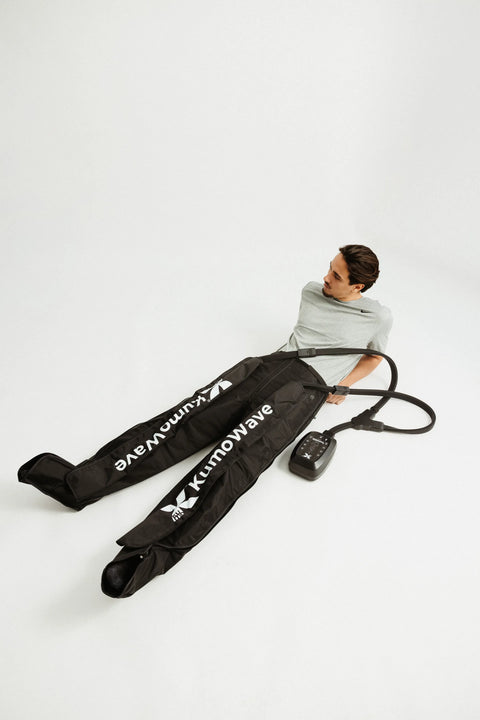
KumoWave Elite – Pressotherapy Pants
Full-coverage trousers. Ideal for lipedema, fluid retention and intensive use.
€799,00 €999,00
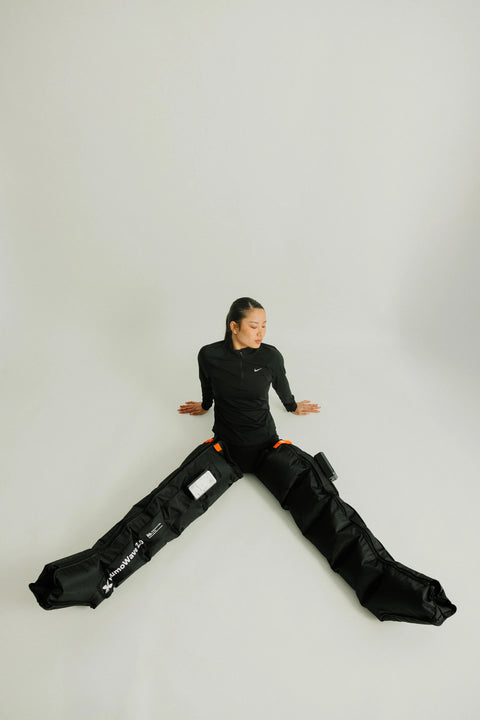
KumoWave 2.0 - Wireless Pressotherapy
Wireless, lightweight boots. Perfect for daily use and recovery.
€499,00 €599,00