
An air leak ruins the session.
If your pressotherapy boots “squeeze” less, don't reach the usual level, or you notice a constant hiss, the problem is almost always a leak point (connectors, hoses, closure/adjustment) or an internal seal failure. In this guide, I'll explain how to detect and prevent air leaks step by step, with maintenance tips that apply to both home recovery boots and intermittent pneumatic compression systems.
Pressotherapy at home
End the day with light legs
★★★★★ 4,8/5 · rated by verified customers
KumoWave pressotherapy boosts circulation and helps drain fluid with sequential compression, in 20-minute sessions at home.
- Boosts circulation and helps drain fluid
- Chamber-based compression, adjustable to you
- Sequential compression that mimics manual drainage
€799,00€999,00
−10% on your 1st order when you subscribe to the newsletter

At Kumo, recovery is understood as a habit: the better you care for your equipment, the more consistent the compression sensation and the experience will be session after session.
Why leaks appear (and why they are not always “holes”)
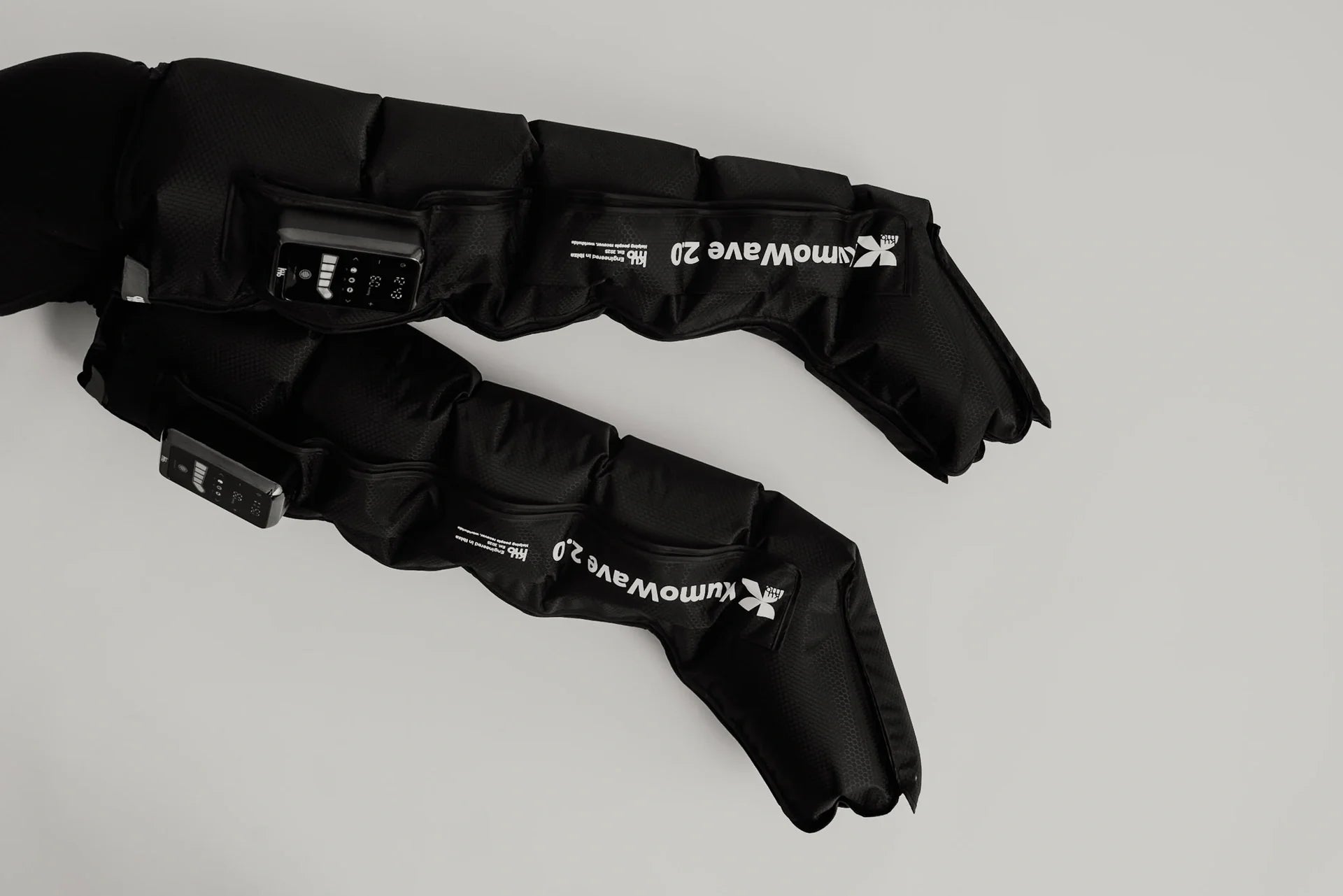
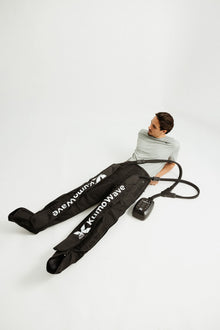
A pressotherapy boot works by cyclically/sequentially inflating air chambers to exert pressure on the leg (a concept similar to intermittent pneumatic compression devices described by clinical centers). (my.clevelandclinic.org)
Personalized protocol · included with your purchase
Want us to tell you how to use it in your case?
With your purchase, our experts prepare a personalized usage protocol for your case: sport, circulation, fluid retention, pregnancy or lipedema.
Message us on WhatsAppOur experts reply · no obligation
- Real leak: air escapes from the circuit (micro-perforation, damaged internal valve or seam, loose connector).
- “Functional” compression loss: air does not escape, but pressure “dissipates” due to a poor fit (boot too large, zipper halfway, loose velcro, creases) and feels less intense.
- Flow problem: there is no leak, but air does not reach correctly (kinked/pinched hose, obstructed port). In clinical equipment, this can trigger “high pressure” alarms due to obstruction. (airosmedical.com)
Typical signs of an air leak in pressotherapy boots
Before disassembling anything, identify the symptom: it will tell you where to look.
- Continuous hiss during the inflation phase (frequent in connectors or micro-perforations).
- Irregular compression: one leg squeezes well and the other doesn't, or a segment remains “loose”.
- Very slow inflation or cycles that seem incomplete (when the system inflates/deflates every so often; in clinical contexts, repeated inflation/deflation at intervals of tens of seconds is described). (my.clevelandclinic.org)
- Need to significantly increase intensity to “feel something” (note: compensating with more pressure is not the solution).
- Low pressure message/indicator (on some compressors): this can occur if the garment is not properly connected or if there is a hole/leak in the garment, according to pneumatic compression reference manuals. (airosmedical.com)
Golden rule: if you have to turn the equipment to maximum to regain the compression sensation, stop and check the seal. Increasing the pressure to "cover up" a leak usually worsens comfort and doesn't fix the cause.
Quick Diagnosis in 7 Minutes (No Special Tools Needed)
- Turn off, deflate, and reconnect everything from scratch. Many "leaks" are connectors that aren't fully seated.
- Inspect the air path: from the compressor to the boot. Look for kinks, pinches, or hoses trapped under a chair/sofa leg.
- Check the closure and fit: zipper fully up, velcro well-seated, no large creases. A "loose" fit can simulate pressure loss.
- Locate the point by ear: in a quiet room, start a gentle inflation and bring your ear close to connectors, bifurcations, and the ends of the boot.
- Test in sections (if your system allows it): first one boot, then the other. If the problem "moves" with the boot, the origin is in the boot; if it stays on the same side/port, check the compressor's wiring/port.
- Bubble test (optional): with the boot inflating at low intensity, apply very little soapy water with a cloth or sprayer only to external connectors and visible joints (never on the compressor). If bubbles appear, there's a leak. Afterward, dry thoroughly.
- Repeat with the leg inside: some leaks only appear when the fabric is stretched by the leg's shape.
The 6 most common causes and how to avoid them
1) Misaligned connectors (the #1 cause)
This is the most frequent cause: the connector “seems” in, but it hasn't reached the stop. Solution: disconnect, align, and firmly reconnect (without forcing). If the system has two outlets and you only use one boot, some equipment includes a blocker/plug for the free port (according to specifications of certain compression devices). (airosmedical.com)
on your first order when you join the newsletter
We send you the code instantly. No spam.
Prevention: avoid pulling the hose to disconnect. Hold the connector and pull straight apart.
2) Hoses bent, pinched, or "fatigued"
A hose with a distinct kink can restrict flow and create strange behaviors (irregular inflation, noises, alarms). Some compression manuals describe "high pressure" errors when there are obstructions/kinks in the tubing. (airosmedical.com)
Prevention:
- Store hoses in wide loops (without knots).
- Do not place weight on them (suitcases, furniture legs).
- Avoid sharp bends near the connector (this is where it cracks most over time).
3) Loose zipper or Velcro (functional loss of compression)
If the boot doesn't wrap well, the chamber expands "outward" instead of compressing the leg. This is perceived as a lack of pressure even though the system is inflating.
Prevention: put on the boot with your leg relaxed, distribute the fabric, and close from bottom to top. If you have to tighten excessively to prevent looseness, you probably need a different size.
4) Creases and wrinkles that create micro-channels for leaks
In multi-chamber boots, a large wrinkle can lift a part of the closure or stress seams. Some equipment even performs a "prefill" to help eliminate wrinkles/creases before therapy, according to sequential system user guides. (airosmedical.com)
Prevention: Before starting, run your hand over the boot and smooth the material, especially around the ankle and calf.
5) Micro-perforations from friction, pets, zippers, or storage
Micro-leaks usually come from:
- Pet claws (very small punctures that only leak when the boot is tensioned).
- Repeated rubbing against a table corner or a buckle.
- Storing the boot folded in the same place (material fatigue).
Prevention: use a clean surface, store the equipment flat or with wide folds, and avoid contact with sharp objects.
6) Dirt/moisture that degrades joints and seals
Sweat and moisture don't "puncture" a chamber, but they can accelerate the wear of fabrics, adhesives, and joint areas. Furthermore, damp equipment smells bad and becomes more fragile.
Good cleaning practices (reference model): pneumatic garment guides indicate hand washing with warm soapy water, do not submerge the tubing or its parts, and allow to air dry completely, avoiding dryers or forced heat. (airosmedical.com)
Preventive maintenance: simple routine after each session
- 1 minute: wipe the inside (skin contact area) with a slightly damp cloth, then a dry one.
- 2 minutes: visually inspect connectors and hoses (look for cracks, crushed areas, deformations).
- Drying: leave the boot open and ventilated until all surfaces are dry. (airosmedical.com)
- Storage: avoid direct sunlight and heat sources; do not leave the equipment "crushed" under other objects (constant pressure creates permanent creases).
Quick Diagnostic Table (Symptom → Probable Cause → Solution)
| Symptom | Where to look first | Probable cause | What to do (in order) |
|---|---|---|---|
| Hissing near the compressor | Ports and connectors | Loose / misaligned connector | Disconnect, align, reconnect; check that it's fully seated |
| One segment doesn't squeeze | Segment area + creases | Wrinkle, looseness, or local micro-leak | Smooth out, readjust; repeat gentle inflation; if it persists, thorough inspection |
| Slow inflation in both boots | Hoses | Kink/pinching | Straighten path, relieve pressure on hose; reposition compressor |
| "Loose" compression without hissing | Zipper and Velcro | Poor fit (functional loss) | Close completely, adjust from ankle; check size |
| Leak only when the boot is on | Seams/tensioned areas | Micro-perforation that opens with tension | Bubble test on external joints; if not located, technical support |
Pressure and Intensity: Why "Turning it to Max" Isn't a Good Idea
Besides not solving a leak, significantly increasing the intensity can worsen tolerance. In a clinical study published in 2003 (J Tissue Viability), the combination that showed the greatest average reduction in edema was at 40 mmHg, and adverse effects were observed in 6 out of 9 people at 70 mmHg (that pressure was discontinued), in addition to cramping in one subject at 60 mmHg. (pubmed.ncbi.nlm.nih.gov)
And although ranges depend on the equipment, there are sequential systems with wide configurable pressure ranges (e.g., 30–80 mmHg in the distal compartment in a reference device) and recommendations for a "suggested target" around 40 mmHg in compatible pump configuration tables. (airosmedical.com)
Practical application: if a leak or loss of compression appears, prioritize checking the circuit before increasing levels.
When to Stop the Session and Ask for Help (Safety + Equipment)
If you notice pain, numbness, tingling, or skin changes, stop the session and check the fit. Clinical resources emphasize the importance of correct sizing and skin monitoring (in pneumatic compression, risks such as skin irritation/injury are mentioned if the fit is not appropriate). (hopkinsmedicine.org)
Additionally, in medical contexts, contraindications for intermittent pneumatic compression are described (for example, suspected deep vein thrombosis or pulmonary embolism, cellulitis, congestive heart failure, among others, according to a health technology assessment report). If you use boots for a clinical reason, follow your professional's instructions. (hiqa.ie)
How to incorporate pressotherapy into a Kumo recovery routine (without damaging the material)
For more complete recovery, many people combine pressotherapy with other tools, alternating stimuli (gentle mobilization, massage, light) and respecting the body's tolerance. If you are interested in building a routine, you can supplement with LED light therapy or with a KumoPulse Air massage gun on days with a heavier load, avoiding running the pressotherapy machine over cables or hoses to prevent permanent kinks.
FAQ: Frequently asked questions about air leaks in Kumo pressotherapy boots
Why do my Kumo pressotherapy boots lose pressure in only one compartment?
- crease or looseness in that area (functional loss of compression), or (
- local micro-leak that only appears when the material is tensioned. Try smoothing the boot, readjusting from the ankle, and repeating at low intensity. If the problem persists, perform a bubble test on external joints (being careful not to wet the compressor) and check the connectors/hose associated with that chamber
Is it normal to hear a hiss during inflation?
A soft motor sound or valve noise may be normal depending on the compressor, but a constant and localized hiss usually indicates an air leak. The most common point is in poorly connected connectors or damaged hoses. In compression equipment, it is described that a "low pressure" indication may appear if the garment is not properly secured to the port or if there is a hole causing a leak. (airosmedical.com) Re-seat connectors, straighten hoses, and try again at low intensity in a quiet environment to locate the source.
Can I "fix" a leak with tape or patches?
If you suspect an internal micro-perforation, it is safest not to improvise repairs that alter the seal or create rigid areas that crack further. Pneumatic device manuals emphasize avoiding unauthorized tampering with the equipment and contacting technical service for errors or failures. (airosmedical.com) As a temporary measure, the only reasonable thing is to correct external causes (connectors, kinks, fit). If the leak is in a chamber or seam, it is appropriate to arrange for inspection or replacement.
How do I clean my boots without causing leaks or damaging the hoses?
The key is controlled moisture and complete drying. Pneumatic garment care guides recommend hand washing with warm soapy water and, most importantly, not submerging the tubing or parts of the tubing, as well as avoiding dryers or forced heat and allowing to air dry until everything is completely dry. (airosmedical.com) In practice: damp cloth + dry cloth after each use, ventilation with the boot open, and storage without aggressive folds.
What do I do if it doesn't inflate properly even if I don't see any leaks?
When it "doesn't inflate" but there's no hiss, think obstruction or fit. Check that the hoses are not kinked; some equipment describes that an obstruction/kink can cause abnormal behavior or error messages. (airosmedical.com) Then, confirm that the boot wraps the leg well: a large size or loose velcro reduces the feeling of pressure even if the system is working. Finally, try with only one boot (if you can) to isolate if the problem is on one side.
What now?
If you want to ensure your sessions are consistent and free of pressure loss, explore Kumo's pressotherapy collection, and if you need help diagnosing a persistent leak or inflation problem, contact the team via the contact page.
KumoWave pressotherapy
Choose your at-home pressotherapy
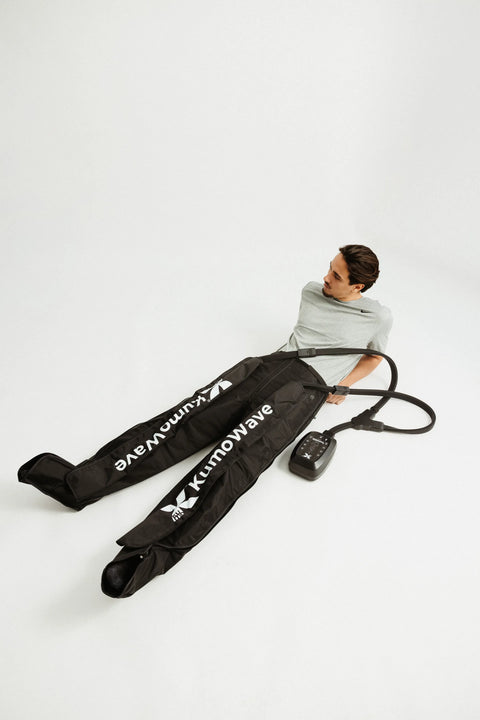
KumoWave Elite – Pressotherapy Pants
Full-coverage trousers. Ideal for lipedema, fluid retention and intensive use.
€799,00 €999,00
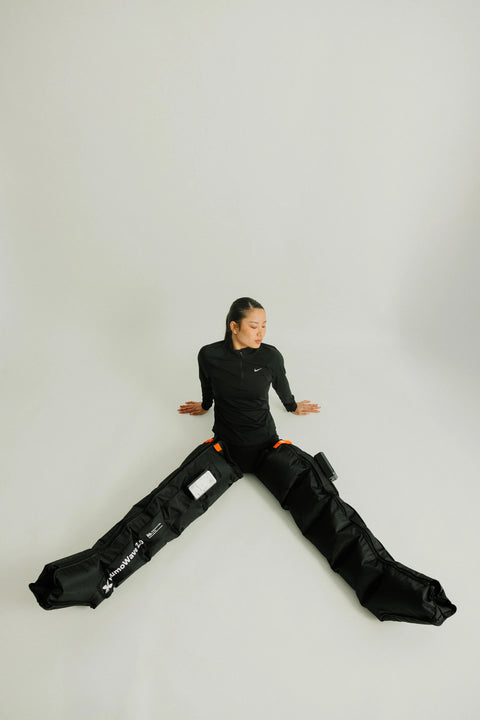
KumoWave 2.0 - Wireless Pressotherapy
Wireless, lightweight boots. Perfect for daily use and recovery.
€499,00 €599,00