Recovering well is not optional.
If you're using (or thinking about using) presotherapy boots and a massage gun, the key isn't to use them "harder," but in the correct order, with a clear intention, and respecting when each tool is appropriate. In this guide, I explain how to combine presotherapy and percussion massage safely and effectively, with practical protocols and what the evidence says.
Pressotherapy at home
End the day with light legs
★★★★★ 4,8/5 · rated by verified customers
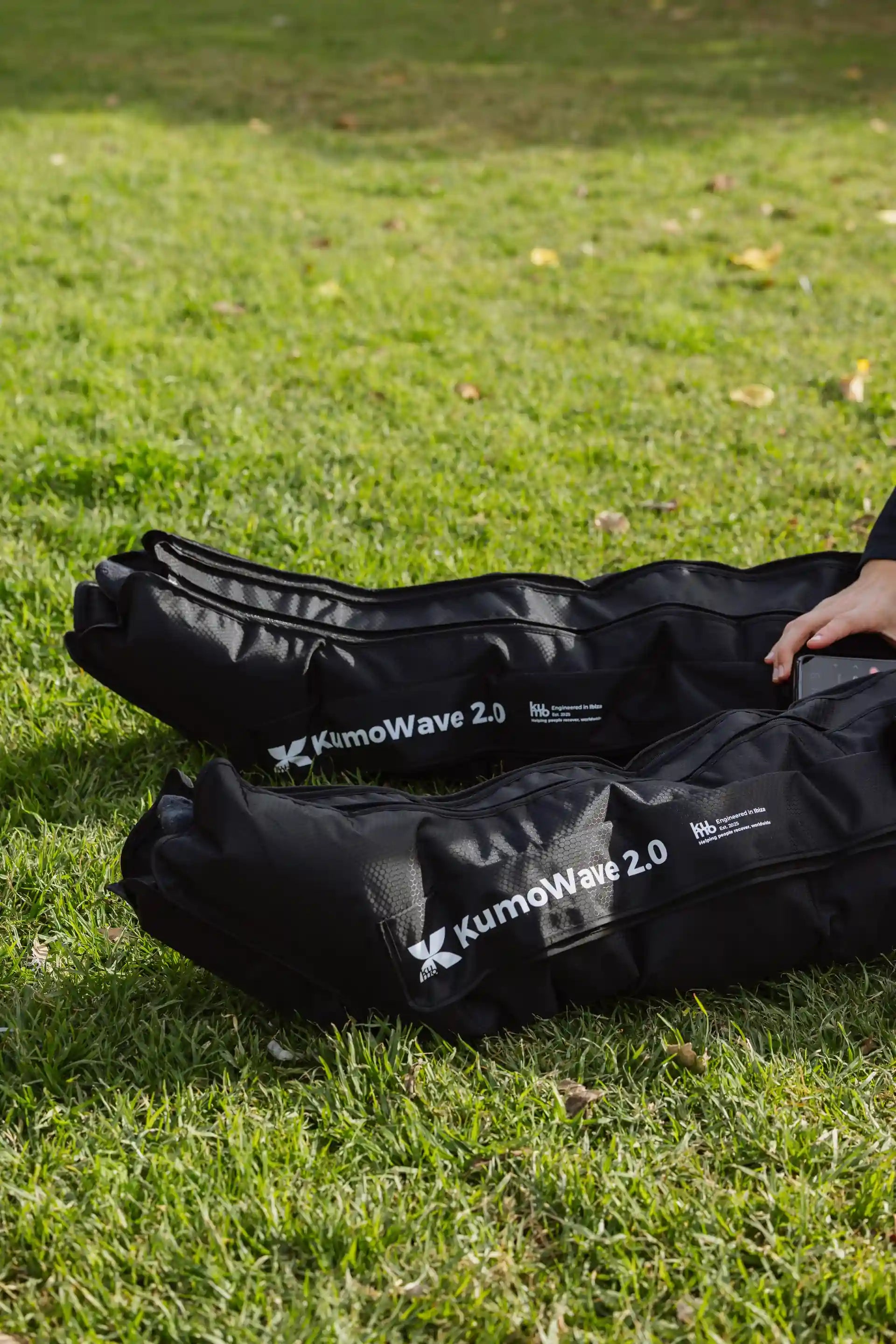
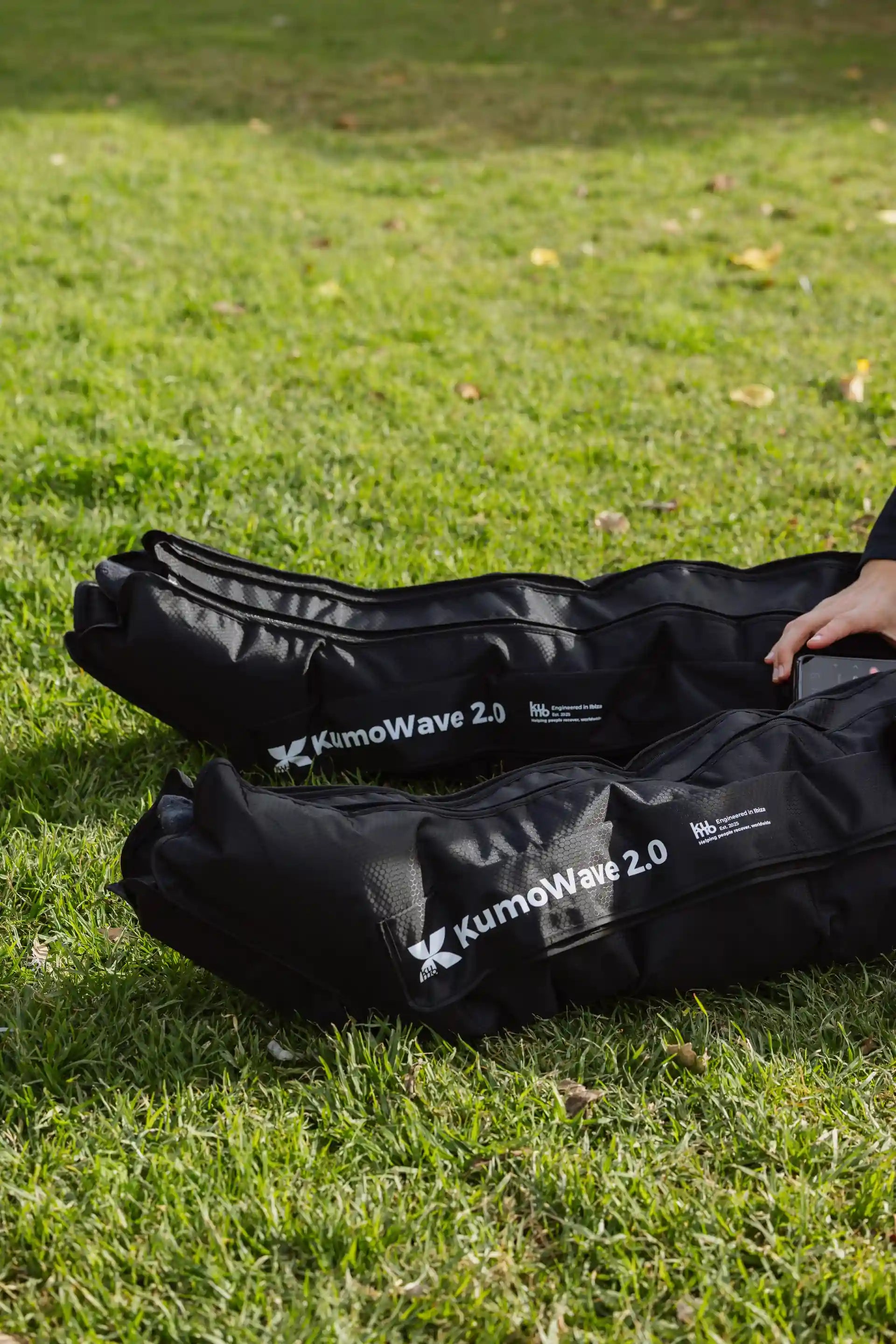
KumoWave pressotherapy boosts circulation and helps drain fluid with sequential compression, in 20-minute sessions at home.
- Boosts circulation and helps drain fluid
- Chamber-based compression, adjustable to you
- Sequential compression that mimics manual drainage
€799,00€999,00
−10% on your 1st order when you subscribe to the newsletter

At Kumo, we approach recovery as a habit: technology, well-being, and performance coexisting in your daily routine. You can explore the brand's universe on Kumo's official website.
Presotherapy: what it is and what it can offer (without myths)
How it works: intermittent pneumatic compression
Modern home presotherapy is typically based on intermittent pneumatic compression (IPC): air chambers that inflate and deflate in cycles to promote venous return (the "upward" flow of blood to the heart) and, in certain contexts, help with swelling management or the feeling of heavy legs. (my.clevelandclinic.org)
Personalized protocol · included with your purchase
Want us to tell you how to use it in your case?
With your purchase, our experts prepare a personalized usage protocol for your case: sport, circulation, fluid retention, pregnancy or lipedema.
Message us on WhatsAppOur experts reply · no obligation
In medicine, IPC has been used for years in hospitals (for example, in thrombosis prevention for immobilized individuals or after surgery), precisely because of its mechanical action on venous flow. (hopkinsmedicine.org)
If you want to explore this type of recovery in "boot" format, you can start with Kumo's presotherapy collection.
What the evidence says about sports recovery: mixed results
In sports, IPC has become popular as a post-training "recovery" tool, but the scientific literature is not uniform: there is much variation in protocols (pressure, duration, timing, population), which explains why sometimes "it makes a difference" and other times it doesn't. (pmc.ncbi.nlm.nih.gov)
on your first order when you join the newsletter
We send you the code instantly. No spam.
In fact, a systematic review with meta-analysis published in 2025 (studies with healthy adults) concluded with moderate certainty evidence that IPC applied after exercise does not reduce muscle pain at 24 hours compared to control, while other modalities (such as photobiomodulation applied before exercise) did show effects on pain. (sciencedirect.com)
Even so, there are studies that observe improvements in specific variables (for example, pain parameters and muscle markers at 48–72 hours in a study published in 2025) and also works that describe faster cardiovascular recovery after intense efforts when IPC is used in the subsequent minutes. In summary: it's not magic, but it can be useful depending on your context and how you apply it. (pubmed.ncbi.nlm.nih.gov)
When it usually makes the most sense
- Heavy legs from standing/sitting for many hours or from travel.
- Accumulated load (several consecutive training sessions) where you're looking for a feeling of "lightness" and comfort.
- Global recovery when you don't want to work point by point, but rather perform a general "reset" of the legs.
And an important nuance: the fact that IPC does not always reduce DOMS (delayed onset muscle soreness) in studies does not mean that it cannot improve your perception of recovery or your comfort. It simply means it should be used with realistic expectations and as part of a broader strategy (sleep, hydration, mobility, volume management). (pmc.ncbi.nlm.nih.gov)
Percussion massage: what a massage gun really does
Acute effects: mobility and stiffness sensation
Percussion massage (massage guns) applies rapid and repeated impacts to soft tissue. The most consistent evidence usually appears in immediate effects such as improved range of motion (ROM) or a feeling of reduced stiffness, especially if dosed well.
For example, a study in the Journal of Sports Science and Medicine (published online in 2023) observed that a minimal dose of hamstring percussion (2 × 60 seconds) was associated with a significant increase in ROM (reported as +11.4%) and changes in tissue stiffness parameters. (jssm.org)
Another study (JSSM, 2020) evaluated 5 minutes of percussive massage on calves and reported increased dorsiflexion ROM without changes in maximal voluntary force, supporting its use as part of a mobility-oriented warm-up without "dampening" performance. (jssm.org)
Does it help to "recover" faster?
The complete picture is more cautious: a systematic review on "massage guns" (2023) suggests improvements in stiffness, ROM, and some indicators after fatigue protocols, but this does not mean it will always improve hard recovery or performance markers the next day. (pubmed.ncbi.nlm.nih.gov)
Furthermore, there are trials where a brief application (e.g., 5 minutes) showed no benefits over passive recovery in strength, ROM, or endurance in the treated area. The moral: the gun is very good for preparing tissue and releasing specific points, but it does not replace planning (or sleep). (pmc.ncbi.nlm.nih.gov)
Safety: more intensity does not mean better results
In general, these are considered safe tools if used with common sense, but there are contraindications and scenarios where they should be avoided (wounds, recent fractures, thrombosis, sensitive areas, aggressive prolonged use, etc.). A review (2023) summarizes typical contraindications and warns about the risk of excessive and aggressive use over long periods. (mdpi.com)
Even clinical cases of severe (rare) adverse effects such as rhabdomyolysis after improper use of percussion guns have been published, which reinforces the idea of proper dosing and avoiding "mashing" sore muscles. (pmc.ncbi.nlm.nih.gov)
If you are looking for a percussion option within the Kumo ecosystem, here is the KumoPulse Air massage gun.
Why combine them: "local" + "global" (and why the order matters)
The logic of combination
- Percussion massage: local intervention. Useful for "unlocking" specific areas (tight calves, tense gluteus medius, sensitive plantar fascia, etc.) and improving ROM immediately. (jssm.org)
- Presotherapy: global intervention for legs. Aimed at circulatory comfort and the feeling of "lighter legs"; in sports, the evidence is variable and depends on protocols. (my.clevelandclinic.org)
Recommended order (most of the time)
First percussion, then presotherapy is a very practical approach when your goal is post-training recovery:
- Percussion allows you to treat specific points without extending a full session.
- Presotherapy "closes" with more uniform work throughout the leg (calf–shin–thigh), which is very comfortable for finishing.
On the other hand, if your legs are very heavy from travel or a sedentary lifestyle and you don't have "critical" points, you can do only presotherapy and reserve percussion for when you notice a particularly loaded area.
Simple rule: use percussion for specific issues; use presotherapy for general issues. And avoid turning recovery into another "punishment" session. (mdpi.com)
Practical protocols for combining them well
1) Before training (mobility-oriented warm-up)
Objective: to feel the tissue "loose" and gain ROM without fatigue.
- Percussion (1–2 key areas): 60–120 seconds per muscle, with light/moderate pressure, moving along the muscle belly (not on joints). Research has shown effects with short doses like 2 × 60 s. (jssm.org)
- Presotherapy: usually not necessary before training. If you use it, do so for comfort and with gentle programs, without trying to "squeeze."
2) Immediately after training (recovery)
Objective: reduce the feeling of load, care for legs, and improve post-exertion comfort.
- Percussion (5–8 minutes total): work 2–4 muscle groups (for example, calves, quadriceps, glutes). Keep times short per area and avoid areas with acute pain.
- Presotherapy (20–30 minutes): this is a common duration in recovery trials after intense efforts (for example, 30 min after repeated sprints) and in studies of lactate clearance during 30 min of recovery. Adjust intensity to tolerance. (pubmed.ncbi.nlm.nih.gov)
If you're in weeks of high load, this combo can especially help you with the sensation (less heavy legs) and maintain a consistent self-care routine, even when the evidence on DOMS is mixed. (sciencedirect.com)
3) Rest days, travel, and "heavy legs"
Objective: circulatory reset and gentle release.
- Presotherapy as a base (comfortable program).
- Percussion only if there is a specific point that bothers you (for example, soleus or lateral thigh fascia), avoiding insisting on sensitive areas.
Practical tip: slightly elevate your legs (cushion under calves) and prioritize slow nasal breathing during the session; it's a simple way to switch into "recovery mode."
4) If there is injury, suspected vascular problem, or unusual pain
There are no shortcuts here: avoid using presotherapy or percussion "on your own" if there is suspicion of thrombosis, infection, decompensated heart failure, or abnormal pain/swelling. IPC is used in thrombosis prevention in clinical settings, but it also has clear contraindications in devices (e.g., pre-existing thrombosis or heart failure) and it is advisable to follow medical criteria. (hopkinsmedicine.org)
Quick and clear safety keys
- Do not use the gun on the anterior/lateral neck, face, eyes, spine, joints, areas with a marked pulse, wounds, significant hematomas, or acute pain. (mdpi.com)
- Do not overuse in time or pressure: the 2023 review mentions risks with aggressive prolonged use and reminds of multiple contraindications. (mdpi.com)
- Presotherapy: if you notice numbness, pain, discoloration changes, or unusual discomfort, stop the session and check the adjustment/intensity.
Common mistakes when combining presotherapy and percussion
- Using percussion "at maximum power" on an already very sore muscle (trying to "break" the pain usually worsens tolerance).
- Turning recovery into an extra hour of stimulation: more tools do not equal more recovery.
- Expecting presotherapy to eliminate DOMS: the evidence on post-exercise muscle pain is variable, and in recent meta-analyses, post-exercise IPC does not always reduce pain. (sciencedirect.com)
- Ignoring contraindications (especially in vascular problems). (hopkinsmedicine.org)
How this fits into a Kumo recovery routine (without overwhelming yourself)
A sustainable routine usually has three layers:
- Daily: gentle mobility + walking + hydration and sleep.
- Post-workout: percussion (key points) + presotherapy (global) when you really need it.
- Extra (optional): light for recovery and well-being.
Regarding this third layer: a systematic review with meta-analysis (2025) found that photobiomodulation applied before exercise reduced muscle pain (with low certainty), while IPC applied afterward did not at 24 hours (moderate certainty). It does not mean that "one replaces the other"; rather, it helps you choose when to use each tool. (sciencedirect.com)
If you are interested in adding light to your ecosystem, you can check out Kumo's LED light therapy section.
Now what?
If you want to turn recovery into a simple routine (and not a "patch"), start by choosing a protocol: percussion for local issues + presotherapy for global issues, and add LED light if you're looking for an extra layer of well-being. Explore presotherapy and percussion massage within the Kumo ecosystem, and if you need guidance, you can write to us from the contact page.
Quick table: how to combine them according to your goal
Decision guide (order, focus, and indicative dosage based on studies and responsible practice)
| Objective | What to do first | What to do next | Practical dosage | Adjustment signal |
|---|---|---|---|---|
| Gain mobility before training | Percussion | (Optional) active mobility | 2 × 60 s per area or ~5 min total | If it hurts or you tense up, lower pressure/speed |
| Post-training recovery (heavy legs) | Percussion (specific points) | Presotherapy | Percussion 5–8 min total + presotherapy 20–30 min | If there is tingling or pain, reduce intensity or stop |
| Travel / sedentary lifestyle / heavy legs | Presotherapy | Percussion only if there is a critical point | Presotherapy in comfortable mode | If discomfort increases, prioritize gentle movement |
| Strong DOMS (24–72 h) | Gentle mobility / walk | Very light percussion (if tolerated) + presotherapy for comfort | Avoid "mashing"; prioritize tolerance | If it worsens the next day, you were being aggressive |
Evidence notes: improved ROM with percussion is described with brief doses (2020–2023). IPC has been studied with ~30 min sessions in recovery after intense efforts, but its effect on muscle pain is not consistent in recent meta-analyses. (jssm.org)
FAQ: presotherapy, percussion massage and Kumo
In what order should I use presotherapy and a massage gun for better recovery?
In most cases, it works well to do percussion massage first and presotherapy afterward. Percussion is more "surgical": it allows you to release tension in calves, quadriceps, or glutes where you feel specific tightness (with short durations). Presotherapy, on the other hand, is a global finish for the legs, very useful for comfort. If your day was sedentary and there are no critical points, you can do only presotherapy. Always adjust intensity and stop if unusual pain or numbness appears. (mdpi.com)
Can I use Kumo presotherapy every day?
Many people use it daily for comfort, especially during periods of high load or heavy legs. The important thing is to do it with tolerable intensity and that your goal is well-being and comfort, not to "squeeze at maximum." Scientifically, protocols vary widely, and the effect on post-exercise muscle pain doesn't always appear, so it's advisable to listen to your body's signals and prioritize basic habits (sleep, gentle movement). If you have a history of vascular or cardiac issues, consult a professional first. (sciencedirect.com)
Is the KumoPulse Air gun useful before training or only afterward?
It can fit very well before training if your goal is to gain mobility and reduce the sensation of stiffness without losing performance. Studies in 2020 and 2023 have shown acute ROM improvements after brief applications (from 2 × 60 s to 5 min in muscle groups). It is also useful after training, but it should be used more gently, especially if there is intense delayed pain. Avoid sensitive areas (joints, neck, wounds) and do not turn the session into something aggressive. (jssm.org)
What should I do if I have strong muscle soreness (DOMS): presotherapy or percussion?
If DOMS is strong, prioritize the basics: gentle walking, comfortable mobility, hydration, and sleep. Presotherapy can provide comfort, but a recent meta-analysis (2025) found no pain reduction at 24 hours with post-exercise IPC (moderate certainty). Percussion can help "reduce tension" in some cases, but it must be very light and short-duration; aggressive use is a bad idea, and adverse events have been described in contexts of inappropriate use. If the pain is unusual, localized, or with abnormal swelling, it's best to consult. (sciencedirect.com)
Does it make sense to combine presotherapy with LED light therapy within Kumo?
Yes, but with intent: presotherapy usually fits best after exertion (global comfort), while photobiomodulation has been extensively studied in windows before exercise. In 2025, a systematic review with meta-analysis reported reduced muscle pain when photobiomodulation is applied before exercise (low certainty), and no clear effect of post-exercise IPC on pain at 24 hours (moderate certainty). It's not "one or the other": it's about using each tool at its best time, without saturating your routine. (sciencedirect.com)
KumoWave pressotherapy
Choose your at-home pressotherapy
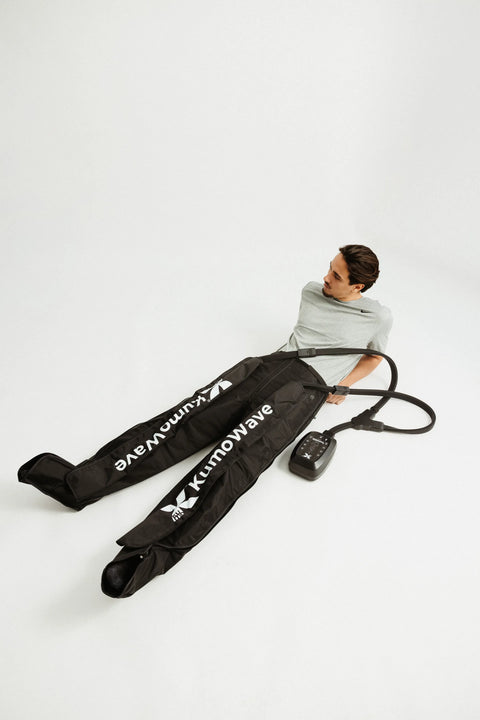
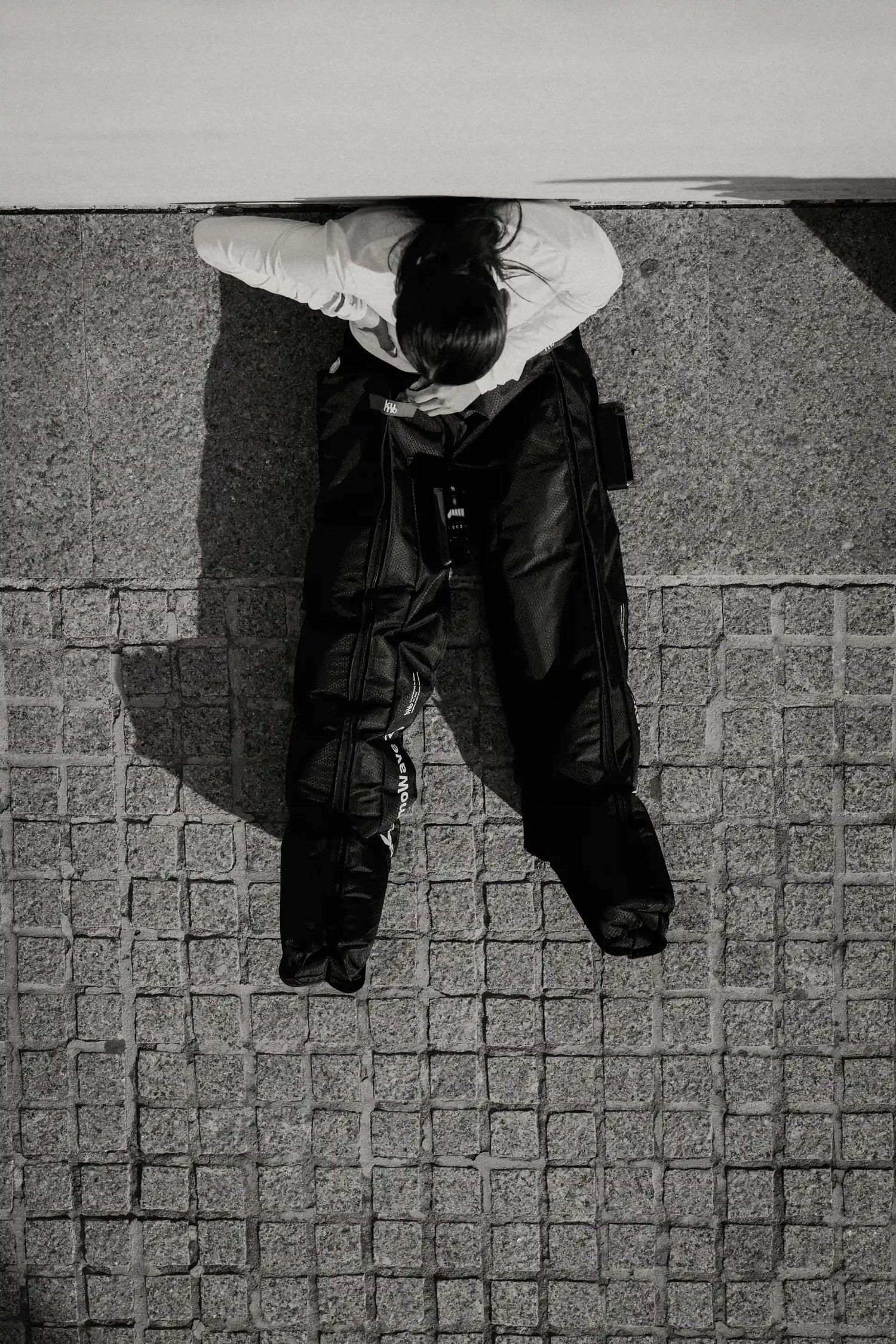
KumoWave Elite – Pressotherapy Pants
Full-coverage trousers. Ideal for lipedema, fluid retention and intensive use.
€799,00 €999,00
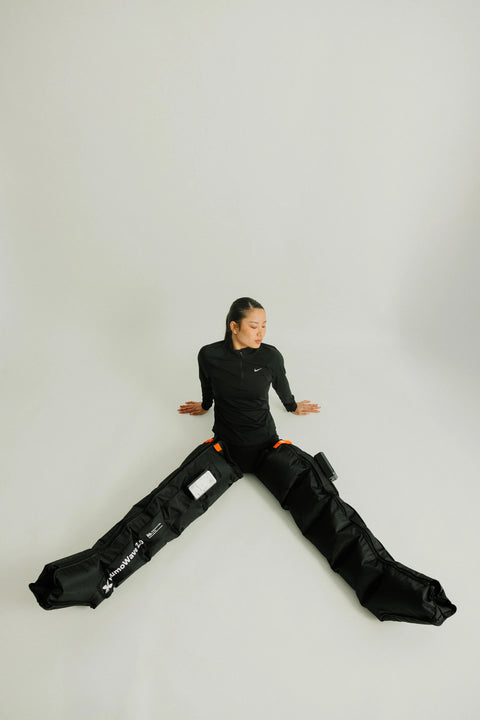
KumoWave 2.0 - Wireless Pressotherapy
Wireless, lightweight boots. Perfect for daily use and recovery.
€499,00 €599,00