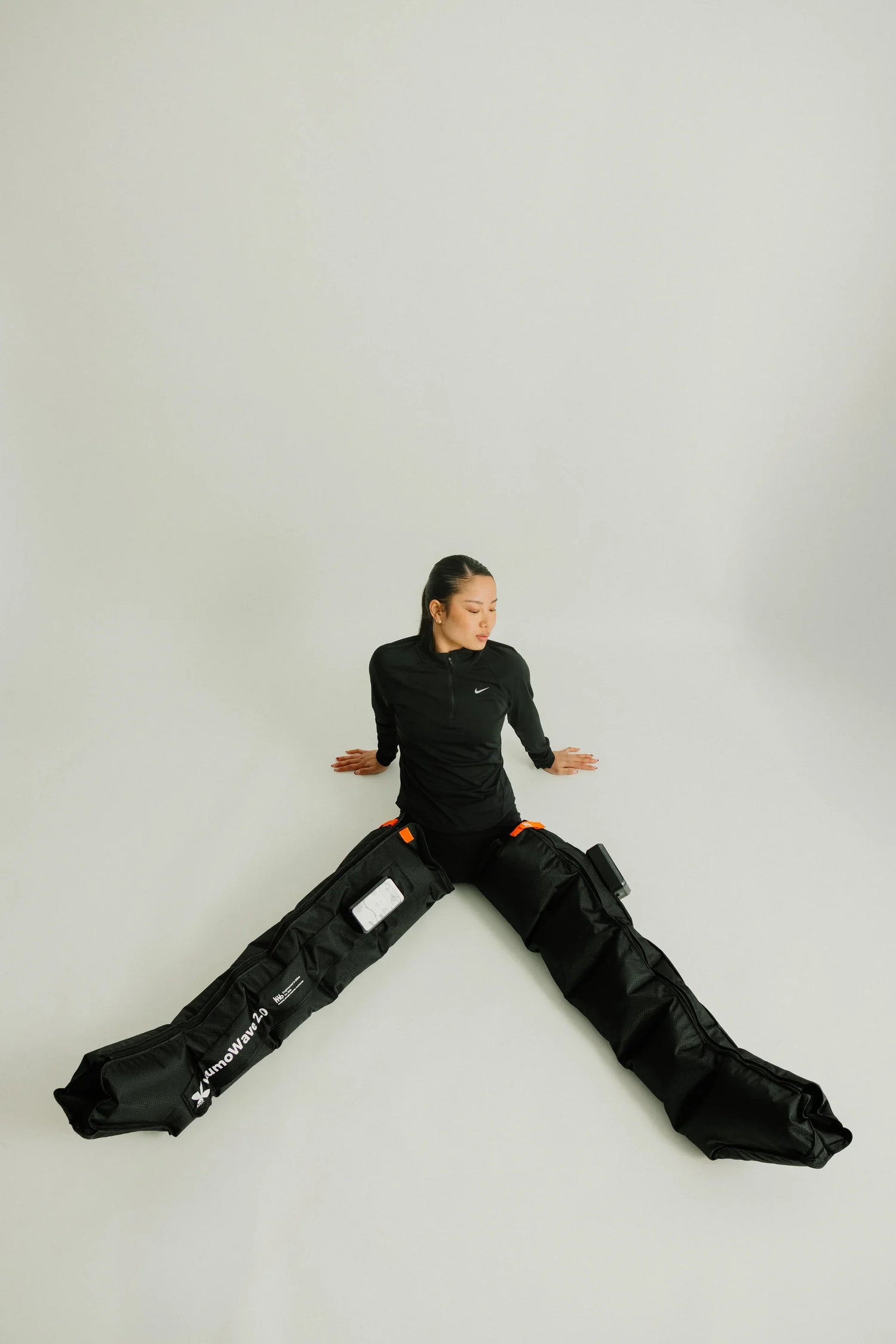
Plantar fasciitis spares no first step.
If you're wondering if presotherapy can help you with heel pain, the most honest answer is: it can be a useful support (especially for tired legs, edema, or recovery after heavy loads), but it does not replace the specific approach to plantar fascia (load management, stretching, strengthening, and, when appropriate, physical therapy). In this guide, I'll explain when it makes sense, how to integrate it, and what real precautions should be taken, especially if you use at-home presotherapy boots like those from Kumo. (mayoclinic.org)
Pressotherapy at home
End the day with light legs
★★★★★ 4,8/5 · rated by verified customers
KumoWave pressotherapy boosts circulation and helps drain fluid with sequential compression, in 20-minute sessions at home.
- Boosts circulation and helps drain fluid
- Chamber-based compression, adjustable to you
- Sequential compression that mimics manual drainage
€799,00€999,00
−10% on your 1st order when you subscribe to the newsletter

What is plantar fasciitis and why does it hurt so much
Typical symptoms and common risk factors
Plantar fasciitis (also called "plantar heel pain") is one of the most common causes of heel pain in adults. It usually manifests as:
- Stabbing pain when taking the first steps in the morning or after sitting.
- Discomfort that improves after walking a bit, but can worsen after many hours on your feet or after training.
- A feeling of "tightness" in the sole of the foot or in the calf/Achilles.
In population studies, plantar heel pain can affect approximately 1 in 10 adults in certain age groups (for example, in those over 50, a prevalence of 9.6% was estimated). It is also associated with overweight, certain jobs involving many hours of standing, and physical/mental health factors that can influence recovery. (pmc.ncbi.nlm.nih.gov)
Personalized protocol · included with your purchase
Want us to tell you how to use it in your case?
With your purchase, our experts prepare a personalized usage protocol for your case: sport, circulation, fluid retention, pregnancy or lipedema.
Message us on WhatsAppOur experts reply · no obligation
What happens in the fascia: it's not always "inflammation"
Although the term "fasciitis" suggests inflammation, clinical reviews describe that there are often degenerative changes (micro-injuries from repetitive loading, tissue alterations) rather than pure acute inflammation. This helps to understand why a consistent plan of progressive loading, strengthening, and mobility, in addition to pain management, usually works best. (pmc.ncbi.nlm.nih.gov)
Key idea: presotherapy can improve the feeling of heavy legs and support recovery, but the "core" of plantar fasciitis almost always lies in how you load your foot (and how you prepare it to load better).
What is presotherapy (intermittent pneumatic compression)
How a presotherapy boot works
Presotherapy, in its most common version, uses intermittent pneumatic compression: air chambers (in boots or sleeves) inflate and deflate in cycles, applying pressure sequentially to the leg (and, depending on the design, also to the foot/ankle). In clinical settings, it is used, for example, to promote venous flow and help prevent clots in certain contexts; the principle is that compression increases blood flow through the veins by "pushing" return upwards. (hopkinsmedicine.org)
on your first order when you join the newsletter
We send you the code instantly. No spam.
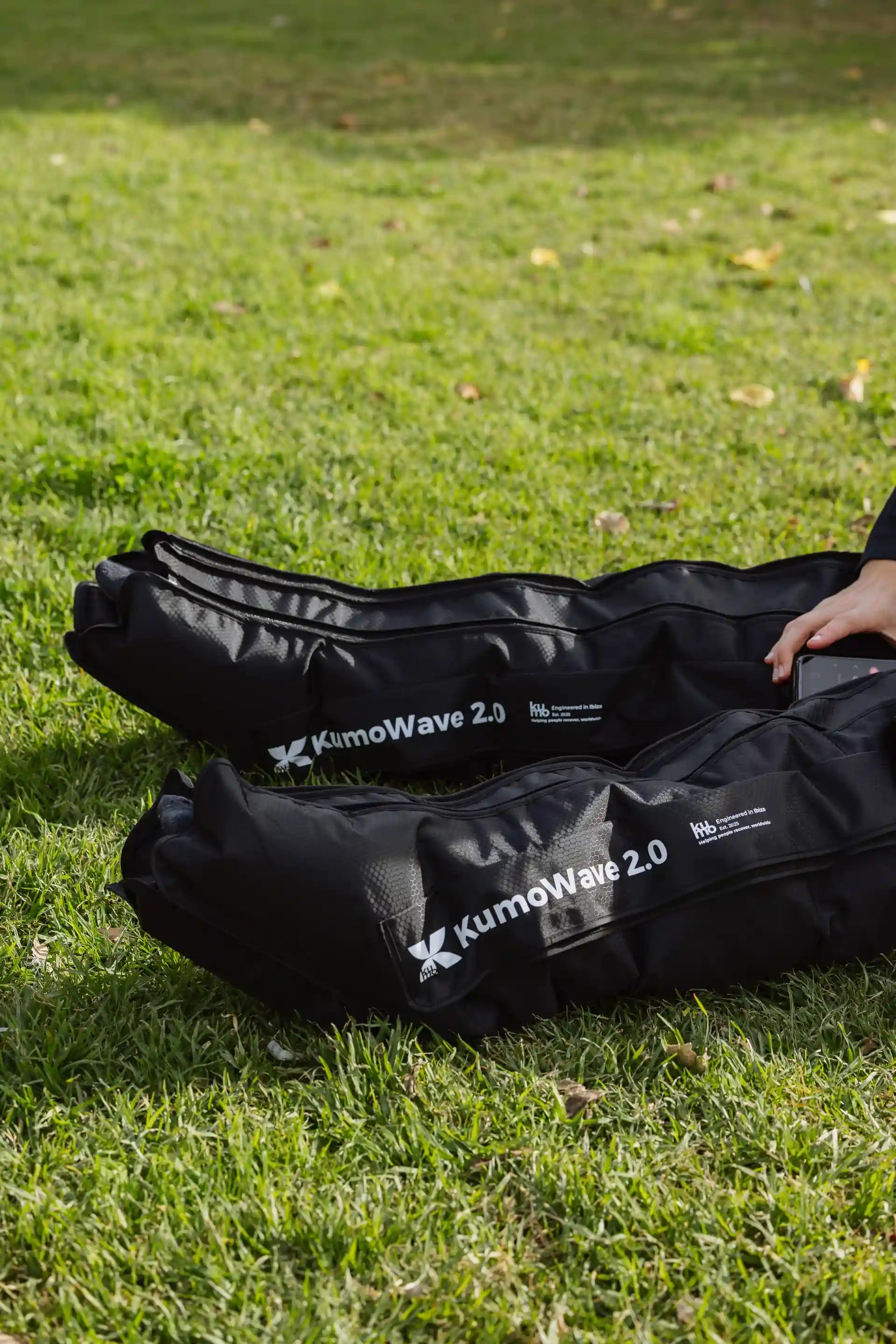
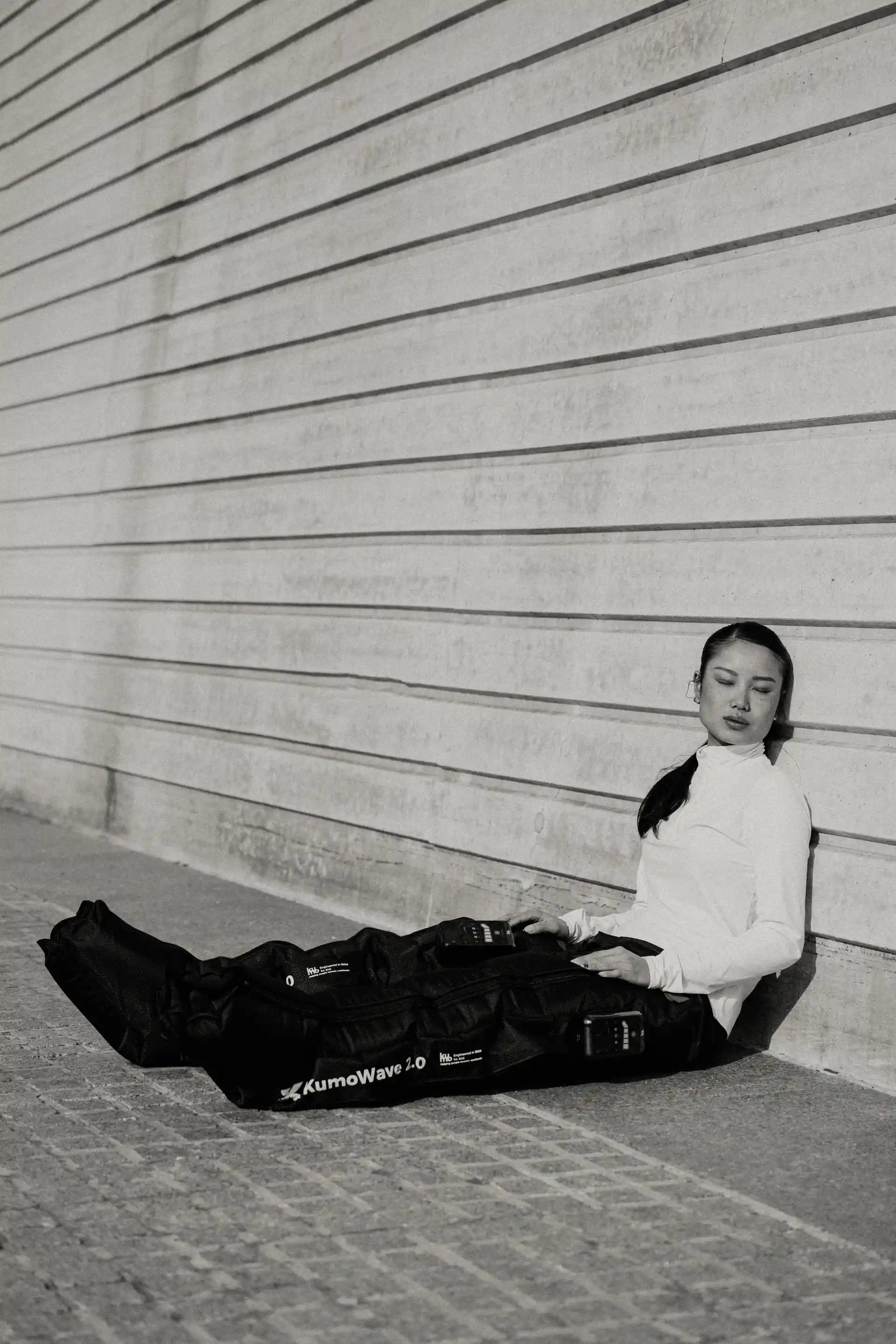
In the Kumo ecosystem, presotherapy is offered in a home format to support recovery and post-effort comfort. You can see the collection here: KumoWave presotherapy boots. (kumobalance.com)
Benefits with a better basis (and limits) according to evidence
What the literature most consistently supports for intermittent pneumatic compression is its usefulness for:
- Promoting venous return and fluid movement in the leg in certain cases. (hopkinsmedicine.org)
- Reducing edema (swelling) as a support in some clinical situations (e.g., venous insufficiency/stasis dermatitis in one trial). (mdpi.com)
However, when we talk about sports recovery (DOMS, muscle soreness, fatigue), the results are mixed: there are studies with improvements in perceptual or physiological markers and others where no clear advantage is observed compared to placebo or rest. For example, 30-minute protocols have been used in controlled designs to evaluate post-exercise recovery. (link.springer.com)
Presotherapy and plantar fasciitis: how it can really help
"Indirect" support that does make sense
Plantar fasciitis is located in the foot, but the load and tension throughout the entire chain (calf-Achilles-sole) influence it. In this context, presotherapy can provide indirect value when:
- You've been on your feet for many hours and notice heavy legs: if you reduce the feeling of congestion or swelling in your legs/ankles, it's easier to move, walk, and follow your exercise plan without "dragging" fatigue.
- You are in a high-volume phase (more daily steps, progressive return to running): using sequential compression can fit as part of your recovery routine, especially if you tend to retain fluid or end up with "heavy" ankles.
- You need to reduce the "noise" of fatigue to be consistent with what's important: strength, mobility, habit changes, and rest.
Think of presotherapy as a recovery accessory (comfort, circulation, relief), not as a tool that "repairs" the plantar fascia on its own. (hopkinsmedicine.org)
What presotherapy does NOT replace in plantar fasciitis
If your goal is to truly improve (and reduce relapses), it's advisable to prioritize:
- Activity modification (temporarily reducing impact, pacing steps/running).
- Ice if it brings relief and stretching (plantar fascia and Achilles/calf) as tolerated.
- Progressive strengthening of the foot and calf.
- Physical therapy and/or support (taping, orthotics) if needed.
Clinical institutions highlight that many people improve within several months with conservative treatment (ice, stretching, and activity adjustments), and that physical therapy and night splints may be considered in some cases. (mayoclinic.org)
Why it's used by athletes even if it's not "specific" for the fascia
Presotherapy became popular partly due to its use in muscle recovery. A crossover trial with intermittent sequential compression applied for 30 minutes after exercise observed changes in perceptive recovery variables and hemodilution, though without improving subsequent cycling performance. (link.springer.com)
And there are also negative results: in a randomized trial with U19 footballers, a single session of IPC at high pressure (200 mmHg) for 30 minutes did not improve recovery compared to placebo (moisturizing cream) in neuromuscular, biochemical, or subjective markers. This is relevant because it suggests that more pressure is not necessarily better and that context (sport, fatigue, placebo, expectations) matters. (pubmed.ncbi.nlm.nih.gov)
How to integrate it into a complete plan (without aggravating the heel)
Practical and prudent protocol (guideline)
Without going into medical "prescriptions," a sensible way to integrate presotherapy when you have plantar fasciitis is:
- Choose the time: at the end of the day, after standing, or after mild/moderate exercise.
- Start conservatively: low-to-medium intensity and short sessions; if you experience tingling, pain, or increased heel sensitivity afterwards, reduce or discontinue.
- Combine it with the essentials: 5–10 minutes of tolerable mobility/stretching and a brief block of strengthening (according to professional guidance or safe progression).
- Evaluate with simple metrics for 7–14 days: pain in the first steps (0–10), tolerance to walking, calf stiffness, and whether there is rebound pain the next day.
Remember to check your skin and sensations: when using compression devices, it is recommended to watch for redness, warmth, pain, abnormal swelling, or irritation under the sleeve/boot and notify a professional if any problem arises. (hopkinsmedicine.org)
Two specific examples (real life)
- Standing work (8–10 h): upon returning home, elevate legs for 5 minutes + gentle presotherapy + calf stretch (knee straight and bent) + light self-massage on the calf. The goal is to "reduce" the overall load to feel better the next day.
- Returning to running after a flare-up: presotherapy as a "closure" on days with more steps, but prioritizing progressive calf/soleus strengthening and impact dosage. Compression does not replace the stimulus that makes the tissue more tolerant.
Kumo complements that may fit (without promising cures)
At Kumo, the focus revolves around high-end recovery and sustainable habits. If you're looking to build a complete routine:
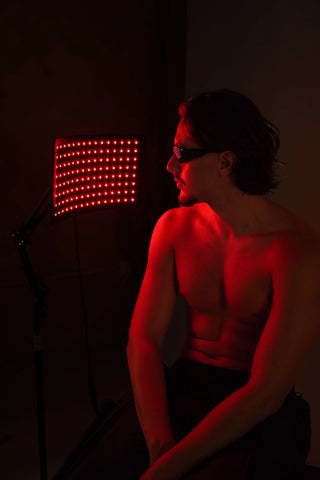
- Light therapy (e.g., red light) as part of a recovery and wellness environment: see LED therapy options. For plantar fasciitis, evidence on photobiomodulation depends on the device, dose, and protocol; if you use it, consider it a complement and prioritize the loading plan. (pmc.ncbi.nlm.nih.gov)
- Massage gun to relieve the calf and leg musculature (avoiding direct impact on the painful heel): KumoPulse Air.
Precautions and contraindications: when NOT to use presotherapy
Important contraindications (safety first)
Although home presotherapy is used for wellness purposes, intermittent pneumatic compression has contraindications described in healthcare settings. In general, you should not use it (or should seek prior medical authorization) if there is suspicion or a recent history of:
- Untreated deep vein thrombosis (DVT), thrombophlebitis, or recent pulmonary embolism.
- Decompensated heart failure or pulmonary edema.
- Significant arterial/ischemic disease (arterial circulation problems).
- Acute skin infection (e.g., cellulitis), open wounds, or very fragile skin in the area.
- Severe neuropathy (less sensation = higher risk of pressure injury).
These precautions appear in clinical materials (e.g., hospital information sheets) and regulatory documentation for intermittent pneumatic compression systems. (wsh.nhs.uk)
Signs to stop and consult
Discontinue the session and consult a professional if you experience:
- Unusual acute pain, numbness, or loss of sensation.
- Marked redness, warmth, blisters, or skin injury under the boot.
- Asymmetrical swelling (one leg more swollen than the other), calf pain, or shortness of breath (this requires urgent assessment).
Educational guides on IPC emphasize checking the skin and reporting areas of pain, warmth, redness, or "skin breakdown." (hopkinsmedicine.org)
Quick Guide: Does presotherapy make sense if you have plantar fasciitis?
Quick decision table (guideline for use)
| Situation | Can it help? | How to use it without messing up | #1 Priority (if you have fasciitis) |
|---|---|---|---|
| Heavy legs after many hours of standing | Yes, for comfort and general relief | Low-to-medium intensity, monitor skin and sensation | Pace standing hours + appropriate footwear + calf strengthening |
| Occasional fluid retention/swollen ankles | Can help as support | Avoid high pressures; combine with elevation and movement | Gentle walking + mobility + consult if recurrent |
| Acute flare-up of severe heel pain | Sometimes not the first thing to do | If compression irritates the foot/heel, discontinue | Reduce impact + ice/analgesia as indicated + tolerable stretching |
| History of DVT, decompensated heart problems, or skin infection | Not without medical supervision | Avoid and seek evaluation | Clinical safety |
FAQ: Kumo presotherapy and plantar fasciitis
Do Kumo presotherapy boots cure plantar fasciitis?
No. Presotherapy can be a recovery support (feeling of relief, less heavy legs, a self-care routine), but it doesn't "cure" plantar fascia on its own. The best strategy usually combines load management, specific stretching, and progressive strengthening of the foot and calf; many people improve with conservative measures within months. If you use Kumo, approach it as one piece of your plan: comfort and adherence, without abandoning what truly changes tissue tolerance.
Can I use Kumo presotherapy if my heel hurts when I get up?
It depends on how your body responds. If morning pain is your main symptom, presotherapy may help more at the end of the day (general relief) than as a direct solution to the first step. Start with a gentle session and observe if there is less stiffness the next day, or, on the contrary, more sensitivity in the foot. If you experience tingling, increased heel pain, or irritation, reduce intensity or discontinue. For persistent intense pain, it is prudent to consult with physical therapy/podiatry.
What duration and intensity are reasonable when starting presotherapy (if I have plantar fasciitis)?
Research on pneumatic compression shows protocols of 30 minutes, but that doesn't mean it's "ideal" for everyone. If you have plantar fasciitis, the practical rule is: start more conservatively (less intensity and less time) and progress only if your heel doesn't worsen. Avoid "chasing" strong sensations; even in athletes, there are trials where a high-pressure session does not improve recovery compared to placebo. Prioritize tolerance, healthy skin, and consistency.
Can I combine Kumo presotherapy with a massage gun or red light?
Yes, as a recovery routine, as long as you are careful with the painful area. A common combination is: presotherapy for general relief and then gentle massage on the calf (not directly on the painful heel) to reduce stiffness. Red light/LED can fit as a wellness complement; the evidence for plantar pain depends on the device and protocol, so it's good to maintain realistic expectations. If irritation, numbness, or a clear rebound of pain appears the next day, reduce stimuli and prioritize the loading plan.
What now?
If you want to turn recovery into a habit (without losing focus on what most impacts your plantar fasciitis), you can explore at-home presotherapy as support for tired legs, add tools like LED therapy or a massage gun, and build a sustainable routine around your training and daily life. If you need guidance on which option best suits your situation, contact the team here: Kumo contact page.
KumoWave pressotherapy
Choose your at-home pressotherapy
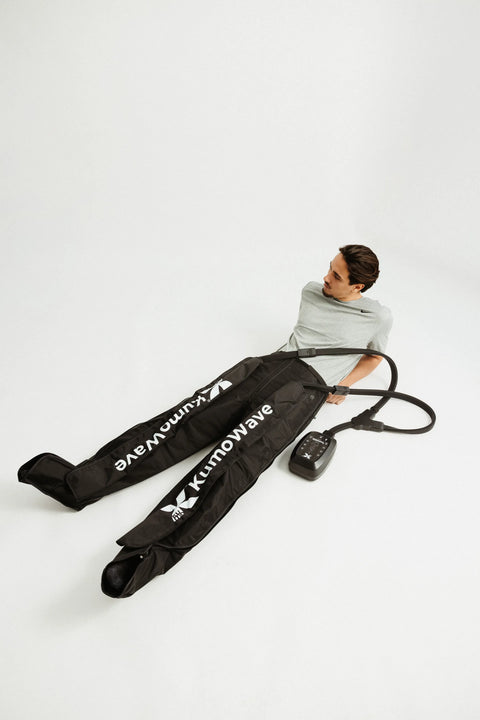
KumoWave Elite – Pressotherapy Pants
Full-coverage trousers. Ideal for lipedema, fluid retention and intensive use.
€799,00 €999,00
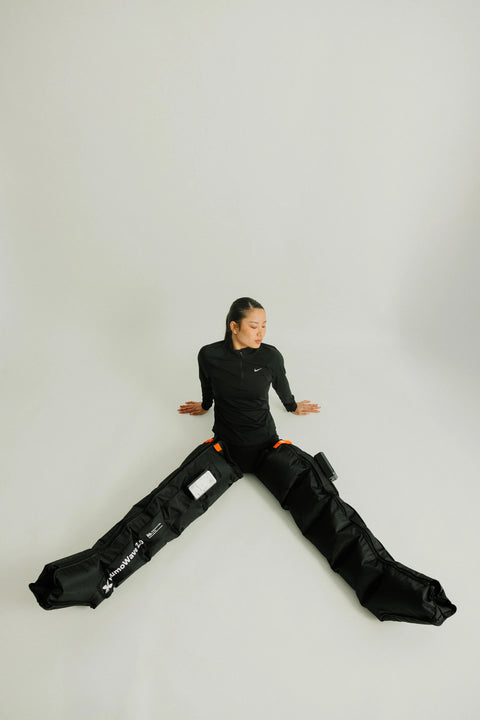
KumoWave 2.0 - Wireless Pressotherapy
Wireless, lightweight boots. Perfect for daily use and recovery.
€499,00 €599,00