
DOMS can ruin your next day.
If you're looking for ways to reduce stiffness and that "wooden legs" feeling, presotherapy (pneumatic compression boots) is one of the most popular tools to support recovery. In this guide, I'll explain what DOMS (Delayed Onset Muscle Soreness) really is, what presotherapy can offer, what the evidence says, and how to fit it into a smart routine alongside other Kumo recovery technologies.
Pressotherapy at home
End the day with light legs
★★★★★ 4,8/5 · rated by verified customers
KumoWave pressotherapy boosts circulation and helps drain fluid with sequential compression, in 20-minute sessions at home.
- Boosts circulation and helps drain fluid
- Chamber-based compression, adjustable to you
- Sequential compression that mimics manual drainage
€799,00€999,00
−10% on your 1st order when you subscribe to the newsletter

Key idea: DOMS is usually not "lactic acid." It's a temporary response to micro-stress (especially eccentric) and typically intensifies between 24 and 72 hours.
What is DOMS and why does it occur?
DOMS: Delayed Onset Muscle Soreness
What we call agujetas in Spain (muscle soreness) usually corresponds to DOMS (Delayed Onset Muscle Soreness): pain, tenderness, and muscle stiffness that appears hours after exertion, especially if it was new (more volume, more intensity, different exercise) or involved a lot of eccentric load (when the muscle lengthens while producing force).
Personalized protocol · included with your purchase
Want us to tell you how to use it in your case?
With your purchase, our experts prepare a personalized usage protocol for your case: sport, circulation, fluid retention, pregnancy or lipedema.
Message us on WhatsAppOur experts reply · no obligation
A reliable and informative reference from the American College of Sports Medicine (ACSM) describes that typical pain can begin around 12–24 h and peak between 24–72 h. You can consult it here: ACSM – Delayed Onset Muscle Soreness (DOMS).
The lactic acid myth (and what really happens)
For years, lactate was blamed, but today we know it's not responsible for the next-day muscle soreness. The most accepted view is that DOMS is related to micro-damage, local inflammation, and sensitization of nerve endings, especially after eccentric or unaccustomed efforts. Recent reviews summarize it as a self-limiting process that affects strength, range of motion, and stiffness sensation for a few days (e.g., evidence reviews from 2020–2025 note the 24–72 h pattern). A useful and current read is: Advances in Non-Pharmacological Strategies for DOMS (2025).
Very typical examples of "strong DOMS"
- Squats with slow tempo lowering (eccentric), long lunges, or new weight.
- Downhill running (trail or asphalt): "shattered" quadriceps.
- Returning to the gym after weeks: everything "aches" the next day.
- Session of plyos (jumps) or intense changes of pace.
What is presotherapy and why is it associated with "leg recovery"?
Presotherapy (at home) vs. intermittent pneumatic compression (in clinic)
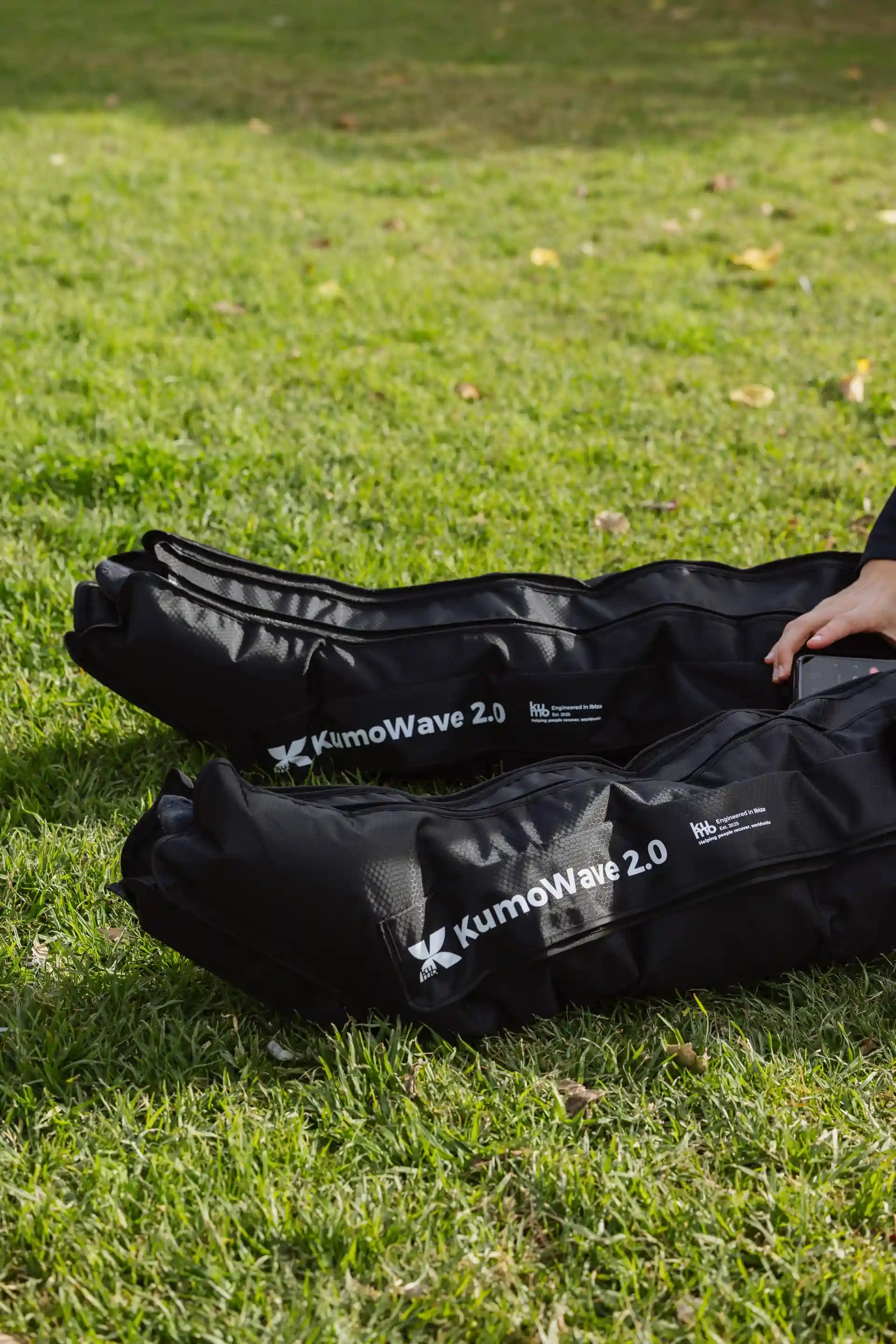
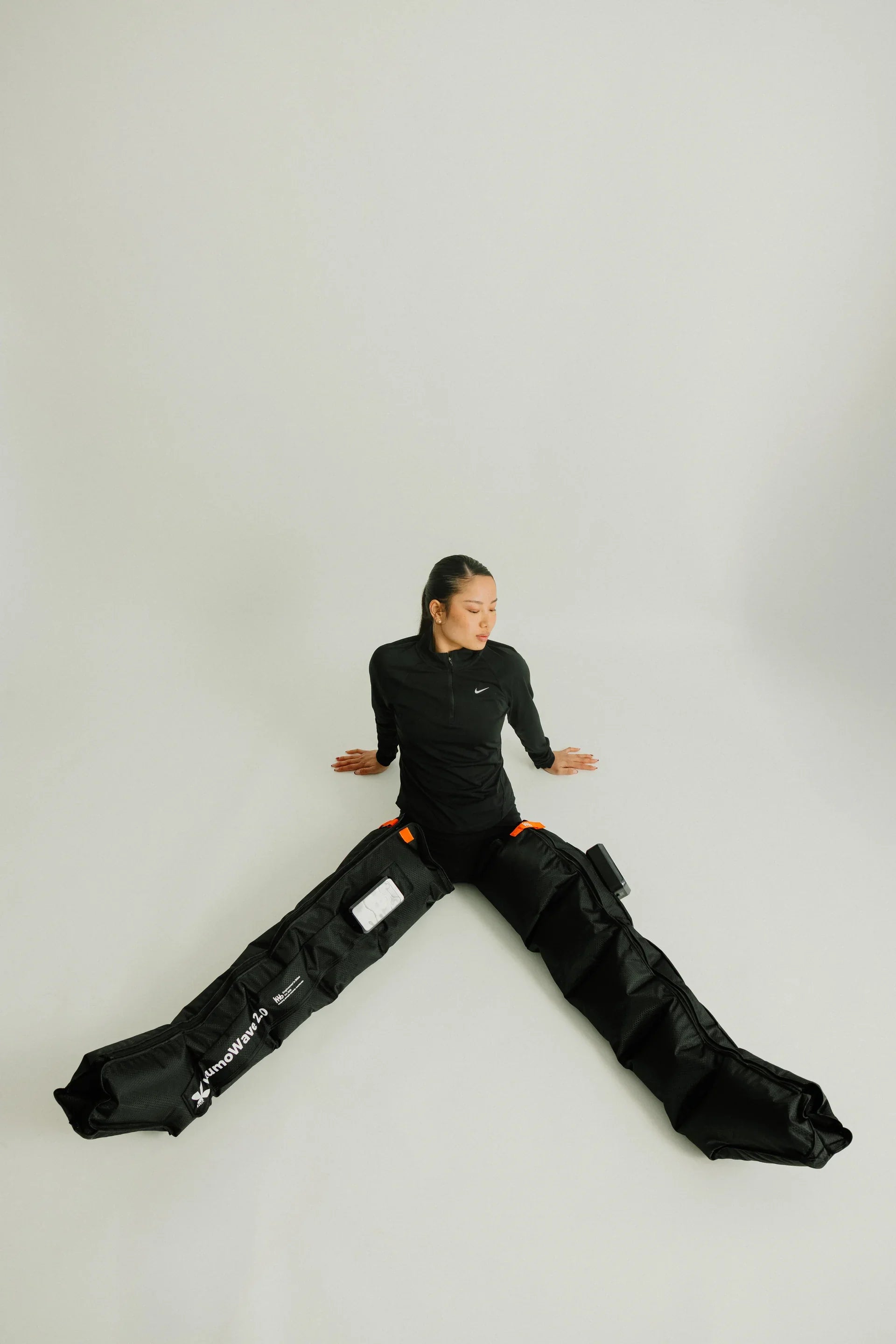
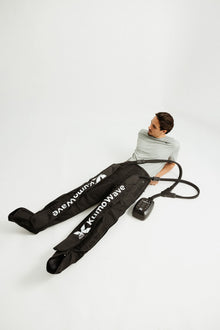
In the context of wellness and sports, presotherapy usually refers to boots that inflate and deflate through chambers to create sequential compression in the legs. In medicine, a related technology is known as intermittent pneumatic compression (IPC), described by hospitals as a system of inflatable cuffs that inflate and deflate to support venous circulation. A clear explanation of its function (inflation/deflation, massage-like sensation, circulatory objective) is found in: Cleveland Clinic – Intermittent Pneumatic Compression.
on your first order when you join the newsletter
We send you the code instantly. No spam.
Important: shared points do not mean that a sports use has the same objective as a hospital use. At Kumo, we talk about recovery technology to support well-being and the sensation of lighter legs, not to treat medical conditions.
What is sought when used for DOMS
When someone uses presotherapy "for DOMS," they usually seek:
- Less feeling of heaviness and stiffness upon waking.
- A drainage massage-like experience (without being a manual massage).
- Support for circulation and "resetting" legs after a tough session.
- Improved perception of recovery to train more comfortably the next day.
If you want to see Kumo's approach to this type of recovery, you can access the collection here: Kumo presotherapy boots.
Does presotherapy work for DOMS? What the evidence says (without magic promises)
What recent reviews show about pneumatic compression in sports recovery
In sports, the evidence tends to show small to moderate benefits, especially in perceived pain and feeling of recovery, with more variable results in physiological markers. For example, a systematic review and meta-analysis published in Biology of Sport (2024) included 17 studies (319 participants) and found trivial to small effects on muscle function and trivial to moderate effects on pain/soreness; it also reports that protocols of 20–30 minutes and pressures around 80 mmHg frequently appear in studies. You can consult it here: Maia et al., 2024 – IPC and sports recovery.
Trials on DOMS: promising, but not definitive, results
For exercise-induced DOMS, trials are usually small. A recent example is a randomized trial in untrained young adults (published in 2025) that applied IPC for 15 minutes immediately after and then at 24, 48, and 72 hours after a plyometric protocol, measuring pain and muscle status up to 96 h. Reference: Gu et al., 2025 – IPC and DOMS.
How to interpret all this in practice
- Presotherapy does not "cure" DOMS overnight, because the recovery process has its own rhythm.
- It can help you feel less stiff and more mobile, especially when combined with gentle movement, sleep, and nutrition.
- The most realistic goal is to seek better comfort and better readiness to move, not "zero DOMS."
How to use presotherapy to wake up less stiff (step by step)
Before you start: 3 quick rules
- No pain: the session should be intense but comfortable; if it hurts, reduce intensity/setting.
- Short consistency > eternal session: a reasonable routine is better than a compression marathon.
- Move afterward: finish with 5–10 minutes of gentle walking or light mobility if you can.
Guideline by time points (training, +24 h, +48 h)
These ranges reflect how it is often used in research and practice (e.g., 20–30 min in reviews; repeated sessions at 24/48/72 h in some trials), but always prioritize your device's instructions and your tolerance.
Table: indicative protocol for presotherapy and DOMS
| Moment | Objective | What to do | Typical duration | "Anti-stiffness" tip |
|---|---|---|---|---|
| Immediately after training | Reduce feeling of load and "heavy legs" | Presotherapy + slow breathing (nasal if you can) | 20–30 min (frequent in sports protocols) | After finishing, walk very gently for 5–10 min |
| The next day (+12–24 h) | Reduce stiffness upon waking | Presotherapy + ankle/hip mobility | 15–30 min | Take 2–3 "mini-breaks" of 30–60 s to move feet |
| Two days later (+48 h) | Improve comfort when DOMS is typically high | Presotherapy + active recovery (gentle cycling or walking) | 20–30 min | Don't chase PRs: reduce load and improve technique quality |
| Three days later (+72 h) if still bothersome | Support return to normalcy | Light session + mobility + presotherapy if it feels good | 15–25 min | Prioritize range of motion and longer warm-up |
A simple routine (10/10/10) for the next day
- 10 min of very gentle walking or cycling (without "burning out").
- 10 min of presotherapy (if you're short on time, this is better than nothing).
- 10 min of mobility: ankles, hips, knee extension, breathing.
Boost results: presotherapy + other strategies that add value
Active recovery: the most underrated "hack"
When you have DOMS, gentle movement often improves the feeling of stiffness (even if temporary). Think about circulation, warmth, and joint range: walking, very easy cycling, dynamic mobility, slowly climbing stairs, etc. Presotherapy fits especially well after that gentle movement.
Massage (and percussive massage) for perceived pain
Massage has interesting evidence for reducing DOMS pain. A meta-analysis (2017) found a significant reduction in pain at 24, 48, and 72 hours in groups with massage vs. control (with effect sizes reported in the publication). Source: Guo et al., 2017 – Massage and DOMS (meta-analysis).
At home, a practical approach is to use a percussive massager on a gentle mode (without "pounding" the area), seeking relaxation and better tolerance to movement. In the Kumo ecosystem, you can see the massager here: KumoPulse Air.
Red light / photobiomodulation: an increasingly studied avenue
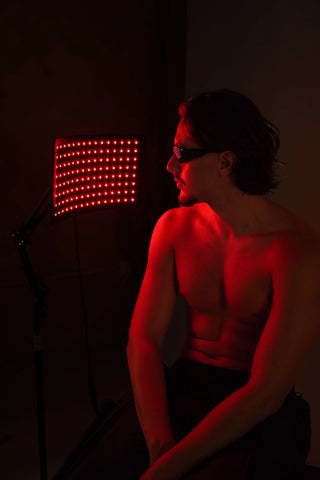
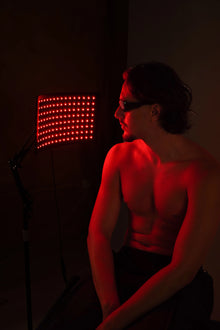
Photobiomodulation (often with wavelengths in the red and near-infrared range) is being investigated as support for pain and recovery. A systematic review and meta-analysis on photomodulation therapy in DOMS (recent publication with studies from 1996 to 2025) concludes that it could help reduce pain and support strength recovery, although it highlights heterogeneity and the need for more quality trials: Systematic Review & Meta-Analysis – Photomodulation Therapy and DOMS.
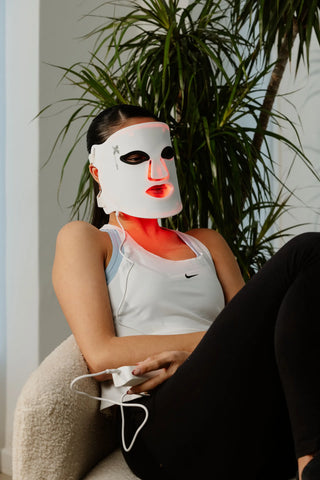
If you're interested in integrating light as a recovery habit, here's Kumo's LED light therapy collection.
Sleep and nutrition: where much of recovery is decided
If the goal is to "be less stiff tomorrow," no technology compensates for lack of sleep. As a general reference, athletes are usually recommended to aim for 7–9 hours (with individual variation) to support performance and recovery; a classic resource in strength and conditioning summarizes it thus: Sleep, Recovery, and Athletic Performance (NSCA).
In nutrition, a widely cited reference is the ISSN Position Stand on protein (2017), which places a usual daily intake for active individuals in the range of 1.4–2.0 g/kg/day in many cases (adjustable according to goal and context). Source: ISSN Position Stand: Protein and Exercise (PubMed).
Common mistakes when trying to "get rid of DOMS"
- Doing another tough session "to loosen up": you can move, yes, but reduce intensity and volume for 24–48 h if you're very sore.
- Too aggressive compression: stronger isn't always better; seek comfort and regularity.
- Stretching intensely when cold: prioritize gentle mobility and gradual warmth; if you stretch, make it progressive.
- Ignoring strange signals: very localized stabbing pain, noticeable loss of strength, striking swelling, or systemic symptoms deserve attention.
Safety: when to avoid presotherapy (and when to consult)
Presotherapy and pneumatic compression are not for everyone. In the clinical setting, healthcare institutions describe risks such as skin irritation, pressure discomfort, or problems in people with vascular or skin conditions (for example, in hospital information on IPC). One example: Johns Hopkins Medicine – IPC (risks and considerations).
Avoid using compression and seek medical advice if:
- You have or suspect deep vein thrombosis (DVT), previous embolism, or unexplained unilateral pain/swelling.
- There is significant arterial disease (poor perfusion), severe numbness, or loss of sensation.
- You have an infection in the area, cellulitis, relevant active wounds, or intense irritation.
- You have decompensated heart failure or medically unevaluated edema.
To see examples of contraindications in clinical documentation, you can consult a hospital leaflet (lymphedema/IPC) as a reference: NHS – Intermittent pneumatic compression (IPC) (contraindications). And, if you are interested in a more technical regulatory approach, some device documents list similar contraindications (e.g., DVT, heart failure, infection) in public documentation: FDA – IPC documentation (example).
FAQ: presotherapy, DOMS, and Kumo routines
How long should I use Kumo presotherapy after a leg workout?
As a practical rule, many sports routines involve sessions of 20–30 minutes, a range that frequently appears in reviews of pneumatic compression for recovery. If you're very sore, prioritize a comfortable (pain-free) session immediately after training or in the evening, and accompany it with 5–10 minutes of gentle walking afterward. The key isn't to "crush" the muscle: it's to create a feeling of relief and help you move better the next day.
Does presotherapy help if the DOMS is in the quadriceps (from downhills or squats)?
It can primarily help with sensation: less heaviness, "looser" legs, and better tolerance to movement. In DOMS, pain typically peaks between 24 and 72 hours, so it makes sense to use presotherapy the same day and repeat lightly the next day if it feels good. Still, it's important to combine it with active recovery (gentle walking/cycling) and a longer warm-up if you're going to train. If there's localized stabbing pain or marked loss of strength, don't treat it as DOMS.
Can I combine Kumo presotherapy and LED light on the same day?
Yes, as a wellness routine, many people combine technologies as long as the experience is tolerable and no adverse effects appear (irritation, pain, etc.). In the literature, photobiomodulation is being investigated as support for pain and recovery in DOMS, although protocols vary and the evidence is still being refined. A sensible strategy is: gentle movement → presotherapy → light session at a separate time of day, and prioritize sleep that night. If you are under medical supervision for a specific condition, confirm compatibility with your professional.
What is the "correct" pressure for presotherapy for DOMS?
There is no universal pressure. In recovery studies with pneumatic compression, various pressures are seen; for example, a review (2024) mentions that around 80 mmHg appears as a frequent option in protocols, but that doesn't mean it's ideal for everyone. For DOMS, it usually works best to start with a moderate intensity and only increase if it remains comfortable. Sign of correct adjustment: you feel firm and pleasant compression, without pain, tingling, or numbness.
Does presotherapy replace rest when I have DOMS?
No. Presotherapy can be a complement to improve comfort, but rest (and especially sleep) remains the cornerstone. In fact, pursuing "zero DOMS" solely through tools without adjusting training often backfires: you load too much too soon and accumulate fatigue. The smart approach is to use presotherapy to feel more mobile, do active recovery, adjust volume for 24–48 hours if you're very sore, and take care of protein intake and hydration. If you do that, DOMS usually becomes more manageable over time.
What now?
If you want to turn recovery into a habit (without overcomplicating it), start with a simple and sustainable routine: presotherapy to relieve leg fatigue, massage to release tension points, and light as a wellness aid. Explore Kumo's home recovery solutions, and if you need guidance, talk to our team on the contact page.
KumoWave pressotherapy
Choose your at-home pressotherapy
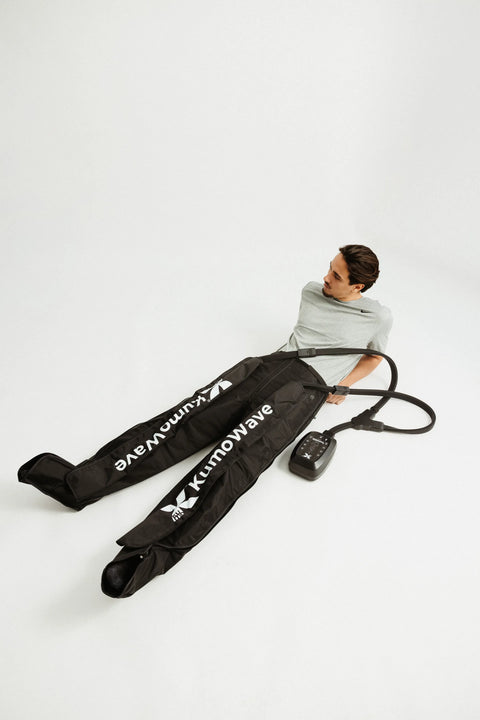
KumoWave Elite – Pressotherapy Pants
Full-coverage trousers. Ideal for lipedema, fluid retention and intensive use.
€799,00 €999,00
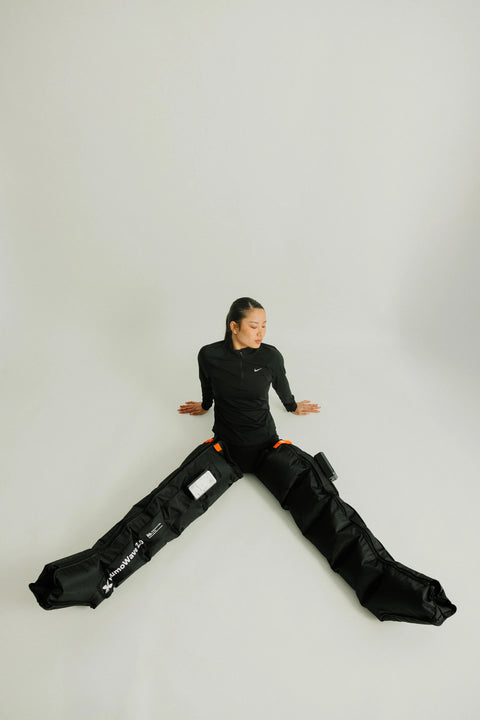
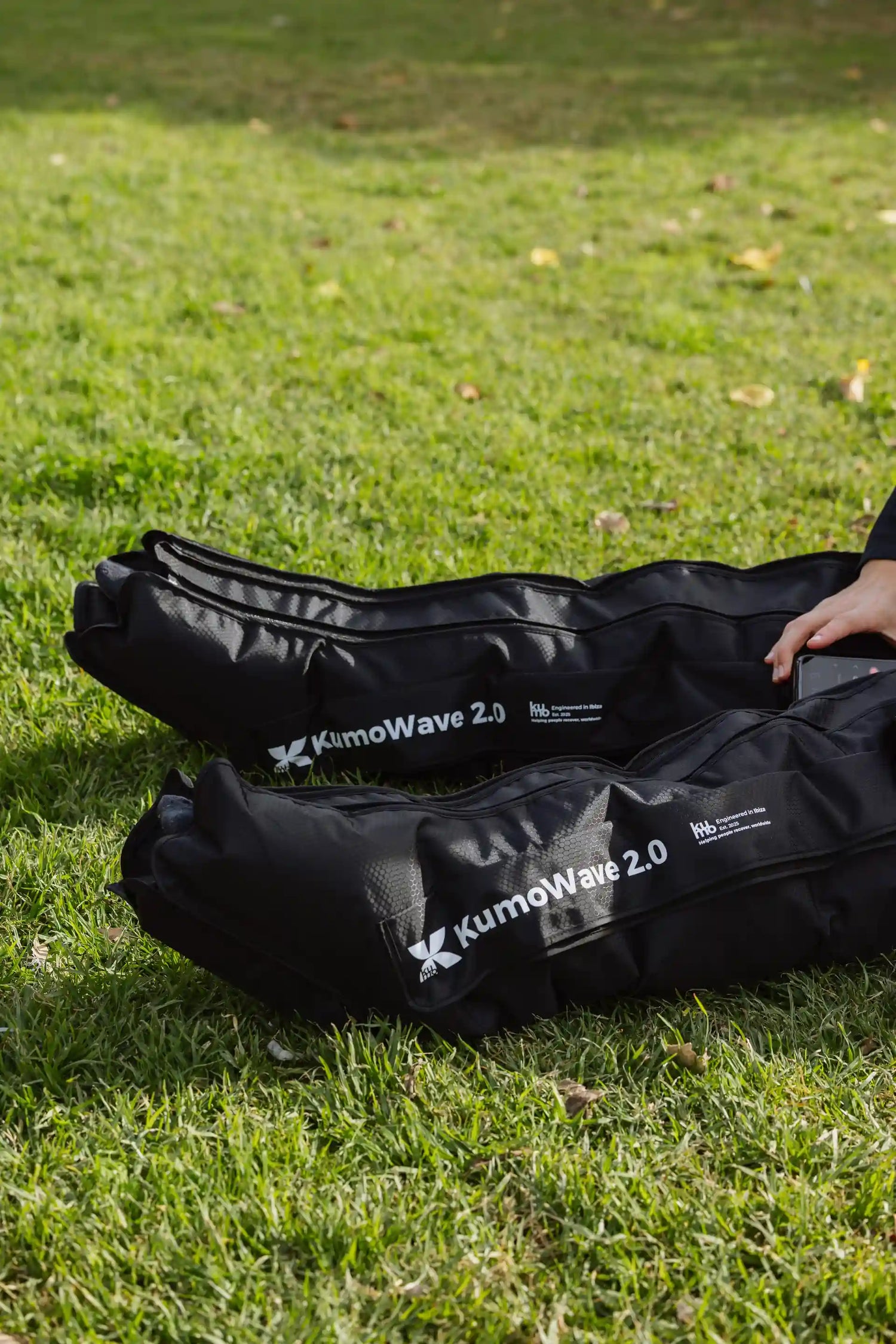
KumoWave 2.0 - Wireless Pressotherapy
Wireless, lightweight boots. Perfect for daily use and recovery.
€499,00 €599,00