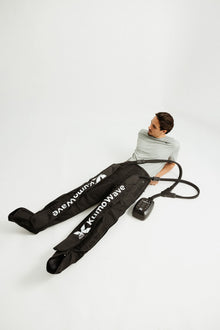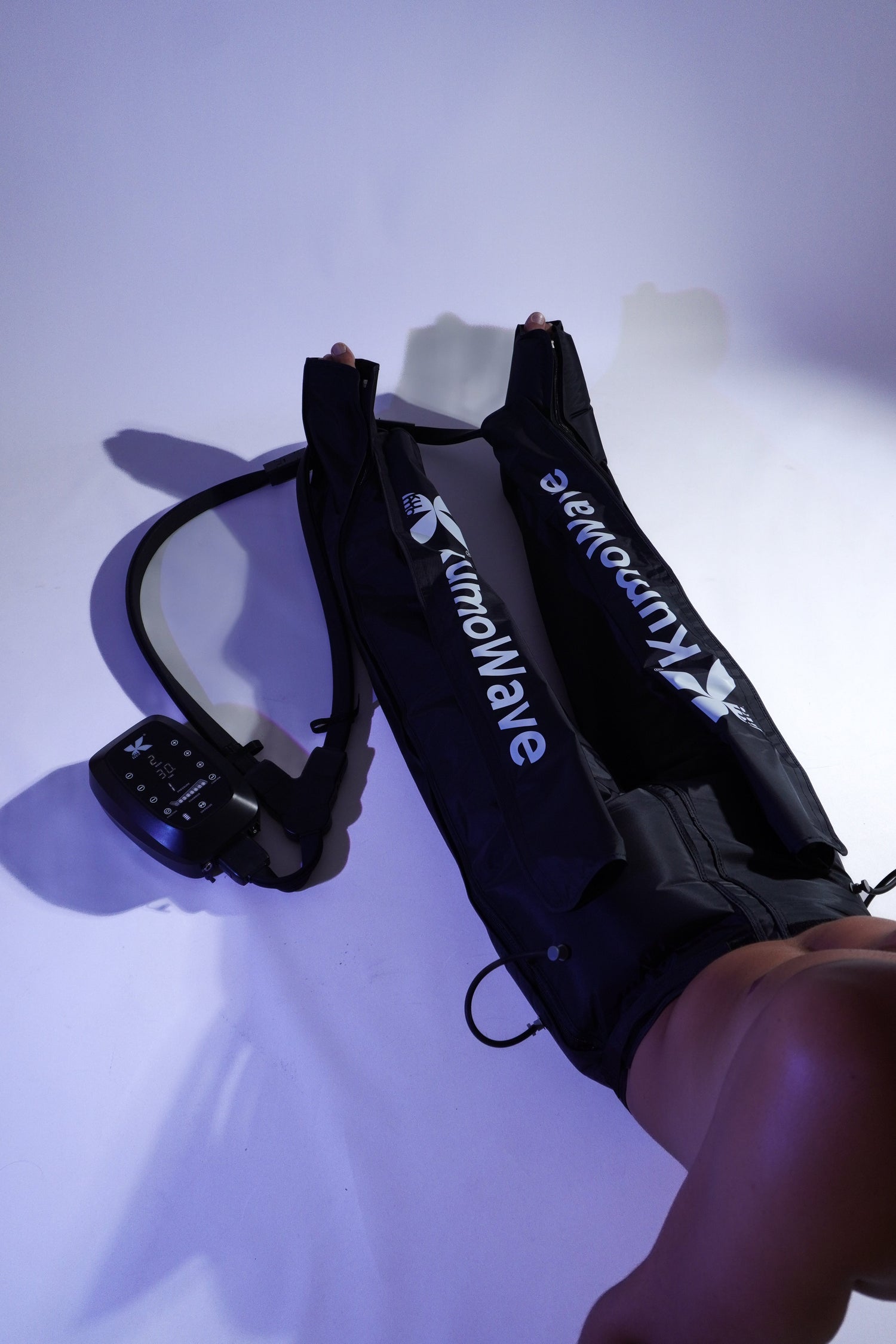
Pressotherapy has become a cornerstone of modern recovery.
In this article you will discover exactly what it is, what benefits it can bring to your overall well-being according to the latest scientific evidence, who it is suitable for, what precautions you should take and how to intelligently integrate it into your self-care routine for 2026.
Pressotherapy at home
End the day with light legs
★★★★★ 4,8/5 · rated by verified customers
KumoWave pressotherapy boosts circulation and helps drain fluid with sequential compression, in 20-minute sessions at home.
- Boosts circulation and helps drain fluid
- Chamber-based compression, adjustable to you
- Sequential compression that mimics manual drainage
€799,00€999,00
−10% on your 1st order when you subscribe to the newsletter

What is pressotherapy and how does it work?
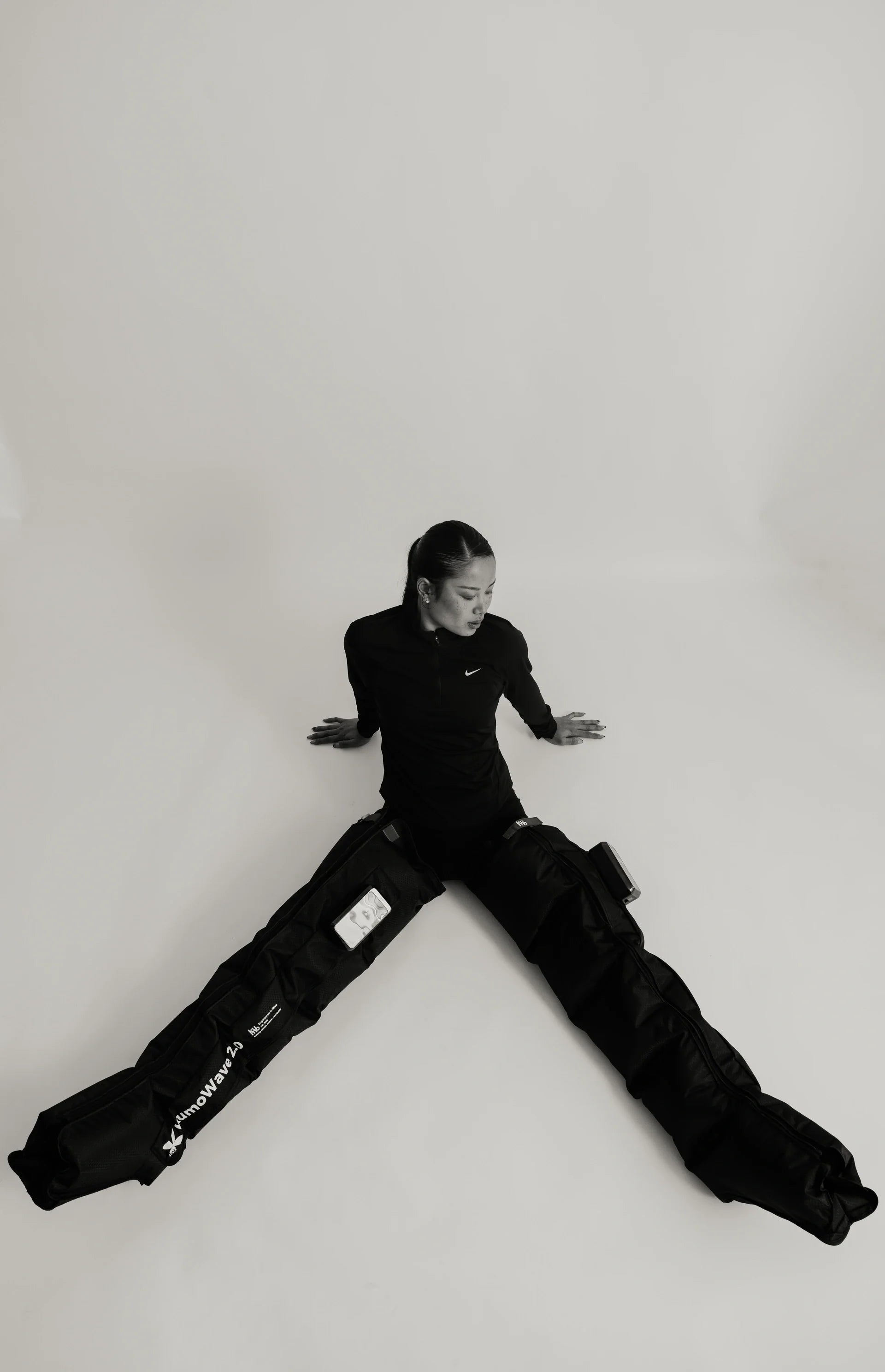
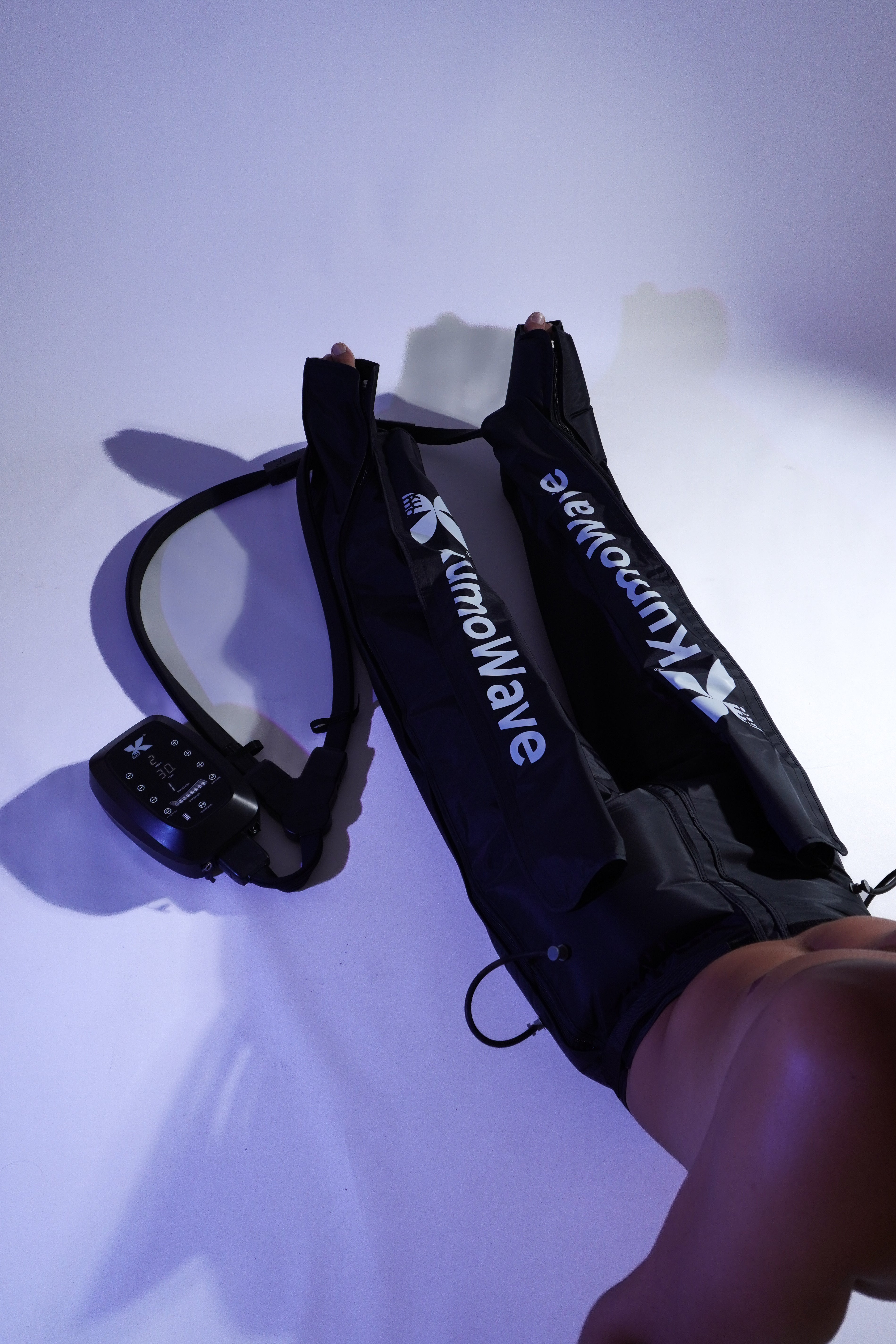
When we talk about pressotherapy in wellness and recovery, we almost always refer to intermittent pneumatic compression : boots (or sleeves) with several air chambers that inflate and deflate sequentially from the foot to the hip.
This rhythmic inflation mimics the action of the leg muscle pump: it pushes venous blood and lymph toward the heart , reduces fluid stasis, and facilitates venous and lymphatic return. ( pubmed.ncbi.nlm.nih.gov )
Personalized protocol · included with your purchase
Want us to tell you how to use it in your case?
With your purchase, our experts prepare a personalized usage protocol for your case: sport, circulation, fluid retention, pregnancy or lipedema.
Message us on WhatsAppOur experts reply · no obligation
From the clinic to everyday well-being
Pneumatic compression technology originated in medical settings to support the treatment of circulatory problems (venous insufficiency, lymphedema, prevention of deep vein thrombosis in immobilized patients). ( my.clevelandclinic.org ) Over time, its use has expanded to:
- Athletes looking to accelerate recovery between demanding sessions.
- People who spend many hours standing or sitting and notice heavy legs at the end of the day.
- Users looking for a self-care and relaxation routine at home.
Brands specializing in recovery, such as the KUMO ecosystem, have adapted this technology to aesthetic, comfortable devices designed for regular home use, moving it away from the hospital environment and closer to everyday life.
Benefits of pressotherapy for overall well-being
1. Improved circulation and a feeling of light legs
Several physiological studies have shown that intermittent pneumatic compression can increase blood flow in the arteries and veins of the legs during exercise and recovery. ( pubmed.ncbi.nlm.nih.gov ) In practical terms, this translates to:
on your first order when you join the newsletter
We send you the code instantly. No spam.
- Reduction of the feeling of tired or swollen legs at the end of the day.
- Greater comfort after sitting (office, long trips) or standing for many hours.
- Subjective sensation of lightness and pleasant warmth in the extremities.
It's not about "changing" your circulatory system, but about giving it a temporary mechanical boost that promotes venous return and can relieve mild discomfort related to sedentary lifestyles or postural strain.
2. Support for lymphatic drainage and mild fluid retention
In the medical field, lymphedema (chronic swelling due to lymph accumulation) is primarily treated with bandages, compression garments, and complex decongestive therapy . ( mayoclinic.org ) Within this approach, sequential pneumatic compression systems are used as supportive therapy in certain cases and always under professional supervision. ( cdc.gov )
In the context of home wellness, pressotherapy can:
- Promote lymphatic movement in healthy people with a slight tendency to bloating at the end of the day.
- To support the feeling of "decongestion" in legs after long days.
If you have been diagnosed with lymphedema, advanced chronic venous insufficiency, or another vascular condition, it is essential that the use of any compression system be guided by a specialist , as the pressure, frequency, and type of device must be individualized. ( mayoclinic.org )
3. Sports recovery and reduction of muscle fatigue
In recent years, studies on the use of compression boots for post-exercise recovery have increased. A 2024 systematic review and meta-analysis that analyzed 17 studies (319 participants) found a trivial to small benefit on muscle function and a trivial to moderate effect on reducing pain and muscle soreness, with highly variable results in markers of muscle damage. ( pubmed.ncbi.nlm.nih.gov )
Some recent examples:
- In competitive handball players, 5 weeks of daily use of intermittent pneumatic compression helped mitigate the decline in agility and improved hemodynamic parameters and perception of recovery compared to a control group. ( pubmed.ncbi.nlm.nih.gov )
- In combat sports athletes, pneumatic compression showed improvements in tissue perfusion and muscle elasticity compared to passive rest, aiding recovery after intense fatigue protocols. ( pubmed.ncbi.nlm.nih.gov )
In summary: for athletes, pressotherapy can be a useful component within a comprehensive recovery strategy (sleep, nutrition, load management), with a particular impact on the perception of pain and heaviness , rather than on dramatic performance improvements on its own. ( sciencedirect.com )
4. Mental well-being, relaxation and self-care ritual
Beyond the physiological effects, many people use pressotherapy as a ritual to disconnect at the end of the day:
- Rhythmic massage promotes a feeling of deep relaxation .
- By integrating it with conscious breathing or guided meditation, it becomes a space for pause within very demanding routines.
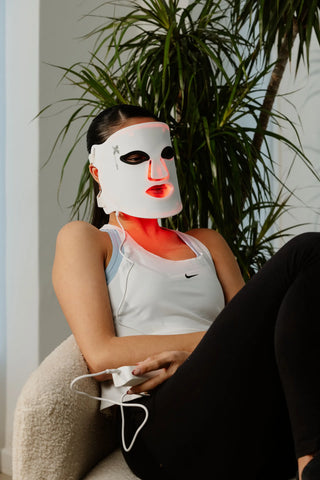
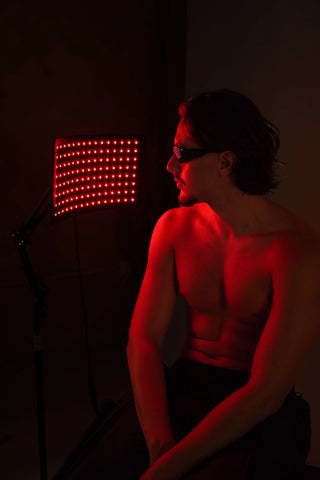
- It can be combined with a dimly lit environment or with LED light therapy aimed at improving the quality of nighttime rest.
This subjective component is also part of overall well-being: feeling better, sleeping better, and taking care of oneself consistently.
What does science say in 2025–2026? Updated evidence
Summary of benefits and scientific evidence
Intermittent pneumatic compression has been studied in very different contexts: hospitalized patients, people with venous ulcers, lymphedema, healthy athletes, etc. The strength of the evidence varies depending on the objective.
| Aim | What can pressotherapy offer? | Level of evidence (until 2025) | Profile for which it is most relevant |
|---|---|---|---|
| Improve venous return and relieve tired legs | It increases blood flow to the extremities and promotes the function of the "muscle pump". ( pubmed.ncbi.nlm.nih.gov ) | Moderate (physiological studies consisting of healthy people). | Sedentary people, with many hours of standing/sitting, frequent travelers. |
| Lymphedema and chronic edema (medical use) | An adjunct to bandages and compression garments within a complete decongestive therapy, under prescription. ( mayoclinic.org ) | Moderate as supportive therapy; needs individualization and supervision. | Patients diagnosed with lymphedema followed by specialized units. |
| Sports recovery | Small improvement in pain perception and fatigue; possible trivial-small effect on muscle function. ( pubmed.ncbi.nlm.nih.gov ) | Low-moderate (modest benefits; heterogeneous results). | Athletes who seek to optimize every detail of recovery. |
| Venous ulcers | It may accelerate healing compared to not using compression, as an adjunct to bandages; its exact role is still being investigated. ( pubmed.ncbi.nlm.nih.gov ) | Moderate but with mixed evidence and a need for more current trials. | Complex patients, always in specialized clinical settings. |
| Prevention of thrombosis in the ICU or post-surgery | Part of mechanical prophylaxis; in some trials it reduces DVT, in others it does not add a clear benefit to heparin. ( pubmed.ncbi.nlm.nih.gov ) | Moderate in combination with other medical measures. | High-risk hospitalized patients under medical supervision. |
Looking ahead to 2026, an increase in quality studies focused on sports recovery protocols (duration, pressure, times of use) and on the use of pressotherapy as a home complement in chronic patients is expected, but today the available evidence already allows for reasonable and prudent use oriented towards well-being.
How to integrate pressotherapy into your recovery routine
Indicative frequency and duration
The most common protocols in sports recovery studies use 20–30 minute sessions with pressures around 70–80 mmHg on the legs, often immediately after intense exercise. ( pubmed.ncbi.nlm.nih.gov )
As a general guideline for healthy users:
- 2–5 sessions per week may be enough to notice changes in feeling light and recovery.
- On days of hard training, use it as a post-exercise session; on easy days, use it in the afternoon/evening as a regenerative massage.
- Start with moderate pressure and increase only if the sensation is pleasant and does not cause discomfort.
If you have any vascular or cardiac condition, or are pregnant, talk to your doctor beforehand to adjust parameters and confirm that there are no contraindications.
Combining pressotherapy with other recovery technologies
Pressotherapy works best when it's part of a comprehensive strategy , not as a standalone tool. Some interesting combinations:
- Pressotherapy + red/LED light therapy : After the compression massage, you can use LED light therapy devices to support muscle regeneration and sleep hygiene, always respecting the usage recommendations.
- Pressotherapy + percussion massage : a massage gun like KUMOPULSE Air allows you to work on trigger points and highly charged areas, while the boots take care of the overall venous and lymphatic return.
- Pressotherapy + gentle stretching : 5–10 minutes of mobility or restorative yoga after the session help consolidate the feeling of lightness.
The goal is to create a routine that is consistent with your activity level, your rest, and your goals (performance, health, aesthetics, or simply well-being).
Practical tips for using compression boots at home
- Use them in a comfortable position (lying down or reclining), with your back well supported.
- Do not use them immediately after a very heavy meal.
- Drink water before and after to help manage body fluids.
- Start with gentle programs and gradually adjust the intensity and duration.
- If you experience pain, intense tingling, dizziness, or shortness of breath, stop the session and consult a healthcare professional.
- Keep your skin clean and dry, and avoid using them on open wounds, active skin infections, or burns.
Safety, contraindications, and when to consult a professional
When used correctly, intermittent pneumatic compression is a technique with a high safety profile ; published serious adverse events are very rare and are usually associated with incorrect indications or overlooked pathologies. ( phlebolymphology.org ) Even so, it is important to know the limits.
Common contraindications (when NOT to use pressotherapy without medical supervision)
In general, the use of compression boots (or other strong compression systems) is not recommended without specialized supervision in the following cases:
- Active deep vein thrombosis (DVT) or suspected recent blood clots in the legs.
- Decompensated heart failure (especially NYHA class IV) or recent episodes of acute pulmonary edema. ( pmc.ncbi.nlm.nih.gov )
- Severe peripheral arterial disease (very narrowed arteries in the legs).
- Acute skin infections at the application site (cellulitis, erysipelas, infected ulcers). ( phlebolymphology.org )
- Ulcers, burns or extensive open wounds under the compression chambers.
- Severe neuropathy with significant loss of sensation (for example, in some advanced diabetes).
If you fall into any of these categories, it is essential to discuss your situation with your doctor before using any home pressotherapy device.
Warning signs during a session
Stop the session and seek professional evaluation if you notice the following during or after use:
- Intense, sharp or burning pain in one leg.
- Very marked redness, local heat or sudden swelling of a limb.
- Shortness of breath, chest tightness, or an unusual feeling of palpitations.
- Dizziness or significant general malaise.
In people at higher risk (history of cancer, recent surgery, significant obesity, history of thrombosis), the use of compression therapy should be discussed with the medical team, just as with other forms of compression. ( cdc.gov )
How to choose a pressotherapy system focused on well-being
Without going into comparisons or prices, some useful criteria when choosing a home computer are:
- Number of chambers : more chambers allow for a more progressive and precise massage.
- Adjustable pressure range : ideal for starting gently and customizing later.
- Pre-configured programs (sports recovery, relaxation, gentle drainage).
- Durable fabrics that are easy to clean and pleasant to the touch.
- Noise level and compressor size , especially if you will be using it at night.
KUMO's compression boots are designed with this philosophy: to combine effective technology, ease of use and a careful aesthetic that encourages making recovery a habit as important as training itself.
Frequently asked questions about pressotherapy
How many pressotherapy sessions per week are recommended?
For healthy individuals seeking wellness and recovery, a typical frequency is 2 to 5 sessions per week , lasting approximately 20–30 minutes each. On days with high physical exertion (intense workouts, long periods of standing), sessions are usually scheduled after activity, while on lighter days, they can be used in the afternoon or evening for relaxation. If you are a beginner, it's a good idea to start with 2–3 sessions per week at moderate pressure, observing how your body responds and adjusting accordingly. For any vascular or cardiac condition, your doctor should determine the appropriate course of action.
Does pressotherapy help with weight loss or cellulite reduction?
No. Pressotherapy is not a slimming treatment nor a direct method for eliminating cellulite. What it can do is promote venous and lymphatic return, temporarily reduce fluid retention, and improve the feeling of lighter, less swollen legs. This sometimes makes the area appear momentarily slimmer, but fat loss is only achieved with a proper calorie balance, exercise, and other healthy lifestyle habits. You can consider pressotherapy as a wellness complement , not as an isolated cosmetic solution.
Is it safe to use compression therapy boots at home?
For most healthy people, using compression boots at home is safe if some basic guidelines are followed: choose moderate pressure, don't excessively lengthen sessions, maintain good skin condition, and stop use if you experience any pain or unusual symptoms. The serious complications described in the literature are very rare and are usually related to pre-existing vascular or cardiac conditions and inappropriate indications. ( phlebolymphology.org ) If you have a history of thrombosis, heart failure, peripheral arterial disease, or lymphedema, always talk to your doctor before incorporating compression therapy into your home routine.
Pressotherapy before or after training: which is better?
Most studies on sports recovery apply compression therapy after exercise , usually within the first hour after training or competition, and it is in this period that small benefits in reducing pain and fatigue have been observed. ( pubmed.ncbi.nlm.nih.gov ) Using it before training could serve as a gentle warm-up for people experiencing morning stiffness, but it does not replace a proper active warm-up. If your main goal is to perform better the next day and experience less muscle soreness, it makes more sense to prioritize post-exercise use and maintain a sport-specific dynamic mobility routine before training.
How long does it take to see the effects of pressotherapy?
Some sensations, such as lighter legs and reduced swelling , are often noticeable from the first few sessions, especially if used after a long day or intense training. Changes in perceived recovery and minor muscle discomfort tend to become more established after several weeks of regular use (for example, 3–5 weeks, as observed in team athletes). ( pubmed.ncbi.nlm.nih.gov ) In all cases, compression therapy should be considered a supportive measure: its effects are enhanced when combined with good sleep, proper nutrition, and a balanced training load plan.
So what now?
If you want recovery to be a central part of your lifestyle, compression therapy can be a powerful ally alongside other cutting-edge technologies. At KUMO, you'll find a cohesive ecosystem of compression boots , LED light therapy , and tools like the KUMOPULSE Air massage gun , designed to integrate recovery into your daily routine with both aesthetics and performance.
If you have specific medical questions or need personalized guidance on which type of device best suits your situation, we encourage you to contact healthcare professionals or write to us through our contact form to receive advice on how to incorporate these technologies into your wellness routine safely and effectively.
KumoWave pressotherapy
Choose your at-home pressotherapy
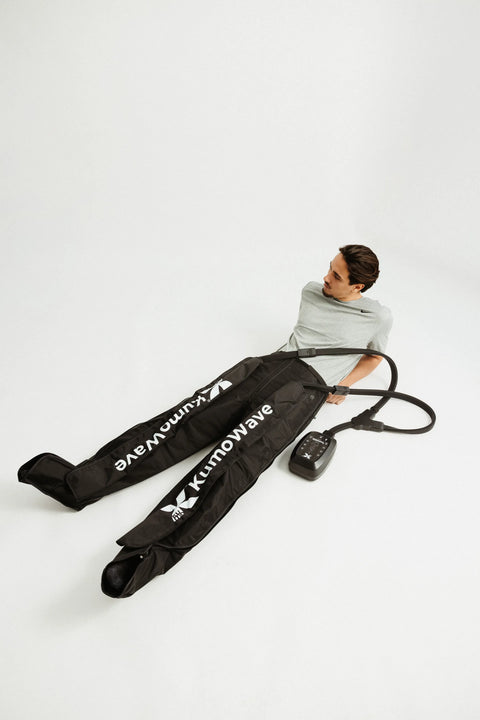
KumoWave Elite – Pressotherapy Pants
Full-coverage trousers. Ideal for lipedema, fluid retention and intensive use.
€799,00 €999,00
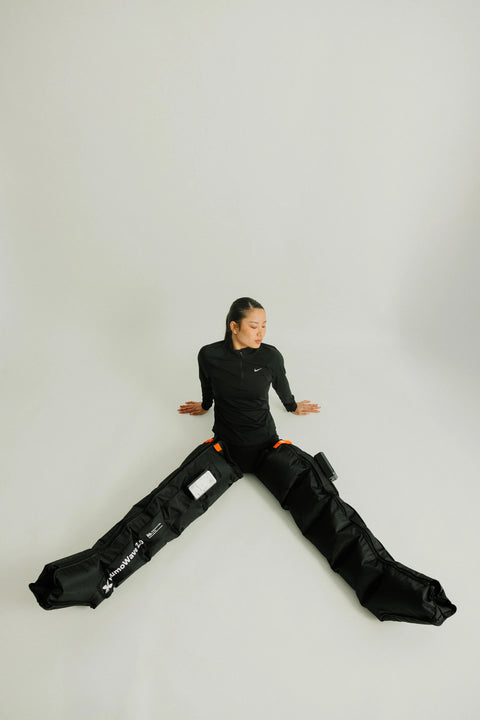
KumoWave 2.0 - Wireless Pressotherapy
Wireless, lightweight boots. Perfect for daily use and recovery.
€499,00 €599,00