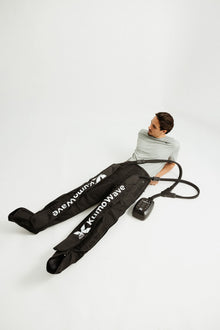

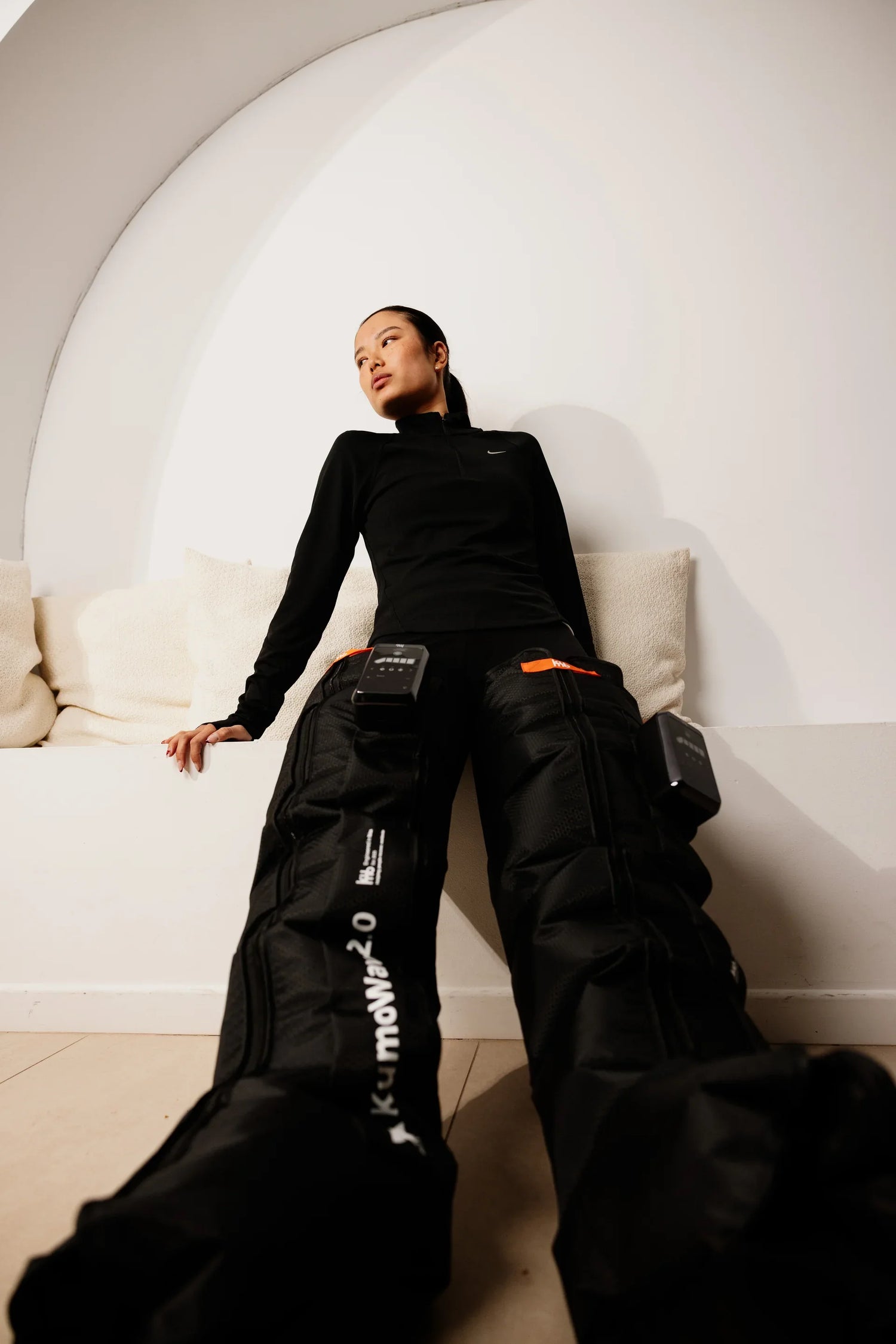
Heavy Calves After a Run.
If you notice your calves feeling heavy, stiff, or "about to explode" after running, a post-run routine with presotherapy can help you speed up the feeling of relief and regain lighter legs. In this article, you'll find a practical protocol (0–72 h), signs to distinguish overload from an injury, and how to integrate Kumo recovery tools into your wellness habit without promising miracles.
Pressotherapy at home
End the day with light legs
★★★★★ 4,8/5 · rated by verified customers
KumoWave pressotherapy boosts circulation and helps drain fluid with sequential compression, in 20-minute sessions at home.
- Boosts circulation and helps drain fluid
- Chamber-based compression, adjustable to you
- Sequential compression that mimics manual drainage
€799,00€999,00
−10% on your 1st order when you subscribe to the newsletter

To explore the brand's recovery universe, you can start on the Kumo homepage.
What is calf overload (and why it happens after running)
Overload, DOMS, or injury: they are not the same
When we talk about "heavy calves," we often mix three different situations:
Personalized protocol · included with your purchase
Want us to tell you how to use it in your case?
With your purchase, our experts prepare a personalized usage protocol for your case: sport, circulation, fluid retention, pregnancy or lipedema.
Message us on WhatsAppOur experts reply · no obligation
- Overload/fatigue: a feeling of tension and "blockage" due to accumulated work (intervals, hills, changes of pace, volume).
- DOMS (Delayed Onset Muscle Soreness): muscle pain that starts after a period "without pain" and reaches its peak between 24 and 72 hours after exertion, then gradually subsides (in many cases, within a week).
- Muscle strain/tear: more acute pain, sometimes with a sharp stab, limp, bruising, or clear loss of strength. If in doubt, professional evaluation is advisable.
Why calves get so "heavy" when running
The calves (gastrocnemius) and soleus work as engines and stabilizers: they absorb impact, control the tibia, and provide propulsion. They become particularly loaded when there are:
- Hills (more eccentric work and ankle demand).
- Long strides or excessive forefoot striking.
- Rapid increase in volume or intensity.
- Ankle/Achilles stiffness or low tolerance to eccentric loading.
What presotherapy can offer for overloaded calves (and what it can't)
How it works: sequential compression for circulation and "light legs"
Presotherapy (also called intermittent pneumatic compression or IPC) applies pressure cyclically through air chambers. The goal is to promote venous return and fluid movement, which many people perceive as relief from heaviness and "unloading" after running. As a general reference, this type of device is used in healthcare settings to support circulation and prevent thrombosis in specific situations.
What recent evidence says (and why results are mixed)
In sports recovery, evidence on IPC is heterogeneous: it depends on the protocol, type of exercise, application time, and what is measured (perceived pain, neuromuscular function, jump, etc.).
on your first order when you join the newsletter
We send you the code instantly. No spam.
- A systematic review with meta-analysis published in 2025 (19 studies, n=672) concluded that, with moderate certainty, IPC did not reduce muscle pain at 24 h (mean difference: −2.20 points; 95% CI −10.08 to 5.68), compared to control.
- At the same time, recent controlled trials show that there might be an improvement in perceived pain in certain contexts or time windows. For example, a trial (2025) suggests a potential reduction in perceived soreness, although without clear improvements in neuromuscular recovery (jump/contraction).
- Another trial (2025) applied IPC for 15 minutes immediately after and again at 24/48/72 h after inducing DOMS through plyometrics, observing differences in favor of the IPC group in pain and some muscle parameters at 48–72 h.
How to translate it into practice: presotherapy is not a guaranteed "cure," but it can be a useful tool for the subjective feeling of relief and post-run comfort, especially if you integrate it into a comprehensive plan (mobility, sleep, nutrition, load progression).
When to avoid it or use with caution (safety first)
Compression (including pneumatic) has risks and contraindications. There is medical consensus literature on complications and scenarios where extreme caution is needed (e.g., active skin infection, certain arterial problems, cardiac decompensation, etc.). If you have a history of vascular issues, unusual pain, marked unilateral swelling, numbness, or worrisome symptoms, prioritize clinical evaluation.
Furthermore, if you suspect a significant calf injury (tear) or have alarm signs, consult a healthcare professional.
Practical rule: presotherapy should feel pleasant and progressive. If it causes acute pain, tingling, numbness, or intense marks that take time to disappear, reduce intensity/time and re-evaluate.
Post-run routine for heavy calves with presotherapy boots (0–72 h)
Before starting: 60-second mini-check
- Pain: Is it diffuse (fatigue/DOMS) or sharp and localized (possible injury)?
- Symmetry: Are both legs the same or is one very different? (Marked unilateral issues deserve more attention).
- Skin and sensitivity: Is there numbness, abnormal heat, a wound, significant irritation?
- Movement: Can you walk normally and raise your heels without acute pain?
Table: indicative post-run protocol (no "filler," with logic)
The durations below are inspired by common research protocols (e.g., 15–30 min sessions in recent trials), adjusted for prudent home use. Always adapt to your tolerance and the device manual.
0–72 h routine for calf overload
| Time | Objective | What to do | Estimated duration |
|---|---|---|---|
| 0–30 min after running | Lower heart rate and "reset" legs | Walk gently for 5–10 min + hydrate. If it feels good, a light presotherapy session. | Presotherapy: 15–20 min |
| 2–6 h after running | Relief and comfort | Elevate legs for 10 min + optional second session if you feel heaviness. | Presotherapy: 15–30 min |
| 24 h | Manage DOMS onset/peak | Ankle + calf mobility within a comfortable range + presotherapy session if it improves the feeling. | 10–15 min mobility + 15–30 min presotherapy |
| 48 h | Support peak stiffness | Presotherapy session + very moderate massage/percussion (if not painful) + gentle walk. | 15–30 min presotherapy |
| 72 h | Return to "elasticity" and progressive loading | Presotherapy as needed + activation (gentle heel raises) + assess progressive return to quality. | 15–30 min presotherapy |
How to use presotherapy without overdoing it (guiding sensations)
- Intensity: start gentle. In recovery, "stronger" is not always "better."
- Realistic goal: aim for relief from heaviness and better movement tolerance, not to "erase" all discomfort in one session.
- Frequency: 1 session is usually enough; 2 only if you tolerate it and notice clear benefits (without irritation).
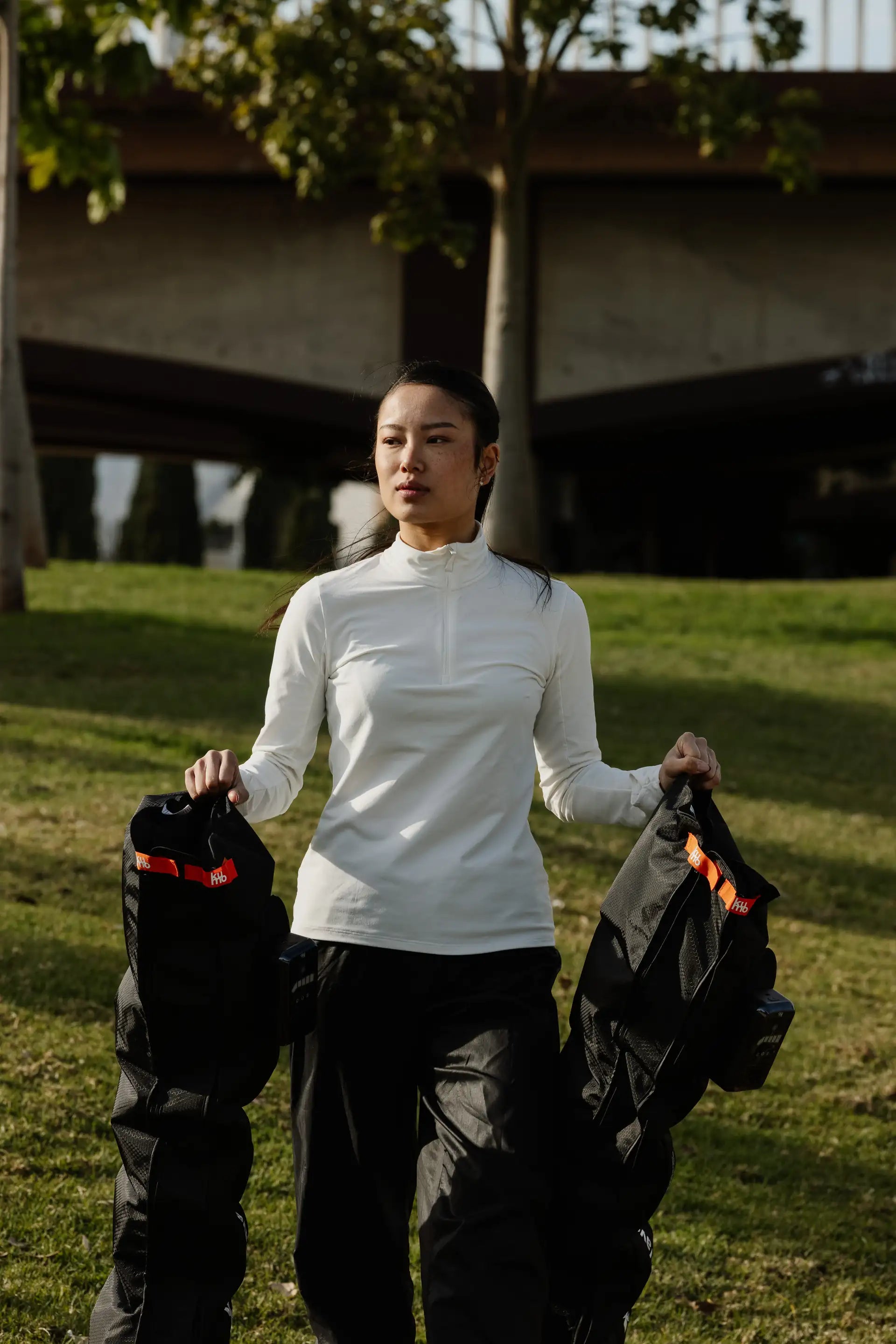
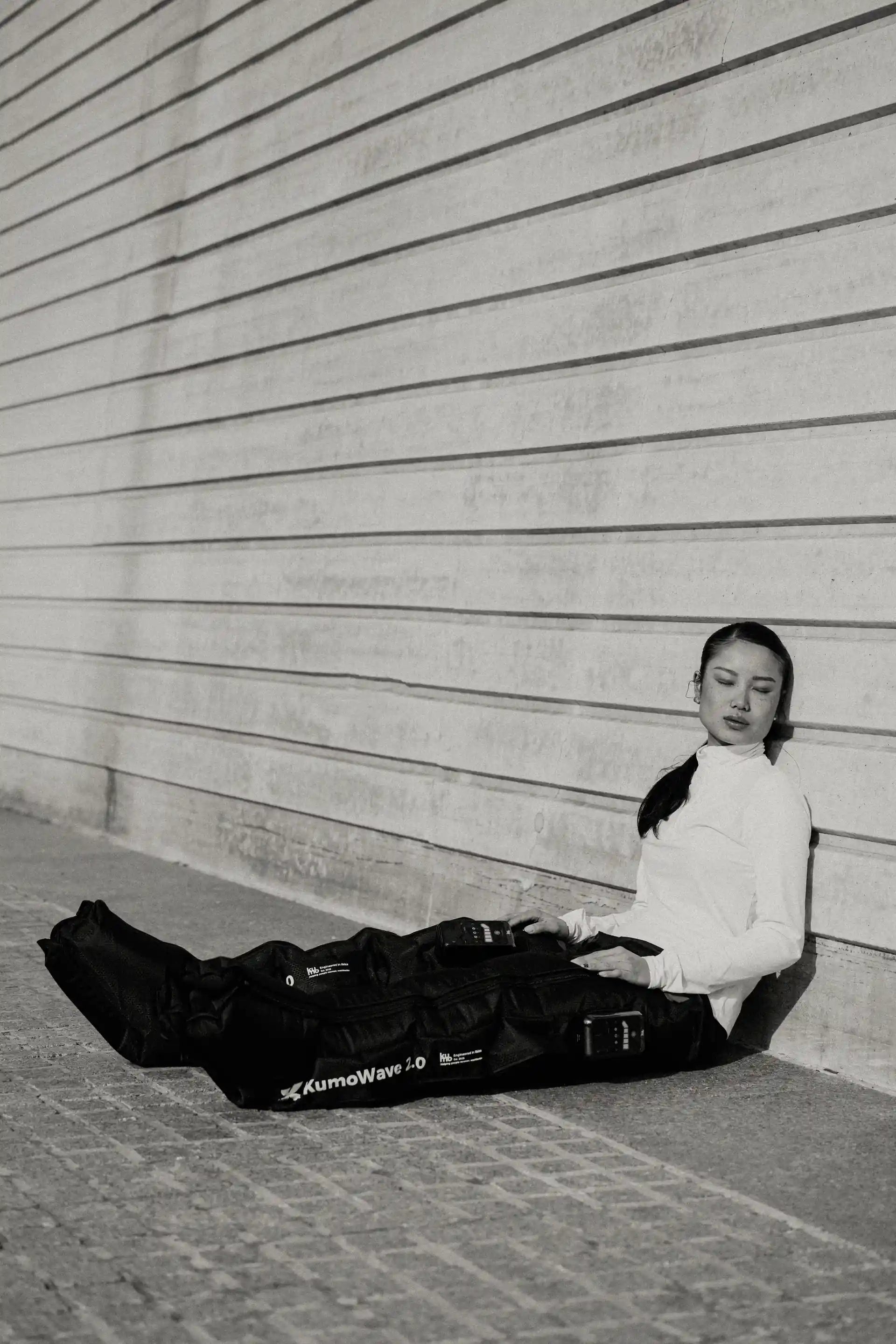
If you want to see the type of product associated with this routine, here is Kumo's collection of presotherapy boots.
Smart complements: presotherapy + other Kumo tools (without promising magic)
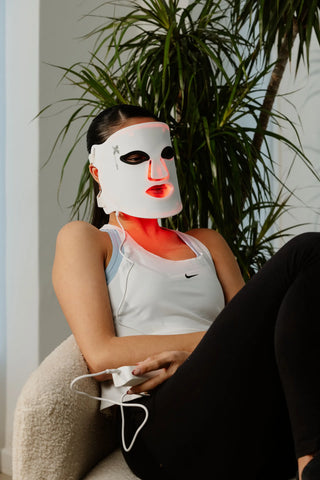
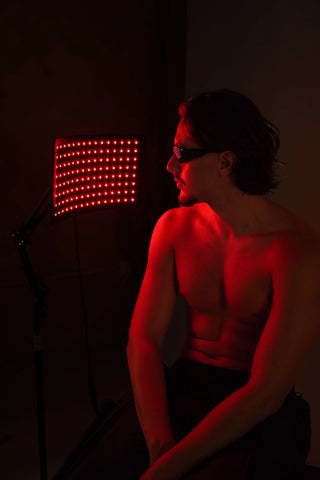
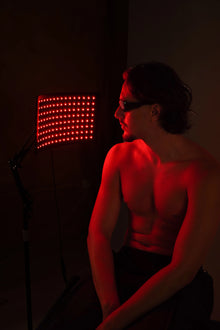
Red light/LED: support for recovery habits
Photobiomodulation (red/infrared light, often with LED) is being researched for its recovery potential. In 2025, a review with meta-analysis observed that photobiomodulation applied before exercise reduced muscle pain in some scenarios (although certainty and protocols vary).
If you are interested in incorporating light into your routine (especially on heavy days), you can explore LED light therapy at Kumo as part of a holistic approach (training + rest + consistency).
Massage gun: when yes and when no
Massage, as a general intervention, has evidence of reducing DOMS in meta-analyses (varied populations and techniques).
In the case of "massage gun" type percussion, trials are still emerging, but the evidence is still consolidating.
If you use it on calves post-run:
- Avoid acute pain and do not insist on "stinging" points.
- Better short duration and a pleasant sensation than "pounding" the tissue.
- Do not use it as a substitute for well-planned load progression.
At Kumo, the product associated with this use is KumoPulse Air.
What has the most impact (and is often forgotten): walking, sleeping, and progressive loading
Presotherapy can fit in very well, but your recovery also depends on basics:
- Gentle walking (5–20 min): maintains mobility and load tolerance without stressing.
- Sleep: if you cut hours after a hard run, it's common for the perception of pain to be worse the next day.
- Training progression: if your calves get heavy every week, the solution is probably not "more recovery," but adjusting hills, pace, and specific strength.
Common mistakes with presotherapy on heavy calves
- Using it to cover up an injury: if there's limping or sharp pain, first rule out a tear/significant injury.
- Increasing intensity too much: compression should be tolerable and safe; if it causes strange symptoms, it's not worth it.
- Expecting "instant recovery": DOMS has a typical temporal evolution (peak 24–72 h). The routine seeks to improve the process, not eliminate it in 15 minutes.
- Forgetting soleus and foot strength: without strengthening and proper technique, calves will get heavy again.
FAQ: Kumo presotherapy and calf overload
When to use Kumo presotherapy boots after running?
If you feel heaviness, stiffness, or fatigue (not acute pain), a session immediately after finishing or within the first few hours post-run usually fits well, and repeat the next day if it provides relief. In sports studies, sessions of 15–30 minutes have been tested, as well as repeated protocols at 24/48/72 h, with variable results depending on the context. The practical key is that it leaves your legs feeling "looser" and without adverse effects, always respecting your device's instructions.
(pubmed.ncbi.nlm.nih.gov)Does presotherapy help with DOMS in the calves?
It can help some people, especially with the subjective feeling of relief, but it's not a guarantee. DOMS typically peaks between 24 and 72 hours and is related to exercise-induced muscle damage (especially eccentric). Evidence on IPC for recovery is mixed: a review with meta-analysis (2025) found that IPC applied after exercise did not reduce pain at 24 h with moderate certainty, although some trials do observe improvements in windows like 48–72 h. Use it as support, not as a "sole solution."
(acsm.org)What if only one calf is heavy and the other isn't?
When discomfort is clearly unilateral, it's advisable to be more conservative: it could range from an asymmetry in technique/load to the beginning of an injury. Presotherapy might provide comfort, but it shouldn't mask important signals (sharp pain, loss of strength, bruising, or limping). In that case, reduce intensity/volume for 48–72 h, prioritize gentle walking and pain-free mobility, and consider a review with a professional if it doesn't improve or worsens. Recovery is more effective when you address the cause (hills, fatigue, stride, strength) and not just the symptom.
(healthy.kaiserpermanente.org)Can I combine Kumo presotherapy with LED light and a massage gun on the same day?
Yes, as long as you do it logically and without aggression. A typical post-run combination is: gentle presotherapy for comfort + light mobility; and, if it feels good, very moderate use of massage/percussion, avoiding acute pain. Regarding light (photobiomodulation), recent reviews analyze its possible role in recovery, with results dependent on timing and protocol (for example, 2025 evidence supports it when applied before exercise in certain scenarios). The important thing: try it conservatively, observe how you respond, and keep the focus on sleep and load progression.
(pubmed.ncbi.nlm.nih.gov)What are the main contraindications or precautions with presotherapy?
Compression has scenarios where it should be avoided or used with medical supervision (for example, certain arterial problems, cardiac decompensation, active skin infections, unusual pain/swelling, or specific vascular situations). There is an international consensus reviewing risks, complications, and safety recommendations in compression therapies. If you have a vascular history, striking new symptoms, or doubts, the most prudent approach is to seek clinical guidance before using presotherapy at home. And if numbness, intense pain, or discoloration changes appear during the session, stop using it.
(pmc.ncbi.nlm.nih.gov)What now?
If you want to turn recovery into a habit (not a "patch"), explore the presotherapy boots for your post-run routines and complement them, if it suits you, with LED light and muscle relief tools. For questions about use, compatibilities, or general purchasing recommendations, you can write directly from the contact page.
KumoWave pressotherapy
Choose your at-home pressotherapy
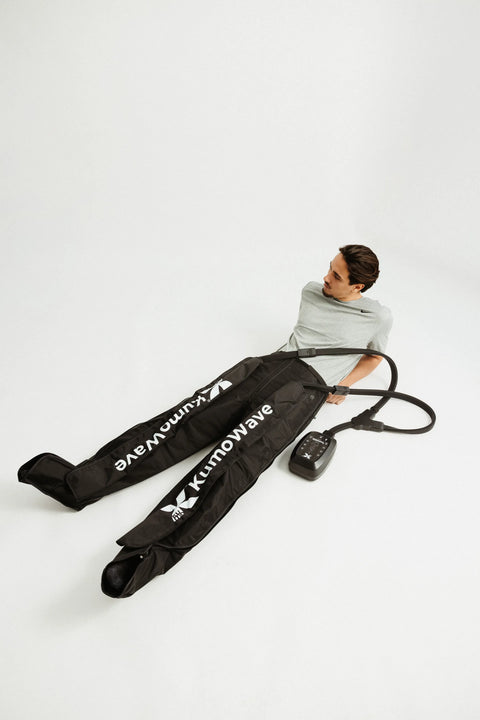
KumoWave Elite – Pressotherapy Pants
Full-coverage trousers. Ideal for lipedema, fluid retention and intensive use.
€799,00 €999,00
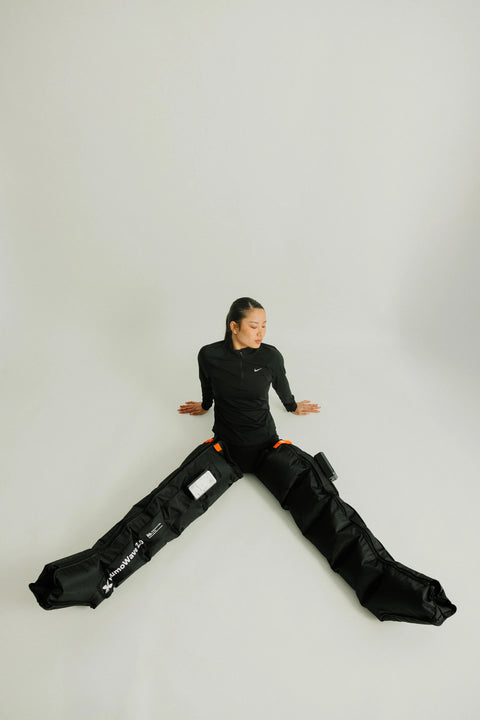
KumoWave 2.0 - Wireless Pressotherapy
Wireless, lightweight boots. Perfect for daily use and recovery.
€499,00 €599,00