Mild fluid retention can be measured and improved with a systematic approach.
If you experience "heavy" legs, sock marks at the end of the day, or slight swelling after prolonged sitting, heat, or travel, pressotherapy (also called intermittent pneumatic compression) can be a useful tool to support venous circulation and fluid drainage. The key is not to "feel a massage," but to identify objective signs of weekly progress and know when to stop and consult a professional.
Pressotherapy at home
End the day with light legs
★★★★★ 4,8/5 · rated by verified customers
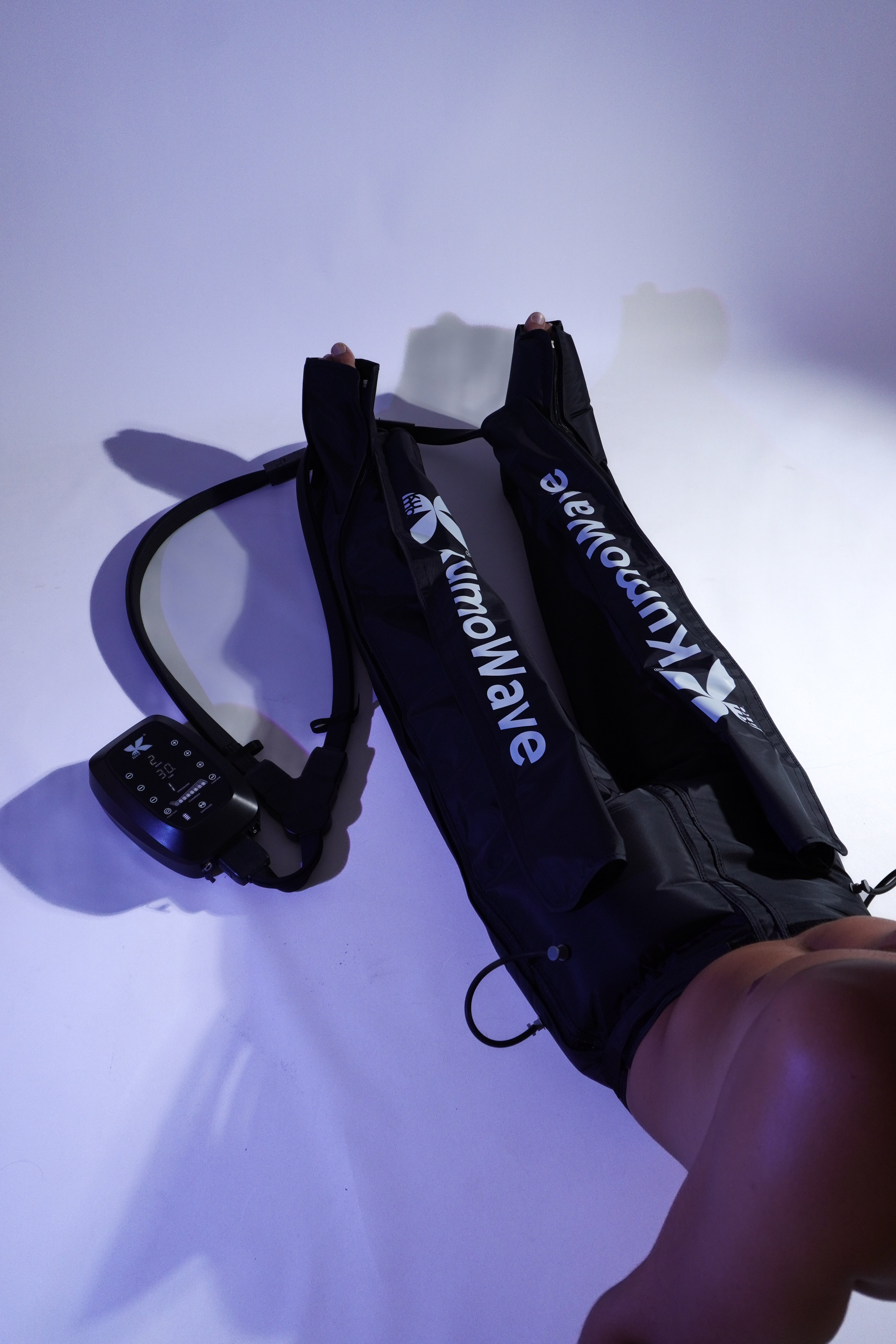
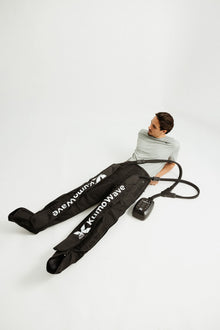
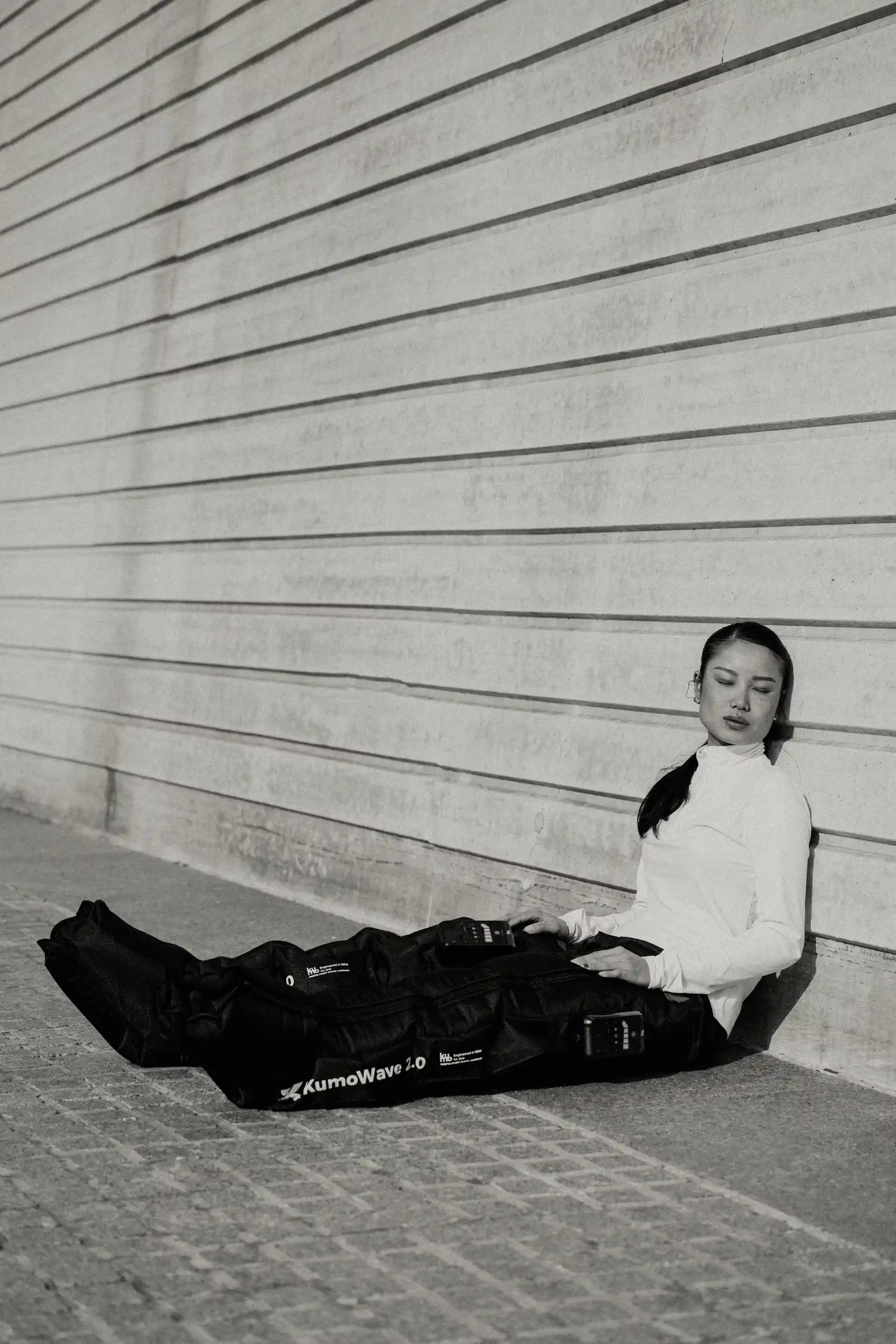
KumoWave pressotherapy boosts circulation and helps drain fluid with sequential compression, in 20-minute sessions at home.
- Boosts circulation and helps drain fluid
- Chamber-based compression, adjustable to you
- Sequential compression that mimics manual drainage
€799,00€999,00
−10% on your 1st order when you subscribe to the newsletter

At Kumo, we approach recovery as a habit: technology, comfort, and consistency. You can explore the brand's universe at Kumo Balance.
What is "mild fluid retention" (and what is not)
In everyday language, "retaining fluids" usually refers to mild edema: an accumulation of fluid in the subcutaneous tissue that manifests as swelling, tightness, or heaviness, especially in the ankles and calves.
Personalized protocol · included with your purchase
Want us to tell you how to use it in your case?
With your purchase, our experts prepare a personalized usage protocol for your case: sport, circulation, fluid retention, pregnancy or lipedema.
Message us on WhatsAppOur experts reply · no obligation
Common (non-alarming) causes of slight swelling
- Standing or walking for long hours (or sitting without moving), especially in hot weather. (medlineplus.gov)
- High salt intake or temporary changes in habits (more processed foods, travel). (medlineplus.gov)
- Hormonal factors (e.g., cyclical variations).
- Muscle stiffness and fatigue that worsen the "heavy legs sensation" (not always actual edema).
When not to self-manage: warning signs
Swelling can also be associated with venous, lymphatic, or systemic problems (heart, kidney, liver). MedlinePlus reminds us that edema can have multiple causes and sometimes requires medical evaluation. (medlineplus.gov)
- Sudden swelling or swelling in only one leg, accompanied by pain, warmth, or redness.
- Shortness of breath, chest pain, dizziness.
- Wounds, active skin infection, fever.
- Edema that progresses week after week despite rest and basic measures.
How pressotherapy (intermittent pneumatic compression) works
Pressotherapy uses an inflatable cuff or boot connected to a pump that applies rhythmic compressions, usually in sequence (from distal to proximal). In the medical field, it is known as Intermittent Pneumatic Compression (IPC) and is used, among other purposes, to promote venous return and in certain edema conditions. (cochrane.org)
What it can improve in mild fluid retention
- Feeling of heaviness and leg fatigue (especially at the end of the day).
- Fluctuating volume due to stasis (morning vs. evening difference).
- Recovery after long periods of sitting, standing, or traveling.
What you should not expect (to avoid frustration)
- That it will "eliminate fat" or replace movement habits.
- That it will solve medical causes on its own (advanced venous insufficiency, established lymphedema, etc.).
Based on physiology, reviews describe that IPC can act as an "assistant" to muscle pumps and reduce venous reflux in venous insufficiency. (pmc.ncbi.nlm.nih.gov)
on your first order when you join the newsletter
We send you the code instantly. No spam.
How to measure progress: 4 simple (and repeatable) indicators
If you want to talk about "weekly progress," you need metrics. The goal is to capture small but consistent changes, without obsessing over a single data point.
1) Perimeter (ankle and calf) at two times of the day
In clinics, to monitor edema/lymphedema, circumference measurements are used at regular intervals and volume calculations (e.g., every 4 cm). At home, you can simplify: always measure at the same points (e.g., the ankle over the malleolus and the widest point of the calf) and under similar conditions. (pmc.ncbi.nlm.nih.gov)
- Record morning (when you wake up) and evening (at the end of the day).
- What's relevant is not a "perfect" number, but whether the evening-morning difference decreases over the weeks.
2) Degree of pitting edema
If pressing with your finger leaves a mark (indentation) for a few seconds, it is pitting edema. Cleveland Clinic describes the 1+ to 4+ scale based on depth and rebound time (e.g., 1+ ≈ 2 mm; 2+ ≈ 3–4 mm). Use it as a guideline and always gently. (my.clevelandclinic.org)
3) "Real-life signs": socks, footwear, and leg sensation
- Do sock marks appear later or are they less deep?
- Do your shoes fit the same in the evening?
- Rate "heavy legs" from 0 to 10 at the end of the day.
4) Body weight (only if you suspect generalized retention)
Daily weight is used in heart failure because weight change can be an early sign of fluid imbalance; Harvard Health emphasizes that weight change can be one of the first signs of retention in that context. For mild localized leg retention, weight may not fluctuate, but if it increases significantly and rapidly, do not ignore it. (health.harvard.edu)
Weekly progress signs: what is reasonable to observe (no promises)
Evolution depends on the cause (heat, sedentary lifestyle, salt, venous return, etc.) and consistency. Instead of looking for "miracles," look for trends.
Tracking table: weekly progress signs
| Week | What you might notice | How to check (data) | Practical interpretation |
|---|---|---|---|
| Week 1 | Less feeling of heaviness at the end of the day; "looser" legs after the session. | 0–10 scale for heaviness (evening); photos in the same place/light. | Good initial sign: perceptual improvement. If there is pain, numbness, or irritation, adjust or stop. |
| Week 2 | Fewer sock marks; shoes less tight in the evening. | Ankle/calf perimeter: compare evening vs. morning. | You are looking to reduce "daily fluctuation" rather than an isolated number. |
| Week 3 | Better tolerance to long days of sitting/standing; less "heavy legs" when climbing stairs. | Heaviness 0–10 + evening perimeter on comparable days (same activity). | Sign of consistency: less variability between "good" and "bad" days. |
| Week 4 | More stable edema: less pitting or faster rebound; more predictable recovery after travel. | Pitting scale (if applicable) + weekly evening–morning difference. | If there is no change in 4 weeks, review cause (salt, sedentary lifestyle, compression, consult). |
Practical protocol: how to use pressotherapy wisely (and with happy skin)
There is no single universal protocol. In studies and clinical settings, parameters (pressure, cycles, frequency) vary according to objective and patient. (pmc.ncbi.nlm.nih.gov)
Simple rules for mild fluid retention
- Consistency > intensity: prioritize sustainable routines.
- Start conservative: if your device allows adjustments, choose a comfortable level. Discomfort is not a "sign of effectiveness."
- Skin first: moisturize if irritated; avoid using on broken skin or with infection.
- Combine with movement: short walks and active breaks improve venous return.
- Elevate your legs when you can and moderate salt if you swell easily. (medlineplus.gov)
Common mistakes that "falsify" your progress
- Measuring perimeters every day at different points.
- Comparing a Monday (very sedentary) with a Saturday (more movement) without noting it down.
- Ignoring the context: heat, long travel, salty food (can increase transient edema).
Safety and contraindications: when to avoid it (or seek medical clearance)
Intermittent pneumatic compression is considered safe in many contexts, but it is not for everyone. Cleveland Clinic mentions possible adverse effects such as discomfort, skin irritation/injury, and, rarely, nerve damage. (my.clevelandclinic.org)
Common contraindications (documented examples)
In regulatory documentation for IPC devices (FDA), contraindications or situations to avoid include: deep vein thrombosis/pulmonary embolism, decompensated congestive heart failure, and atherosclerosis/severe ischemic vascular disease, among others. (accessdata.fda.gov)
Additionally, an international consensus on risks/contraindications of medical compression indicates that in complex pathologies (e.g., heart failure, diabetes, peripheral arterial disease, mixed etiology), the indication should be carefully evaluated. (pmc.ncbi.nlm.nih.gov)
Safety Checklist (before each week of use)
- Did new swelling appear only in one leg or deep "cramp-like" pain?
- Did you experience shortness of breath, chest tightness, or palpitations?
- Are there wounds, infection, severe dermatitis, or very fragile skin?
- Do you have a diagnosis of peripheral arterial disease, heart failure, or a history of blood clots?
If you answer "yes" to any of these, it is prudent to pause and seek medical guidance.
How to integrate Kumo into a recovery routine (without mixing objectives)
If your focus is on mild fluid retention and the feeling of tired legs, a reasonable strategy is to build a simple and measurable routine.
Option 1: Prioritize legs (pressotherapy)
If you are looking for a home format, you can check out Kumo's pressotherapy collection, designed to support wellness and recovery habits.
Option 2: Complements that usually fit well
- Red light/LED as part of a global recovery and rest routine: LED light therapy.
- Localized muscle work (calves, soleus, plantar fascia) if "heaviness" is strongly linked to tension: KumoPulse Air.
Important: this does not replace medical management of pathological edema; it is a recovery hygiene approach.
Concrete (realistic) example: how progress looks in a log
Profile: a person with an office job, legs more swollen in the evening, and occasional travel. Goal: reduce evening-morning fluctuation and heaviness.
- Week 0 (baseline): measure 3 evenings and 3 mornings, note heaviness 0–10, ankle photo.
- Week 1–2: look for perceptual improvement and fewer sock marks; maintain consistent measurement.
- Week 3–4: compare weekly averages (not the "best day"). If everything remains the same, review salt intake, movement breaks, and consult if there are atypical signs.
FAQ: frequently asked questions about Kumo and pressotherapy for mild fluid retention
How long does it take to notice changes with Kumo pressotherapy boots?
In mild retention, progress is usually best seen as a weekly trend, not an immediate "before/after." The first week may improve the sensation (less heavy legs), and in subsequent weeks it is more useful to monitor repeatable metrics: ankle/calf perimeter (morning vs. evening) and sock marks. If nothing changes or it worsens in 4 weeks, it is advisable to review causes (salt, heat, sedentary lifestyle) and rule out medical reasons, as edema has multiple origins. (medlineplus.gov)
Can I use Kumo pressotherapy if I have varicose veins or mild venous insufficiency?
Compression (including intermittent pneumatic compression) is used in different venous contexts, but the specific indication depends on your case. There is evidence of IPC use as mechanical compression in venous problems (e.g., in venous ulcers in clinical studies), although this does not mean it is "for everyone" or replaces diagnosis. If you have pain, significant skin changes, or suspected arterial disease, consult first. Guidelines emphasize caution when there is arterial or mixed pathology. (cochrane.org)
How do I know if my swelling is "mild fluid retention" or something that requires a doctor?
One clue is the context: heat, long hours of sitting or standing, and salty foods promote transient edema. (medlineplus.gov) However, you should seek evaluation if the swelling is sudden, unilateral, painful, with redness, or if it is accompanied by shortness of breath. Also if fragile skin, wounds appear or it progressively worsens. Using a pitting edema scale can help you describe it, but it does not replace diagnosis. (my.clevelandclinic.org)
What signs indicate that I am overdoing pressotherapy?
You should not leave a session with severe pain, numbness, persistent tingling, very irritated skin, or aggressive marks. Cleveland Clinic mentions that discomfort and skin problems may occur, and rarely nerve or pressure injury. (my.clevelandclinic.org) If it happens, reduce intensity/time according to the device manual or pause. And if you have conditions such as decompensated heart failure, known/suspected blood clots, or severe arterial disease, pneumatic compression may be contraindicated or require supervision. (accessdata.fda.gov)
What now?
If you want to turn recovery into a measurable routine (and not a fleeting sensation), explore Kumo's pressotherapy and recovery complements and, if you have any health or compatibility doubts, write to the team from the contact page. A good strategy is simple: measure, be consistent, and prioritize safety.
KumoWave pressotherapy
Choose your at-home pressotherapy
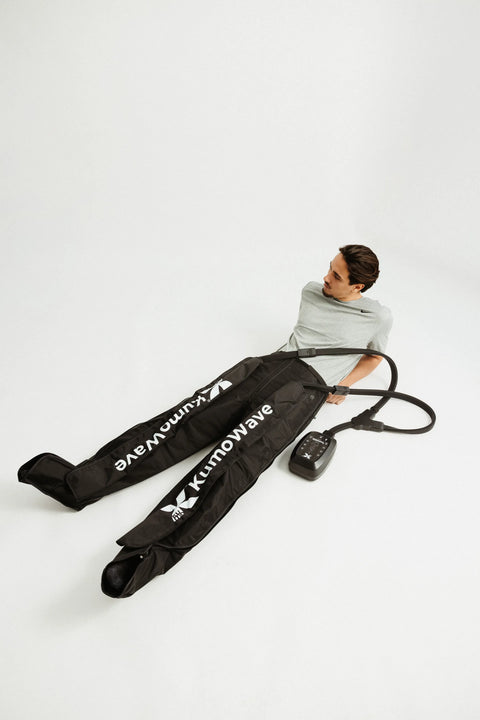
KumoWave Elite – Pressotherapy Pants
Full-coverage trousers. Ideal for lipedema, fluid retention and intensive use.
€799,00 €999,00
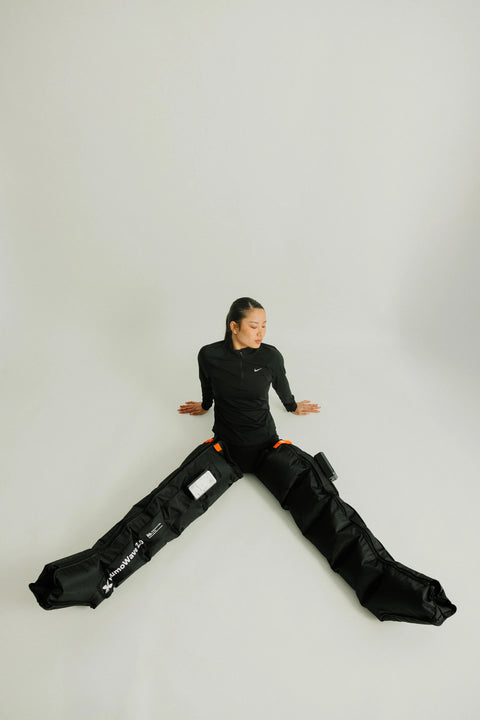
KumoWave 2.0 - Wireless Pressotherapy
Wireless, lightweight boots. Perfect for daily use and recovery.
€499,00 €599,00