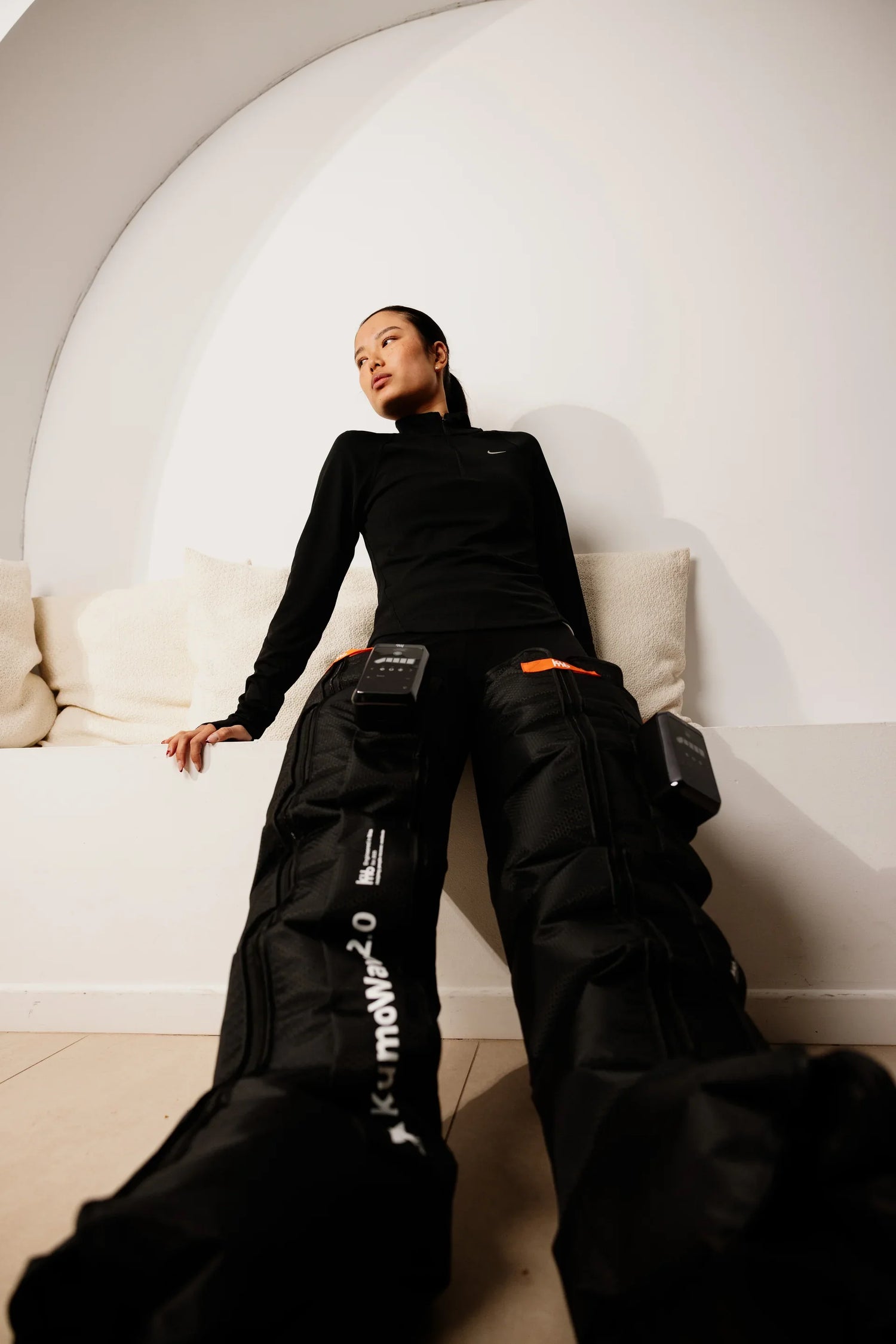
Light legs, better race.
Presotherapy (also called intermittent pneumatic compression) can be a very useful tool to get to the marathon with less sensation of "heavy legs" during the previous week and to make recovery easier in the days after. In this guide from Kumo, you will find a clear protocol (no improvisation), what to expect according to the evidence, and important precautions for safe use.
Pressotherapy at home
End the day with light legs
★★★★★ 4,8/5 · rated by verified customers
KumoWave pressotherapy boosts circulation and helps drain fluid with sequential compression, in 20-minute sessions at home.
- Boosts circulation and helps drain fluid
- Chamber-based compression, adjustable to you
- Sequential compression that mimics manual drainage
€799,00€999,00
−10% on your 1st order when you subscribe to the newsletter

What is presotherapy (and why it's interesting for runners)
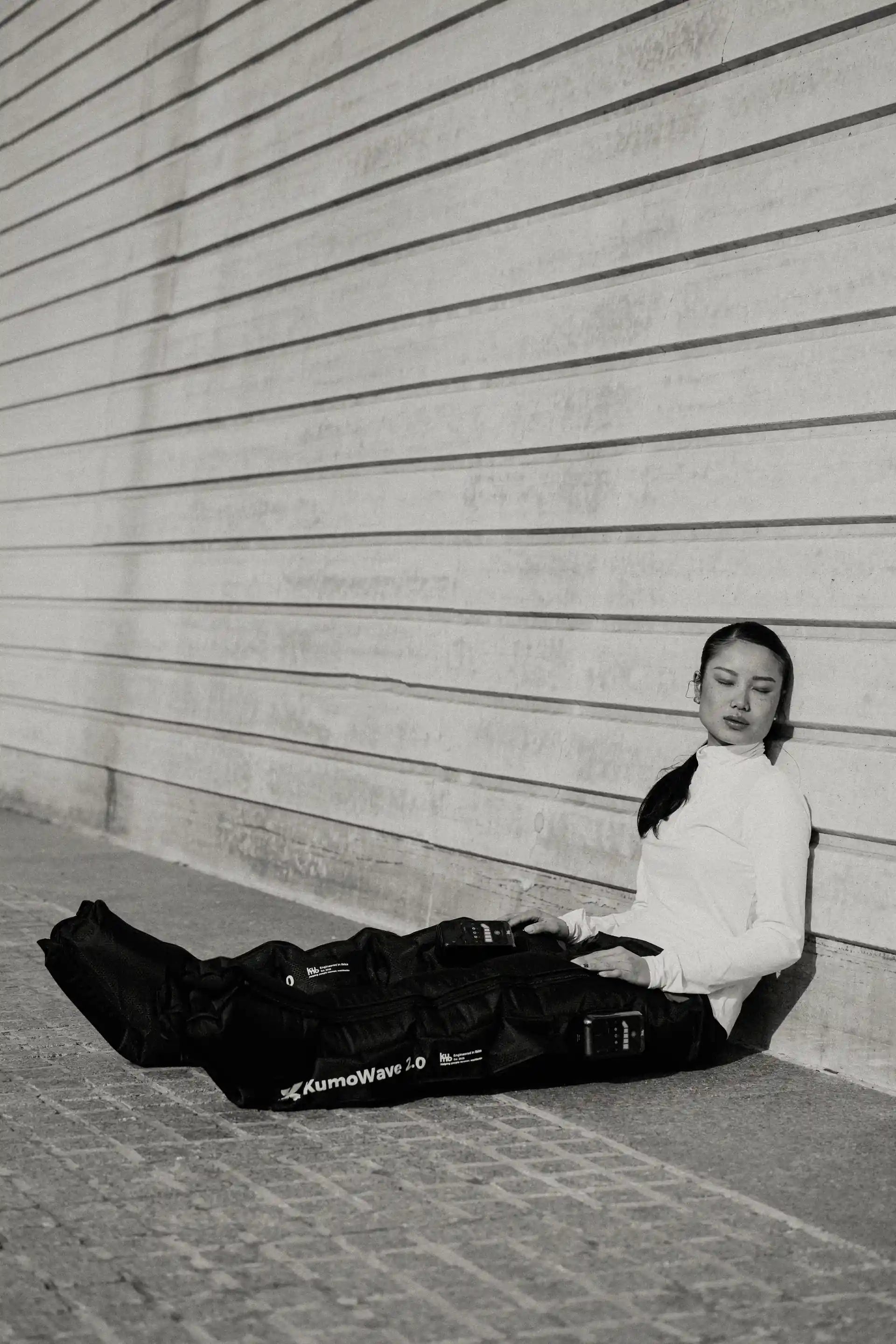
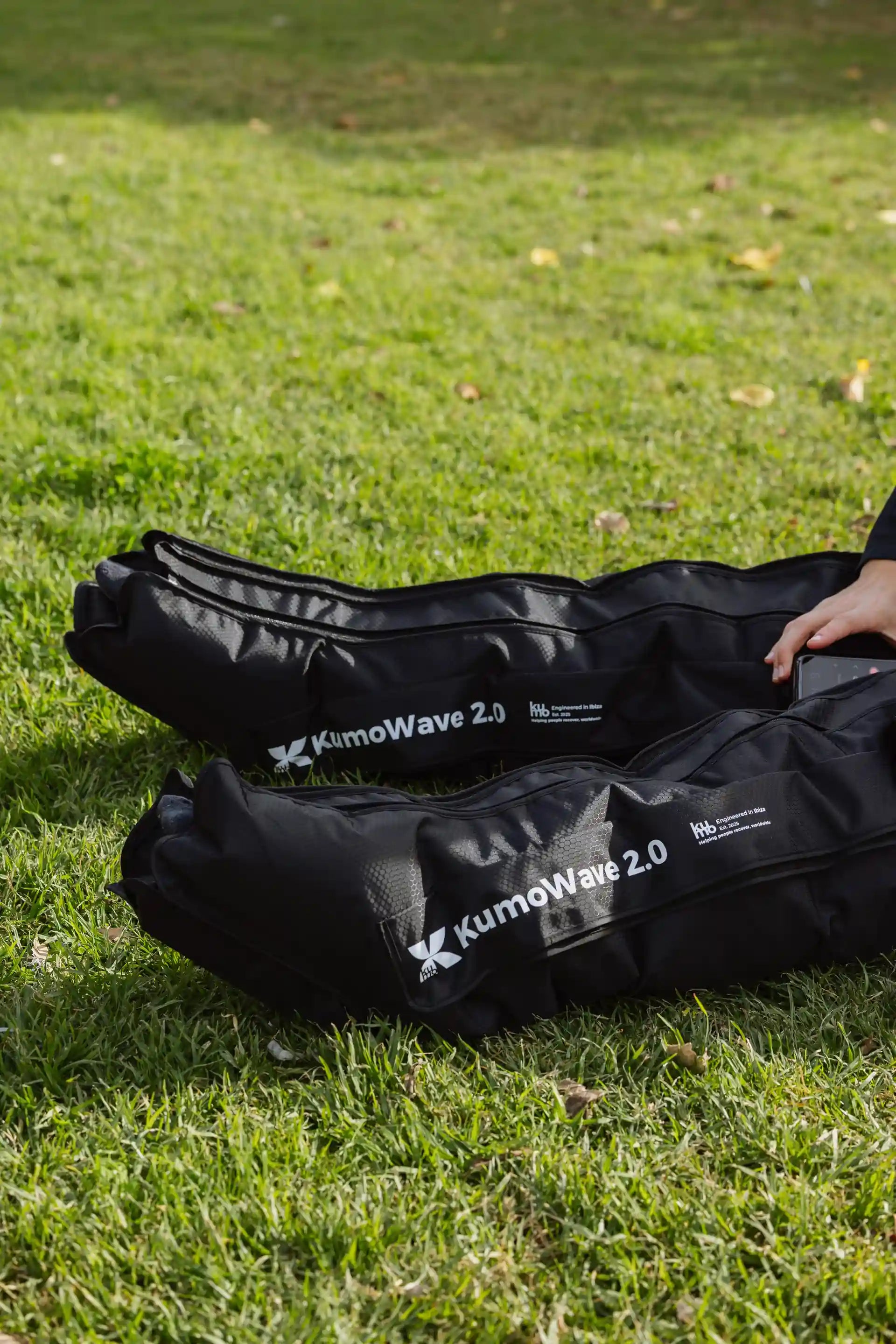
In a sports context, presotherapy usually refers to the use of boots or sleeves that inflate and deflate through chambers, applying sequential pressure on the feet, calves, and, depending on the model, thighs. The goal is to promote venous return and fluid management in the legs, something especially relevant when you accumulate kilometers, spend many hours standing, or travel to compete.
In medicine, intermittent pneumatic compression devices are used to increase venous blood flow and help prevent clots in situations of immobility; their mechanism is well explained in clinical resources like Johns Hopkins Medicine. (hopkinsmedicine.org)
Personalized protocol · included with your purchase
Want us to tell you how to use it in your case?
With your purchase, our experts prepare a personalized usage protocol for your case: sport, circulation, fluid retention, pregnancy or lipedema.
Message us on WhatsAppOur experts reply · no obligation
What it can provide in a taper week and post-marathon
- Perception of recovery: less heaviness, a feeling of "unloading" after easy runs or travel.
- Comfort and routine: a guided session helps to calm down when tapering makes you nervous.
- Swelling management: especially useful if you notice "tight" ankles/calves after many hours sitting (work, plane, car).
What the evidence says about presotherapy and recovery
The science on presotherapy/intermittent pneumatic compression applied to sports is not uniform: it depends on the protocol (duration, timing, pressure), the type of exercise (eccentric muscle damage, long run, plyometrics), and whether we compare it against placebo, rest, or other strategies.
Useful findings (without promising miracles)
In a controlled trial published in 2021 (placebo design), applying intermittent pneumatic compression for 48 hours after eccentric exercise showed no significant differences compared to placebo in strength, pain, or mobility; the factor that most explained recovery was the passage of time. (pmc.ncbi.nlm.nih.gov)
On the other hand, there are studies that do observe physiological and subjective changes associated with compression in recovery. For example, a study in Scientific Reports (2022) found that compression was associated with increases in blood flow during the first hours post-exercise and better subjective ratings (soreness/recovery) by effect size analysis, although there are not always significant differences in blood markers. (nature.com)
on your first order when you join the newsletter
We send you the code instantly. No spam.
And a systematic review with meta-analysis (2025) comparing several modalities concluded that, with moderate certainty evidence, intermittent pneumatic compression applied after exercise did not reduce muscle soreness at 24 hours compared to control (in the included studies). (pubmed.ncbi.nlm.nih.gov)
Practical interpretation for marathoners: presotherapy can help you feel your legs "looser" and recover better subjectively, but it should not be treated as a guaranteed intervention to accelerate all markers of muscle damage. Use it as part of a complete plan (sleep, nutrition, mobility, well-adjusted load).
Safety: when to avoid presotherapy (contraindications and warning signs)
Before applying presotherapy, especially if you have a history of vascular or heart conditions, it is advisable to be cautious. In medical compression, relevant contraindications are described, such as severe peripheral arterial disease (e.g., very low ankle-brachial index), severe heart failure (NYHA IV), severe diabetic neuropathy with loss of sensation, material allergies, among others. (phlebolymphology.org)
It is also warned that some conditions (ulcers, burns, peripheral vascular disease) increase the risk of problems with pneumatic compression devices; moreover, discomfort, sweating, or skin irritation may occur if the fit is not correct. (hopkinsmedicine.org)
Simple rule for runners
- Do not use presotherapy if you have unusual acute pain, marked redness, local heat, or suspected thrombosis (consult a doctor).
- Do not look for “more pressure = more recovery.” If you notice tingling, numbness, or pain, reduce the intensity or stop the session.
- If it's your first time, do not use presotherapy the day before the race: try it beforehand to see how it feels and your tolerance.
Week before the marathon: how to fit presotherapy without interfering with the taper
The week before is for arriving fresh, not for "getting in shape." In terms of tapering, a popular article from Mayo Clinic summarizes a meta-analysis (27 studies) where an effective strategy was to gradually reduce volume by 41–60% over two weeks while maintaining intensity and frequency. (newsnetwork.mayoclinic.org)
In real scientifically analyzed plans (2024), the last week before the race usually shows a sharp drop in volume (approx. ~50% compared to the previous week, with variability depending on the plan). (pmc.ncbi.nlm.nih.gov)
Key principle: "do not experiment"
If you already use presotherapy in your routine, the week before can help you feel better. If you don't use it, introduce it conservatively (short durations, low/medium intensities) and avoid drastic changes 48–72 hours before race day.
Recommended protocol (previous week)
- After easy runs or a day with heavy feet: 15–25 min, low-medium intensity, seeking comfort.
- After the last "brisk" workout (if you do one): 15–20 min to promote a feeling of unloading, without pushing to the maximum.
- Travel day (if flying or long car ride): 20–30 min upon arrival, hydration, and light walk.
- The day before: if it feels good, 10–15 min very gently just to "loosen up." If it makes you feel strange or too activated, it's better to skip it.
If you're looking to equip yourself with this type of home recovery, you can check out Kumo's presotherapy boots collection and choose the routine that best fits your deload week.
After the marathon: daily presotherapy (first 72 hours and first week)
A marathon is a significant physiological stress. In amateur runners, an increase in muscle damage markers (CK, LDH, myoglobin) has been observed from the end of the race and for at least 72 hours, along with inflammatory changes (e.g., CRP). (pmc.ncbi.nlm.nih.gov)
Furthermore, in prolonged effort, CK can increase markedly and remain high for 48–72 hours, returning to baseline within a range of days (variable depending on the individual and load). (pmc.ncbi.nlm.nih.gov)
Realistic goal by phases
- 0–24 h: comfort, gentle circulation, reduce swelling, promote rest.
- 24–72 h: manage DOMS and stiffness, combine with short walks and mobility.
- Days 4–7: recover range of motion and "normalcy" in stride before adding intensity.
Presotherapy plan: from 7 days before to 7 days after
| Day | Time | Session | Intensity | Goal | Useful complement |
|---|---|---|---|---|---|
| D-7 to D-5 | After easy run / evening | 15–25 min | Low-medium | Unload legs without affecting performance | Hydration + 5–10 min mobility |
| D-4 to D-3 | If traveling or much standing | 20–30 min | Low-medium | Reduce swelling and heaviness | Gentle walk upon arrival |
| D-2 | Night | 10–20 min | Low | Relax and sleep better | Warm shower + breathing |
| D-1 | Optional | 10–15 min | Very low | "Loosen up" without experimenting | Elevate legs 5 min |
| Day 0 (race) | 6–12 h post finish | 15–20 min | Low | Comfort, swelling management | Recovery meal + sleep |
| Day 1 | Morning or evening | 20–30 min | Low-medium | Stiffness and heavy legs | 2–3 short walks |
| Day 2 | Evening | 20–30 min | Low-medium | DOMS and venous return | Ankle/hip mobility |
| Day 3 | Depending on sensations | 15–25 min | Low-medium | Resume routine without forcing | Very easy run (if appropriate) |
| Days 4–7 | 2–4 sessions/week | 15–30 min | Low-medium | Normalize leg sensation | Light strength + technique |
How to do a "well-executed" session (quick checklist)
- Timing: best after training or at the end of the day; avoid aggressive sessions just before going for a run if you notice it "numbes" your leg.
- Duration: 15–30 min is usually sufficient for comfort goals.
- Intensity: seek pleasant pressure. The session should feel "deep" but never painful.
- Posture: lying or semi-reclined, legs aligned; if swollen, elevate slightly.
- Hydration: accompany the session with water and salts if you've been sweating a lot (this is not a minor detail in a marathon).
- Skin: check for chafing/blisters from the marathon before putting on boots; if there is an open wound, prioritize healing.
Presotherapy + other Kumo technologies (without overdoing recovery)
Effective recovery is usually multifactorial. If you want to build a "Kumo routine" around the marathon, a sensible combination (without doing everything at once) can be:
- Presotherapy: base for heavy legs and comfort (especially during taper and post-race).
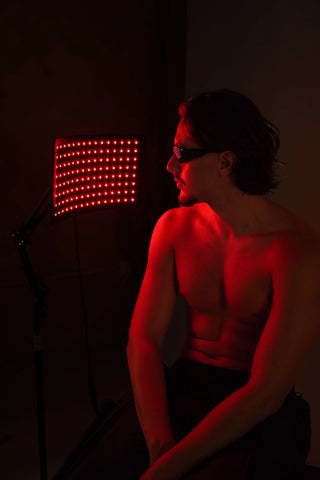
- Red light / LED (photobiomodulation): evidence in some reviews suggests benefits when applied before exercise for muscle soreness in certain contexts; if you are interested in exploring this avenue, you can check out Kumo's LED light therapy. (pubmed.ncbi.nlm.nih.gov)
- Local work with a massage gun: useful for calves, soleus, and gluteus medius with a gentle approach post-marathon (avoid "pounding" inflamed areas). If you are looking for a brand option, you have the KumoPulse Air massage gun.
FAQ: presotherapy for marathon (and how it fits with Kumo)
How many times can I use Kumo presotherapy boots in marathon week?
In marathon week, it is most common to do 2–4 sessions depending on your load and how you feel: one after the last slightly longer run, another if you travel or spend many hours sitting, and a very gentle session the day before only if it feels good. Keep the intensity in a comfortable range and do not try new protocols at the last minute. The idea is to arrive with "deflamed" and rested legs, not to cause strange sensations. If you notice tingling or pain, reduce intensity or pause.
Does presotherapy replace sports massage or foam rolling?
Not necessarily: they are different stimuli. Presotherapy primarily seeks a sense of relief and support for circulation, while massage/foam rolling acts more locally on tissues and sensitivity. Evidence for recovery with intermittent pneumatic compression is mixed (depending on protocols), and some reviews do not find a reduction in pain at 24 hours compared to control, so it should be seen as a complement, not as "the only solution." The most effective approach is usually to combine: sleep, nutrition, gentle walks, and a supportive tool (presotherapy or massage) without excess. (pubmed.ncbi.nlm.nih.gov)
Can I use presotherapy if I have varicose veins or circulatory problems?
It depends on the case. There are clinical contexts where compression is used as a therapeutic tool, but contraindications are also described in situations such as severe peripheral arterial disease or certain heart failures, and special caution is recommended if there are skin lesions or vascular disease. It is prudent to consult a healthcare professional if your varicose veins are symptomatic, if you have a history of thrombosis, or if you experience unilateral pain/redness. In case of use, prioritize low intensities and short sessions, and stop at any anomalous sign. (phlebolymphology.org)
What should I do first after the marathon: presotherapy, stretching, or ice?
First, the basics: hydrate, eat, and start resting. In the first few hours, a gentle presotherapy session can be a comfortable option to manage the feeling of swelling, but it is not essential. Keep in mind that after a marathon, markers of muscle damage and inflammation increase for at least 72 hours; so the initial goal is comfort, not "fixing everything" in one afternoon. If you stretch, make it light and pain-free; if you use cold, do so judiciously and for short periods. (pmc.ncbi.nlm.nih.gov)
When should I resume hard training if I am using presotherapy?
Presotherapy can improve sensations, but it should not dictate the return to intensity. Even if you feel good, after a marathon there are physiological signs of stress (muscle damage, inflammation) that can persist for several days. A prudent strategy is to use the first week for walking, mobility, some very easy running if there is no pain, and to leave intensity for when your stride feels "normal" and residual fatigue has decreased. If you want an individualized plan or have doubts about your case, it is best to rely on a professional and listen to your body more than any device. (pmc.ncbi.nlm.nih.gov)
What now?
If you want to make recovery a habit (before and after your races), explore Kumo presotherapy and complement your routine with tools like LED light or localized work with a massage gun. For any questions about what best fits your marathon week, you can contact the team through the contact page.
KumoWave pressotherapy
Choose your at-home pressotherapy
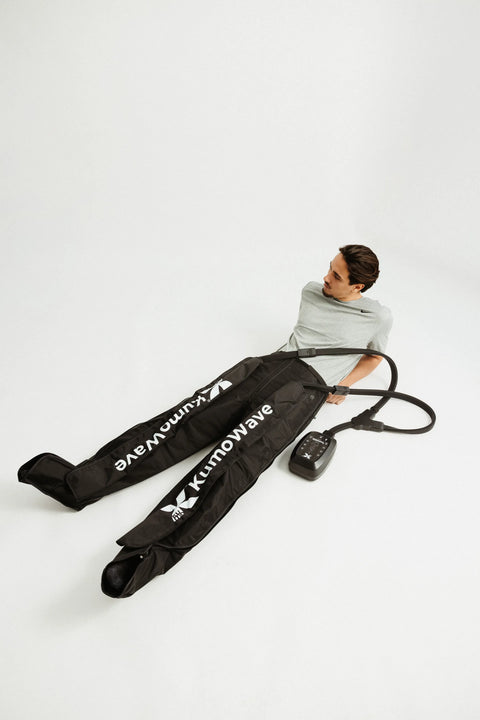
KumoWave Elite – Pressotherapy Pants
Full-coverage trousers. Ideal for lipedema, fluid retention and intensive use.
€799,00 €999,00
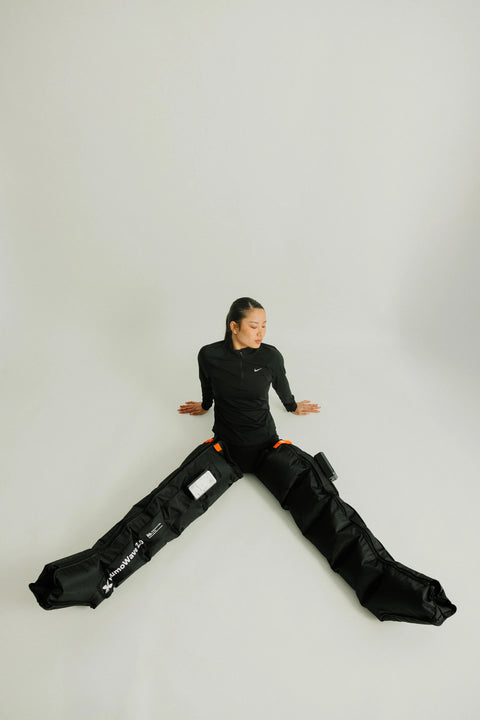
KumoWave 2.0 - Wireless Pressotherapy
Wireless, lightweight boots. Perfect for daily use and recovery.
€499,00 €599,00