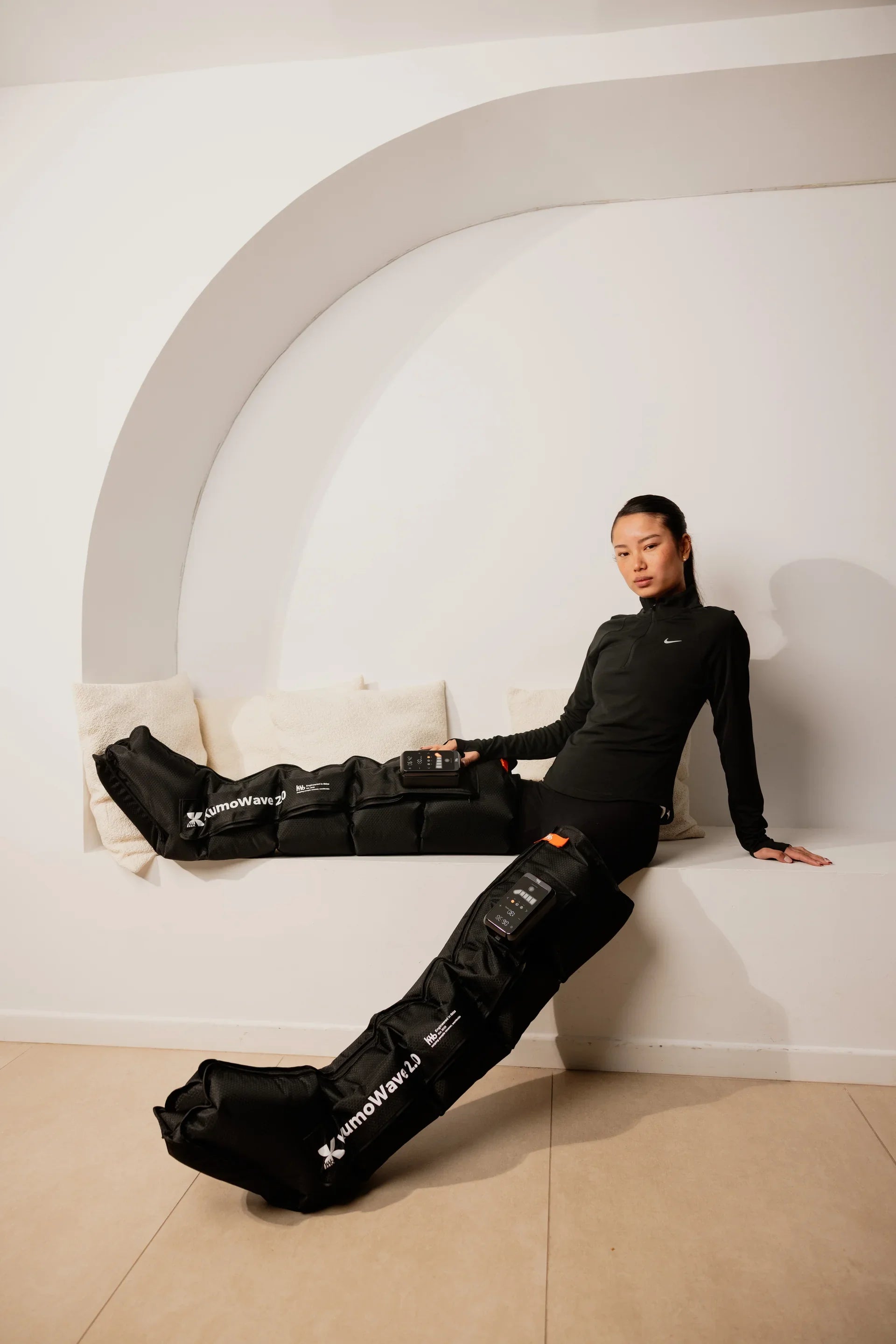
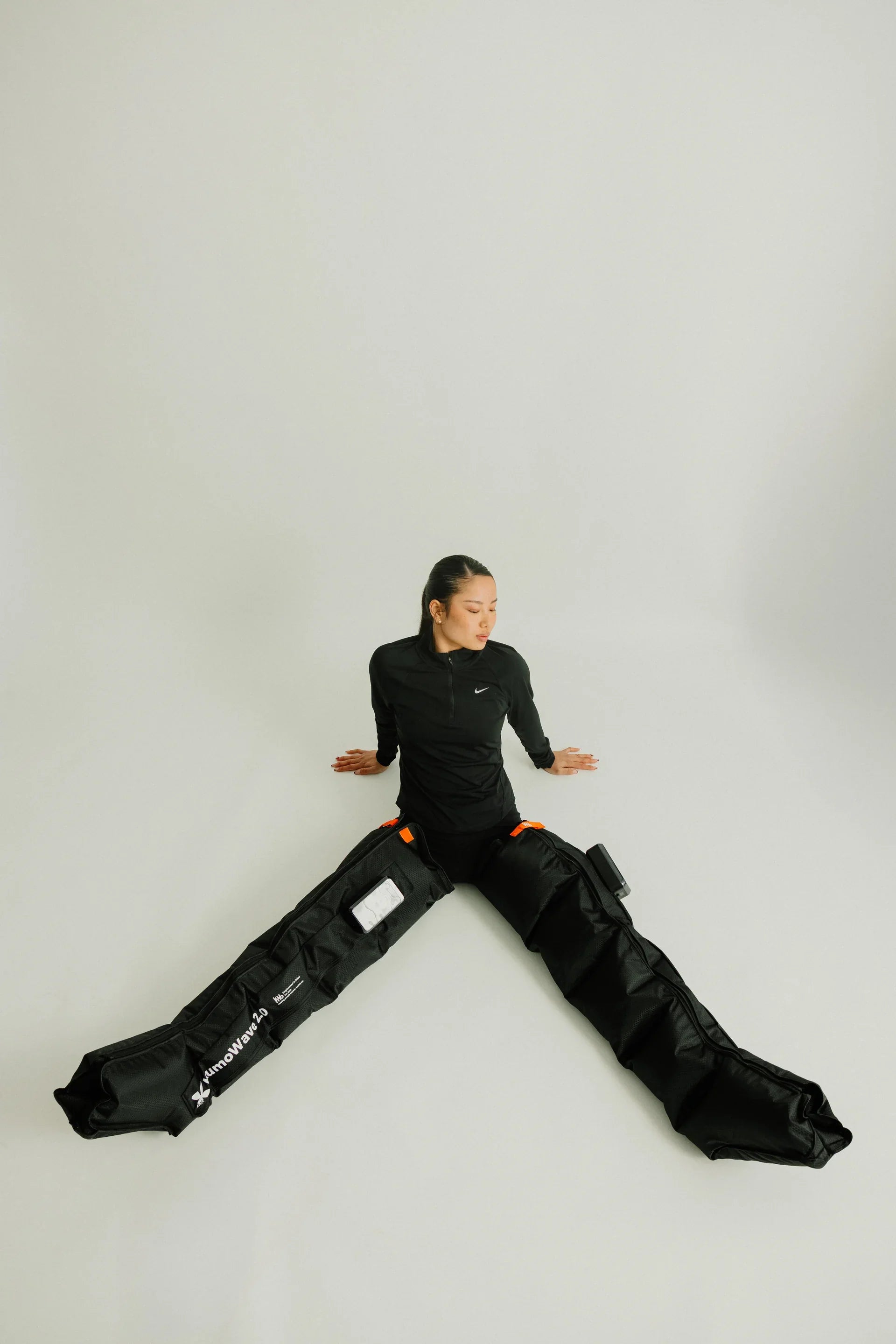
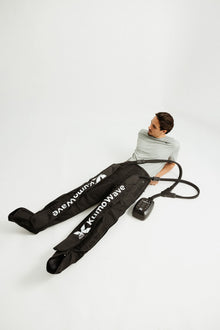
Traveling with wireless pressotherapy should not cause you problems.
If you use pressotherapy boots to relieve tired legs or for your recovery routine, the most important thing when you leave home is simple: avoid knocks, bends in sensitive areas, moisture, and comply with battery transport regulations (especially on planes). In this guide, I explain, step by step, how to do it safely and comfortably, with tips applicable to equipment like Kumo's.
Pressotherapy at home
End the day with light legs
★★★★★ 4,8/5 · rated by verified customers
KumoWave pressotherapy boosts circulation and helps drain fluid with sequential compression, in 20-minute sessions at home.
- Boosts circulation and helps drain fluid
- Chamber-based compression, adjustable to you
- Sequential compression that mimics manual drainage
€799,00€999,00
−10% on your 1st order when you subscribe to the newsletter

If you want to see the brand's range, you can start with the official Kumo website and, specifically, the pressotherapy section.
Why wireless pressotherapy is "travel-friendly" (if you prepare it well)
Wireless pressotherapy has become popular because it eliminates some of the typical "mess" of bulkier systems: fewer cables, less dependence on power outlets, and faster setup. Even so, traveling adds very specific risks:
Personalized protocol · included with your purchase
Want us to tell you how to use it in your case?
With your purchase, our experts prepare a personalized usage protocol for your case: sport, circulation, fluid retention, pregnancy or lipedema.
Message us on WhatsAppOur experts reply · no obligation
- Impacts (suitcases, hotel changes, public transport).
- Compression from weight (if you store the boots under rigid objects).
- Bending in elements that should not be forced (zippers, seams, connections, tubes if your model has them).
- Lithium battery regulations for cabin vs. checked baggage.
The good news: with a packing method and a mini-checklist, you can reduce almost all these risks.
Before you leave: quick preparation (10 minutes that prevent breakdowns)
1) Cleaning and drying: the golden rule against odors and mold
Before storing your boots, make sure they are completely dry. If you've sweated or used them with body cream, wipe them with a slightly damp cloth (without soaking) and then dry them. Moisture trapped for hours (or days) inside a bag is a classic recipe for bad odors and material deterioration.
2) Check "critical points" (in 60 seconds)
- Zippers or fasteners: ensure they are not forced and open/close smoothly.
- Seams: no loose threads that could snag in the suitcase.
- Connections/accessories (if applicable): no looseness or bent parts.
3) Battery: avoid extremes if you're storing them for a long time
For short trips, it's usually practical to leave with enough charge not to depend on outlets. But if, in addition, you're going to store the equipment for weeks or months, it's best to avoid storing it completely discharged or at a constant 100%.
on your first order when you join the newsletter
We send you the code instantly. No spam.
As a general reference for devices with lithium batteries, Apple reminds us that for prolonged storage, temperature and charge level are most influential, and suggests around 50% for long-term storage, recharging periodically if many months pass. (apple.com)
How to pack wireless pressotherapy boots without damaging them
The goal: no crushing or "angled" bending
Think of your boots as a technical garment with structure: what damages them most is not "folding," but folding incorrectly and then subjecting them to weight. Simple rules:
- Do not put them at the bottom of the suitcase if shoes, rigid toiletry bags, or heavy chargers go on top.
- Yes to "padding" around them: soft clothes (sweatshirts, t-shirts) work very well.
- Avoid sharp creases: a wide fold or gentle roll is better (depending on the material and design).
Bag or case: when to use a rigid one
If you travel frequently (and especially if you check luggage), a more structured container reduces the risk of crushing. You don't need an industrial case: it just needs to be semi-rigid, with a sturdy zipper and enough space for the boots not to be "under pressure."
Small accessories: the most common way to lose them
The easiest things to lose are not the boots, but the accessories (cables, adapters, small parts). Use an internal zippered pouch and always place it in the same spot in your luggage. This also speeds up security checks and prevents you from having to open your entire suitcase at the airport.
Flying with wireless pressotherapy: batteries, checks, and rules (without drama)
The essential: lithium batteries and carry-on luggage
In general, aviation regulations treat lithium batteries with special care due to the risk of overheating/fire. The FAA indicates that spare (uninstalled) lithium batteries, including power banks, must be carried in carry-on luggage, and sets typical limits by Wh (e.g., up to 100 Wh without approval and 101–160 Wh with airline approval, with a unit limit). (faa.gov)
Furthermore, the FAA reminds that if a cabin bag ends up being gate-checked, items like spare batteries or power banks must be removed and kept with you in the cabin. (faa.gov)
Practical tip: how to get through security without opening half your suitcase
- Keep the equipment (or at least the battery part) in an accessible area of your carry-on luggage.
- If asked, explain simply: "pressotherapy boots / recovery equipment with rechargeable battery."
- Avoid leaving it on or with exposed buttons that could be pressed accidentally inside your backpack.
A useful note on context (why so much emphasis on batteries)
The concern is not theoretical: AP reported in May 2025 that, citing FAA statistics, the previous year saw a record number of incidents related to lithium batteries, and some airlines were adjusting policies on the use of portable chargers. (apnews.com)
Summarized official recommendation (to keep as a "mental rule")
Keep battery-powered devices with you in the cabin, check the size/capacity if it's a large battery, and report any signs of overheating or damage.
This idea aligns with IATA's public recommendations for travelers with lithium batteries and everyday devices (including some medical devices). (iata.org)
For more information, you can directly consult official sources such as the FAA's guide on batteries in luggage and IATA's approach for passengers. FAA PackSafe (lithium batteries) and IATA (lithium battery travel campaign). (faa.gov)
During the trip: smart use for tired legs (no medical promises)
Many people travel for work or vacation and notice heavy legs from sitting for hours. Here, it's important to separate two things:
- Comfort and subjective recovery (feeling relieved after a long day).
- Medical risks (like clots) that require clinical criteria.
On long flights: what health organizations do recommend
The CDC explains that sitting for long periods can increase the risk of deep vein thrombosis (DVT) in some people, and advises measures such as getting up and walking, moving your legs, and considering compression stockings if you have risk factors (discussed with a professional). (wwwnc.cdc.gov)
Similarly, the American Academy of Family Physicians (AAFP) includes general recommendations such as hydration, periodic walking, and isometric exercises; it also mentions evidence for compression stockings on certain long flights. (aafp.org)
How pressotherapy fits in here
Pressotherapy boots (as a concept) are often used within wellness and recovery routines. Even so, do not treat them as a "substitute" for medical recommendations for thrombosis or circulatory problems. If you have a history, significant varicose veins, pain, asymmetrical swelling, or any worrying symptom, it is correct to consult a healthcare professional.
Upon arrival: how to store it without damage (hotel, home, or off-season)
Rule 1: let it "breathe" before putting it back in the bag
If you used it, don't put it away immediately. Let it ventilate for 15–30 minutes in a dry place. It's a small habit that reduces residual moisture and odor.
Rule 2: avoid prolonged heat and pressure
- Do not leave it in the trunk in direct sunlight for hours (heat + battery is not a good combination).
- Do not store it under heavy objects for days.
- In a closet, place it on a shelf where it won't be "crushed" against the back.
Rule 3: battery in prolonged storage (in simple terms)
Without inventing specific numbers (because they depend on the model and its exact chemistry), the practical idea is: store it with an intermediate charge and in a temperate environment. As an example of best practices for devices with batteries, Apple suggests long-term storage with approximately 50% charge and checking every few months if storage is extended. (apple.com)
Common mistakes (and how to avoid them)
- "It fits perfectly, just right": if you force the bag's closure, you're creating creases and tension. A little more space is better.
- Putting chargers and rigid objects on top: this is the fastest way to deform sensitive parts.
- Storing with moisture: accelerates odors, deterioration, and stains.
- Checking loose batteries: in many cases, spare batteries and power banks must be in the cabin. (faa.gov)
- Not anticipating "gate check": if your carry-on ends up in the hold, remember to remove power banks/spare batteries. (faa.gov)
Travel checklist: Kumo method for not forgetting anything
Quick control table (before, during, and after)
| Time | What to do | Why it helps | Duration |
|---|---|---|---|
| Before leaving | Clean and dry; check zippers/seams; organize accessories in a small bag | Avoids moisture, snags, and lost parts | 5–10 min |
| Packing | Pad with soft clothing; avoid weight on top; avoid forced folds | Reduces bumps and compression deformation | 3–5 min |
| Airport / plane | Keep batteries/power banks accessible in the cabin; avoid accidental activation | Complies with safety rules and speeds up checks | 1–2 min |
| Upon arrival | Ventilate before storing; store without pressure or heat | Extends lifespan and maintains hygiene | 15–30 min (ventilation) |
FAQ: frequent questions about wireless pressotherapy and travel (Kumo)
Can I carry Kumo wireless pressotherapy boots on the plane as carry-on luggage?
In practice, this type of equipment can usually travel in the cabin, but the key is how you manage the battery and accessories. The FAA indicates that spare batteries and power banks must be in carry-on luggage, not checked baggage, and there are common limits per Wh. (faa.gov) If your cabin bag ends up being gate-checked, it is advisable to remove power banks/loose batteries and carry them with you. (faa.gov) To avoid delays, place the equipment in an accessible area and protect it with soft clothing.
How do I store my Kumo pressotherapy in my suitcase to prevent damage?
The rule is to avoid crushing and forced folds. Place the boots in an area of the suitcase where they won't receive direct weight (for example, on top of clothes and never under shoes or rigid toiletry bags). Add "padding" around them with a sweatshirt or t-shirts. Store accessories in a zippered pouch to avoid losing them. If you travel often, a semi-rigid case can be a practical investment: it's not for "luxury," but to minimize repeated impacts, which are what most shorten the equipment's lifespan.
What battery level is best for storing it if I won't use it for weeks?
If you're not going to use it for a while, it's best to avoid extremes (0% for a long time or constant 100%). As an example of a reference recommendation for lithium batteries in devices, Apple highlights that temperature and charge percentage influence battery health during storage, and suggests around 50% for prolonged storage, checking every few months if storage is extended. (apple.com) In any case, prioritize a cool, dry place without pressure on the equipment.
Does pressotherapy help prevent thrombosis on long flights?
For thrombosis prevention, it is responsible to follow health recommendations based on your individual risk. The CDC explains that sitting for long periods can increase the risk of DVT in some people and advises measures such as getting up, walking, moving your legs, and asking about compression stockings if you have risk factors. (wwwnc.cdc.gov) Pressotherapy can be part of your wellness routine, but it should not be considered a substitute for medical advice. If you have a history, significant pain, noticeable swelling, or concerns, consult a professional.
What now?
If you want to integrate recovery into your daily life without complications, explore Kumo's pressotherapy collection and complement your routine with wellness technology such as LED light therapy or a deep massage with KumoPulse Air. If you need help choosing the most suitable approach for your use (travel, standing work, sport), you can write directly from the contact page.
KumoWave pressotherapy
Choose your at-home pressotherapy
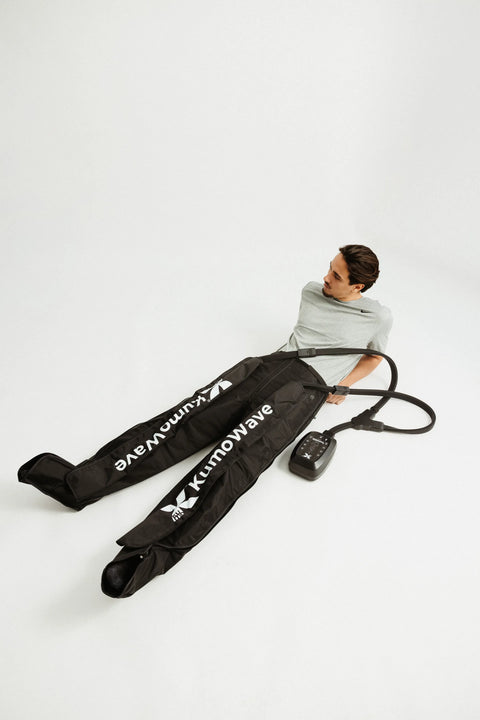
KumoWave Elite – Pressotherapy Pants
Full-coverage trousers. Ideal for lipedema, fluid retention and intensive use.
€799,00 €999,00
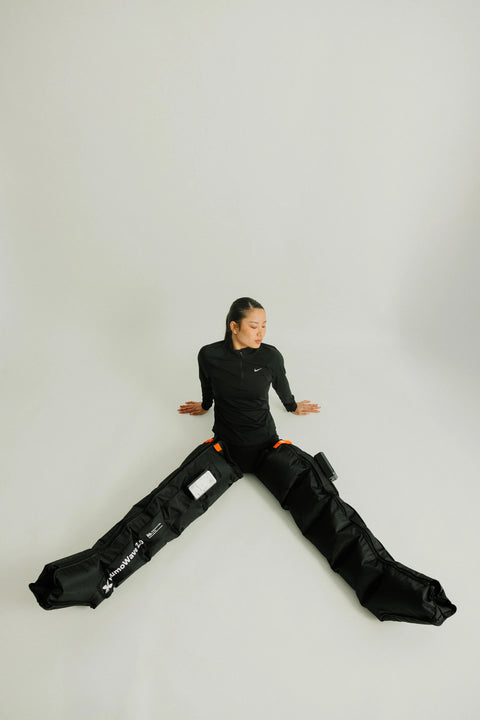
KumoWave 2.0 - Wireless Pressotherapy
Wireless, lightweight boots. Perfect for daily use and recovery.
€499,00 €599,00