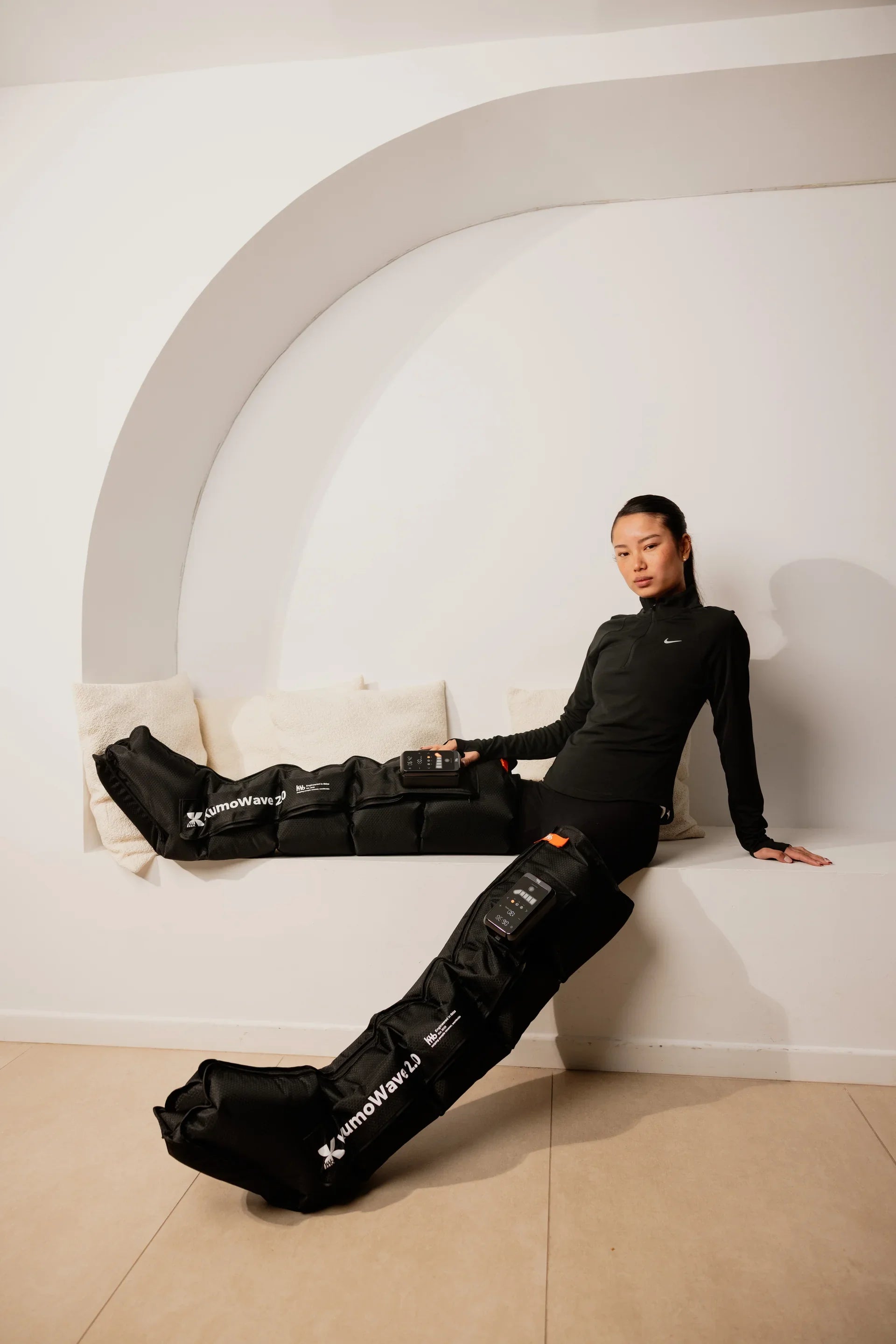
Pressotherapy and hypertension can coexist, but with clear rules.
If you have high blood pressure (or are undergoing treatment) and are wondering if you can use pressotherapy boots at home, the responsible answer is: it depends on your blood pressure control, your cardiovascular history, and how you use compression. In this guide, you will find safety criteria, situations where it is advisable to avoid it, warning signs, and a practical protocol to minimize risks, with a realistic approach based on reliable medical sources.
Pressotherapy at home
End the day with light legs
★★★★★ 4,8/5 · rated by verified customers
KumoWave pressotherapy boosts circulation and helps drain fluid with sequential compression, in 20-minute sessions at home.
- Boosts circulation and helps drain fluid
- Chamber-based compression, adjustable to you
- Sequential compression that mimics manual drainage
€799,00€999,00
−10% on your 1st order when you subscribe to the newsletter

At KUMO, we work on recovery as a habit: aesthetic, efficient technology that is easy to integrate into daily life. If you want to explore the brand's universe, you can start with the official Kumo website.
What is pressotherapy and what happens in the body
Intermittent pneumatic compression: the mechanism (simplified)
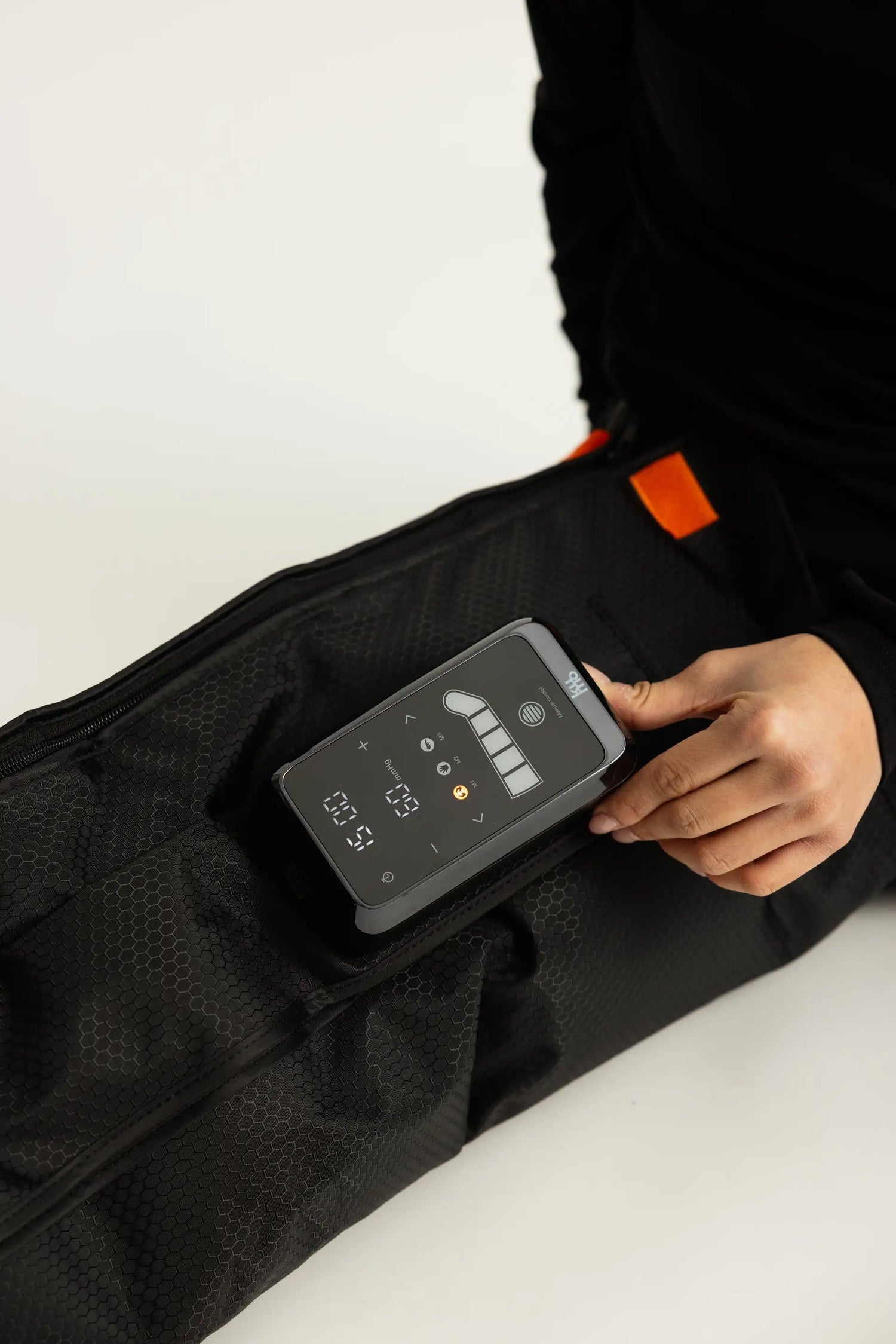
Home pressotherapy is usually based on intermittent pneumatic compression (inflation and deflation of air chambers) applied to the legs (and sometimes arms). The typical goal in recovery is to promote venous return (blood back to the heart) and help with the sensation of heavy legs after standing for many hours, traveling, or training.
Personalized protocol · included with your purchase
Want us to tell you how to use it in your case?
With your purchase, our experts prepare a personalized usage protocol for your case: sport, circulation, fluid retention, pregnancy or lipedema.
Message us on WhatsAppOur experts reply · no obligation
Why it can be relevant if you have hypertension
By compressing the legs, blood and fluid are mobilized towards the torso. In most healthy people, this is well tolerated, but in individuals with uncontrolled hypertension or heart problems, this redistribution can be a reason for caution. The important thing is not to "demonize" pressotherapy, but to understand when and how to use it.
Hypertension: reference figures and why safety matters
Hypertension is extremely common. In the United States, a CDC report (NCHS Data Brief No. 511, published in October 2024) describes that hypertension affects almost half of the adult population and provides prevalence data by age and sex, as well as levels of awareness of the diagnosis (for example, 59.2% of people with hypertension were aware of their condition during the analyzed period). You can consult it here: CDC – Data Brief 511 (2024).
Globally, the WHO reported in 2021 that the number of adults (30–79 years) with hypertension increased from 650 million to 1.28 billion in the last three decades. Source: WHO – Hypertension statement (2021).
on your first order when you join the newsletter
We send you the code instantly. No spam.
To speak a common language, it is useful to rely on widely disseminated categories. The American Heart Association (AHA) summarizes blood pressure ranges (normal, elevated, hypertension by stages, and very high figures) in its updated table (copyright 2025): AHA – Blood Pressure Categories (2025).
Is pressotherapy safe if you have hypertension?
There is no single answer, because "hypertension" can mean anything from well-controlled blood pressure with medication to persistently high readings, marked variability, or resistant hypertension.
The most honest (and useful) approach is to separate what we know from what is still not well defined:
- What is clear: pneumatic compression is used in clinical settings to promote circulation and reduce the risk of thrombosis in specific contexts (e.g., after surgery). Cleveland Clinic explains its use and summarizes evidence of DVT (deep vein thrombosis) risk reduction in a large trial; see: Cleveland Clinic – Intermittent Pneumatic Compression.
- What is less clear in "unstable" hypertension: an international consensus on the risks and contraindications of medical compression (published in 2020) indicates that serious adverse events are rare when applied correctly and contraindications are respected, and also states that there are no studies evaluating the relevance of refractory or unstable hypertension in this context. Source: PMC – International consensus statement (2020).
Practical interpretation: if your hypertension is well controlled and you have no risky comorbidities, many people can use pressotherapy with caution. If your hypertension is uncontrolled, variable, or accompanied by symptoms, it is sensible to seek clinical validation before using compression at home.
When NOT to use pressotherapy (or when to seek medical authorization)
This section does not replace a diagnosis. It serves to identify scenarios where pressotherapy may be inappropriate or requires supervision.
- Very high readings or symptoms compatible with hypertensive urgency/emergency (AHA considers the threshold >180 and/or >120 mmHg, especially with symptoms). Reference: AHA (2025).
- Uncontrolled hypertension or "severe" according to local protocols: some clinical documents on thromboembolism prevention (which include sequential compression devices) list "uncontrolled severe hypertension" as a contraindication. Example: Connecticut Children’s – VTE Prevention Pathway (2025).
- Decompensated heart failure or suspected volume overload (due to the possible increase in venous return).
- Current or suspected deep vein thrombosis (DVT), or relevant recent history (risk of complications). For general risks and medical use, see: Cleveland Clinic.
- Significant peripheral arterial disease (compression can be harmful in certain arterial cases).
- Active skin infections, extensive open wounds, unexplained pain, severe loss of sensation, or marked neuropathies (due to risk of injury without adequate "feedback").
If you recognize yourself in one of these points, the safest thing is not to improvise: consult your doctor or cardiology/internal medicine team before using pneumatic compression at home.
Home safety protocol: how to minimize risks (step-by-step)
1) Before the session: 5 quick checks
- General condition: if you have chest pain, shortness of breath, severe dizziness, an "unusual" headache, or neurological symptoms today, do not do the session.
- Blood pressure: if you usually measure it, check your readings and your trend. Avoid using pressotherapy when you are clearly "outside your usual range" or if you suspect it is out of control.
- Atypical or asymmetrical edema: a much more swollen, warm, or painful leg may require medical evaluation (do not "cover it up" with pressotherapy).
- Hydration and temperature: avoid sessions after a sauna/very hot bath or marked dehydration (due to possible pressure changes and discomfort).
- Gentle compression at the start: begin with low intensity and short duration, and progress only if you tolerate it well (a "strong sensation" is not a goal).
2) During the session: signs that you are doing well (and that you should stop)
A well-tolerated session usually feels like a pleasant rhythmic pressure, without pain or intense tingling.
- Maintain comfortable breathing. If you notice shortness of breath or tightness, stop the session.
- No pain: pressotherapy should not hurt. Sharp or increasing pain = stop and check placement/intensity.
- Pay attention to "cardiovascular" symptoms: bothersome palpitations, dizziness, severe headache, blurred vision, persistent nausea.
3) Afterwards: how to "close" the session safely
- Stand up slowly (especially if you were very relaxed or lying down).
- Check sensations for 10–20 minutes: breathing, dizziness, headache, tingling.
- Simple log (optional): note intensity/duration/sensation. If you have hypertension, this "diary" helps to detect patterns and avoid excesses.
How KUMO fits into prudent recovery (without promising what it cannot deliver)
Recovery is an "ecosystem": mobility, sleep, hydration, strength, and tools that add up without overdoing it. If you are interested in pneumatic compression focused on well-being and tired legs, you can see KUMO's selection of pressotherapy boots (without this replacing medical recommendation in cases of uncontrolled hypertension).
If one day you prefer a more "passive" option without compression in the legs, you can explore complementary technologies aimed at recovery and comfort, such as LED light therapy.
And if you are looking to relieve muscle tension locally (for example, calves or quadriceps), a massage gun type tool can be a useful alternative on days when you don't want compression: KumoPulse Air.
Quick decision: a safety traffic light for pressotherapy with hypertension
Guidance table (does not replace clinical judgment)
| Situation | General guidance | What to do to reduce risk | When to stop |
|---|---|---|---|
| Normal or elevated blood pressure (without HBP diagnosis) | In general, prudent home use is usually well tolerated | Start gently, short sessions, no pain, gradual progression | Dizziness, shortness of breath, pain, neurological symptoms |
| Diagnosed but controlled and stable hypertension (with or without medication) | Possible with individual caution | Avoid high intensities at the beginning, monitor sensations, do not "compensate" for a bad blood pressure day | Severe headache, bothersome palpitations, chest tightness, blurred vision |
| Uncontrolled, very variable, or symptomatic hypertension | Best not to use without medical approval | Prioritize blood pressure control and evaluation; consider alternatives without compression that day | Stop if any symptoms appear; seek medical attention if relevant |
| Very high readings (e.g., >180 and/or >120 mmHg) or suspected urgency/emergency | Do not use | Follow emergency/healthcare recommendations according to symptoms (AHA) | Always |
Reference for categories and thresholds: American Heart Association (2025).
Common mistakes (and how to avoid them)
- Using more pressure thinking it will be "more effective": in recovery, tolerance and regularity usually win over intensity.
- Doing pressotherapy when your blood pressure feels "off" (acute stress, pain, poor sleep, too much caffeine): a gentle option or rest is better.
- Ignoring clear signs (shortness of breath, chest pain, weakness, visual disturbances): always stop.
- Using it to "treat" hypertension: pressotherapy does not replace treatment, monitoring, or lifestyle changes.
FAQ: pressotherapy, hypertension and KUMO
Can I use KUMO pressotherapy boots if I take antihypertensive medication?
In many people with well-controlled hypertension, pneumatic compression may be compatible with a recovery routine, but there is no universal rule. The key is stability: if your readings are usually within your doctor's target and you have no symptoms, it is usually considered a "possible" practice with caution (low intensity at the beginning and attention to signals). If your blood pressure is variable or you have a history of heart problems, seek medical confirmation. For reference ranges, the AHA publishes clear blood pressure categories.
What pressure level should I choose for pressotherapy if I have controlled hypertension?
There is no "magic number" valid for all devices and profiles. The safest recommendation is to start at the lowest level that is comfortable, without pain or numbness, and assess tolerance for several days before increasing. Home pressotherapy aimed at well-being should not feel aggressive. If severe headache, bothersome palpitations, shortness of breath, or dizziness appear when increasing intensity, reduce or stop. If in doubt, your healthcare professional can individualize it according to your history.
Does KUMO pressotherapy help lower blood pressure?
It should not be used with that expectation. Pressotherapy is primarily aimed at a feeling of lightness, comfort, and support for peripheral circulation in recovery contexts. Blood pressure control is based on diagnosis, habits, and prescribed treatment. Furthermore, an international consensus on medical compression (2020) emphasizes that safety depends on correct patient selection and that specific evidence in unstable hypertension is limited. If your goal is to "lower blood pressure," a medical plan (and not a compression device) is appropriate.
If I cannot use pressotherapy due to my hypertension, what KUMO alternative is gentler for recovery?
If compression is not advisable that day (for example, because you are decompensated or symptomatic), you can prioritize recovery options that do not involve leg compression: gentle mobility, breathing, rest, and complementary tools focused on well-being. Within the KUMO ecosystem, many people combine recovery with LED light therapy or localized muscle relief with a massage gun, depending on tolerance. Even so, if your hypertension is out of control, the most important thing is to stabilize it with medical follow-up and avoid "self-managing" symptoms with devices.
What now?
If you want to integrate recovery intelligently and judiciously, explore KUMO's solutions and build a progressive routine (without excess). And if you have hypertension with specific safety concerns, the most responsible thing is to rely on your medical team: for inquiries or general guidance on the use of our products, you can write to us from the contact page.
KumoWave pressotherapy
Choose your at-home pressotherapy
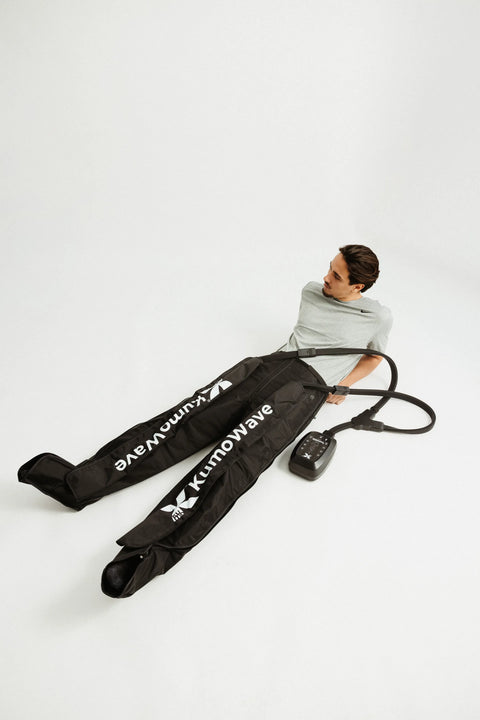
KumoWave Elite – Pressotherapy Pants
Full-coverage trousers. Ideal for lipedema, fluid retention and intensive use.
€799,00 €999,00

KumoWave 2.0 - Wireless Pressotherapy
Wireless, lightweight boots. Perfect for daily use and recovery.
€499,00 €599,00