
The LED face mask is surrounded by myths and spectacular promises.
In this article we'll separate what science says from what's pure marketing: what real benefits it can provide, what limitations it has, when it's safe, and how to intelligently integrate it into your care and recovery routine.
What is an LED face mask and how does it work?
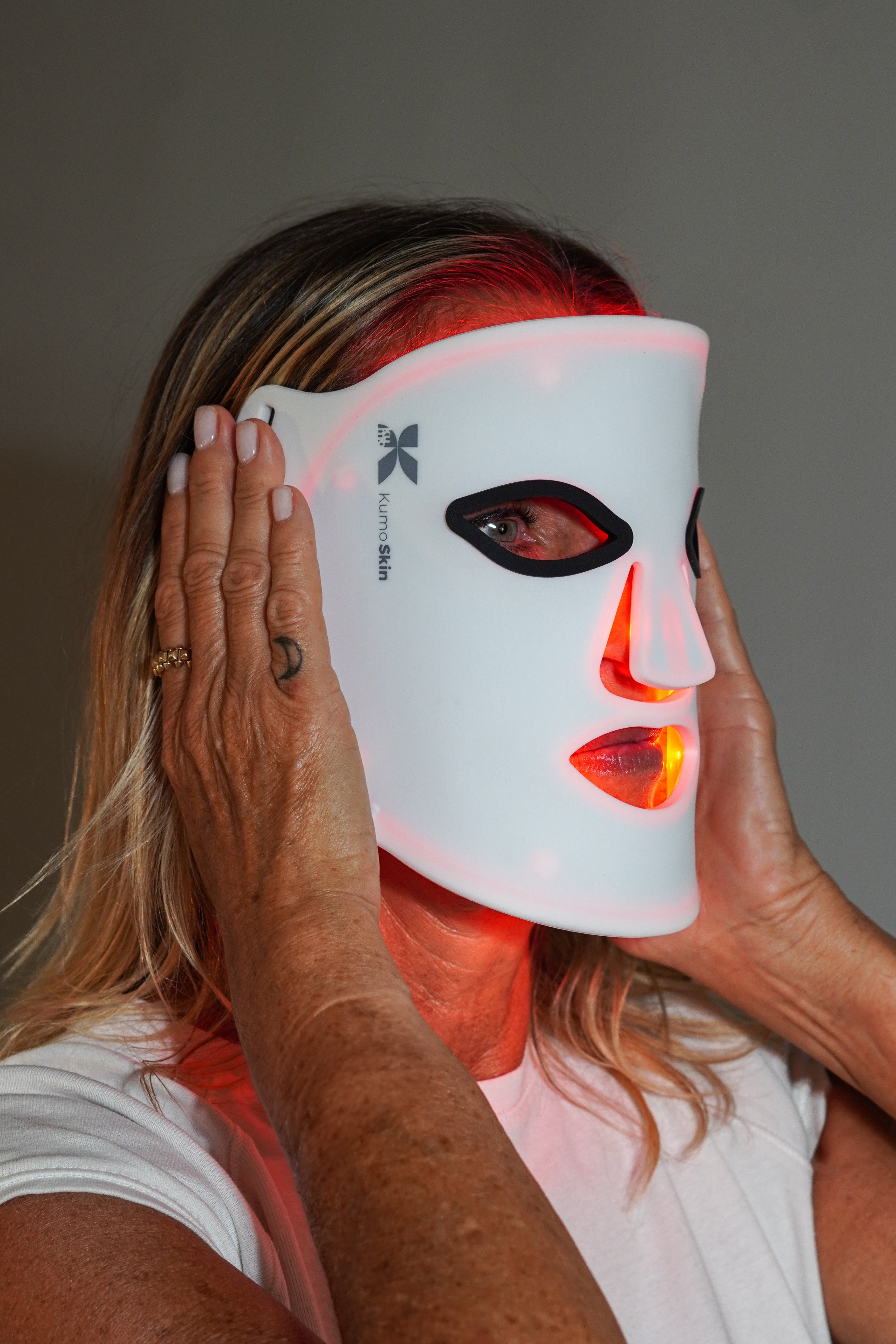
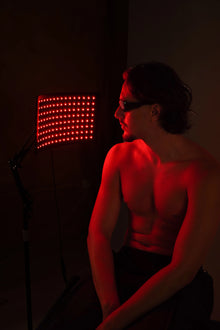
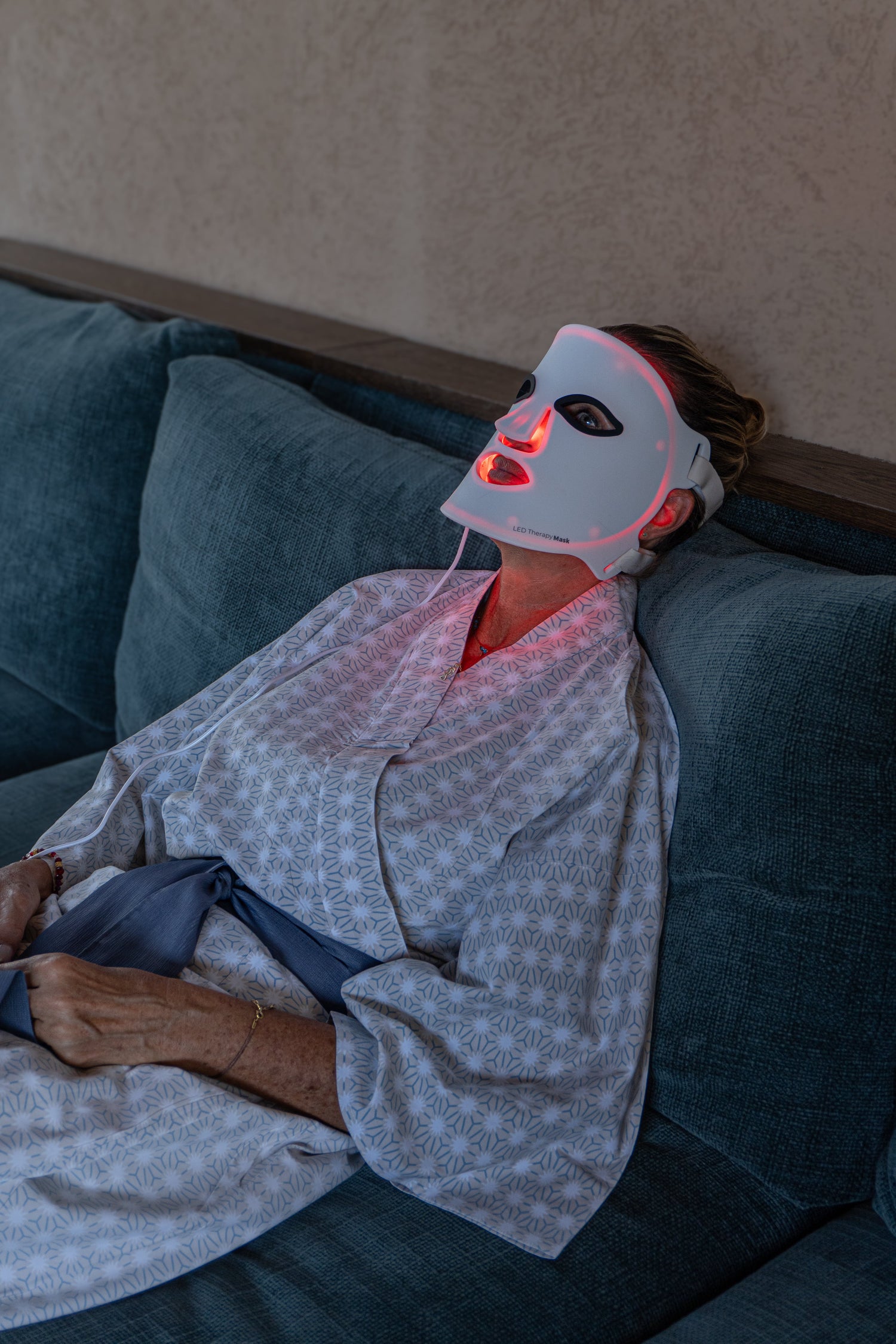
A facial LED mask is a device that emits visible and sometimes infrared light at low intensity, directed at the skin of the face. It is neither a laser nor UV rays: it is based on photobiomodulation , that is, how certain wavelengths of light can stimulate cellular processes (energy production, repair signals, reduction of oxidative stress). (pubmed.ncbi.nlm.nih.gov)
Facial red light
Bring your skin back to life
★★★★★ 4,8/5 · rated by verified customers
The KumoSkin LED mask helps repair and calm your skin in short sessions at home.
- 250 LEDs in flexible medical silicone
- Red light to boost collagen and glow
- 4 lights: red, infrared, blue and yellow
€299,00€429,00
−10% on your 1st order when you subscribe to the newsletter

In dermatological treatment rooms, panels or helmets with higher power are used; home versions are less intense but apply the same principle with short, repeated sessions. The goal is not to "burn" or peel the skin, but to deliver a gentle, repeated stimulus that promotes regeneration.
Most common types of light in an LED face mask
-
Red light (≈620–660 nm)
It penetrates deeper layers and is associated with improvements in fine wrinkles, firmness, and reduced inflammation. It may activate fibroblasts and collagen-related pathways, according to photobiomodulation trials for rejuvenation. (pubmed.ncbi.nlm.nih.gov) -
Amber or yellow light
It is sometimes used in conjunction with red eyeliner; in clinical studies, it showed similar reductions in periorbital wrinkle volume, around 30%, after several sessions. (pubmed.ncbi.nlm.nih.gov) -
Blue light (≈415 nm)
It works more on the surface and helps reduce certain bacteria involved in acne and some of the inflammation, especially in mild to moderate acne. ( healthline.com ) -
Near-infrared (NIR) light
It's not visible, but some masks incorporate it to penetrate even deeper. It may support tissue repair, although evidence in aesthetic facial skin is more limited.
Scientifically backed benefits (and their limitations)
Rejuvenation and wrinkles
Several clinical studies support the idea that red and amber light therapy can improve signs of skin aging:
Personalized protocol · included with your purchase
Want us to tell you how to use it in your case?
With your purchase, our experts prepare the ideal LED protocol for your skin type and goal (acne, wrinkles, dark spots...).
Message us on WhatsAppOur experts reply · no obligation
- A randomized clinical trial with 137 women found a reduction of approximately 30% in the volume of wrinkles around the eyes after 10 sessions of red or amber photobiomodulation. (pubmed.ncbi.nlm.nih.gov)
- A 2023 study using a red LED mask (630 nm, 12 minutes, twice a week for 3 months) described a progressive and overall improvement in skin quality, with effects that persisted for at least one month after the protocol ended. (pubmed.ncbi.nlm.nih.gov)
In other words, there is evidence for real benefits in fine lines, texture, and radiance. But:
- Studies typically have small sample sizes and partial funding from industry.
- The results are gradual , not a radical "before/after" in just a few days.
- As a comprehensive review of photobiomodulation points out, the quality of evidence can still be improved, and not all home devices replicate the exact conditions of clinical trials. (pubmed.ncbi.nlm.nih.gov)
Acne and inflammation
For acne, the LED facial mask can be an interesting aid, with some nuances:
- Blue and red light reduce bacteria and modulate inflammation , improving mild-to-moderate inflammatory acne in several phototherapy studies. ( healthline.com )
- The American Academy of Dermatology (AAD), cited by Healthline, emphasizes that visible light is not effective for comedones (blackheads/whiteheads) or severe nodular acne; it works best as an adjunct treatment for mild to moderate acne. ( healthline.com )
Translated: It can help reduce breakouts and inflammation, but it is not a substitute for medical treatment when there is severe acne, deep scarring, or significant hormonal imbalances.
on your first order when you join the newsletter
We send you the code instantly. No spam.
Skin wellness and overall recovery
Photobiomodulation has been used for years in:
- Wound repair
- Relief from pain and inflammatory processes
- Support for the skin barrier function
A 2021 clinical review concludes that there is a reasonable body of evidence for its use in rejuvenation, acne, and wound healing, with a good safety profile when used correctly. (pubmed.ncbi.nlm.nih.gov)
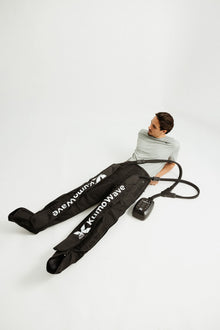
In the context of brands like KUMO, the LED facial mask fits within a global recovery routine , alongside technologies such as leg compression boots or muscle massage guns, aimed at optimizing well-being and daily performance without invasive procedures.
Common myths about LED face masks
Myth 1: “The LED facial mask is a miracle treatment that cures everything”
LED masks are not a magic wand. Studies show benefits in specific areas : fine lines, skin texture, certain types of acne, and support for skin repair. (pubmed.ncbi.nlm.nih.gov)
However:
- It does not completely "erase" deep wrinkles.
- It does not, on its own, correct marked sagging, severe scars, or complex skin pathologies.
- It does not replace basic habits: cleansing, hydration, sun protection, sleep and nutrition.
It is a complementary tool within a comprehensive care strategy, not a substitute for everything else.
Myth 2: “The longer and more powerful, the better”
Photobiomodulation doesn't work like tanning: there is an optimal dose . Dermatologist-reviewed articles indicate that, in practice, many people use red light for 10 to 20 minutes, 2 to 5 times per week, and that exceeding recommended times or frequencies can cause irritation, burns, or worsen existing problems . (health.com )
Furthermore, one of the aforementioned anti-aging LED mask studies used only two 12-minute sessions per week for 3 months , with good results without the need for extreme intensities. (pubmed.ncbi.nlm.nih.gov)
More is not always better; more is often too much .
Myth 3: “There is no risk, light is completely harmless”
Although LED face masks do not emit UV radiation, and studies consider them to be of low short-term risk , they are not neutral:
- Effects such as redness, irritation, slight peeling, and even burns have been described when the duration is exceeded or defective devices are used. ( healthline.com )
- The AAD and other sources recommend special caution for people with photosensitive diseases (such as lupus), those undergoing treatment with drugs that increase sensitivity to light, or those with darker skin tones due to a higher risk of hyperpigmentation. ( healthline.com )
That's why it's crucial to always follow the manufacturer's instructions and, if in doubt, consult a dermatologist.
Myth 4: “LED masks always improve blemishes”
This is one of the most delicate myths. The reality is more complex:
- Dermatologists interviewed in 2025 warn that some people predisposed to melasma have seen their pigmentation worsen with LED masks, especially those that generate noticeable heat or combine red, blue, and infrared light. ( harpersbazaar.com )
- The AAD also notes that medium to dark skin tones are more sensitive to visible light and may develop persistent hyperpigmentation. ( healthline.com )
If you have a history of melasma, spots that are activated by heat, or a high phototype, it is especially important to consult a specialist first and take extra precautions with sun protection.
Myth 5: “The results are immediate and permanent”
Clinical study data points in the opposite direction:
- In the 3-month red mask trial, improvement was progressive over 1, 2, and 3 months of use and was maintained for about a month afterward, but not permanently. (pubmed.ncbi.nlm.nih.gov)
- The AAD reminds us that, for both skin and hair, light therapy requires continued use and maintenance sessions because the skin continues to age over time. ( aad.org )
Therefore, the LED face mask is a maintenance tool: it requires consistency, and its effects diminish if it is completely abandoned.
Table: Myths and realities of the LED face mask
| Myth | Reality | What does it mean to you? |
|---|---|---|
| “It cures everything” | It works best on fine lines, texture, and mild-to-moderate acne. | Use it to optimize, not to solve serious problems without medical supervision |
| “The more, the better” | There are optimal doses; excess can irritate or burn the skin | Respect the timing and frequency recommended by the manufacturer or your dermatologist |
| “It is 100% safe in all cases” | It is low risk, but not suitable for everyone or all contexts. | If you are taking photosensitizing drugs or have skin conditions, seek advice. |
| “It always lightens stains” | It can worsen melasma in predisposed or heat-sensitive skin. | If you have dark spots, it's crucial to assess the risks and increase sun protection. |
| “Immediate and permanent results” | Gradual improvements that require weeks/months and maintenance | Think of it as a medium-term habit, not a quick fix. |
Safety: Who can use an LED face mask (and who should be careful)
Most medical sources agree that red and blue light, in approved devices and used correctly, are safe in the short term for many people. ( healthline.com )
Even so, it is advisable to exercise extreme caution if:
- Are you pregnant or breastfeeding (specific evidence is limited)?
- You have a history of melasma , severe hyperpigmentation, or spots that worsen with heat.
- You have photosensitive diseases (lupus, porphyrias, etc.) or you take photosensitizing medication.
- Have you had skin cancer or recent suspicious lesions?
- You have migraines or epilepsy that are sensitive to flashing light.
In these cases, the responsible thing to do is to talk to a dermatologist or doctor first before incorporating such a device into your routine.
Eye protection and heat management
- Use the included protective eyewear if the manufacturer recommends it; regular sunglasses are not a substitute for proper eye protection. (health.com )
- Avoid looking directly at LEDs at close range for extended periods.
- If you experience excessive heat, discomfort, stinging, or blurred vision, stop the session .
How to integrate the LED facial mask into your care and recovery routine
Indicative frequency and duration
There is no universal protocol yet, but current references provide useful ranges:
- Dermatologist-reviewed articles describe that most people use red light therapy 2–5 times per week for 10–20 minutes , always following the specific instructions for the device. (health.com )
- The clinical study of the Dior × Lucibel mask used two 12-minute sessions per week for three months for facial rejuvenation. (pubmed.ncbi.nlm.nih.gov)
A prudent strategy:
- Start with the minimum frequency recommended by the manufacturer.
- Evaluate skin response for 3–4 weeks.
- Adjust intensities and times judiciously (ideally with professional advice).
Skin preparation and aftercare
To minimize irritation and optimize results:
- Wash your face with a gentle cleanser , without physical or chemical exfoliants, just before the session. ( healthline.com )
- Avoid applying strong retinoids, acids, or exfoliants in the hours beforehand if your skin is sensitive.
- After the session, apply a soothing moisturizer or a light serum, and avoid harsh products for a few hours. (health.com )
- Reinforce the use of broad-spectrum sunscreen every morning; skin may be somewhat more reactive after phototherapy.
In synergy with other recovery tools
The LED facial mask can be the "aesthetic" part of a broader recovery routine:
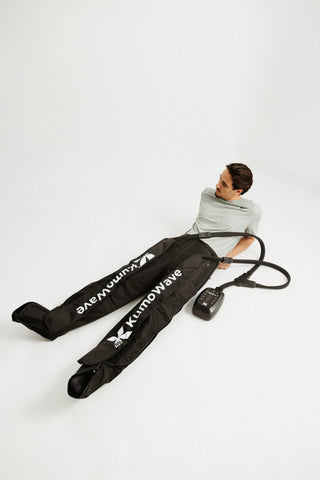
- After intense training or demanding days, pressotherapy boots help activate circulation and relieve the feeling of heavy legs.
- A KumoPulse Air massage gun can help to deeply relax tense muscles.
Combined with an LED light mask for the face, they form a comprehensive recovery ritual that addresses both muscle comfort and visible skin quality, without resorting to invasive procedures.
FAQ – Frequently Asked Questions about the LED Face Mask
How often should I use an LED face mask to see results?
The ideal frequency depends on the device and your skin type, but many protocols range from 2 to 5 weekly sessions of 10–20 minutes . (health.com )
The key is consistency : studies showing improvement in wrinkles or texture typically last between 8 and 12 weeks. If your skin is sensitive, it's best to start with a shorter period and every other day, observing for any redness or tightness. If you are undergoing dermatological treatment (for example, for acne), always coordinate the frequency with your specialist.
Is an LED facial mask effective for hormonal or severe acne?
LED masks may help with mild to moderate inflammatory acne by reducing bacteria and some inflammation, especially when they combine blue and red light. ( healthline.com )
However, in severe acne (nodules, cysts, deep scars) or acne of clear hormonal origin, evidence indicates that light therapy alone is not enough. In these cases, it is considered a complementary treatment, never the primary one. If your acne is painful, leaves persistent marks, or affects your mood, a personalized treatment plan with a dermatologist is the priority.
Is the LED face mask safe during pregnancy or breastfeeding?
Reference articles and dermatological guidelines indicate that red and blue light are generally low risk, but specific research on pregnancy and breastfeeding is limited . ( healthline.com )
Some experts prefer to be cautious and recommend avoiding devices that aren't strictly necessary during this period, especially those undergoing intensive treatments or combined with photosensitizing medications. If you are pregnant or breastfeeding, it's best to discuss the use of an LED mask with your gynecologist or dermatologist before incorporating it into your routine.
What skin type benefits most from an LED facial mask?
Current evidence suggests good results, especially in skin with early signs of aging (fine lines, uneven texture, lack of radiance) and in mild-to-moderate inflammatory acne . (pubmed.ncbi.nlm.nih.gov)
In people with medium to dark skin tones, or those prone to hyperpigmentation or melasma, extra caution is needed because visible light and heat can trigger pigment production. ( harpersbazaar.com )
In general, any skin type should gradually introduce the mask, observing the response and always prioritizing daily sun protection.
Can an LED face mask replace my creams or medical treatment?
No. The LED facial mask is a complement , not a replacement. Scientific guidelines and reviews emphasize that phototherapy does not correct unhealthy habits or replace topical or oral treatments indicated for specific skin conditions. (pubmed.ncbi.nlm.nih.gov)
Ideally, this should be integrated into a solid foundation: gentle cleansing, adequate hydration, daily sunscreen, and, if necessary, the products or medications prescribed by your dermatologist. In the presence of skin conditions (severe acne, rosacea, psoriasis, intense melasma), medical advice and follow-up should always be provided.
So what now?
If you want the LED facial mask to be part of a complete recovery routine, the next step is to define your main goal (brighter skin, support for mild acne, or post-exercise recovery) and discuss it with a skin care professional if needed. Then, you can explore Kumo's range of LED light therapy products and combine them with recovery solutions such as compression therapy or percussion massage, depending on your needs.
To resolve specific questions about products or usage, you can write through the contact page , and if you want to learn more about the brand's philosophy and its global approach to well-being, visit Kumo's homepage .

Facial red light
KumoSkin Mask – LED Facial Mask
★★★★★ 4,8/5 · rated by verified customers
- 250 LEDs in flexible medical silicone
- Red light to boost collagen and glow
- 4 lights: red, infrared, blue and yellow
€299,00€429,00· pay in installments with seQura or Klarna