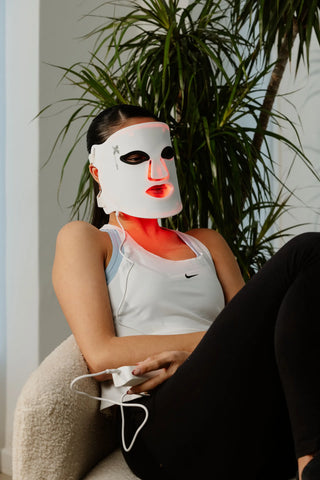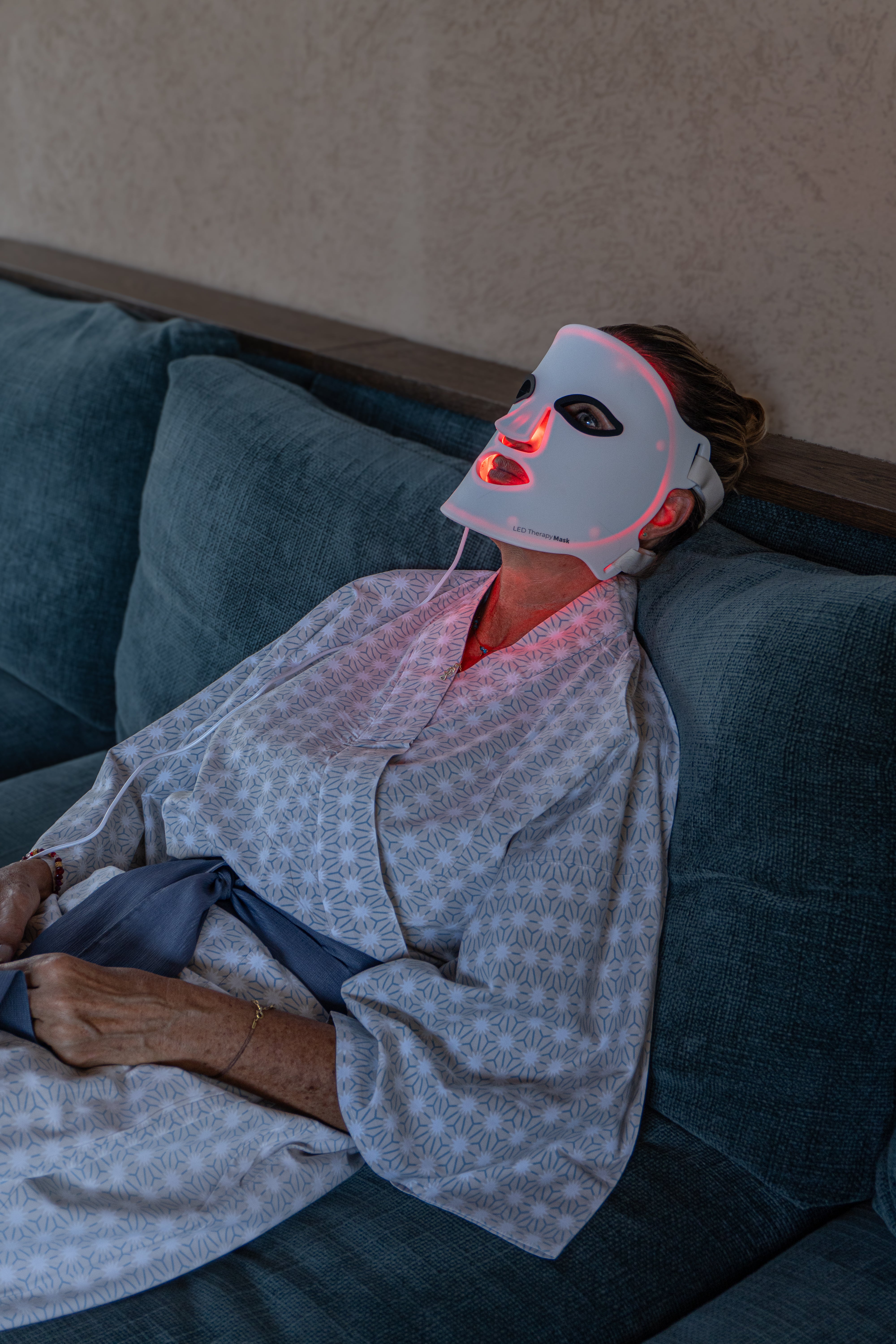

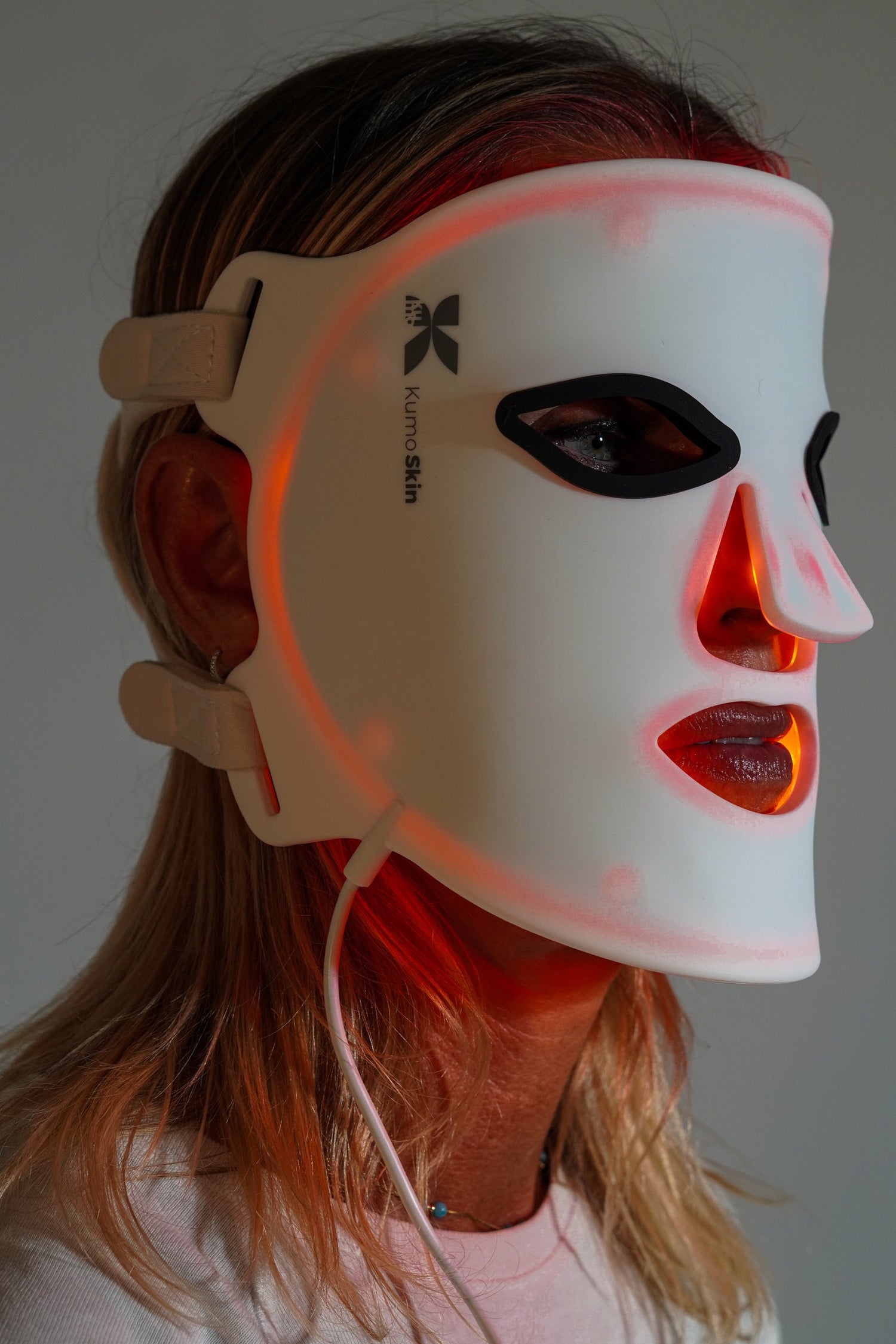
The best LED facial mask is not chosen by colors. What makes the difference is a clear combination of wavelength, safety, comfort, and consistency, especially if you integrate it into a serious at-home skincare ritual within Kumo Balance's tech wellness approach. (aad.org)
In practice, facial photobiomodulation is mostly used to support skin texture, fine lines, and certain acne breakouts, although results depend heavily on the device and protocol. If you want to understand the technical basis first, review how an LED facial mask works; here we will focus on the criteria that truly help you make the right choice. (pubmed.ncbi.nlm.nih.gov)
Red & infrared light
Recover faster, at home
★★★★★ 4,8/5 · rated by verified customers
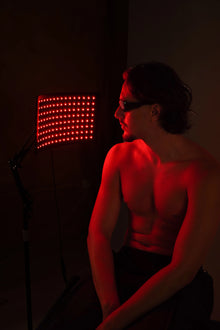
The KumoLux panel supports muscle recovery with full-body red and infrared light.
- 660 nm red + 850 nm infrared light
- Full-body muscle recovery
- Clinically validated biohacking protocols
€399,00€499,00
−10% on your 1st order when you subscribe to the newsletter

What do the "7 colors" really mean?
The "7 colors" are often a commercial resource, not a universal clinical standard. In practice, what matters is the wavelength in nanometers: blue is mainly studied for acne, red for signs of aging and texture, and near-infrared for somewhat deeper targets; green, yellow, or violet appear in some devices, but with less consistent support. To apply this to your skin, the page on benefits for each skin type helps you sort things out. (pubmed.ncbi.nlm.nih.gov)
Key criteria for success in 2026
Before looking at secondary features, it's advisable to read a complete guide to choosing yours in 2026 with a simple idea: prioritize evidence, safety, and ease of use over marketing. The AAD reminds us that a device marked as FDA-cleared can generally be considered safe, but this does not equate to better efficacy. (aad.org)
Personalized protocol · included with your purchase
Want us to tell you how to use it in your case?
With your purchase, our experts set up your red and infrared light sessions for your sport and goal.
Message us on WhatsAppOur experts reply · no obligation
Quick buying guide
| Criterion | What you should check | Why it matters |
|---|---|---|
| Wavelength | That it specifies concrete nm, especially 415-445 nm for blue, 630-660 nm for red, and 810-850 nm for near-infrared. (pubmed.ncbi.nlm.nih.gov) | Because the real benefit depends on the wavelength, not the number of colors you see. (pubmed.ncbi.nlm.nih.gov) |
| Safety | That it indicates FDA-cleared or 510(k), in addition to photobiological safety tests and home use. (aad.org) | Because a well-designed light should come with clear instructions and eye protection when required. (aad.org) |
| Dose and routine | That it details session duration, frequency, and power, not just “many LEDs.” (pubmed.ncbi.nlm.nih.gov) | Because in photobiomodulation, the dose matters as much as the technology. (pubmed.ncbi.nlm.nih.gov) |
| Fit and comfort | That it fits the face well and allows you to repeat use without discomfort. (pubmed.ncbi.nlm.nih.gov) | Because real adherence depends on it being easy to use for several weeks. (pubmed.ncbi.nlm.nih.gov) |
| Purpose of use | That the manufacturer states what it is intended for: acne, wrinkles, texture, or redness. (aad.org) | Because the same device does not work equally well for everything. (aad.org) |
Practical tip: if the manufacturer does not specify nm, time, and intended use, you are not comparing real technology but marketing. This is a practical inference from clinical studies, where results are related to wavelength and dose. (pubmed.ncbi.nlm.nih.gov)
In addition, several recent FDA 510(k) filings for home LED masks mention photobiological safety and home use tests; for example, a recent document on a home LED mask can be seen in this reference 510(k), and another filing highlights an integrated eye shield in its technical documentation. The most recent records also cite standards such as IEC 60601-2-83 and IEC 62471, as well as ISO 10993 biocompatibility. (accessdata.fda.gov)
What clinical evidence says about LED masks
The evidence does not promise miracles, but it does show modest and measurable improvements when the protocol is well-defined. A randomized, double-blind trial with 76 patients treated one half of the face with 830 nm, 633 nm, or a combination of both, twice a week for 4 weeks; the result was an objective reduction in wrinkles and an increase in elasticity. You can view the study in this classic LED skin rejuvenation trial. (pubmed.ncbi.nlm.nih.gov)
on your first order when you join the newsletter
We send you the code instantly. No spam.
More recently, a multicenter at-home use study with 630 nm LED and 850 nm IRED evaluated crow's feet with a maximum irradiance of 10 mW/cm² ±20% and concluded that the device was safe, well-tolerated, and painless. The full reading is in this multicenter study on home use. (pubmed.ncbi.nlm.nih.gov)
For acne, blue and red light have the most clinical experience. A comparative trial of red and blue light in mild-to-moderate acne observed improvements in both modalities, and the AAD summarizes that some visible light devices can help with pimples, though not with blackheads, cysts, or nodules. The comparative work can be seen in this trial on red and blue light in acne. (pubmed.ncbi.nlm.nih.gov)
Smart purchasing is not based on a rainbow of colors, but on a clear protocol: what light it uses, what it's for, how long each session lasts, and what level of safety it offers. (aad.org)
How to choose it according to your goal
If you already understand the mechanism, the next step is to choose according to your main goal. To refine the criteria, the evidence and real results we have gathered on home use can also help you. (pubmed.ncbi.nlm.nih.gov)
If your goal is acne
Look for devices that specify blue light or a blue + red combination. Visible light is used for superficial pimples, and the AAD reminds us that it does not replace other treatments when there are deep or cystic lesions. If your skin is easily irritated, start with short sessions and check for tolerance. (aad.org)
If your goal is firmness and fine wrinkles
Red and near-infrared light are usually best suited here. Classic studies and more recent trials continue to find improvements in texture, wrinkles, and elasticity when the wavelength and consistency are well chosen. (pubmed.ncbi.nlm.nih.gov)
If you have sensitive skin or a tendency to spots
It is advisable to be more cautious with exposure to visible light, especially if you have photodermatosis or use photosensitizing medication. The AAD also warns that darker skin types may be more sensitive to visible light and develop more intense or long-lasting hyperpigmentation, so the safety criterion is even more important. (aad.org)
How to use it at home for it to work
Once you have chosen well, routine is key. If you prefer a specific roadmap, the step-by-step guide to using it at home will serve as a basis; the idea is simple: follow the instructions, be consistent, and do not improvise the dose. (aad.org)
- Use the mask on clean, dry skin to avoid interfering with very occlusive serums or irritating active ingredients. (aad.org)
- Start with the frequency recommended by the manufacturer and do not extend sessions "just in case," because the dose matters. (pubmed.ncbi.nlm.nih.gov)
- If you are taking photosensitizing medication or have a condition that reacts to light, seek professional advice before using it. (aad.org)
- If the manufacturer requires eye protection, use the goggles every time. (aad.org)
- Measure your progress in weeks, not days, because clinical studies work with repeated cycles. (pubmed.ncbi.nlm.nih.gov)
In many protocols, evolution is assessed after several weeks of regular use, so it is advisable to think of a repeatable ritual and not an express solution. (pubmed.ncbi.nlm.nih.gov)
Common mistakes when choosing an LED mask
- Confusing "7 colors" with real efficacy and not checking the wavelength in nm. (pubmed.ncbi.nlm.nih.gov)
- Ignoring whether the device requires eye protection or if the manufacturer describes a specific safety standard. (aad.org)
- Using it for longer than indicated thinking that it will work better. (pubmed.ncbi.nlm.nih.gov)
- Expecting it to solve deep acne, complex spots, or advanced sagging on its own. (aad.org)
Frequently asked questions
What is an LED mask and what is it for?
It is a photobiomodulation device that uses visible or near-infrared light to modulate cellular responses in the skin. In aesthetics, it is mainly used to support the improvement of texture, fine lines, redness, and some acne breakouts. Its advantage is that it is non-invasive and can be integrated at home, but it does not replace all dermatological treatments. Real utility depends on wavelength, dose, and consistency. (aad.org)
What do the 7 colors of the LED mask mean?
In most cases, the "7 colors" are a commercial way of presenting different wavelengths. What is important is not the color you see, but the value in nanometers and the indication for use. Red, blue, and red + infrared are the modes with the most repeated support; other shades may appear in some devices, but with more irregular evidence. If the manufacturer does not explain what each mode is for, it is advisable to be suspicious. (pubmed.ncbi.nlm.nih.gov)
Is it effective to use a facial LED mask at home?
Yes, but with realistic expectations. Home studies show gradual improvements when the device is well-designed and the protocol is followed. The AAD points out that many FDA-cleared devices are considered safe, although this alone does not guarantee great efficacy. Therefore, what matters most is choosing the right wavelength, using it consistently for weeks, and always following the manufacturer's instructions. (aad.org)
What should be considered when choosing it?
First, check what it is intended for: acne, wrinkles, texture, or redness. Then review the wavelength in nm, declared safety, fit, and eye protection. It is also advisable to consider your skin type and if you are taking medications that increase light sensitivity. If in doubt, a prudent choice is worth more than a mask full of promises. (aad.org)
How to use it at home for results?
Follow the manual, don't improvise more dose than necessary, and be consistent. A well-done routine starts with clean, dry skin, continues with repeated sessions for several weeks, and respects eye protection when indicated. Improvement is usually progressive, so it is advisable to measure progress with patience and not in a hurry. If a protocol irritates you or is uncomfortable, it is probably not the right one for you. (aad.org)
What now?
If you want to put it into practice, start with the KumoSkin Mask made of medical silicone and the step-by-step guide to integrate it into a simple and consistent routine. And if you prefer to see how it fits into the brand's recovery and wellness ecosystem, go back to Kumo Balance's tech wellness approach.

Red & infrared light
KumoLux Panel – Red and Infrared LED Panel
★★★★★ 4,8/5 · rated by verified customers
- 660 nm red + 850 nm infrared light
- Full-body muscle recovery
- Clinically validated biohacking protocols
€399,00€499,00· pay in installments with seQura or Klarna