Choosing an LED mask isn't about marketing.
The right choice depends on wavelength, dosage, safety, and consistency. The AAD reminds us that home devices are usually less powerful than professional ones, so it's wise to critically review the technical specifications.
Red & infrared light
Recover faster, at home
★★★★★ 4,8/5 · rated by verified customers
The KumoLux panel supports muscle recovery with full-body red and infrared light.
- 660 nm red + 850 nm infrared light
- Full-body muscle recovery
- Clinically validated biohacking protocols
€399,00€499,00
−10% on your 1st order when you subscribe to the newsletter

What is an LED mask and what does it actually do?
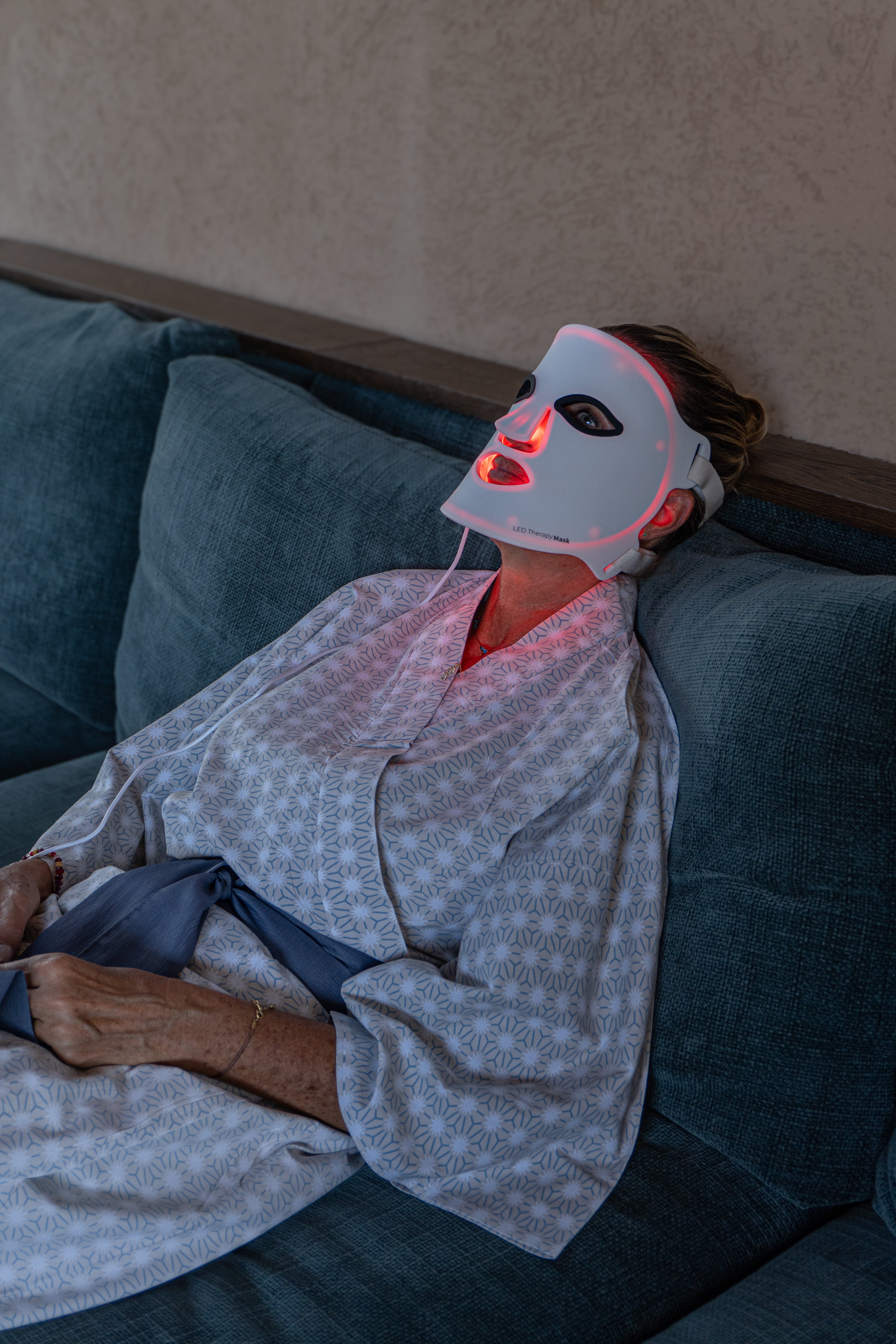
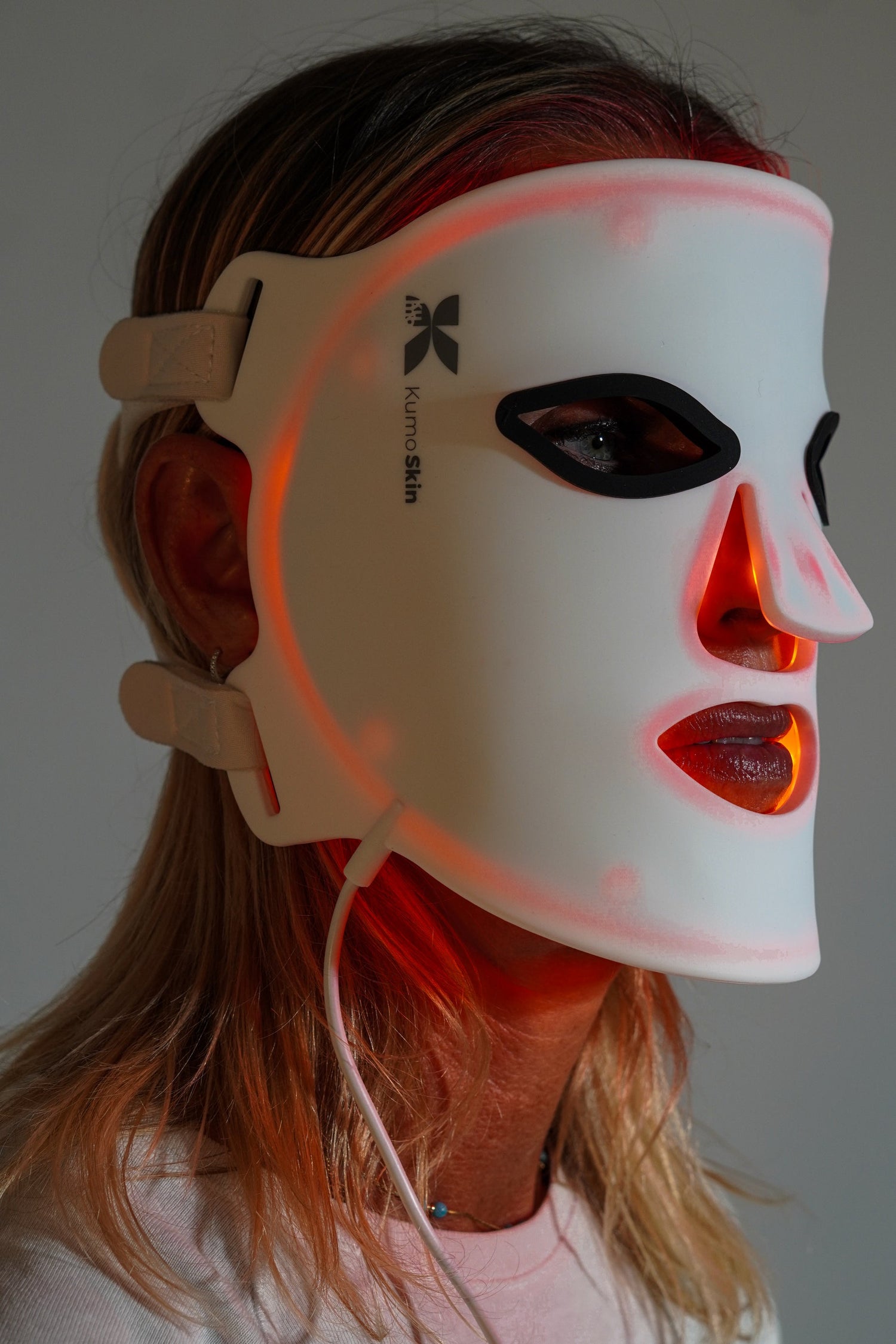
An LED mask applies photobiomodulation: red or near-infrared light to modulate skin processes without needles or downtime. The AAD guide on red light therapy links it to acne, wrinkles, and other signs of aging, and recent home trials continue to use combinations like 630/850 nm for rejuvenation.
If you want to understand the mechanism in more detail, you can review how a facial LED mask works and what results you can expect. For now, just remember one idea: the right mask isn't the flashiest, but the one designed for your goal and for consistent use.
Personalized protocol · included with your purchase
Want us to tell you how to use it in your case?
With your purchase, our experts set up your red and infrared light sessions for your sport and goal.
Message us on WhatsAppOur experts reply · no obligation
How to choose an LED mask in 2026
In 2026, the sensible criterion is simple: don't buy based on the number of diodes, buy based on the combination of wavelength, protocol, safety, and comfort. This is what appears repeatedly in clinical trials and regulatory documentation for facial devices. (pmc.ncbi.nlm.nih.gov)
Essential criteria table
| Criterion | What to look for | Why it matters |
|---|---|---|
| Wavelength | Red 630–660 nm for surface targets; blue/red for acne; near-infrared 830–850 nm in rejuvenation protocols. | Efficacy depends on matching the light mode to the objective. |
| Dose and time | Irradiance, fluence, duration per session, and frequency of use. | Trials report these parameters because the number of LEDs alone doesn't explain the result. |
| Safety | FDA-cleared, CE marked, and documentation from IEC 60601-1, IEC 60601-1-11, and IEC 62471 tests. | These are the most useful signals for filtering home-use devices. |
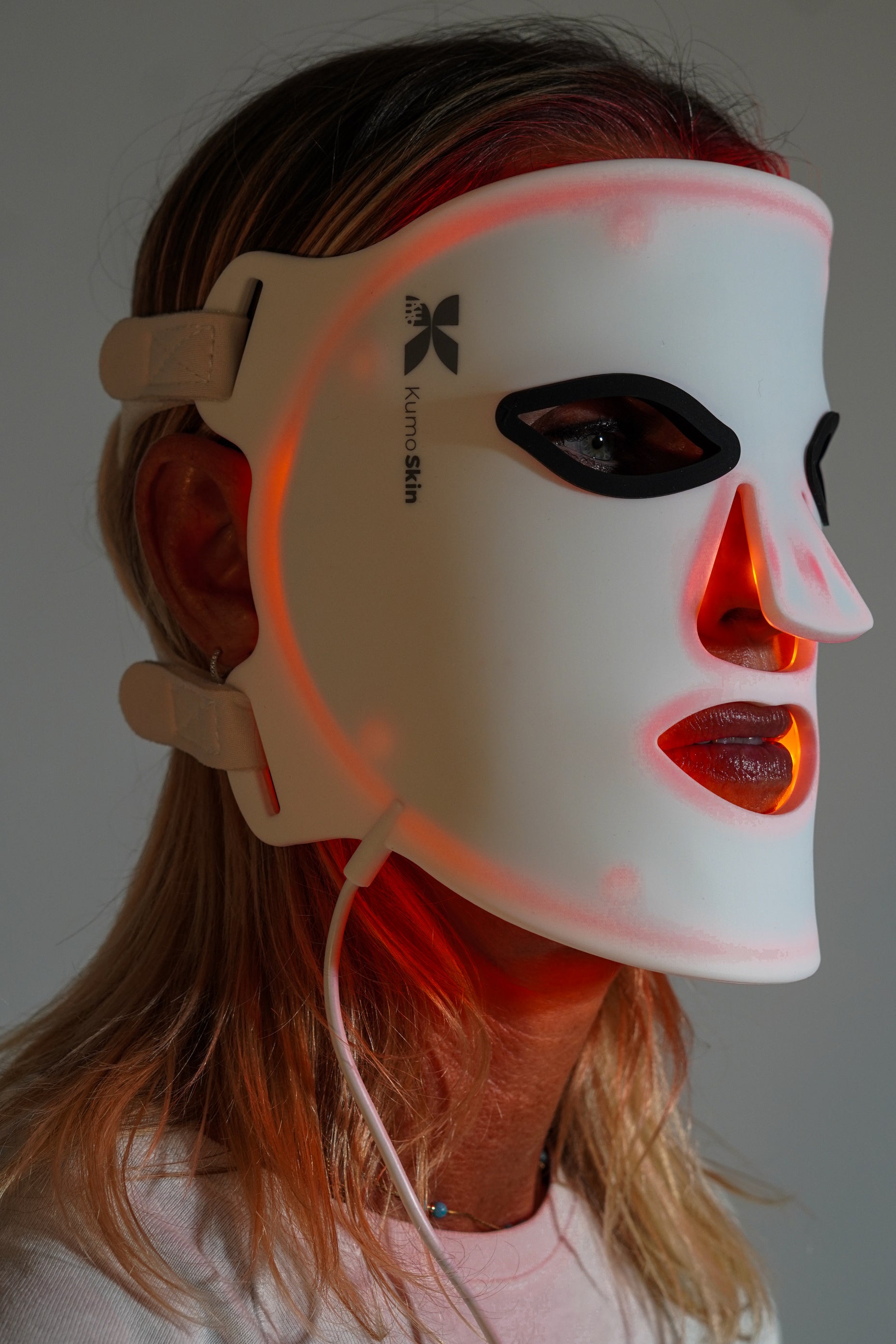
| Comfort | Flexible silicone, good facial fit, and eye protection when indicated. | Consistency improves when the mask is comfortable and safe to use. |
| Expectation | Gradual improvements over weeks, not immediate changes. | Clinical studies evaluate results at 4, 8, 12, and 16 weeks. |
If your main question is whether red, infrared, or a combination of both is right for you, reading the guide on red or infrared LED masks for different skin types will help. The choice changes depending on whether you prioritize wrinkles, texture, redness, or acne.
My quick method to avoid mistakes
- First, define whether you are looking for wrinkles, acne, redness, or a general improvement in texture, because your goal dictates the light mode.
- Check what wavelength the device uses and if that wavelength aligns with your main goal.
- Look for data on irradiance, fluence, and session duration, not just an impressive number of LEDs.
- Verify the regulatory aspect before looking at the design, because safety cannot be guessed from appearance.
- Prioritize a mask you'll want to use repeatedly, because consistency is what turns theory into results.
Safety, certifications, and signs of trustworthiness
The key word here is verification. The FDA explains that, for radiation-emitting products, "certification" means the manufacturer declares compliance with the applicable standard; additionally, "FDA approved" and "FDA certified" are not valid terms to describe a medical device. In the EU, the CE mark can only be used if the product complies with applicable regulations, and if a notified body is involved, its number must appear next to the marking. A recent FDA LED facial mask document, for example, mentions IEC 60601-1, IEC 60601-1-11, IEC 62471, and IEC 60601-2-83 tests.
on your first order when you join the newsletter
We send you the code instantly. No spam.
You can check this in the official FDA explanation of radiation-emitting product certification, in the European guide on CE marking, and in a recent 510(k) document with safety and home use tests.
In practice, also review the mask's fit and eye protection. The AAD recommends following device instructions and wearing protective eyewear when indicated; FDA documents show solutions like eye shields or integrated protection to prevent light from reaching the eyes.
If you have dark phototype skin, lupus, or are taking photosensitizing medication, it's worth seeking medical advice before purchasing. The AAD notes that visible light can increase the risk of hyperpigmentation in darker skin tones and that certain diseases or drugs can worsen with exposure.
If your main concern is dark spots, the guide on LED masks and dark spots might also be helpful, as consistency and usage habits are as important as the device itself.
What results can you expect and in what timeframe?
In rejuvenation, studies don't promise miracles, but they do show gradual improvements. In a randomized multicenter trial with a 630/850 nm mask for home use, improvement in crow's feet appeared at 8, 12, and 16 weeks, and the device was well-tolerated. In inflammatory acne, an open-label randomized trial published in 2026 observed fewer inflammatory and total lesions with red and blue light at home at 4 and 8 weeks.
The AAD adds that light for acne can help, especially with inflammatory pimples, but rarely clears acne on its own; it also reminds us that several sessions are usually needed and that results vary from person to person. For this topic, you can delve deeper into LED masks for acne: protocol and results. (aad.org)
The AAD itself emphasizes an important point: not all devices or protocols are comparable. Therefore, two masks may show different results even if they appear "similar" on the commercial spec sheet.
How to use it well at home
Consistency is worth more than intensity. If the device requires regular use, changes are usually measured in weeks, not in a single session. If you want to organize it as a routine, this nighttime facial routine with an LED mask serves as a practical guide.
- Wash and dry your skin before starting to avoid affecting contact or device comfort.
- Follow the time and frequency indicated by the manufacturer; trials and guides emphasize that the protocol is as important as the wavelength.
- Use eye protection if the device recommends it, and do not substitute specific goggles for sunglasses.
- Maintain consistency for several weeks before judging results, as many studies evaluate changes at 8, 12, or 16 weeks.
- If your goal is acne, accompany the mask with a gentle routine and medical treatment when indicated, because light alone is not always enough.
FAQ about LED masks
Is at-home LED light therapy safe, and what certifications or safety signals should be checked before purchasing?
Yes, it is generally a low-risk technology when the device is designed for home use and used as indicated by the manufacturer. The FDA clarifies that "FDA-cleared" describes a low-risk device but does not prove efficacy; in the EU, the CE mark is only valid if the product complies with applicable regulations. Before purchasing, also check that the manual mentions tests like IEC 60601-1, IEC 60601-1-11, and IEC 62471, and that it includes eye protection when appropriate.
What wavelength is suitable for wrinkles, texture, and acne?
For wrinkles and texture, protocols with red light are usually of interest, often 630–660 nm, and in some devices, the combination with near-infrared 830–850 nm. For acne, visible blue and red light is mainly used for inflammatory breakouts, and the AAD reminds us that the response is often variable and gradual. If the manufacturer doesn't explain what problem each mode treats, it's a bad sign.
Does it really work for acne, or just for occasional pimples?
Yes, but with nuances. The AAD notes that light can help, especially with inflammatory acne, and that, on its own, it rarely clears all lesions; blackheads, closed comedones, nodules, and cysts respond much less. A 2026 randomized home trial found a reduction in inflammatory and total lesions with a red and blue light device at 4 and 8 weeks. For acne, consistency and combination with an appropriate routine weigh heavily.
What material and design are best for an LED mask?
Look for a mask that is flexible, comfortable, and easy to maintain, because repeated use is what makes the treatment meaningful. Recent regulatory documents show silicone bodies or lightweight plastic materials, as well as eye shields or integrated protection to limit ocular exposure. If the device is tight, too heavy, or forces you to struggle with it every day, you will probably use it less and get poorer results.
How long does it take to see results?
It's normal to think in weeks, not days. In rejuvenation, relevant studies measure changes at 8, 12, and 16 weeks; in acne, some trials already show differences at 4 or 8 weeks, although individual response varies considerably. The AAD insists that use is repeated and that not everyone responds the same way. If you are looking for an immediate change, this technology is not for that; if you are looking for a consistent habit, it might fit.
What now?
If you want to continue exploring at your leisure, return to Kumo Balance and check out KumoSkin Mask to continue comparing selection criteria, home use, and real routine ease.

Red & infrared light
KumoLux Panel – Red and Infrared LED Panel
★★★★★ 4,8/5 · rated by verified customers
- 660 nm red + 850 nm infrared light
- Full-body muscle recovery
- Clinically validated biohacking protocols
€399,00€499,00· pay in installments with seQura or Klarna