The combination of an LED face mask and good serums can transform your skin.
If you already use (or are thinking of buying) an LED light mask for your face, you're probably wondering which serum to apply, in what order, and how to achieve visible results without irritating your skin. In this article, you'll find a complete and practical guide: what each light color does, which active ingredients work best with phototherapy, and how to organize your routine step by step, with recommendations based on recent studies and best dermatological practices.
In addition, we'll see how to integrate the LED mask into a holistic wellness approach, such as the one proposed by KUMO , to take care of both your skin and your daily recovery and performance.
What exactly is an LED face mask?
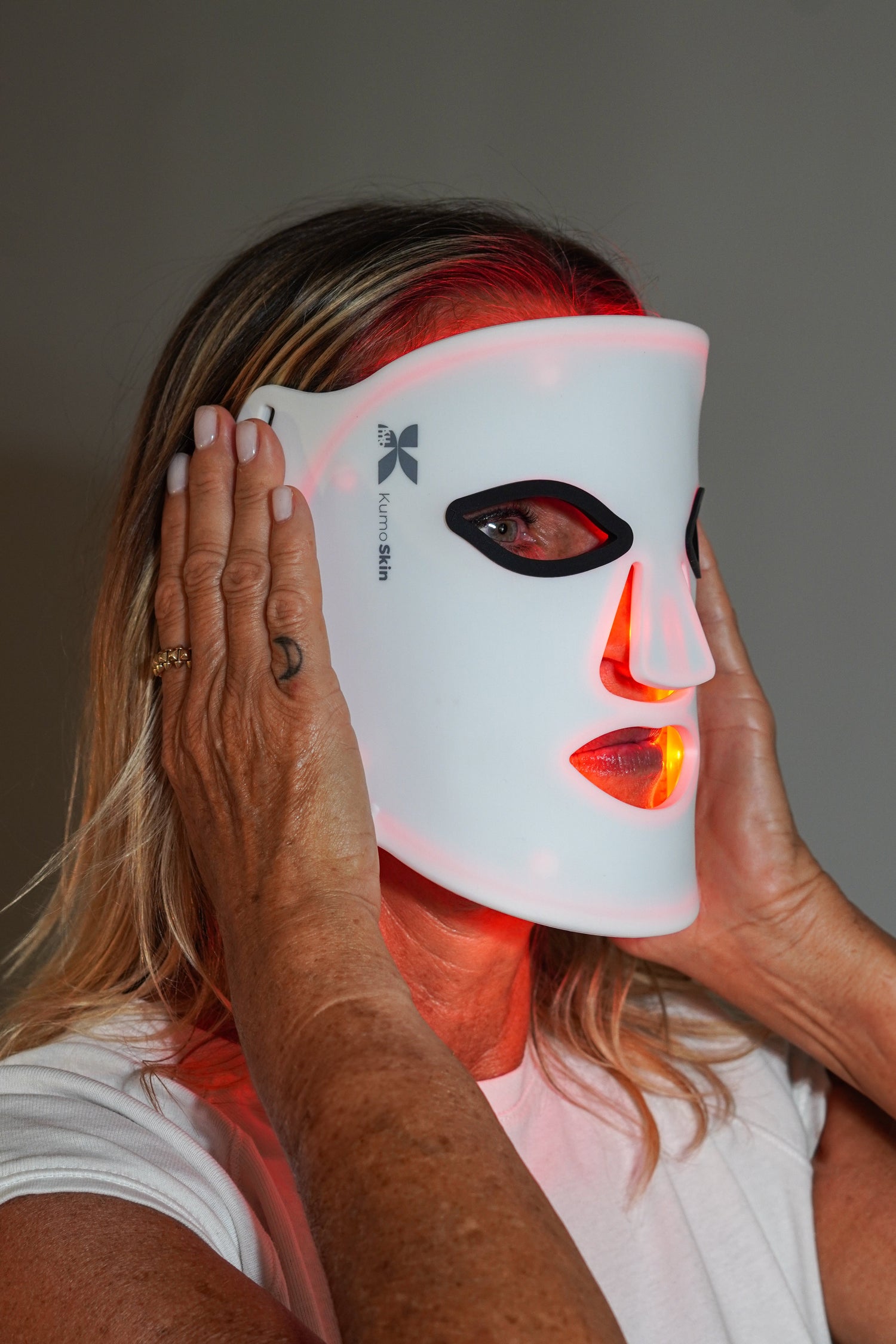
A facial LED mask is a phototherapy device that emits visible and sometimes infrared light at very specific wavelengths. Unlike ultraviolet (UV) light, these wavelengths do not tan or damage skin DNA as the sun does; therefore, dermatological associations consider it a low-risk option when used correctly and with reliable devices. The American Academy of Dermatology notes that at-home red light therapy is considered low-risk in the short term, although very long-term data is still lacking.
LED face masks are primarily used for:
- Reduce fine wrinkles and improve firmness (red and infrared light).
- Support acne treatment (mainly blue light, sometimes combined with red).
- Improve overall skin tone, radiance, and texture.
- Soothe mild redness and support the barrier function.
The key is that each color penetrates to a different depth and acts on different cells and biological processes.
How LED light affects the skin
Photobiomodulation (low-intensity light therapy) uses precisely calculated wavelengths to modulate the activity of skin cells. Studies published in recent years confirm that, when properly parameterized, LED light can stimulate collagen production, modulate inflammation, and improve certain signs of photoaging. In a 2023 randomized clinical trial, for example, a red (660 nm) and amber (590 nm) light protocol reduced the volume of periorbital wrinkles by approximately 30% after 4 weeks of use. ( pubmed.ncbi.nlm.nih.gov )
Red and infrared light: collagen, firmness and repair
Red light (≈630–660 nm) and near-infrared light (≈800–850 nm) penetrate to the dermis, where fibroblasts, responsible for producing collagen and elastin, are located. Several studies show that these wavelengths are absorbed by cytochrome c oxidase in the mitochondria, increasing ATP (cellular energy) production and activating tissue repair and regeneration processes. ( aestheticthrive.com )
Most common benefits of red/infrared light in LED face masks:
- It softens fine lines and wrinkles.
- Discreet but progressive improvement in firmness.
- Reduction of mild redness and swelling.
- Support for skin barrier repair.
Blue light: support against acne
Blue light (≈415–470 nm) acts primarily on the epidermis and sebaceous glands. It is known to activate porphyrins present in Cutibacterium acnes , generating reactive oxygen species that damage these bacteria and help reduce inflammatory acne lesions. Several studies with 415 nm devices show significant reductions in lesions within 4–12 weeks with short uses several times per week. ( pmc.ncbi.nlm.nih.gov )
That's why many masks combine blue and red light: the former helps control the bacterial and sebaceous component, and the latter calms inflammation and supports repair.
Other colors (amber, yellow, green): complementary support
Some devices add yellow/amber (≈570–600 nm) or green (≈520–550 nm) light. Scientific evidence for these wavelengths is less robust than for red, blue, and infrared light, but available studies suggest potential benefits in:
- Superficial redness and microcirculation (yellow/amber).
- Mild hyperpigmentation and uniformity of tone (green).
A 2025 exploratory trial of yellow light combined with red and infrared light for facial photoaging showed improvements in texture parameters, brown spots, and wrinkles after 8 weeks of treatment, although with a small number of participants. ( pubmed.ncbi.nlm.nih.gov )
The role of serums in a facial LED mask routine
What is a serum and why does its texture matter?
Serums are cosmetics with a more fluid phase and a higher concentration of active ingredients than creams. They typically have light bases (aqueous or gel) and a high concentration of functional ingredients (niacinamide, peptides, vitamin C, hyaluronic acid, etc.).
In the context of the LED face mask, texture matters because:
- It is not advisable to create a very thick occlusive layer that could interfere with the arrival of light.
- It is preferable to avoid formulas with many opaque mineral filters, glitters or dense pigments just before the session.
- Serums help to meet the specific needs of your skin (hydration, blemishes, wrinkles, acne) and can enhance the effects of light when chosen well.
Active ingredients that combine particularly well with the LED face mask
There is no single "best serum" that is universally available, but there are families of active ingredients that have good synergy with phototherapy and are scientifically backed:
- Niacinamide (vitamin B3): Multiple recent studies (2023–2025) show that it improves stratum corneum hydration, strengthens barrier function, and helps even out skin tone and modulate inflammation. ( mdpi.com ) ( nature.com )
- Peptides: Some peptides signal fibroblasts to synthesize more collagen. Combining them with red/infrared light can be beneficial in anti-aging routines.
- Hyaluronic acid: hydrates the surface and improves the skin's plump appearance; it is a great complement after a light therapy session, especially when combined with a good moisturizer and emollient.
- Antioxidants (stabilized vitamin C, vitamin E, resveratrol, etc.): help combat daily oxidative stress; if your skin tolerates it, they can be added to daytime routines, always with sunscreen.
- Soothing ingredients (panthenol, allantoin, centella asiatica, madecassoside): ideal for sensitive or red skin; they blend well before or after red light therapy.
Real-life cosmetic studies with niacinamide creams and serums have shown measurable improvements in skin hydration and tone after just 3–4 weeks of daily use, suggesting that a consistent combination of effective active ingredients and LED light therapy can deliver progressive results without resorting to invasive procedures. ( mdpi.com )
Ingredients to use with caution
Most skin types tolerate the combination of serums and LED face masks well, but certain active ingredients should be handled with care:
- Retinoids (retinol, retinal, tretinoin): are not photosensitizing in the same way as acids, but can irritate; many people prefer to use them on alternate nights or apply them hours after the LED session if the skin is reactive.
- Exfoliating acids (AHA/BHA such as glycolic, lactic, salicylic): it is best to avoid applying them just before using the mask, especially at medium/high concentrations, so as not to overload the skin.
- Clearly photosensitizing ingredients (certain very potent vitamin A derivatives, some topical medications, etc.): if you have any doubts, always consult your dermatologist before using phototherapy at home.
The American Academy of Dermatology reminds us that visible light therapy may not be suitable for people with photosensitive conditions or who are taking medications that increase light sensitivity, and that in these cases a prior medical evaluation is essential. ( aad.org )
Step-by-step routine: how to combine your LED face mask and serums
Each device has its own protocol, so the manufacturer's instructions are always the primary reference. Beyond that, this general structure usually works very well.
Step 1: Before the session (skin preparation)
- Gentle cleansing: Cleanse your face, removing makeup and sunscreen. Opt for low-foaming cleansers if you have sensitive skin.
- Perfectly dry skin: most studies use clean, dry skin during light exposure to ensure a homogeneous arrival of the light beam.
- Optional – light serum beforehand: Some manufacturers allow you to apply a very light, water-based serum before using the light (for example, low-dose niacinamide, panthenol). If your mask doesn't contraindicate it and your skin responds well, it can be a good way to add essential active ingredients.
- Eye protection: If the manual indicates, use the included goggles or phototherapy goggles; do not substitute regular sunglasses.
Step 2: During the session (using the LED facial mask)
The key here is to respect the time, frequency, and intensity recommended by the manufacturer:
- Most home protocols range from 5 to 20 minutes per session, several days a week.
- In clinical trials, for example, 10 sessions over 4 weeks have been used to improve periorbital wrinkles, with good results in wrinkle volume reduction and no significant adverse effects. ( pubmed.ncbi.nlm.nih.gov )
- Consistency is usually more important than aggressively increasing intensity or duration.
While the mask is on, avoid looking directly at the LEDs, even with your eyes closed, if you are not wearing specific protection.
Step 3: After the session (seal and personalize the routine)
After turning off the mask and removing the eye protection, you can continue with your cosmetic routine adapted to your goals:
- For hydration and barrier: apply a serum with hyaluronic acid and/or niacinamide, followed by a moisturizing cream that provides lipids (ceramides, squalane, light oils).
- For blemishes and dullness (only if your skin tolerates it): vitamin C serum or derivatives and, during the day, a broad-spectrum sunscreen reapplied as directed.
- For acne: after a blue/red light session, a serum with niacinamide and zinc, or calming ingredients, can support sebum regulation without irritation.
- At night: if your skin is already used to it, you can use mild retinoids every other day after the session to boost the anti-aging routine.
Table of LED light and serum combinations according to your goal
| Main objective | Colors of the LED face mask | Recommended serum type | Ideal time to apply |
|---|---|---|---|
| Fine lines and loss of firmness | Red + infrared | Niacinamide + peptides, mild antioxidants | After the session, in the evening |
| Mild-moderate inflammatory acne | Blue + red | Niacinamide, zinc, calming ingredients | After the session, morning or evening |
| Very dehydrated or sensitized skin | Red (no blue), amber optional | Panthenol, hyaluronic acid, ceramides | Before (very light) and after the session |
| Light blemishes and dull tone | Red + green/amber if the device allows it | Stabilized vitamin C, niacinamide | After the session, in the morning + SPF |
| Redness and reactive skin | Soft red + yellow/amber | Centella asiatica, madecassoside, allantoin | After the session, preferably at night |
Safety, contraindications and realistic expectations
When used correctly, LED therapy is generally low-risk and less aggressive than procedures such as ablative lasers or deep peels. However, "low risk" does not mean "for everyone or without regulations."
Basic precautions
- Always check the specific instructions for your device (maximum times, frequency, eye protection requirements, etc.).
- Start slowly: if you have sensitive skin, reduce the frequency for the first few weeks and mainly use red/amber light at moderate intensities.
- Protect your eyes if the manufacturer indicates it; intense light, even if it is not UV, can be annoying or potentially problematic without adequate protection.
- Do not use the mask over open wounds, significant active infections, or suspicious lesions without the supervision of a dermatologist.
The AAD emphasizes that red light devices “approved by the FDA” are actually “authorized” or “released” as low-risk, but this does not guarantee universal effectiveness or a complete absence of adverse effects. ( aad.org )
When to consult a professional
Before using an LED facial mask at home, you should talk to your dermatologist if:
- You have photosensitive diseases (lupus, porphyria, etc.).
- You are taking photosensitizing medication (some antibiotics, systemic retinoids, certain antidepressants, etc.).
- If you suffer from melasma, have a marked tendency towards dark spots, or have darker skin tones, some experts have observed that the heat from certain devices could exacerbate melasma in some patients. ( harpersbazaar.com )
- You undergo medical dermatological treatments (laser, medical peels, oral isotretinoin, etc.).
In all these cases, the personalized opinion of a specialist takes priority over any generic recommendation.
What results can you expect and within what timeframe?
Clinical studies of LED therapy for aging and acne typically report modest but visible improvements after 4–8 weeks of consistent use; in other cases, improvement continues slowly over several months. ( pubmed.ncbi.nlm.nih.gov )
It is important to understand that:
- It does not replace daily sun protection or a well-formulated basic skincare routine.
- Results depend heavily on regularity, the quality of the device, and the initial condition of the skin.
- The combination of appropriate light and well-chosen serums likely offers more benefits than using a mask alone or cosmetics without phototherapy.
Beyond the face: a global view of recovery and well-being
The skin on your face doesn't exist in isolation from the rest of your body. Stress, lack of sleep, systemic inflammation, and poor muscle recovery can all manifest as dark circles, a dull complexion, and premature aging. That's why it makes sense to integrate your LED facial mask into a broader wellness approach.
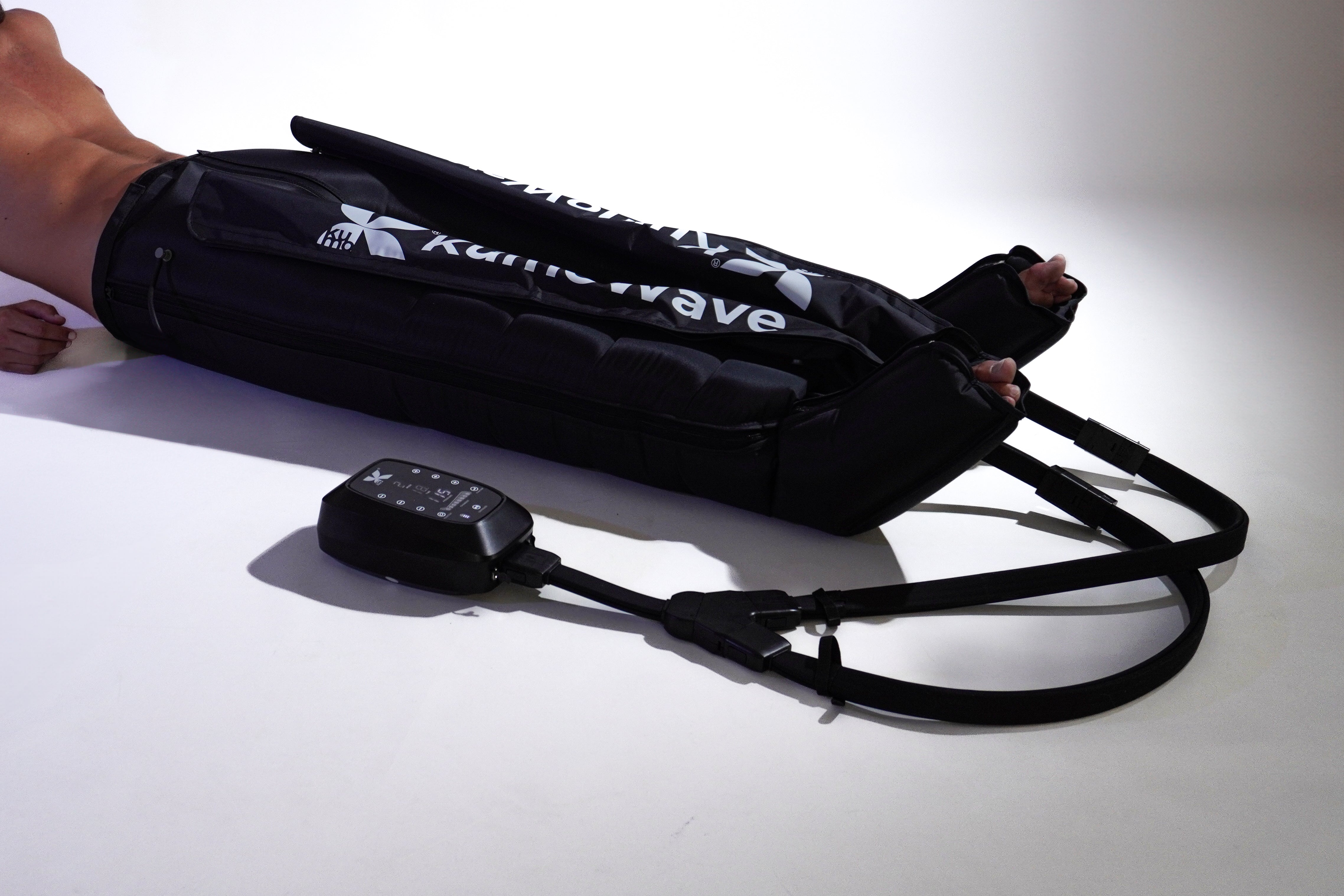
- Muscle recovery and circulation: Technologies like compression boots can help relieve tired legs and improve the feeling of lightness after exercise or long days on your feet. ExploreKUMO's compression section to complement your body care routine.
- Red light and rest: Controlled exposure to red light on the body is used to support muscle recovery and sleep; you can discover more options in KUMO's LED light therapy collection .
- Muscle tension release: Stiffness in the neck and trapezius muscles not only causes discomfort, but can also affect your appearance (tension, clenched jaw). A device like the KumoPulse Air massage gun helps to deeply relax muscles and improve your overall sense of well-being.
Frequently asked questions about LED face masks and serums
How many times a week can I use an LED facial mask with serums?
It depends on the device and your skin type, but many at-home protocols recommend between 3 and 5 sessions per week, lasting about 5 to 20 minutes. Ideally, start at the lower end (fewer minutes and fewer days) and assess your skin's response: if there is no persistent redness or discomfort, you can gradually increase the frequency to the range suggested by the manufacturer. Remember that consistency is more important than very long sessions. Always maintain a simple and well-tolerated serum routine to avoid overloading your skin.
Which serum is best to use before or after an LED facial mask?
In most cases, it's safer and more effective to reserve the main serums for after the session, on clean, dry skin. After phototherapy, you can apply niacinamide, hyaluronic acid, peptides, or soothing actives to reinforce hydration, the skin barrier, and repair. If your device allows it, a very light, watery serum (for example, with panthenol or low-level niacinamide) can be used beforehand, always avoiding very opaque or pigmented formulas. Potentially irritating actives (retinol, exfoliating acids) are best applied on alternate nights or at different times.
Is the LED face mask safe during pregnancy?
Visible LED light (red, blue, amber) is neither ionizing nor UV radiation and is generally considered low-risk for the skin when used correctly. However, specific studies in pregnant women are very limited, and many guidelines recommend avoiding non-essential cosmetic treatments during this period. Furthermore, pigmentation changes (such as melasma) are common during pregnancy, and some women may experience a worsening of dark spots with heat or light. Therefore, it is wisest to consult your gynecologist and dermatologist before using an LED facial mask if you are pregnant.
Can I use retinol and an LED face mask in the same routine?
Yes, it's possible to combine them, but it's best to do so strategically. If you have sensitive skin or are just starting with retinol, avoid using it right before your LED session to prevent adding irritants. A wise option is to apply the LED mask to clean, moisturized skin and reserve retinol for alternate nights, or apply it a few hours later if your skin is already used to it. Always pay attention to your skin's signals: if you notice persistent redness, intense peeling, or discomfort, reduce the frequency of retinol or phototherapy and consult a professional.
How long does it take to see results with an LED face mask and good serums?
Timeframes vary depending on your goal and the initial condition of your skin. Clinical studies using red and amber light for periorbital wrinkles have shown improvements in about 4 weeks with several weekly sessions, while more general changes in texture and firmness typically require 8 to 12 weeks of consistent use. ( pubmed.ncbi.nlm.nih.gov ) Well-formulated serums (for example, with niacinamide or peptides) also usually show measurable effects starting at 3–4 weeks. It's more realistic to expect gradual improvements, not dramatic overnight changes.
So what now?
If you truly want to integrate your LED facial mask and serums into a wellness and recovery-oriented lifestyle, I invite you to explore KUMO's range of LED light therapy products , as well as theirpressotherapy solutions and the KumoPulse Air massage gun to care for your body as well. If you're unsure which combination is best for you, you can contact the team through the KUMO contact page for personalized advice.