Ten minutes can change how your body moves.
If you feel stiff when you get up, after a workout, or after sitting for hours, combining percussion massage (massage gun) with mobility exercises is a simple strategy to "reset" tension, improve your sense of range of motion, and prepare your body to move better. In this guide, you'll find a 10-minute, step-by-step routine and clear guidelines for applying it safely using a device like the KumoPulse Air , the percussion massager from Kumo , a brand specializing in premium recovery technologies.
Facial red light
Bring your skin back to life
★★★★★ 4,8/5 · rated by verified customers
The KumoSkin LED mask helps repair and calm your skin in short sessions at home.
- 250 LEDs in flexible medical silicone
- Red light to boost collagen and glow
- 4 lights: red, infrared, blue and yellow
€299,00€429,00
−10% on your 1st order when you subscribe to the newsletter

Why combine percussion massage + mobility (and not just do one thing)
Mobility isn't just about stretching; it's about the ability to control a useful range of motion. Percussion massage, meanwhile, can help reduce stiffness and allow tissues to loosen up enough to move more easily afterward.
Scientific evidence on massage guns is growing, but there is still no single protocol. A systematic review (2023) observed that massage guns can help improve flexibility and range of motion in the short term in muscles such as the hamstrings, calves, and posterior chain, while their use for power/agility is not recommended (it may even worsen certain results). Furthermore, significant variability in parameters (frequency, duration, etc.) has been reported.
Personalized protocol · included with your purchase
Want us to tell you how to use it in your case?
With your purchase, our experts prepare the ideal LED protocol for your skin type and goal (acne, wrinkles, dark spots...).
Message us on WhatsAppOur experts reply · no obligation
Therefore, the best practical approach is usually: brief, localized percussion followed immediately by active movement , to "convert" that momentary relaxation into quality movement. ( pmc.ncbi.nlm.nih.gov )
What a massage gun can (and can't) do
Realistic benefits in 10 minutes
- A feeling of less rigidity and greater "fluidity" when moving.
- Improved short-term range of motion (useful before or after training).
- Support for perceived recovery : less post-exercise discomfort in some people.
Expectations that should be adjusted
- It's not a magic wand to "fix" complex injuries or pains: if there is acute pain, tingling or loss of strength, it's time to consult a professional.
- In terms of performance, massage (manual or with devices) does not always improve strength, sprinting, or jumping ability; it is usually seen to have a greater effect on flexibility and DOMS (delayed onset muscle soreness). ( pubmed.ncbi.nlm.nih.gov )
Key idea: Use percussion as an "input" to move better, not as a substitute for moving.
Safety and best practices (before you start)
A massage gun is powerful. Used correctly, it's usually safe; used incorrectly, it can irritate tissues or penetrate sensitive areas.
on your first order when you join the newsletter
We send you the code instantly. No spam.
Areas and situations to avoid
- Do not use it on bone , joints, spine, ribs, or areas with little muscle mass.
- Avoid the anterior/lateral neck (vascular zone) and sensitive areas. Clinical guidelines emphasize not applying percussion directly where vascular or nerve structures are exposed. ( health.clevelandclinic.org )
- Do not use on wounds , bruises, irritated/infected skin, or recent injuries.
- Consult your doctor beforehand if you have a bleeding disorder , suspected thrombosis , neuropathies with loss of sensation, osteoporosis, or other relevant conditions. A review (2023) lists common contraindications (e.g., deep vein thrombosis, wounds, recent fractures, avoidance of sensitive areas such as the neck, etc.). ( pmc.ncbi.nlm.nih.gov )
Golden rule of intensity and time
- Start gently (at the minimum intensity) and only increase if it doesn't hurt.
- Don't "squash": let the device do the work. Cleveland Clinic recommends not adding extra pressure and limiting the time per muscle group to a couple of minutes . ( health.clevelandclinic.org )
- Look for tolerable discomfort (0–3/10). Acute pain = stop.
Quick 10-minute routine: percussion massage + mobility
This routine serves as a daily reset or as a pre-workout if you're feeling stiff. If you do it post-workout, lower the intensity even further and prioritize breathing and gentle movement.
Table: minute-by-minute plan (10:00)
| Minute | Percussion massage (KumoPulse Air) | Mobility (without pain) | Aim |
|---|---|---|---|
| 0:00–1:00 | Breathing + 20–30 s on pectoralis major (each side), gentle | Chest/scapular openings (8 repetitions) | Remove “screen posture” |
| 1:00–3:00 | Hamstrings (45 s per leg), slow range of motion | Hip hinge with hands on hips (8 repetitions) | freer rear chain |
| 3:00–5:00 | Gluteus medius/upperus (45 seconds per side), avoiding bone | 90/90 hip with gears (6–8 gears) | Hip: controlled rotation |
| 5:00–7:00 | Quadriceps (45 seconds per leg), without pressing the kneecap | Lunge with gentle swing (6 repetitions per side) | Knee flexion and hip extension |
| 7:00–8:30 | Calf (30–45 s per leg), especially gastrocnemius/soleus | Knee to wall (ankle) 6 repetitions per side | Dorsiflexion for walking/squatting |
| 8:30–10:00 | Latissimus dorsi/upper back (30–45 s per side), without spine | Thoracic rotation in quadruped position (6 repetitions per side) | Mobile thoracic spine, more comfortable shoulders |
How to execute each block (with a simple technique)
1) Chest and shoulder blades (1 minute)
Percussion: Place the head on the pectoral muscle (fleshy part, avoiding the clavicle). Make slow passes, 20–30 seconds per side.
Mobility: Standing with arms extended in front, separate and bring your shoulder blades together (like "hugging the air" and then opening). Keep your ribs controlled.
2) Hamstrings + hip hinge (2 minutes)
Percussion: run your fingers along the ischium from top to bottom without stopping at the back of the knee. 45 seconds per leg.
Mobility: gentle hinge: push hips back, long back, soft knees. The goal is to "feel" the hip, not force a stretch.
3) Glutes + 90/90 (2 minutes)
Percussion: works the gluteus medius/ulnaris (lateral hip) and gluteus maximus (fleshy area), avoiding the hip bone.
Mobility: 90/90: Sit with both knees bent and switch sides without pain. Keep your chest up; use your hands if needed.
4) Quadriceps + lunge with swing (2 minutes)
Percussion: quadriceps in the central and lateral part, avoiding the patella and the bony edge of the tibia. 45 s per leg.
Mobility: Short stride, gently rock forward/backward seeking hip opening. Slow breathing.
5) Calf + ankle (1.5 minutes)
Percussion: calf (gastrocnemius/soleus) without emphasizing behind the knee or over the Achilles tendon. 30–45 s per leg.
Mobility: Knee to wall: Flat foot, bring knee towards the wall without lifting the heel. 6 repetitions per side.
6) Upper back + thoracic rotation (1.5 minutes)
Percussion: works the latissimus dorsi and muscles around the scapula (without passing through the spine). 30–45 seconds per side.
Mobility: On all fours, rotate your chest, opening one arm towards the ceiling; return. 6 repetitions per side.
When to use this routine: before or after training
Before (to move better)
Prioritize: short duration , low-to-medium intensity , and dynamic mobility. The 2023 systematic review suggests short-term ROM/flexibility benefits but does not recommend using massage guns to improve explosive tasks. In practice: use it as “movement preparation,” not as “aggressive activation.” ( pmc.ncbi.nlm.nih.gov )
Afterwards (to recover and lower tension)
Low intensity and more time for breathing and gentle movement. For delayed onset muscle soreness (DOMS), evidence on massage in general shows small reductions in DOMS and small improvements in flexibility in meta-analyses (e.g., in sports) and reviews on post-exercise massage. ( pubmed.ncbi.nlm.nih.gov )
Mobility and consistency: the real “multiplier”
A short routine works best if you repeat it. Stretching and flexibility recommendations generally fall within practical ranges: for example, holding stretches for 10–30 seconds (and longer for older adults) is cited in information based on ACSM guidelines. ( heart.org )
Furthermore, everyday stiffness isn't just about "muscle": it's also about habit. The WHO (2024) reminds us that a significant portion of the adult population doesn't meet activity recommendations and that inactivity has a significant health and economic impact. Translated to your daily life: micro-routines like this can be a realistic way to keep your body "usable" even during challenging weeks. ( who.int )
How Kumo fits into a comprehensive recovery strategy
At Kumo, recovery isn't seen as an occasional luxury, but as a modern habit: aesthetics, technology, and performance at the service of well-being. This percussion + mobility routine is the "minimum viable" core (10 minutes), and you can complement it according to your needs:
- Massage gun: If you want a practical tool to relieve tension in key areas, you can check out KumoPulse Air .
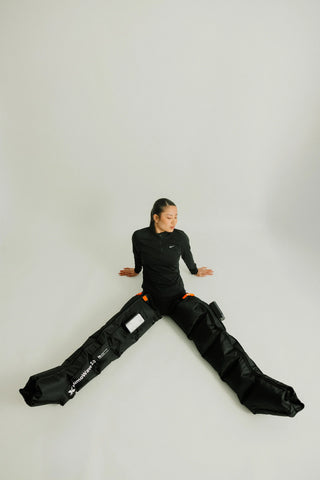
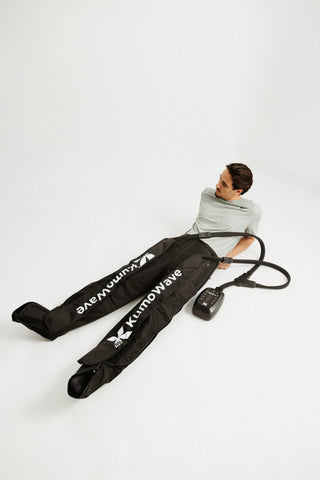
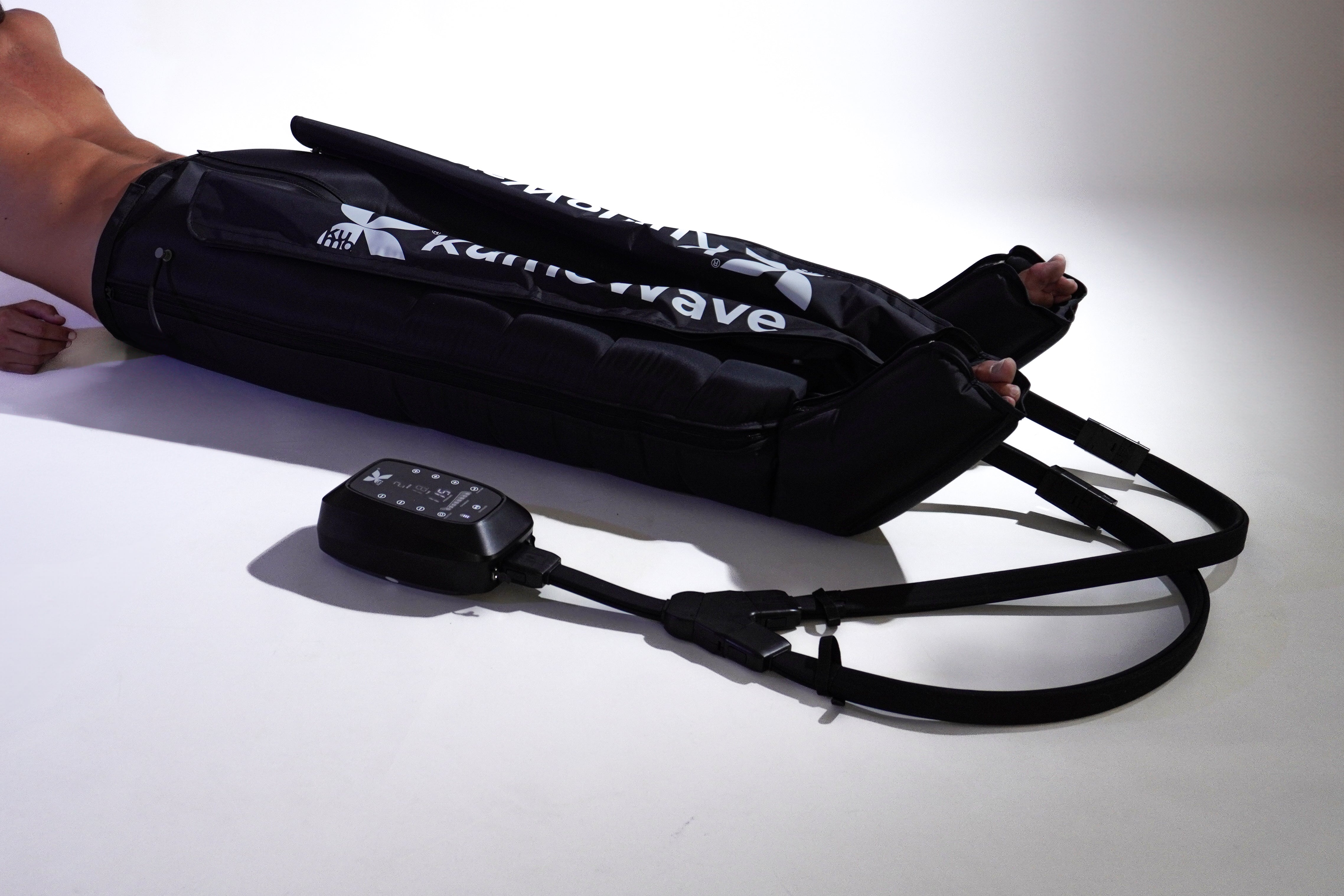
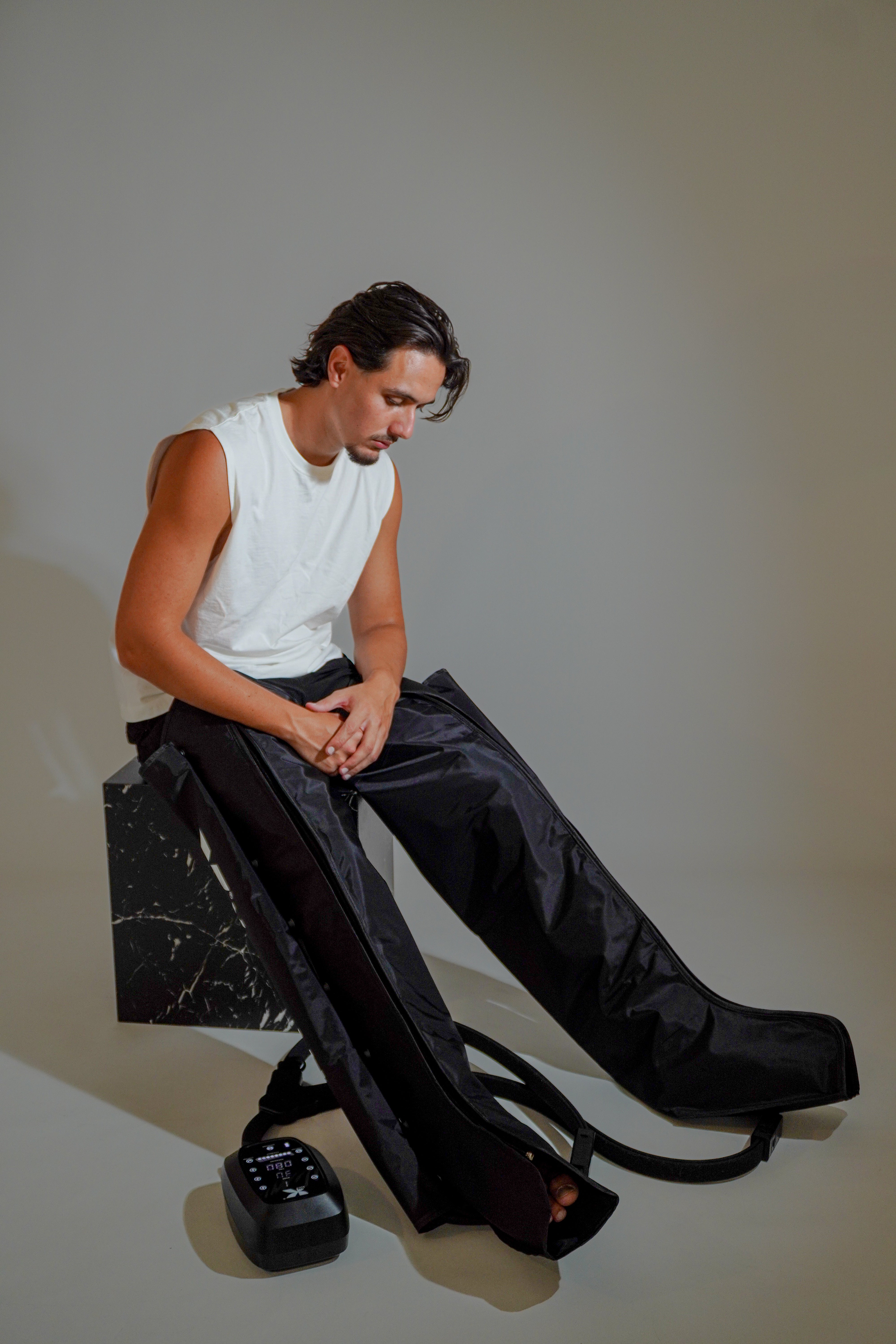
- Pressotherapy: If your main limitation is a feeling of heaviness in your legs (travel, standing, high-impact training), pressotherapy is often used to promote comfort and circulation; explore the pressotherapy collection.
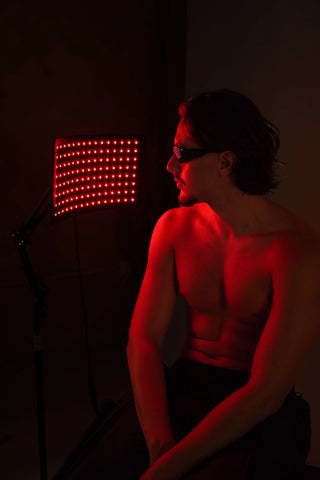
- LED light therapy: For a more complete routine focused on care and regeneration (skin and wellness), check out LED light therapy .
If you want to learn about the brand's complete ecosystem, start with Kumo's homepage .
Frequently Asked Questions (FAQ) about Kumo, percussion massage and mobility
How long should I use KumoPulse Air on each muscle?
As a general rule, keep the work on each muscle group within short ranges of motion: 30 to 90 seconds is usually enough to notice changes in sensation before moving on to movement. In clinical practice, it's recommended not to overdo it and to limit the time per area (for example, "a couple of minutes" per group) to avoid irritation. Start with low intensity, without adding extra pressure, and move slowly along the muscle (not over bone). If sharp pain, numbness, or worsening discomfort occurs, stop the session.
Can I do the 10-minute routine every day?
Yes, as long as you keep it gentle and the movement doesn't cause pain. The key is sustainability: a daily 10-minute "reset" is usually better than a long session once a week. In terms of flexibility, improvements are generally associated with consistency, and common recommendations include holding stretches for 10–30 seconds and repeating them regularly. Percussion, on the other hand, should be used briefly and purposefully: less "hammering" and more preparing the body to move well.
What areas should I avoid using a Kumo massage gun?
Avoid passing the device over bones, joints , and particularly sensitive areas. In general: do not use it on the front or side of the neck , or directly on the spine, and avoid areas with damaged skin, bruising, or recent injuries. Extra caution is also advised if there are clotting disorders, suspected thrombosis, or loss of sensation. These recommendations appear in both clinical information and reviews that list common contraindications (for example, avoiding sensitive areas such as the neck and superficial blood vessels, and caution with thrombosis).
Does it make sense to combine percussion massage with Kumo pressotherapy?
This often makes sense when your goal is twofold: to loosen tissues (percussion + mobility) and then dedicate a block to leg comfort (compression therapy), especially if you spend many hours sitting, travel, or do workouts that strain your lower body. A practical approach is: a 10-minute routine first, followed by compression therapy, on days when fatigue accumulates. If you notice significant swelling, unusual pain, or have a history of vascular problems, prioritize professional advice before applying any compression technique.
Does Kumo LED light therapy replace mobility?
No: they are tools with different purposes. Mobility training improves movement control and joint quality, something no technology can do for you. LED light therapy can fit into a wellness and recovery routine (depending on goals and tolerance), but it doesn't replace active exercise. If you're looking to feel looser today, the most straightforward approach is usually: brief percussion + mobility. If you're looking to build a comprehensive habit, then yes: you can combine technologies (LED, compression therapy, etc.) with movement for a more holistic approach.
So what now?
If you want to make this routine a simple habit, start by doing it 3–5 days a week and adjust it according to your body. To support yourself with premium recovery tools, visit Kumo and discover KumoPulse Air , compression therapy , and LED light therapy . If you need guidance on which solution best fits your routine, you can contact us.

Facial red light
KumoSkin Mask – LED Facial Mask
★★★★★ 4,8/5 · rated by verified customers
- 250 LEDs in flexible medical silicone
- Red light to boost collagen and glow
- 4 lights: red, infrared, blue and yellow
€299,00€429,00· pay in installments with seQura or Klarna