Lipedema in the legs hurts and feels heavy. It is recognized by an abnormal and symmetrical accumulation of fat in the lower limbs, with tenderness to the touch, easy bruising, and generally spared feet. (nhs.uk)
It's not common fat or simple aesthetic cellulite: the diagnosis is clinical, and when necessary, tests are mainly used to rule out other causes. If you want a broader overview of the topic, you can check out Kumo Balance's home recovery technology and the guide on what lipedema is and how to recognize it early. (my.clevelandclinic.org)
Pressotherapy at home
End the day with light legs
★★★★★ 4,8/5 · rated by verified customers
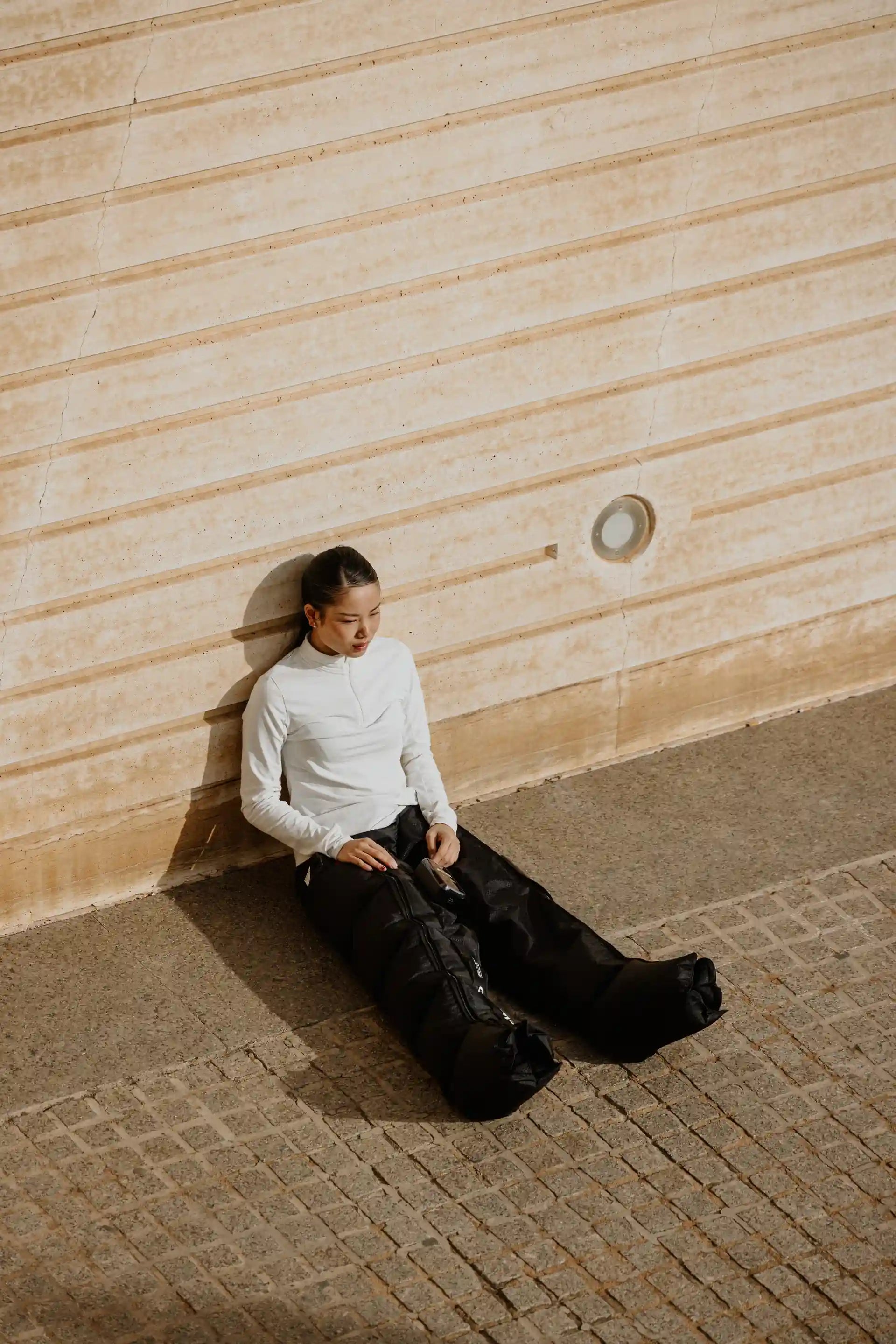
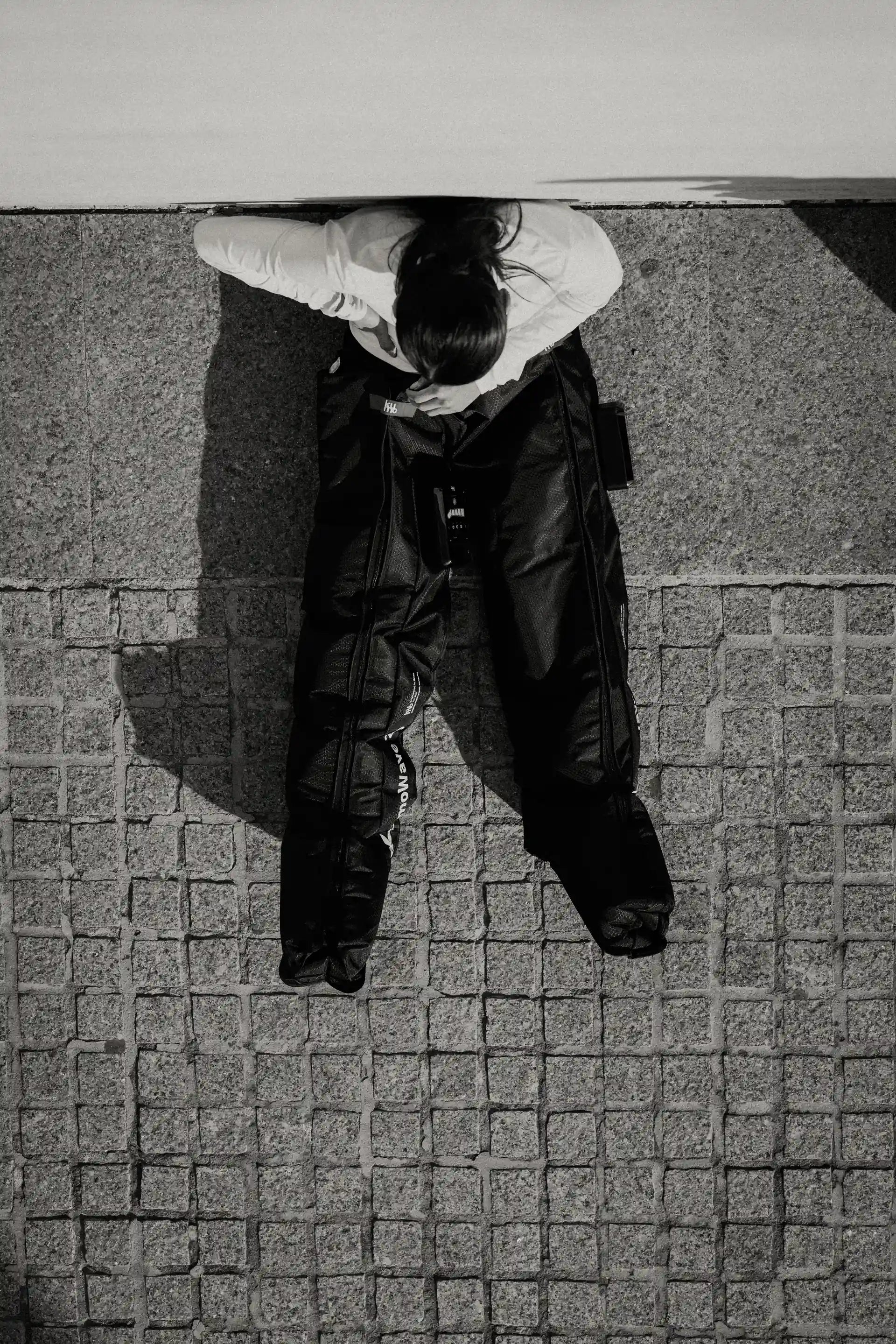
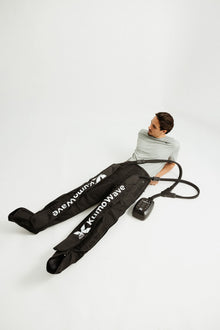
KumoWave pressotherapy boosts circulation and helps drain fluid with sequential compression, in 20-minute sessions at home.
- Boosts circulation and helps drain fluid
- Chamber-based compression, adjustable to you
- Sequential compression that mimics manual drainage
€799,00€999,00
−10% on your 1st order when you subscribe to the newsletter

What is lipedema in the legs?
Lipedema is a chronic adipose tissue disorder that primarily affects women and usually concentrates in the hips, thighs, calves, and sometimes the arms. The most characteristic feature is body disproportion: the lower body increases more than the trunk, while the hands and feet are usually spared. Additionally, it can worsen during times of hormonal change such as puberty, pregnancy, or menopause. (nhs.uk)
An important nuance: losing weight can improve overall health, but it usually doesn't completely eliminate lipedematous tissue. That's why the useful approach is not to "pursue a miracle diet," but to combine correct diagnosis, symptom control, and sustainable habits. (my.clevelandclinic.org)
Personalized protocol · included with your purchase
Want us to tell you how to use it in your case?
With your purchase, our experts prepare a personalized usage protocol for your case: sport, circulation, fluid retention, pregnancy or lipedema.
Message us on WhatsAppOur experts reply · no obligation
Symptoms of lipedema in the legs
Symptoms can vary from person to person, but a combination of several signs guides the diagnosis. (my.clevelandclinic.org)
- Pain, tenderness, or heaviness: legs may hurt to the touch or feel "heavy," even without intense exertion. (nhs.uk)
- Easy bruising: minor bumps or pressure can leave visible bruises. (nhs.uk)
- Symmetrical distribution: both legs are usually affected similarly, especially above the ankles and feet. (nhs.uk)
- Spared feet and hands: when the feet remain slender compared to the rest of the leg, this "cuff sign" or abrupt cutoff at the ankle is very indicative. (nhs.uk)
- Irregular texture under the skin: sometimes small nodules or a padded-like surface are felt, with soft or cold skin to the touch. (nhs.uk)
- Fatigue and functional limitation: walking, climbing stairs, or standing for long periods can become more uncomfortable over time. (my.clevelandclinic.org)
If you notice that the change in volume appeared or worsened with puberty, pregnancy, or menopause, that also adds to the likelihood of lipedema. It doesn't prove the diagnosis on its own, but it helps organize the clinical suspicion. (my.clevelandclinic.org)
Stages of lipedema in legs
In practice, you will see two ways to classify it: one with three morphological stages and another with four that adds lipo-lymphedema when associated lymphatic involvement appears. Not all guidelines use the same scheme. (my.clevelandclinic.org)
on your first order when you join the newsletter
We send you the code instantly. No spam.
Quick table of lipedema stages
| Stage | What is seen in the leg | What the person usually notices |
|---|---|---|
| Stage 1 | Skin still smooth, but with thicker subcutaneous tissue and small nodules to the touch. (my.clevelandclinic.org) | Pain and bruising may appear, although the external change may still be subtle. (my.clevelandclinic.org) |
| Stage 2 | The surface begins to look irregular, with dimples or a "padded" appearance, and fibrosis increases. (my.clevelandclinic.org) | Tenderness, heaviness, and discomfort when moving are usually more evident. (my.clevelandclinic.org) |
| Stage 3 | Large folds, fatty lobules, and a more marked deformity of the thighs and legs appear. (my.clevelandclinic.org) | Walking can become more difficult and the daily physical burden increases. (my.clevelandclinic.org) |
| Stage 4 | Lipedema is accompanied by lymphedema, i.e., an added lymphatic alteration. (my.clevelandclinic.org) | Volume and heaviness are usually greater, and management can become more complex. (my.clevelandclinic.org) |
Important: some modern sources stick to three stages and reserve the picture with lymphedema for another category. More than obsessing over the label, the relevant thing is to recognize if the tissue becomes harder, more uneven, and more limiting over time. (my.clevelandclinic.org)
How to distinguish it from cellulite, lymphedema, and lipohypertrophy
At this point, there is often a lot of confusion. If you want to delve deeper into the topic, reading about lipedema or cellulite without errors will serve as a practical complement. (my.clevelandclinic.org)
- Aesthetic cellulite: causes dimples or "orange peel" skin, but generally does not hurt and is considered a cosmetic change. In contrast, lipedema usually hurts, causes tenderness, and bruises more easily. (my.clevelandclinic.org)
- Infectious cellulitis: if the leg is red, hot, painful, and there are also flu-like symptoms, we are not talking about aesthetics but an infection that needs urgent medical attention. (nhs.uk)
- Lymphedema: usually related to a failure of the lymphatic system and can affect the foot; in lipedema, the feet are usually spared and Stemmer's sign is usually absent. (nhs.uk)
- Lipohypertrophy: it resembles it due to the disproportion of fat, but it normally lacks the pain, edema, and tendency to bruising that are so typical of lipedema. (ovid.com)
The clinical key, in summary, is this: if there is pain, symmetry, heaviness, bruising, and spared feet, lipedema moves up high on the list of possibilities. If there is also redness and warmth, something else should be considered and consulted quickly. (nhs.uk)
How to relieve lipedema in the legs
There is no simple cure, but there are measures that can reduce pain, edema, pressure, and difficulty walking. The realistic goal is to improve symptoms, preserve mobility, and slow progression as much as possible. (nhs.uk)
Compression and pressotherapy
Compression is usually part of conservative management: stockings, bandages, or specific garments can help when there is edema, and in some people, they also facilitate walking and alleviate the sensation of heaviness. Intermittent pneumatic compression and mechanical drainage have been tested with varying results, but they remain common tools in symptomatic treatment. (nhs.uk)
If you want to see how this approach fits at home, the guide to at-home pressotherapy for lipedema summarizes a practical way to integrate compression into a recovery routine. (journals.sagepub.com)
Movement, diet, and daily habits
Walking, swimming, or cycling are examples of exercises often recommended because they improve mobility and, in many people, reduce the perception of swelling and pain. Cleveland Clinic also notes that aquatic exercise can unload the joints, which is useful when the legs are already heavy. Healthy eating and weight control do not "erase" lipedema, but they do help the general condition and prevent excessive load from worsening the condition. (my.clevelandclinic.org)
To put that practical part into action, you can review what to eat and what to avoid with lipedema. And if you prefer a more organized view of routines without surgical intervention, the guide to non-surgical protocols and habits for controlling it will serve as your next step. (my.clevelandclinic.org)
Physical therapy, drainage, and skin care
Manual lymphatic drainage, complex decongestive therapy, and regular skin care can be helpful, especially if there is associated edema or a risk of skin complications. It is also recommended to hydrate the skin well to reduce dryness and infections, and emotional support should not be overlooked when pain or body image affect quality of life. (journals.sagepub.com)
In other words: it's not about making "more effort," but about building a consistent, gentle, and sustainable plan. This consistency is usually more useful than aggressive short-term solutions. (nhs.uk)
When is surgery considered?
Liposuction is not usually the first step, but it may be considered when conservative treatment is not enough and pain or functional limitation remain significant. Recent studies and reviews indicate improvements in pain, edema, quality of life, and mobility in selected cases, especially with techniques such as water-assisted or tumescent liposuction and with experienced teams. (my.clevelandclinic.org)
A 2025 meta-analysis that gathered 6 studies and 429 patients with refractory lipedema found reductions in pain, edema, and movement restriction after surgery, although the authors insist that high-quality trials are still lacking to define the best strategy. (pubmed.ncbi.nlm.nih.gov)
If you want to expand on that part, the guide to real lipedema treatment options will help you better understand what fits each profile. (my.clevelandclinic.org)
When to seek medical evaluation
It is advisable to consult if you notice persistent swelling, pain to the touch, frequent bruising, or a heaviness that begins to limit you. It is also recommended to seek an evaluation if you are unsure whether it is lipedema, lymphedema, aesthetic cellulite, or a venous problem. The diagnosis is usually based on medical history and physical examination, and imaging tests are sometimes used to rule out other causes. (nhs.uk)
Seek urgent attention if a leg becomes red, hot, painful, and general flu-like symptoms appear, because that is more consistent with an infection such as infectious cellulitis than with lipedema. Detecting it early greatly changes management. (nhs.uk)
Frequently asked questions about lipedema in legs
What are the symptoms of lipedema in the legs and how to distinguish it from cellulite, lymphedema, or lipohypertrophy?
The most typical is a symmetrical accumulation of fat in the legs, with pain, tenderness, heaviness, and easy bruising. Aesthetic cellulite is usually just a change in texture and does not hurt; lymphedema affects the foot more and is related to lymphatic system problems; and lipohypertrophy resembles it in form, but normally does not cause pain or edema. If there is also warmth, redness, and fever, think of infectious cellulitis and consult quickly. (my.clevelandclinic.org)
What phases or stages does lipedema have and what signals indicate each for its clinical classification?
In summary, stage 1 shows almost normal skin with small nodules and occasional pain; stage 2 adds superficial irregularity and more fibrosis; stage 3 presents large folds and more functional limitation; and some schemes add a stage 4 when lipo-lymphedema appears. Not all guidelines use exactly the same numbering, so clinical evolution matters more than the label. (my.clevelandclinic.org)
How to relieve lipedema in the legs through compression, physical therapy, or lifestyle changes?
The most useful combination usually includes compression, adapted exercise, manual lymphatic drainage, skin care, and sustainable habits. Walking, swimming, or cycling help with mobility; compression can reduce pain and heaviness; and physical therapy can improve comfort and edema control. The idea is not to "push harder," but to build a consistent and tolerable routine. (nhs.uk)
Is it possible to reduce lipedema fat in the legs without surgery and what treatments offer significant improvements?
Without surgery, pain, swelling, and mobility can be greatly improved, but lipedematous tissue is usually not completely eliminated. The best conservative improvements usually come from a combined plan: compression, movement, drainage, self-care, and professional follow-up. When the case is refractory, liposuction can offer significant improvements in pain, edema, and function, although it is not a universal solution. (nhs.uk)
What now?
If you recognize several of these signs, the next step is to request a clinical evaluation and start a realistic conservative routine. To continue advancing, you can read about real lipedema treatment options and non-surgical protocols and habits to control it; and if you are looking for home support focused on compression, pressotherapy for lipedema at home can be part of that routine as a complement, not a substitute for medical follow-up. (nhs.uk)
KumoWave pressotherapy
Choose your at-home pressotherapy
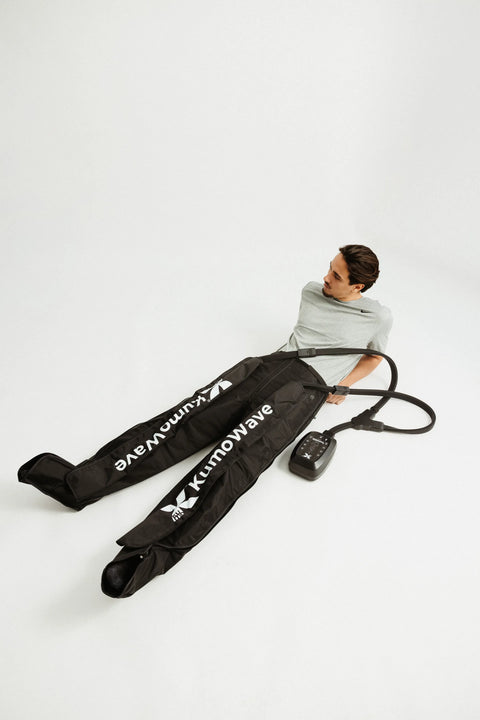
KumoWave Elite – Pressotherapy Pants
Full-coverage trousers. Ideal for lipedema, fluid retention and intensive use.
€799,00 €999,00
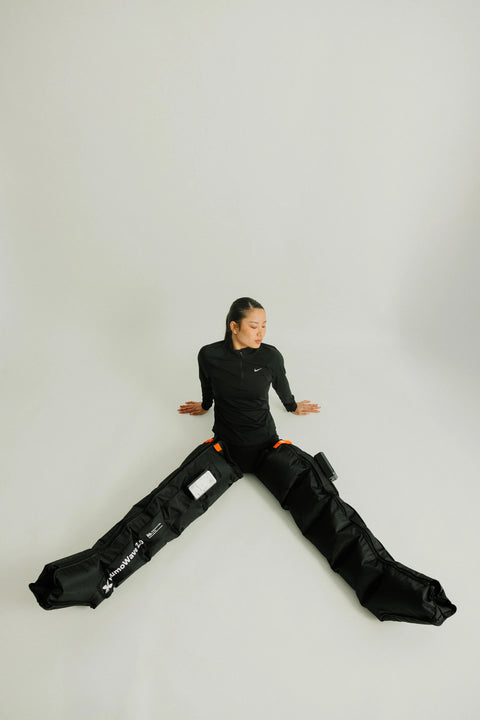
KumoWave 2.0 - Wireless Pressotherapy
Wireless, lightweight boots. Perfect for daily use and recovery.
€499,00 €599,00