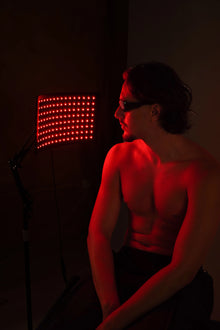
Cellulite can be recognized.
The most useful way to start is by observing whether dimples only appear when you change position or if they are already visible at rest. The MedlinePlus fact sheet reminds us that even thin people can have cellulite because the key factor lies in how fat is organized under the skin. If you want a broader understanding, the guide on types of cellulite helps to classify the most common variants. (medlineplus.gov)
Pressotherapy at home
End the day with light legs
★★★★★ 4,8/5 · rated by verified customers
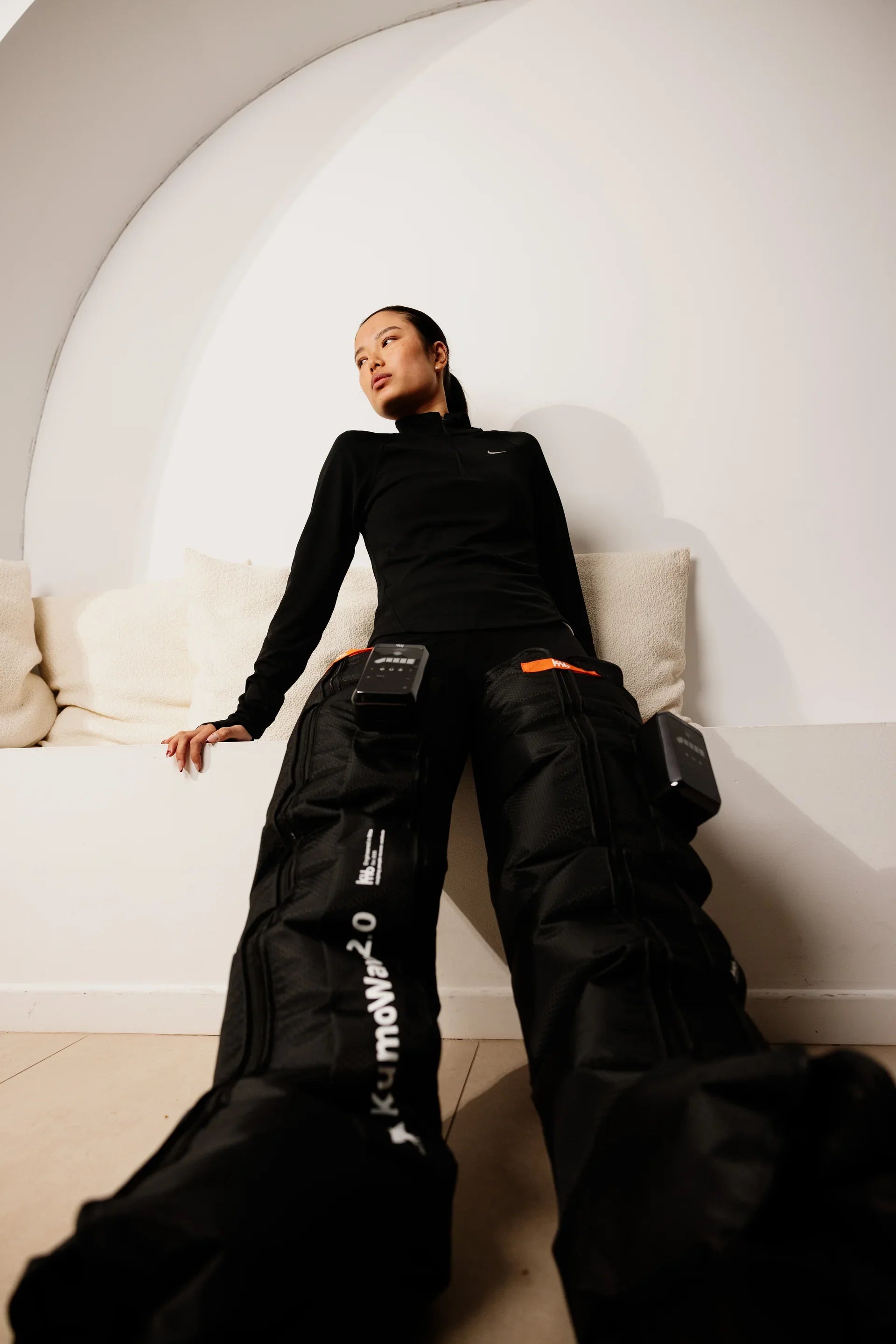
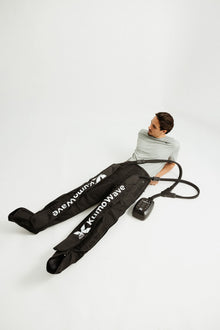
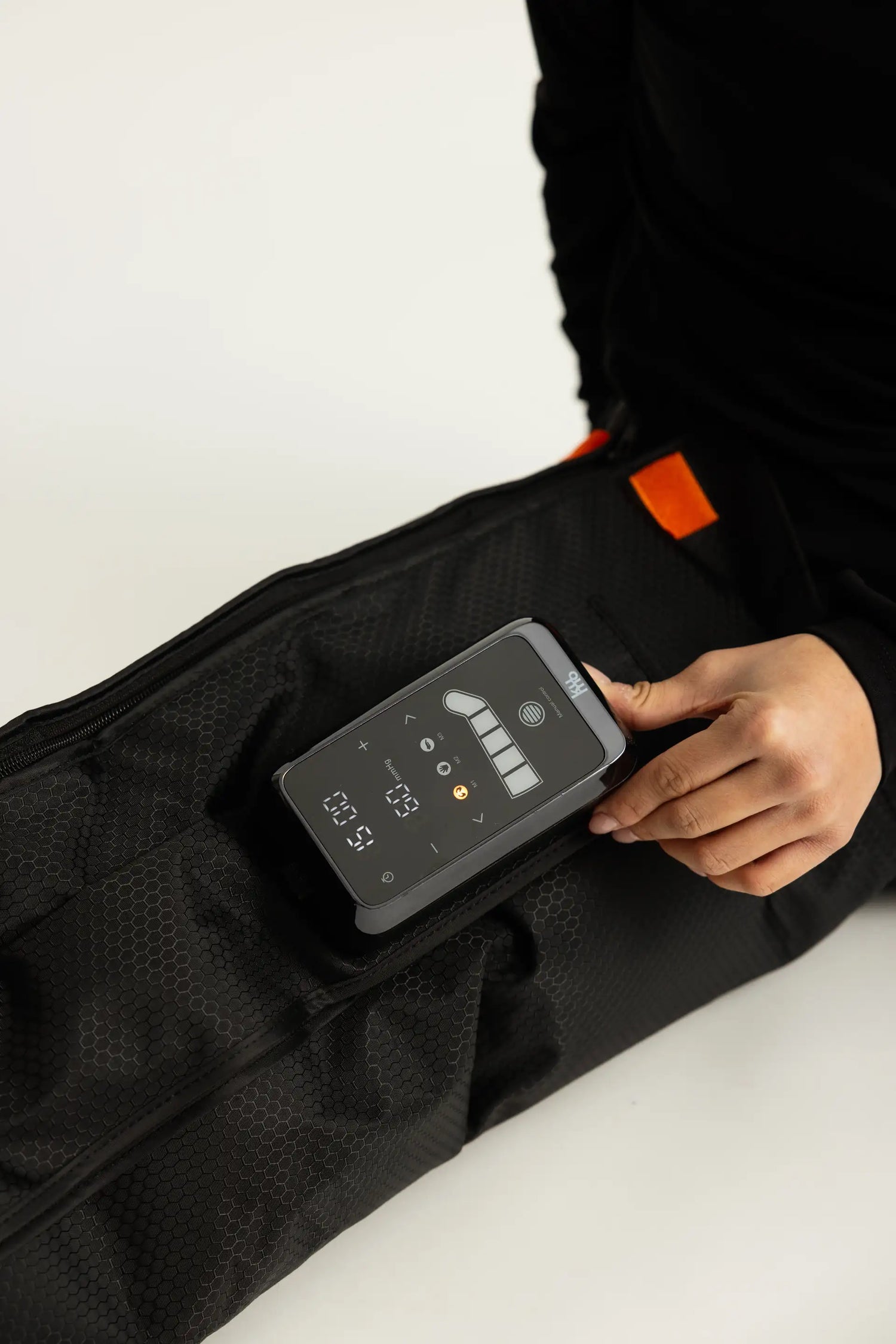
KumoWave pressotherapy boosts circulation and helps drain fluid with sequential compression, in 20-minute sessions at home.
- Boosts circulation and helps drain fluid
- Chamber-based compression, adjustable to you
- Sequential compression that mimics manual drainage
€799,00€999,00
−10% on your 1st order when you subscribe to the newsletter

What is aesthetic cellulite?
Aesthetic cellulite is an accumulation of fat under the surface of the skin that pushes against bands of connective tissue, creating an uneven, dimpled texture. It is usually not harmful to health but is very common in women after puberty. (medlineplus.gov)
Genetics, age, sex, and skin thickness influence how noticeable it is. Over time, skin loses elasticity, and cellulite can become more evident; it is also commonly seen on thighs, buttocks, hips, abdomen, and, in some people, arms. (medlineplus.gov)
Personalized protocol · included with your purchase
Want us to tell you how to use it in your case?
With your purchase, our experts prepare a personalized usage protocol for your case: sport, circulation, fluid retention, pregnancy or lipedema.
Message us on WhatsAppOur experts reply · no obligation
How many grades are there and how are they interpreted?
The most commonly used clinical scale has four grades: 0, 1, 2, and 3. The key is when the dimples become visible and whether they appear only with a change in posture or are already seen at rest. Cleveland Clinic summarizes it simply and very practically for initial self-observation. (my.clevelandclinic.org)
Quick chart to recognize each grade
| Grade | How it looks | Key to recognize it |
|---|---|---|
| 0 | The surface appears uniform. | No visible dimples or irregularities at rest. (my.clevelandclinic.org) |
| 1 | The skin appears smooth when standing but is marked when changing position. | Dimples usually appear when sitting or when observing the area more closely. (my.clevelandclinic.org) |
| 2 | Dimples are already visible without much manipulation of the area. | The irregularity is noticeable when standing or sitting, even without pinching the skin. (my.clevelandclinic.org) |
| 3 | Deep depressions and more pronounced bumps are visible. | The texture is evident even at rest and is usually the most visible form. (my.clevelandclinic.org) |
Vision remains the basis of evaluation, but it doesn't explain everything: a 2024 study with 114 women found a correlation between clinical severity and various subcutaneous tissue measurements obtained by ultrasound. In other words, superficial appearance and internal structure do not always progress at the same rate. (pubmed.ncbi.nlm.nih.gov)
How to identify your cellulite grade at home
To check your case at home, observe the same area with side lighting, first standing and then sitting. Cellulite can be seen on thighs, buttocks, abdomen, and also on arms, so it is advisable to look at each area separately. (medlineplus.gov)
on your first order when you join the newsletter
We send you the code instantly. No spam.
- If the skin appears smooth when standing and dimples only appear when you sit down, the pattern usually fits a mild grade. (my.clevelandclinic.org)
- If the irregularity is already visible without manipulating the skin, even when you are standing or sitting, the grade is usually intermediate. (my.clevelandclinic.org)
- If you notice deep depressions, more pronounced bumps, and small nodules, the appearance approaches an advanced grade. (my.clevelandclinic.org)
- If the result changes a lot depending on the light or posture, repeat the observation before drawing conclusions. (my.clevelandclinic.org)
When it's not just cellulite
If, in addition to the texture, there is pain, tenderness, easy bruising, a feeling of heaviness, and a disproportionate increase in volume, lipedema should also be considered. The NHS guide on lipedema describes precisely that pattern and reminds us that the feet or hands are usually unaffected. (nhs.uk)
To compare both situations without confusion, the comparison of lipedema vs. cellulite without errors is a very useful reference.
If you want to further refine your reading, you can expand with edematous cellulite and fibrous cellulite.
What treatment is recommended according to the grade?
There's no need to pursue a perfect cure: Cleveland Clinic points out that it cannot be completely eliminated, although its appearance can be improved. According to the American Academy of Dermatology guide, subcision and some lasers are among the best-supported options, while ultrasound alone has not shown a clear reduction. (my.clevelandclinic.org)
- Regular exercise: can help make cellulite look less noticeable by increasing muscle mass and blood flow. (my.clevelandclinic.org)
- 0.3% Retinol: can thicken the skin and somewhat smooth its appearance, but usually requires several months of consistent use. (aad.org)
- Subcision and laser: make more sense when the skin shows more persistent or deep dimples. (aad.org)
- Low expectations: dry brushing, rollers, isolated ultrasound, and supplements do not have solid backing for eliminating it. (aad.org)
If you want to see how these options are distributed between clinic visits and home routines, the guide to cellulite treatments in the clinic vs. at home helps you understand the differences without complications.
Habits that help improve appearance
The most useful daily strategy is usually the simplest: moving, strengthening, and maintaining consistency for weeks or months. Cleveland Clinic explains that exercise improves appearance by boosting muscle mass and blood flow, and also that visible changes take time. A balanced diet and stable weight can also help improve the appearance more easily. (my.clevelandclinic.org)
If you prefer an already structured roadmap, the complete anti-cellulite routine at home combines habits and recovery so you don't have to improvise every day.
FAQ
What grade of cellulite do you have and how to identify it at home?
Start with natural or side light, first standing and then sitting. If the skin appears smooth when standing and only shows dimples when you sit down, it is usually a mild grade. If the irregularity appears without manipulating the area, the grade goes up. The key is to always compare the same area in two positions and not just rely on a single photo. (my.clevelandclinic.org)
How many grades of cellulite are there and how do they differ?
There are four grades: 0, 1, 2, and 3. Grade 0 shows no visible changes; grade 1 is mild and may be noticeable when changing position; grade 2 is already visible without manipulating the skin; and grade 3 presents deep dimples and marked bumps. The main difference is not body size, but the visibility of the skin surface. (my.clevelandclinic.org)
How to identify the grade of cellulite at a glance?
The most useful thing is to compare the skin at rest with the same area when you sit down. If you see no changes, you would be close to grade 0. If small dimples appear only with posture, you think of grade 1. If they are already noticeable without touching, you are moving towards grade 2 or 3. The key is to observe with good light and without forcing the skin. (my.clevelandclinic.org)
What type of cellulite corresponds to each grade and what treatment is recommended?
It's not advisable to mix both concepts: the grade describes how much cellulite is visible, while the type usually refers to texture or tissue predominance. In practice, the mildest cases usually improve with exercise and consistent habits, and the most visible ones may require dermatological evaluation and procedures such as subcision or laser. (aad.org)
What are the warning signs of different grades of cellulite?
Consult if there is also pain, tenderness, easy bruising, noticeable swelling, or a clear disproportion between the legs or arms and the rest of the body. This pattern may point to lipedema and not aesthetic cellulite. It also deserves attention if the change appears suddenly or if you notice that it doesn't match what you normally see. (nhs.uk)
What now?
If you have already identified your grade, the next step is to transition to a sustainable and realistic routine. Start with Kumo Balance's recovery and wellness proposal to integrate habits that fit your daily life.
KumoWave pressotherapy
Choose your at-home pressotherapy
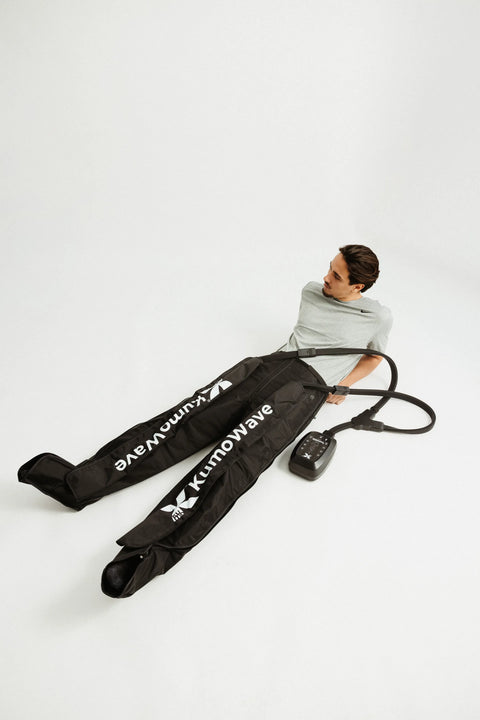
KumoWave Elite – Pressotherapy Pants
Full-coverage trousers. Ideal for lipedema, fluid retention and intensive use.
€799,00 €999,00
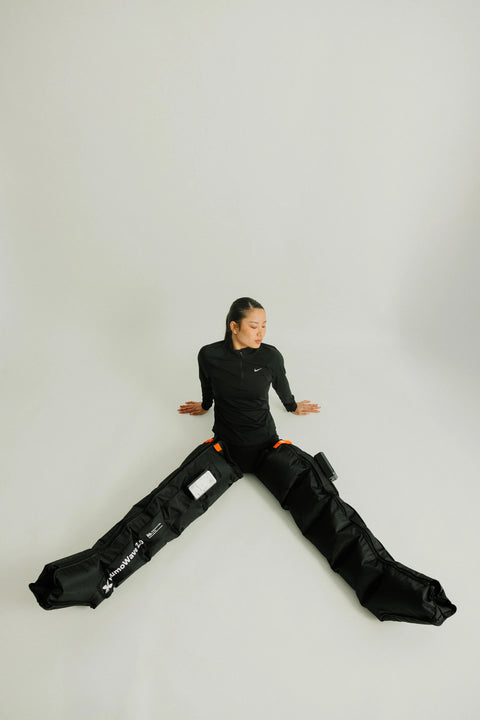
KumoWave 2.0 - Wireless Pressotherapy
Wireless, lightweight boots. Perfect for daily use and recovery.
€499,00 €599,00