A massage gun can relieve stiffness… or leave you more tense.
When percussion therapy is used too intensely, in the wrong place, or for too long, the body may respond protectively : reflex contraction, tissue irritation, and increased pain sensitivity. In this guide, you'll find the most common mistakes (those that most "stiffen" the muscle), warning signs, and a simple protocol to make your recovery safer and more effective, integrating it into a Kumo -style wellness routine. ( health.clevelandclinic.org )
Pressotherapy at home
End the day with light legs
★★★★★ 4,8/5 · rated by verified customers
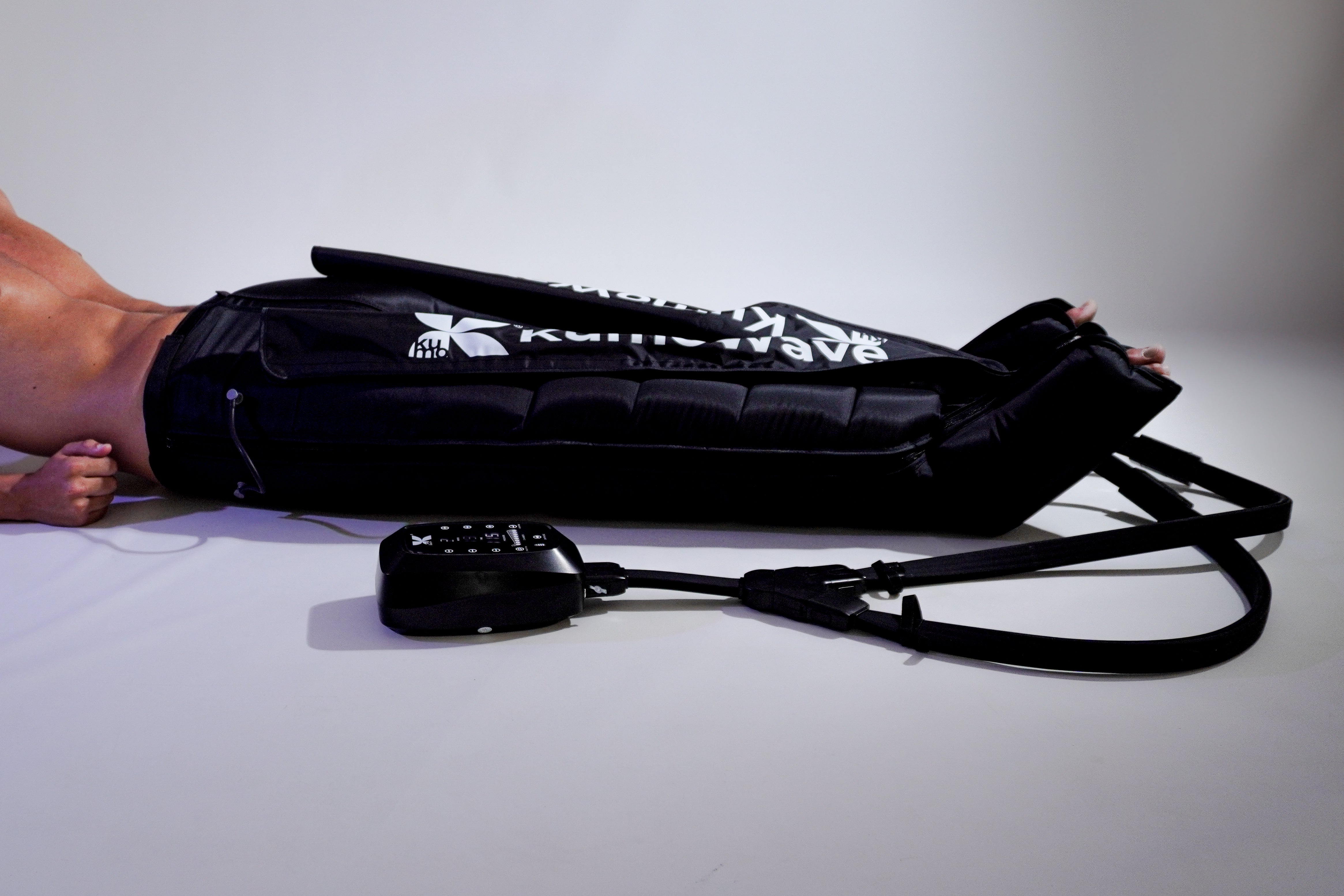
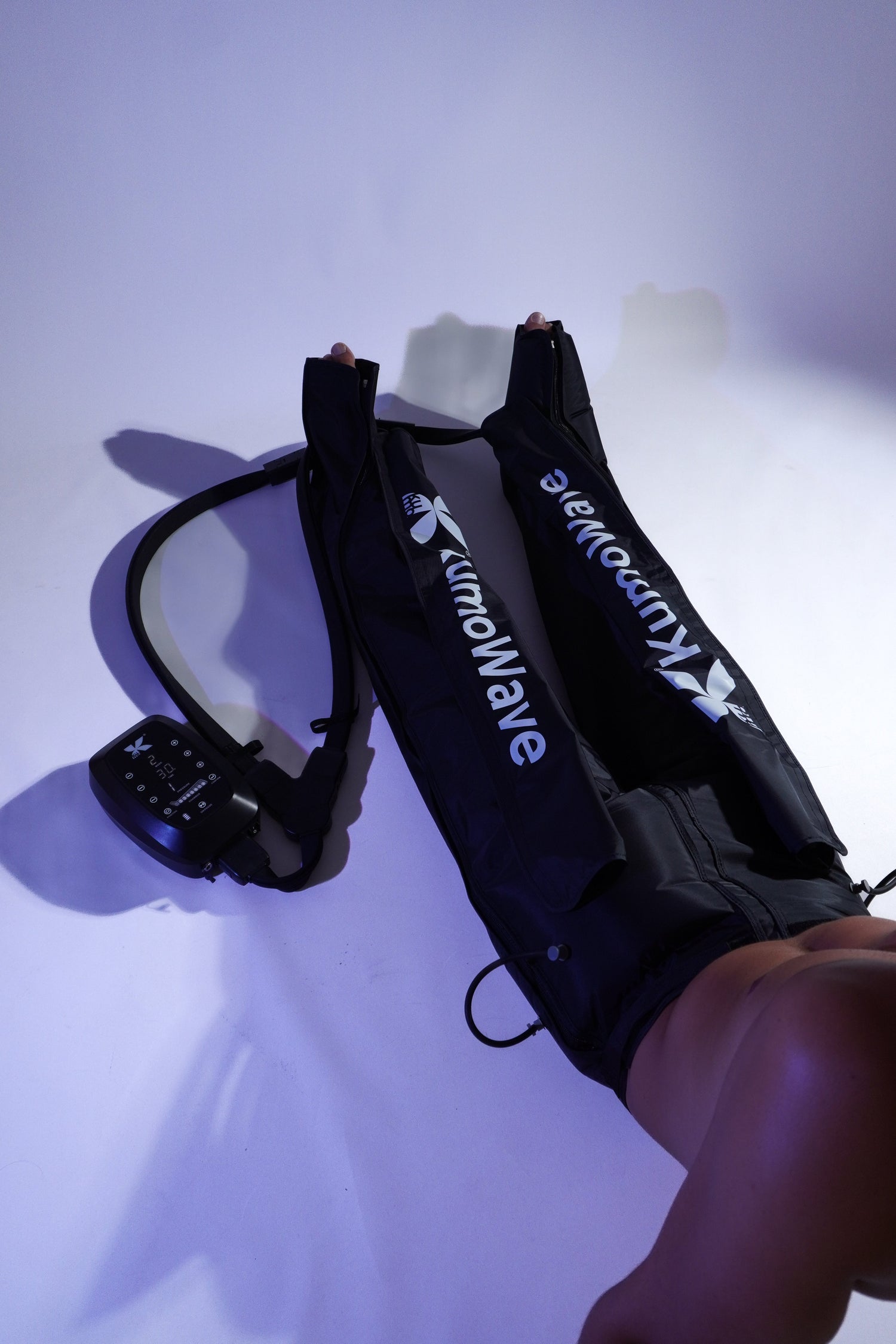
KumoWave pressotherapy boosts circulation and helps drain fluid with sequential compression, in 20-minute sessions at home.
- Boosts circulation and helps drain fluid
- Chamber-based compression, adjustable to you
- Sequential compression that mimics manual drainage
€799,00€999,00
−10% on your 1st order when you subscribe to the newsletter

Why a massage gun can increase tension (when used incorrectly)
Muscle tension isn't always due to a lack of massage: often it's the nervous system's response to protect a sensitive area (for example, after overuse, micro-tears, or pain). If the percussive stimulus is too aggressive, your body may react with "guarding" (defensive contraction), which feels like more knots and stiffness.
This is especially evident in the context of delayed onset muscle soreness (DOMS): pain and microinflammation already increase muscle tone and stiffness; adding intense pressure at the wrong time can worsen the perception of pain or leave the area "reactive." Recent studies on percussion and DOMS show variable effects: sometimes there is momentary relief, but not necessarily a faster recovery, reinforcing the idea of using it with realistic doses and goals. ( pmc.ncbi.nlm.nih.gov )
Personalized protocol · included with your purchase
Want us to tell you how to use it in your case?
With your purchase, our experts prepare a personalized usage protocol for your case: sport, circulation, fluid retention, pregnancy or lipedema.
Message us on WhatsAppOur experts reply · no obligation
Mistakes to make when using a massage gun that can increase muscle tension
1) Starting too strong (speed and pressure) “for it to have an effect”
What happens: Intense pain or discomfort triggers a defensive response: you clench your jaw, hold your breath, and the muscle contracts. Result: You leave feeling stiffer than before.
How to correct it: Start at a low intensity and aim for a tolerable level of pressure, not pain. UCLA Health recommends starting gently (especially at first) and not exceeding long periods of time for any one muscle group. ( uclahealth.org )
2) Staying "stuck" on the painful spot until "the knot breaks"
What happens is that repeatedly pressing on the same spot can irritate the tissue and increase local sensitivity (more pain upon touch, more of a "knot"). Furthermore, what we call a "knot" is often not a lump that needs to be flattened, but rather an area of heightened sensitivity or sustained tension.
on your first order when you join the newsletter
We send you the code instantly. No spam.
How to correct it: Keep the brush head moving slowly, and if you find a tender spot, stay there for only a few seconds and then go over the entire muscle again. Cleveland Clinic suggests not using it for more than “a couple of minutes” per muscle group. ( health.clevelandclinic.org )
3) Use it on bones, joints, or areas with superficial nerves
What happens: Bouncing on bony areas or near joints can cause discomfort, bruising, or irritation. It can also trigger tingling (a sign that you're near a nerve), which often increases tension as a protective measure.
How to correct it: “muscle yes, bone no.” UCLA Health and HSS emphasize avoiding bones, joints, and nerves, and reserving percussion for muscle masses. ( uclahealth.org )
4) Apply it to a recent injury, inflammation, or pain with swelling
What happens: If there is a recent sprain, tear, significant contusion, or clear inflammation, intense mechanical stimulation can aggravate irritation and increase stiffness.
How to correct it: For acute pain with inflammation or a recent injury, stop and consult a doctor. HSS summarizes it clearly: If you've just injured yourself and there's significant pain or swelling, you shouldn't use a massage gun. ( hss.edu )
5) Mistaking “good pain” for a warning sign
What happens: Tolerating sharp pain, burning, numbness, “electrical” sensations, or loss of strength can turn a recovery use into a problem (nerve irritation, increased spasm, persistent pain).
How to correct it: Use judgment: mild relief or “pleasant” is acceptable; acute pain or neurological symptoms (tingling, numbness) are a sign to stop.
6) Use it on your neck like a back roller
The problem is that the neck is a delicate area (with vascular and nerve structures). Although many people use it for "cervical muscle tension," there are medical reports of serious events following prolonged or inappropriate use on the neck, including arterial dissection with stroke.
How to correct it: Avoid using it on the neck (especially the front and sides). There are documented cases in the literature and clinical reports: for example, a case presented in 2023 describes a vertebral artery dissection and stroke after using a massage gun on the neck for two hours. (aan.com)
7) Using it without taking into account medication and vascular risks (e.g., anticoagulants)
What's happening: If you're taking anticoagulants or have a clotting disorder, the risk of bruising increases. And if a blood clot is suspected (calf pain and swelling, localized heat), percussion is not a good idea.
How to correct it: Prisma Health recommends avoiding percussion if you are on anticoagulants, if you have a clotting disorder or a suspected clot, and consulting a doctor before starting. ( blog.prismahealth.org )
8) Use it as a substitute for mobility, strength, and recovery habits
What happens is that sometimes there is momentary relief, but if you don't change what caused the tension (posture, load, lack of mobility or strength), the body tightens up again. In 2024, a study in the Journal of Sports Science & Medicine observed that percussion can provide immediate and temporary relief from perceived muscle soreness, without necessarily speeding up full recovery. ( pmc.ncbi.nlm.nih.gov )
How to correct it: Use it as a tool before or after moving (gentle mobility, light activation, walking, appropriate stretching), not as a replacement.
Practical table: error → why it's tense → quick adjustment
| Common mistake | How can tension increase? | What to do instead |
|---|---|---|
| Increase the power to maximum from the start | Defensive response: contraction and pain | Start gently; progress if the muscle "gives way" without pain |
| Dwelling on a painful point for a long time | Local irritation, increased sensitivity, more "knot" | Slow sweeps; short pauses of a few seconds |
| Pass through bones/joints | Discomfort, rebound, irritation | Muscle mass only; avoid bony prominences |
| Use it with a recent injury or inflammation. | It worsens irritation and stiffness. | Relative rest, professional evaluation if there is pain/swelling |
| Neck (especially lateral/anterior) | Vascular and nervous risk zone | Avoid it; seek alternatives guided by a professional. |
| Long sessions per muscle | Tissue overload and increased pain | ≤2 minutes per muscle group per session |
Areas to avoid and warning signs (to avoid "activating" more tension)
As a general rule, reserve percussion for large muscles (quadriceps, hamstrings, glutes, calves, latissimus dorsi) and be conservative in small areas.
- Neck (especially the front and sides): due to vascular and nerve structures; there are reports of vascular injuries following improper neck massage. (aan.com)
- Spine and bony prominences: percussion is not intended for bone. ( health.clevelandclinic.org )
- Back of the knee (popliteal fossa) and areas with superficial vessels/nerves: more likely to experience tingling or electric pain.
- Wounds, irritated skin, significant bruising: these increase the risk of worsening the condition. ( blog.prismahealth.org )
- Areas with numbness or neuropathy: if you don't feel well, you cannot regulate the dose (risk of excess). ( blog.prismahealth.org )
Clear signs to stop: sharp pain, tingling, numbness, dizziness, extensive bruising, or worsening that lasts more than 24–48 hours.
Quick and safe protocol (5–8 minutes) to reduce tension without overdoing it
- Quick scan (15 seconds): Is there swelling, sharp pain, or a recent injury? If so, do not use the gun. ( hss.edu )
- Start at low intensity: 10–30 seconds per zone to begin with if you are a beginner. ( uclahealth.org )
- Slow sweeps over the muscle: avoid "hammering" a fixed point.
- Maximum dose per muscle group: Try not to exceed ~2 minutes per muscle group in a session (especially if there is sensitivity). ( uclahealth.org )
- Breathe and relax: if you're holding your breath, you're probably going too hard.
- “Close” with movement: 1–2 minutes of gentle mobility or light activation of the worked muscle to make the relief more functional.
If your goal is DOMS/muscle soreness, adjust your expectations: In 2025, a study of 60 people compared foam rolling, tapping, and passive rest; tapping did not show the same effect as foam rolling in reducing tone and stiffness, and neither was clearly superior to rest for pain. This supports the “just the right dose” approach and combining it with other habits. ( pmc.ncbi.nlm.nih.gov )
How to fit the massage gun into a “Kumo” recovery routine
At Kumo, recovery isn't a one-off event: it's a practice. You can integrate the massage gun as part of a system, depending on your day and training load.
- Self-massage at home: if you are looking for a device from the brand, you can check out the KumoPulse Air massage gun (use geared towards large muscles and short sessions).
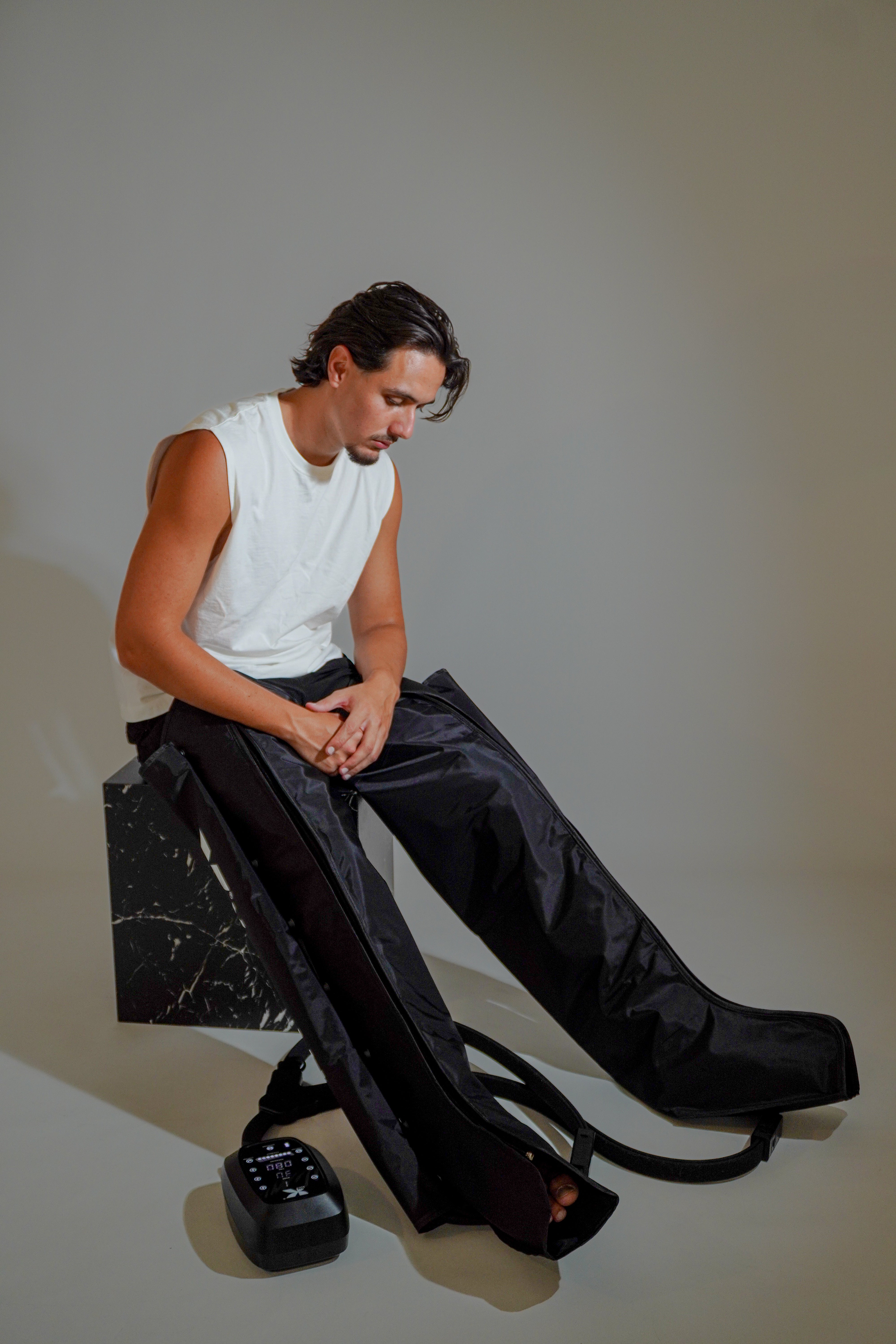
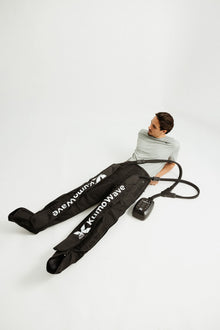
- Circulation and heavy legs: alternate self-massage with habits that promote comfort in lower limbs, such as pressotherapy boots .
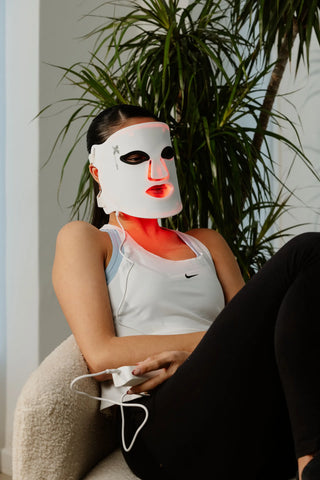
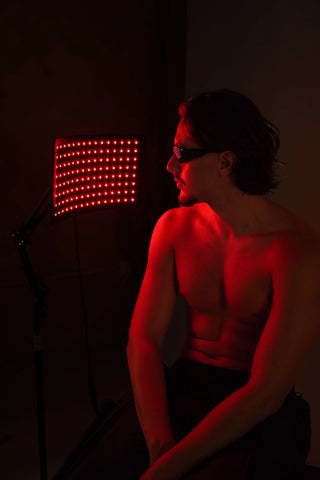
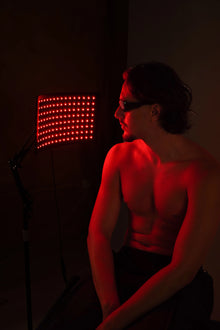
- Skincare and wellness routine: If your focus is on a more “holistic” recovery, you can explore LED light therapy within your self-care routine.
To learn more about the brand's approach and recovery technologies, visit Kumo's homepage .
FAQ: Frequently asked questions about Kumo and the use of massage guns
How long should I use a Kumo massage gun on each muscle?
As a practical guideline, keep sessions short: start with 10–30 seconds per area if you're a beginner and gradually increase according to your tolerance, avoiding exceeding approximately 2 minutes per muscle group in a single session. This aligns with recommendations from health centers that prioritize the "minimum effective dose" to prevent irritation and defensive tension. If you notice the muscle is more sensitive or stiff the next day, reduce the intensity and duration: during recovery, stronger isn't always better. ( uclahealth.org )
Can I use the KumoPulse Air on my neck or cervical spine?
In general, it's best to avoid the neck (especially the front and sides). It's an area with sensitive vascular and nerve structures, and there are medical reports of serious events associated with prolonged or inappropriate massage/percussion in that area. If your discomfort is in your upper trapezius or upper back, prioritize working the large muscles around it (at low intensity) and combine this with gentle mobility exercises. If you experience dizziness, unusual headaches, or neurological symptoms, consult a doctor immediately. (aan.com)
If I feel more tense after using the massage gun, what should I do?
First, stop and let the tissue "calm down." Most likely, you've used too much pressure, too fast, or too long (or you've focused on a particular spot). For 24 hours, prioritize gentle movement (walking, light mobility exercises), hydration, and sleep. In your next session, halve the dose: less time, more sweeping motion, and avoid areas near bone or nerves. If tingling, numbness, or significantly worsen pain occurs, do not use the device and seek professional evaluation. ( hss.edu )
Can you combine a Kumo massage gun with pressotherapy or LED therapy in the same week?
Yes, many wellness routines combine tools, as long as you respect your body's tolerance and the goal of each session. A reasonable guideline is to use a massage gun for localized support (short sessions, large muscle groups) and reserve compression therapy for days with heavy legs or when you're seeking improved circulation. LED therapy can fit into broader self-care routines. If you're in rehabilitation, have a medical condition, or are taking blood thinners, consult a doctor before combining stimuli. ( blog.prismahealth.org )
So what now?
If you want to make recovery a habit, explore the Kumo ecosystem: from the KumoPulse Air massage gun to options like compression therapy and LED light therapy . If you're unsure which approach is best for you, you can contact the team through the contact page .
KumoWave pressotherapy
Choose your at-home pressotherapy
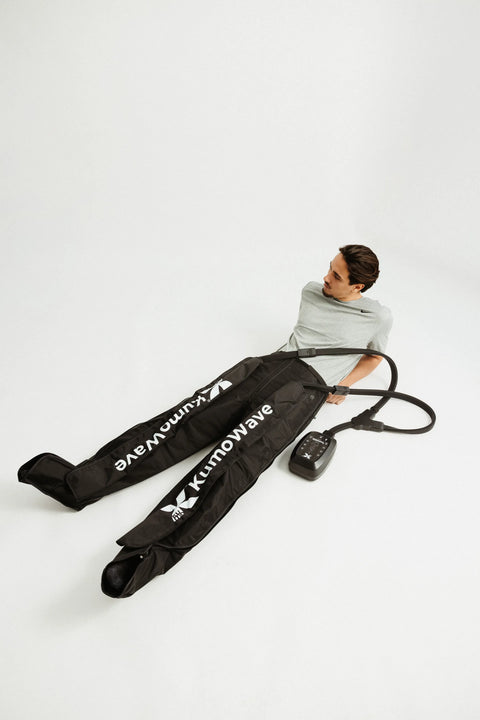
KumoWave Elite – Pressotherapy Pants
Full-coverage trousers. Ideal for lipedema, fluid retention and intensive use.
€799,00 €999,00
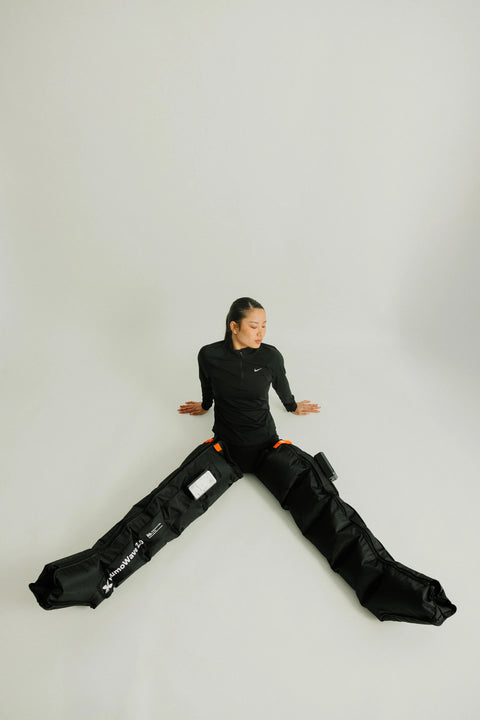
KumoWave 2.0 - Wireless Pressotherapy
Wireless, lightweight boots. Perfect for daily use and recovery.
€499,00 €599,00