Introduction: Release your tense neck
Neck muscle tension can turn any day into a challenge. If you notice a stiff neck, tension headaches, or a sharp pain when you turn your head, you're probably suffering from this common problem in the age of screens.
In this article, you'll discover specific exercises for neck tension , how to perform them step by step, how much time to dedicate to them, and how to combine them with modern recovery technologies (such as red light therapy or compression therapy) to accelerate relief. We'll also discuss when it's best to consult a healthcare professional and how to prevent the pain from returning.
Pressotherapy at home
End the day with light legs
★★★★★ 4,8/5 · rated by verified customers
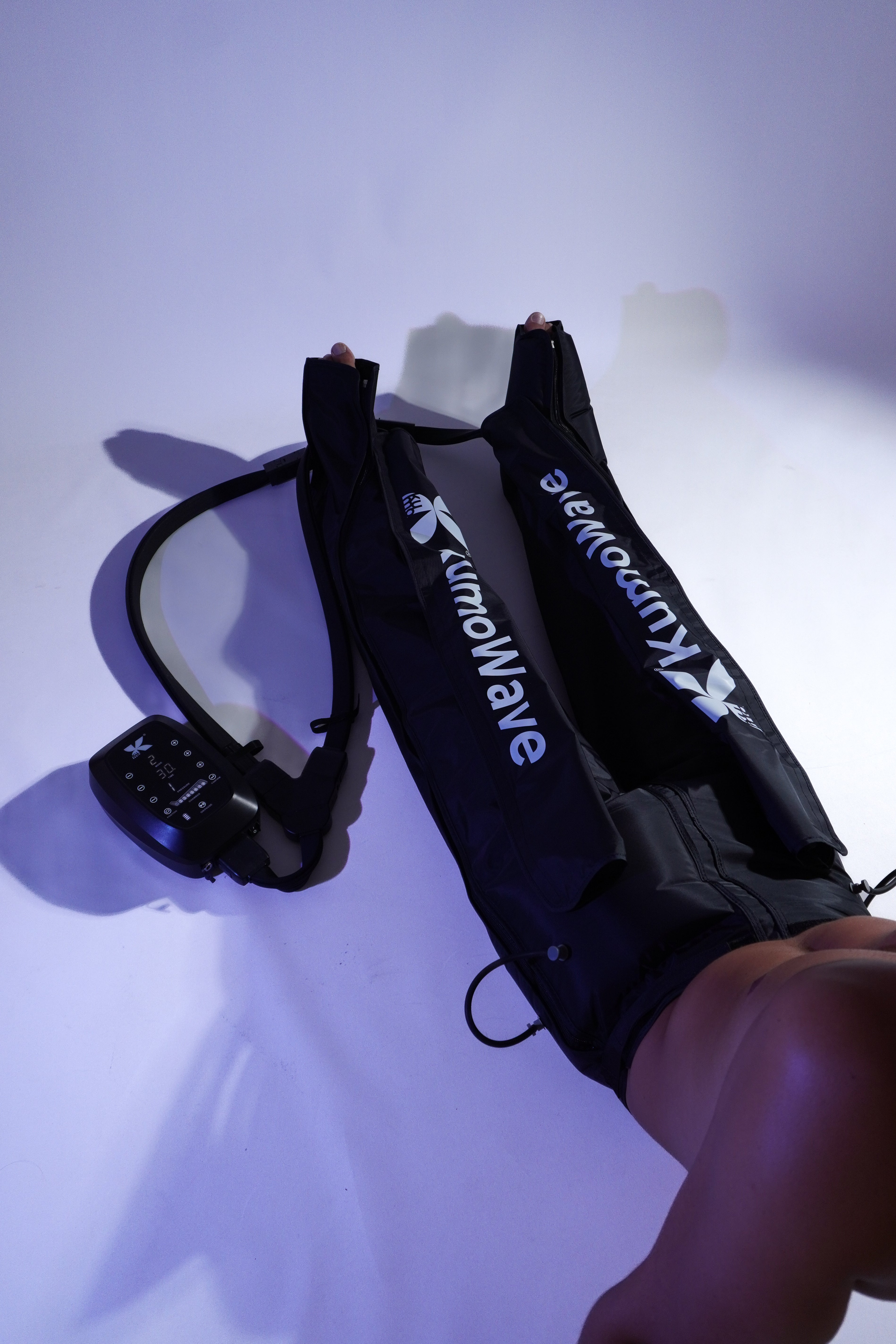
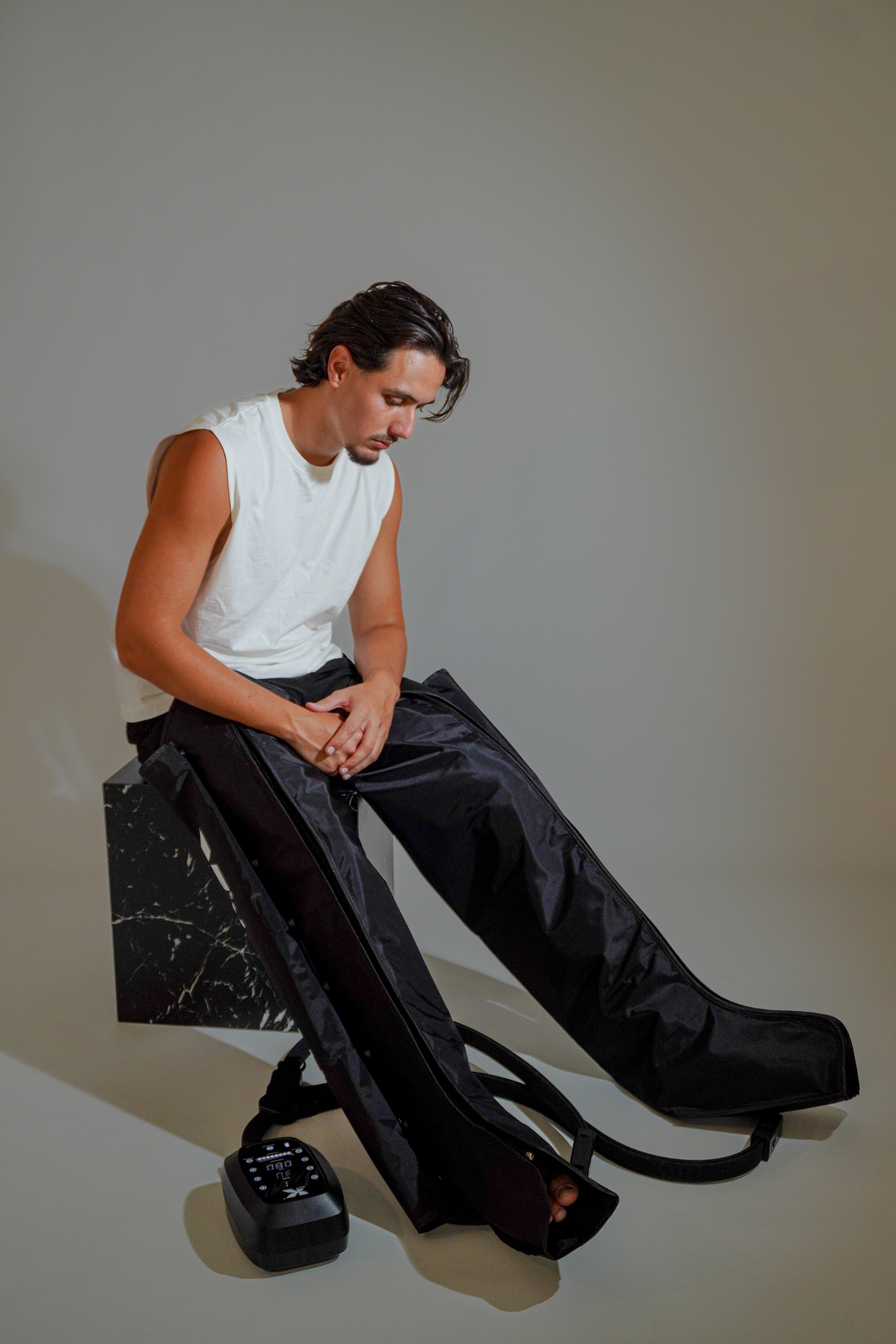
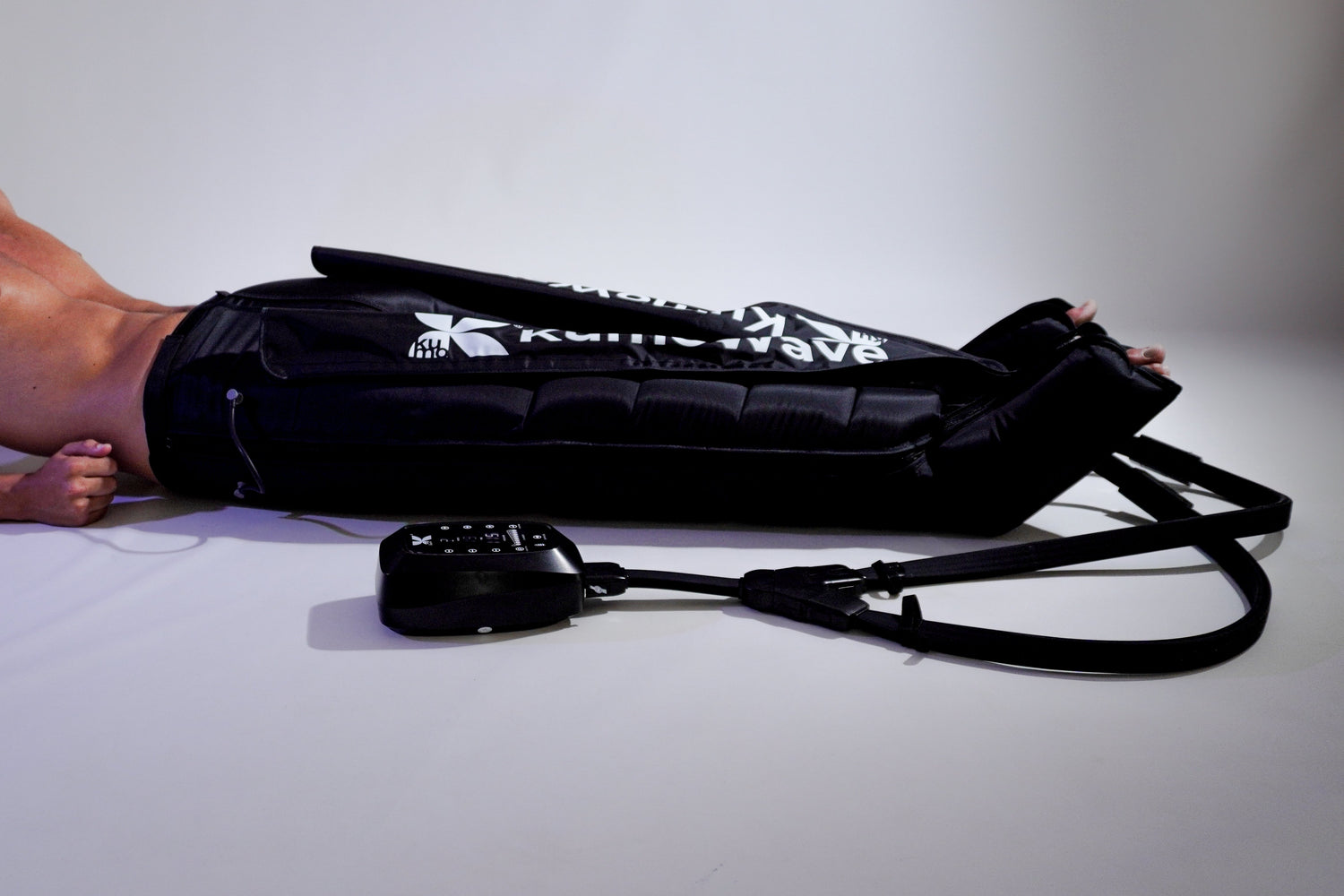
KumoWave pressotherapy boosts circulation and helps drain fluid with sequential compression, in 20-minute sessions at home.
- Boosts circulation and helps drain fluid
- Chamber-based compression, adjustable to you
- Sequential compression that mimics manual drainage
€799,00€999,00
−10% on your 1st order when you subscribe to the newsletter

What exactly are cervical muscle contractures?
A cervical muscle contracture is an excessive and sustained tension in the muscles of the neck and upper back (trapezius, levator scapulae, paravertebral muscles, etc.). These fibers shorten and become painful to the touch, limiting movement.
They are associated with symptoms such as:
Personalized protocol · included with your purchase
Want us to tell you how to use it in your case?
With your purchase, our experts prepare a personalized usage protocol for your case: sport, circulation, fluid retention, pregnancy or lipedema.
Message us on WhatsAppOur experts reply · no obligation
- Pain localized in the neck and nape.
- Stiffness when turning or tilting the head.
- Tension headaches (headache due to muscle tension).
- Pain radiating to the shoulders, upper back, or even arms.
- Feeling of fatigue and heaviness in the cervical area.
According to data from international health organizations, neck pain is one of the most frequent musculoskeletal disorders in adults, with a clear increase in recent years due to the intensive use of electronic devices and prolonged work in front of the computer.
Most frequent causes of neck contractures
Before moving on to the exercises, it is key to understand what is causing the muscle tension in order to address the root of the problem.
Sustained postures and office work
Spending hours in front of a computer with your head tilted forward and shoulders rounded puts constant strain on your neck muscles. The body isn't designed to be immobile for so long; even a rigidly held "good posture" can become harmful.
on your first order when you join the newsletter
We send you the code instantly. No spam.
Stress and emotional tension
Many people experience physical symptoms of stress in their neck and upper back. In moments of anxiety, it's common to raise the shoulders, clench the jaw, and keep muscles tense, which promotes the development of muscle knots (trigger points).
Lack of movement and muscle weakness
The combination of a sedentary lifestyle, little exercise, and occasional overexertion (for example, lifting a heavy load) creates the perfect conditions for muscle tension. A strong and flexible neck is better equipped to handle daily demands.
Prolonged mobile phone use (“text neck”)
Tilting your head down to look at your phone significantly increases the load on your cervical vertebrae and the surrounding muscles. Repeating this posture throughout the day builds up tension and can trigger chronic pain.
Gentle warm-up before exercising the neck
It's never a good idea to work directly on a cold, sore muscle. Before exercises for neck muscle tension, dedicate 3–5 minutes to a gentle warm-up .
- Walk at a comfortable pace around the house or on the street (2–3 minutes).
- General shoulder mobility: forward and backward circles, without pain.
- Deep diaphragmatic breathing to reduce overall muscle tone.
If you have a muscle massage gun , you can use it at minimum intensity on your trapezius muscles and shoulders for 1–2 minutes per side to increase blood flow and prepare the area.
Stretching exercises for cervical muscle contractures
Gentle, sustained stretching helps reduce tension, improve mobility, and send the nervous system the signal that the muscle can relax.
Lateral neck stretch
Objective: to relax the upper trapezius and lateral neck muscles.
- Sit with your back straight and your feet flat on the floor.
- Gently drop your right ear towards your right shoulder, without raising your shoulder.
- Optional: Place your right hand on top of your head to add gentle pressure (without forcing it).
- Hold for 20–30 seconds, breathing deeply, and switch sides.
Perform 2–3 repetitions per side, 1–2 times a day.
Neck stretch (cervical flexion)
Objective: to relieve pressure on the back of the neck and the suboccipital area.
- Whether sitting or standing, lengthen your spine as if you were being pulled from the crown of your head.
- Bring your chin towards your chest, as if you wanted to make a small "double chin" without hunching your back.
- Place your hands interlaced at the back of your head and apply very gentle pressure.
- Hold for 20–30 seconds, without reaching sharp pain.
Repeat 2-3 times, paying attention to slow, controlled breathing.
Levator scapulae stretch
Objective: to work one of the muscles that is most overloaded when we raise our shoulders due to tension or stress.
- Sit up straight and hold the chair with your right hand.
- Turn your head slightly to the left (looking at your left armpit).
- With your left hand, hold the back of your head and gently pull down, as if you wanted to look in your pants pocket.
- Hold for 20–30 seconds and switch sides.
Do 2 sets on each side, ideally once a day when you notice the area is tense.
Mobility exercises to unlock the cervical area
In addition to stretching, it is important to move the neck with controlled range of motion to improve joint lubrication and reduce stiffness.
Gentle inclines (yes/no/maybe)
Goal: to improve pain-free range of motion.
- “Yes”: Bring your chin to your chest and then gently look up at the ceiling, without collapsing your neck. 8–10 repetitions.
- “No”: Turn your head to the right and left as if you were saying no, without reaching the point of pain. 8–10 repetitions per side.
- “Maybe”: tilt your head, bringing your ear towards your shoulder, from side to side. 8–10 repetitions per side.
Perform this block 1-2 times a day, especially during active work breaks.
Shoulder circles
Objective: to relieve tension in the muscles that connect the shoulders and neck.
- Standing with arms relaxed at your sides.
- Raise your shoulders towards your ears, pull them back, lower them and bring them forward forming a wide circle.
- Make 10 circles backwards and 10 forwards.
This exercise can be done several times a day to break up sustained postures.
Strengthening exercises to prevent contractures
Treating muscle contractures isn't limited to stretching. Strengthening the cervical and scapular muscles helps the neck better tolerate daily strain and reduces the recurrence of discomfort.
Cervical retraction (double chin)
Objective: to strengthen the deep neck flexor muscles and correct forward head posture.
- Sit with your back supported and your gaze forward.
- Imagine you want to pull your chin back, without lowering or raising it, creating a "double chin".
- Hold for 5 seconds and return to the neutral position.
Perform 2–3 sets of 8–10 repetitions daily. This is a very useful exercise for those who spend a lot of time in front of a computer.
Isometric neck strengthening
Objective: to improve muscle endurance without movement, ideal in phases of mild-moderate pain.
- Place your hand on your forehead and push your head towards it, without any movement (isometric flexion).
- Hold for 5–8 seconds and relax.
- Repeat by placing your hand behind your head (extension) and on each side (lateral inclination).
Do 1–2 sets of 5 repetitions in each direction, keeping the intensity at a comfortable level (50–60% of subjective effort).
Scapular work with elastic bands
Objective: to strengthen the muscles of the upper back, key to relieving pressure on the neck.
- Band row: anchor the band, pull it by bringing your elbows back and bring your shoulder blades together.
- Pull-apart: hold the band with both hands at chest level and separate them by opening your arms until they form a T.
Perform 2–3 sets of 12–15 repetitions, 2–3 days per week. As you gain strength, increase the resistance of the band.
Summary table of recommended exercises
| Exercise | Main objective | Sets / Repetitions | Indicative frequency |
|---|---|---|---|
| Lateral neck stretch | Relax trapezius and lateral cervical muscles | 2–3 x 20–30 s per side | Daily |
| Neck stretch | Relieve back tension and tension headaches | 2–3 x 20–30 s | Daily |
| Mobility “yes/no/maybe” | Improve joint range of motion without pain | 8–10 reps per direction | 1–2 times/day |
| Cervical retraction | Correct forward head posture, activate deep flexors | 2–3 x 8–10 rep. | Daily |
| Neck isometrics | Increase resistance without movement | 1–2 x 5 reps per direction | 3–5 days/week |
| Rowing / pull-apart with band | Strengthen upper back and shoulder blades | 2–3 x 12–15 rep. | 2–3 days/week |
Self-massage and myofascial release in cervical contractures
Self-massage can be a great ally in untying muscle knots and reducing the feeling of stiffness.
Self-massage with hands
Using your fingertips, make circular motions over the painful points in your neck and trapezius muscles, gradually increasing the pressure as tolerated. Spend 1–2 minutes per area, always avoiding direct pressure on the spine.
Using a massage gun
Percussive massage guns allow for deep tissue work on tense muscles. Models like the KumoPulse Air are designed to modulate the intensity and adapt to different muscle groups.
- Always start at the lowest intensity.
- It passes slowly through the trapezius muscles, upper back and paravertebral area, avoiding direct contact with the vertebrae.
- Apply 1–2 minutes per side, maximum 10–15 minutes total.
This type of technology can complement stretching and strengthening exercises, but it does not replace medical evaluation when pain is intense or persistent.
Complementary therapies: red light, heat, and active recovery
In addition to exercise, there are technological recovery tools that can accelerate the relief process in muscle contractures.
Red and LED light therapy for muscle recovery
LED and red light therapy is increasingly used in the sports and wellness fields for its potential to improve local circulation and support natural muscle recovery processes.
Devices designed for LED light therapy can be easily integrated into the recovery routine after a workday or after an exercise session, as a complement to stretching and mobility work.
Local warmth and general relaxation
Applying gentle heat (heating pad, warm shower) for 10–15 minutes before exercising can help relax the neck muscles. Combining this with deep breathing techniques and regular breaks throughout the day reduces sympathetic tone (stress) and promotes overall relaxation.
Pressotherapy to improve overall circulation
Although pressotherapy boots primarily focus on the legs and lower body, improving overall circulation and reducing the feeling of heaviness in the body can have a positive effect on the perception of general pain.
If you spend many hours sitting, alternating cervical stretching sessions with the use of leg compression therapy equipment can help you combat postural fatigue and maintain better muscle balance.
Common mistakes when doing neck exercises
Even the best exercises for muscle contractures can be counterproductive if performed incorrectly. Some common mistakes include:
- Forcing the range of motion: the stretch should generate a pleasant slight tension, never sharp pain.
- Avoid sudden movements: bouncing or quick jerks increase the risk of injury.
- Forgetting to breathe: holding your breath increases muscle tension; exhale during exertion.
- Working only on the neck: not strengthening the upper back and shoulders limits the long-term effect.
- Not being consistent: exercising only when there is intense pain reduces its preventive effectiveness.
Daily habits to prevent neck strain
Exercise is essential, but real change comes when you modify your daily habits .
Postural hygiene in front of screens
- Adjust the screen to eye level.
- Keep your feet flat and your back supported by lumbar support.
- Move the keyboard and mouse closer so you don't move your head too far ahead.
- Avoid holding your phone at chest level for long periods; raise it higher towards eye level.
Active breaks and micro-mobility
Schedule a short 2–3 minute break every 45–60 minutes of work to get up, walk around, and do 1–2 of the exercises described (e.g., shoulder circles and yes/no/maybe mobility exercises). These micro-breaks are more effective than one long stretching session at the end of the day.
Stress management and rest
Chronic stress and insufficient sleep keep your neck muscles in a constant state of alertness. Creating a nightly recovery routine (dim lighting, deep breathing, quiet reading, using Kumo recovery devices) can make a difference in how your neck feels the next day.
When to see a healthcare professional
Although most neck strains improve with exercise, relative rest, and good habits, it is important to consult a doctor or physiotherapist if:
- Neck pain lasts for more than 2–3 weeks without improvement.
- The pain is very intense or appears suddenly after a trauma (for example, a traffic accident).
- You feel tingling, weakness, or loss of strength in your arms or hands.
- You have a fever, unexplained weight loss, or other associated general symptoms.
A professional will be able to rule out more serious pathologies, personalize the exercises and, if necessary, combine the treatment with other therapies.
Frequently asked questions about cervical muscle contractures
How long does it take for neck muscle tension to disappear?
Recovery time varies depending on the cause, the intensity of the pain, and the degree of change in daily habits. Many minor muscle contractions improve within a few days with gentle stretching, local heat, and relative rest. However, when there is chronic poor posture, high stress, or muscle weakness, the process can take several weeks. The key is to combine mobility exercises, stretching, and strengthening with good posture. If you don't notice improvement in 2–3 weeks or the pain worsens, it's advisable to consult a healthcare professional.
Is it good to exercise if I have cervical muscle contractures?
Yes, provided the exercise is appropriate and doesn't cause acute pain. Keeping the neck completely immobile for days often worsens stiffness. It's advisable to start with gentle mobility movements, stretches without bouncing, and low-intensity isometric exercises. Avoid high-impact exercises or those with heavy loads on the head during the acute phase. As the pain decreases, incorporating upper back and shoulder strengthening exercises helps prevent relapses. If you have any questions, consult a physiotherapist.
Does red light therapy help with muscle contractures?
Red light and LED light therapy are used as a complement to muscle recovery, especially in sports and wellness. Their aim is to promote local circulation and support the body's natural tissue repair processes. While they don't replace exercise or medical treatment when necessary, they can be integrated into a recovery routine that includes stretching, mobility exercises, and relaxation techniques. For practical use at home, there are specific LED light therapy devices that are easy to incorporate into daily life.
Can I use a massage gun for neck muscle tension?
A massage gun can be helpful for relieving tension in the trapezius muscles, shoulders, and upper back—areas often involved in neck and neck muscle tension. It's important to use it with caution: choose the lowest intensity setting, avoid applying direct pressure to the vertebrae, and don't exceed 10–15 minutes of total use. Models like the KumoPulse Air allow you to adjust the intensity and target specific areas. If you experience sharp pain, dizziness, or tingling, stop using it and consult a healthcare professional.
What exercises should I avoid if I suffer from frequent neck pain?
If you have recurring neck pain, it's best to avoid, at least temporarily, exercises that put excessive strain on the area: overhead lifting with poor technique, abdominal exercises where you pull on your neck with your hands, jumping, or repetitive impacts without good core stability. It's also preferable to avoid sudden twisting motions or bouncing stretches. Instead, prioritize controlled movements, cervical retraction exercises, upper back strengthening, and gentle mobility work. A tailored, progressive program is usually much safer and more effective.
So what now? Take the next step towards a tension-free neck.
Incorporating these exercises for neck muscle tension into your daily routine is a powerful first step toward reducing pain and regaining freedom of movement. If you want to take it a step further, you can complement your plan with recovery technologies such as LED therapy , compression therapy , or massage tools like KumoPulse Air . And if you need additional guidance, don't hesitate to contact the team through the contact page. Your neck will thank you for every small action you take today.
KumoWave pressotherapy
Choose your at-home pressotherapy
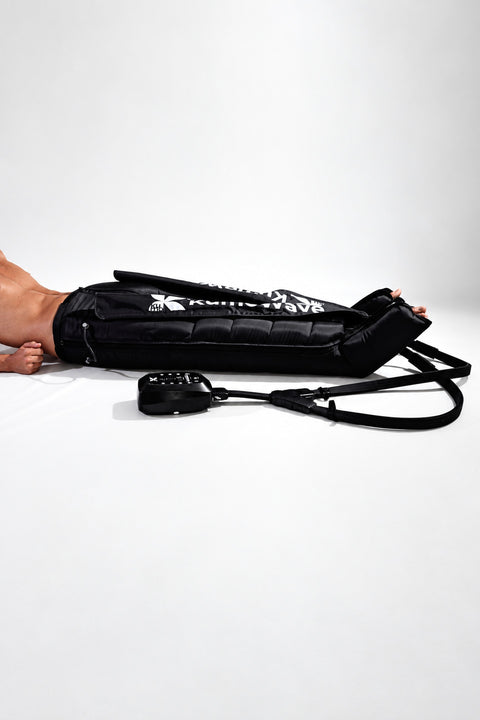
KumoWave Elite – Pressotherapy Pants
Full-coverage trousers. Ideal for lipedema, fluid retention and intensive use.
€799,00 €999,00

KumoWave 2.0 - Wireless Pressotherapy
Wireless, lightweight boots. Perfect for daily use and recovery.
€499,00 €599,00