
Introduction
Muscle contractures can be prevented.
Every day we accumulate hours sitting, stress, poorly planned workouts, and nights of little rest. The result is usually the same: tense areas of the body, localized pain, and a feeling of stiffness that limits our movements. In this article, you'll discover exactly what muscle contractures are, why they appear, and, above all, how to prevent them with simple habits you can start implementing today.
Pressotherapy at home
End the day with light legs
★★★★★ 4,8/5 · rated by verified customers
KumoWave pressotherapy boosts circulation and helps drain fluid with sequential compression, in 20-minute sessions at home.
- Boosts circulation and helps drain fluid
- Chamber-based compression, adjustable to you
- Sequential compression that mimics manual drainage
€799,00€999,00
−10% on your 1st order when you subscribe to the newsletter

We'll explore evidence-based strategies to improve your posture, increase movement, enhance hydration, and optimize recovery, integrating both traditional methods (stretching, active breaks, massage) and modern recovery technologies that are part of KUMO 's DNA.
What are muscle contractures?
Simply put, a muscle contracture is a sustained and involuntary increase in the tone of a muscle or muscle group. The fibers shorten and become rigid, causing pain, a feeling of tightness or knots, and loss of mobility. It is not the same as a tear (rupture of muscle fibers) or simple muscle fatigue.
Personalized protocol · included with your purchase
Want us to tell you how to use it in your case?
With your purchase, our experts prepare a personalized usage protocol for your case: sport, circulation, fluid retention, pregnancy or lipedema.
Message us on WhatsAppOur experts reply · no obligation
Muscle contractures can appear after intense exertion, but also due to less obvious causes: maintaining the same posture for hours, sleeping in a bad position, continuous stress, prolonged sedentary behavior, or insufficient recovery after exercise.
Differences between contracture, cramp and tear
- Muscle contracture: prolonged increased tension, moderate to severe pain, and a hardened area to the touch. It usually lasts for days if not treated properly.
- Cramp or spasm: a sudden, very painful but brief (seconds or minutes) muscle contraction. It is often related to dehydration, fatigue, or electrolyte imbalances. ( mayoclinic.org )
- Muscle strain: partial or complete rupture of muscle fibers. Acute pain, inflammation, and often functional impairment. Requires medical evaluation.
In everyday life, most recurring discomfort in the neck, shoulders, and lower back is due to tension and contractures, not serious injuries, but it can become chronic if action is not taken in time.
Common causes of muscle contractures in everyday life
Muscle contractures don't appear out of nowhere. They are usually due to a combination of physical, postural, and emotional factors. These are the most common:
on your first order when you join the newsletter
We send you the code instantly. No spam.
1. Sedentary lifestyle and lack of movement
According to data from the World Health Organization (WHO), about 31% of the world's adults—some 1.8 billion people—do not meet the minimum recommended levels of physical activity, and this inactivity has increased since 2010. ( who.int ) Lack of movement promotes muscle stiffness, shortening of muscle chains, and chronic neck and back pain.
2. Sustained postures and poor ergonomics
Working long hours sitting in front of a computer, with the screen too low, without lumbar support, or with the shoulders hunched forward, puts continuous strain on the neck, upper back, and lower back muscles. A Mayo Clinic office ergonomics guide highlights that adjusting chair height, screen position, and lumbar support significantly reduces neck, back, and shoulder discomfort in sedentary jobs. ( mayoclinic.org )
3. Overload and errors in training
Training beyond your current level, suddenly increasing volume or intensity, or not respecting recovery days can lead to micro-tears and increased muscle tone. If this is repeated frequently, it creates areas of persistent tension (especially in the calves, hamstrings, trapezius muscles, and lower back).
4. Dehydration and electrolyte imbalances
Clinical literature links the appearance of cramps and muscle spasms to the loss of fluids and minerals (sodium, potassium, calcium, and magnesium), especially in hot climates or during intense exercise with profuse sweating. ( mayoclinic.org ) Although a contracture is not exactly a cramp, sharing these risk factors promotes fatigue and increased muscle tone.
5. Stress and emotional tension
Stress, anxiety, or lack of sleep can increase the activity of the sympathetic nervous system, resulting in a more rigid posture and increased muscle tone in key areas such as the neck, jaw, and shoulders. Many tension headaches are related to muscle contractions in this region.
6. Insufficient sleep and poor quality of rest
Sleeping too few hours, frequently interrupting sleep, or sleeping on unsuitable mattresses and pillows hinders deep muscle relaxation. Furthermore, certain sleeping positions (arms above the head, neck in forced rotation, or legs in extreme flexion) can lead to morning muscle tension.
How to prevent muscle contractures in everyday life
The good news is that most recurring muscle contractions can be prevented with a combination of regular movement, good posture, restorative rest, and well-planned recovery.
1. Move more: regular physical activity
The WHO recommends at least 150 minutes of moderate-intensity physical activity or 75 minutes of vigorous-intensity activity per week, or an equivalent combination, to maintain health and reduce the risk of chronic diseases. (who.int ) At a muscular level, this translates to:
- Less stiffness and more joint mobility.
- Improved strength and endurance of postural muscles.
- Increased blood flow and oxygen supply to the muscles.
You don't need to do high-performance sports. Walking briskly, climbing stairs, cycling, practicing yoga or Pilates, and doing strength training adapted to your level already make a big difference.
2. Active micro-breaks in the office
If you spend many hours in front of the computer, incorporate this very simple protocol every 45–60 minutes:
- Stand up and walk for 1–2 minutes.
- Do 10 shoulder raises and 10 backward circles.
- Perform 5–8 repetitions of the neck retraction exercise (“double chin”): pull your chin back, hold for 5 seconds, and relax.
- Finish with 10 gentle squats or going up and down a short flight of stairs.
These simple gestures reduce muscle static, improve circulation, and help prevent contractures in the neck and lower back.
3. Improve your postural ergonomics
Some practical ergonomic guidelines to reduce muscle strain while working at a desk are:
- Chair: Height that allows feet to rest on the floor and knees at an angle close to 90°. Light lumbar support.
- Screen: the top part should be approximately at eye level, about 50–70 cm away.
- Keyboard and mouse: close to the body, so that elbows and shoulders do not extend too far forward.
- Phone and laptop: avoid holding the mobile phone on your shoulder; use headphones and, if you work with a laptop, a stand to raise the screen.
Quick summary: risk factors for contractures and how to act
| Everyday factor | How it contributes to muscle contractures | Simple preventive action |
|---|---|---|
| Sedentary lifestyle | Weak and stiff muscles, worse circulation, and more chronic pain. | Walk daily, climb stairs, and meet the minimum recommendations for physical activity. |
| Poor posture while working | Continuous tension in the neck, shoulders, and lower back. | Adjust chair and screen, support your back well and take active breaks every hour. |
| Dehydration | It increases muscle fatigue and the risk of cramps and spasms. | Drink water regularly and add electrolyte drinks during long workouts. |
| Intense stress | It increases muscle tone, especially in the shoulder girdle. | Deep breathing, short breaks, relaxation exercises, and good sleep hygiene. |
| Workout without warm-up | Increased risk of micro-injuries and localized overload. | Progressive warm-up of 8–10 minutes before training. |
| Insufficient recovery | Accumulation of fatigue and tension in the same muscle groups. | Alternate intensities, get enough sleep, and use active recovery strategies. |
4. Hydration and nutrition for less tense muscles
Clinical studies indicate that dehydration and low levels of minerals such as potassium, calcium, and magnesium increase the risk of muscle cramps, especially in athletes and in hot climates. ( mayoclinic.org ) To reduce this risk:
- Drink water throughout the day (not just during exercise).
- Include foods rich in electrolytes: leafy green vegetables, nuts, dairy products, legumes, avocado, banana, etc.
- During prolonged exertion with intense sweating, use electrolyte drinks (without excessive sugar).
5. Warm-up and cool-down before and after exercise
A proper warm-up increases muscle temperature, improves tissue elasticity, and prepares the nervous system, reducing the risk of strains and micro-injuries. It includes:
- 5 minutes of general joint mobility (neck, shoulders, hips, ankles).
- 3–5 minutes of gentle cardiovascular exercise (brisk walking, stationary cycling, light jogging).
- Progressive series of the specific movement of the sport (for example, squats without load before using weight).
Afterwards, perform a cool-down with deep breathing and gentle stretching of the most involved muscle groups.
6. Restful sleep and stress management
Sleep is one of the most powerful (and underrated) tools for muscle recovery. Try:
- Sleep between 7 and 9 hours daily, with regular schedules.
- Avoid intense screen time at least 60 minutes before bedtime.
- Take care of your sleeping posture: use a pillow that keeps your neck neutral and a mattress that doesn't excessively sink your lower back.
- Practice relaxation techniques (diaphragmatic breathing, brief meditation, gentle nighttime stretching).
Recovery technologies that can help you prevent muscle contractures
In addition to basic habits, today there are recovery technologies that, when used correctly, can complement your routine and help you keep your muscles more relaxed and prepared.
1. Percussion massage and massage guns
Massage guns (percussion massage) are used to mobilize soft tissue, improve local circulation, and promote muscle release. Recent research on percussion massage shows that, in some protocols, it can aid in the recovery from delayed onset muscle soreness (DOMS) and improve parameters such as flexibility, although the results are not consistent across all studies. ( pubmed.ncbi.nlm.nih.gov )
In your daily routine, you can use devices like the KumoPulse Air massage gun in short sessions on the most stressed muscle groups (calves, quadriceps, glutes, back), especially after intense workouts or long periods of sitting. They are not a substitute for medical treatment or physiotherapy, but they can be a good complement to everyday muscle recovery.
2. Pressotherapy: relief from tired legs and improved circulation
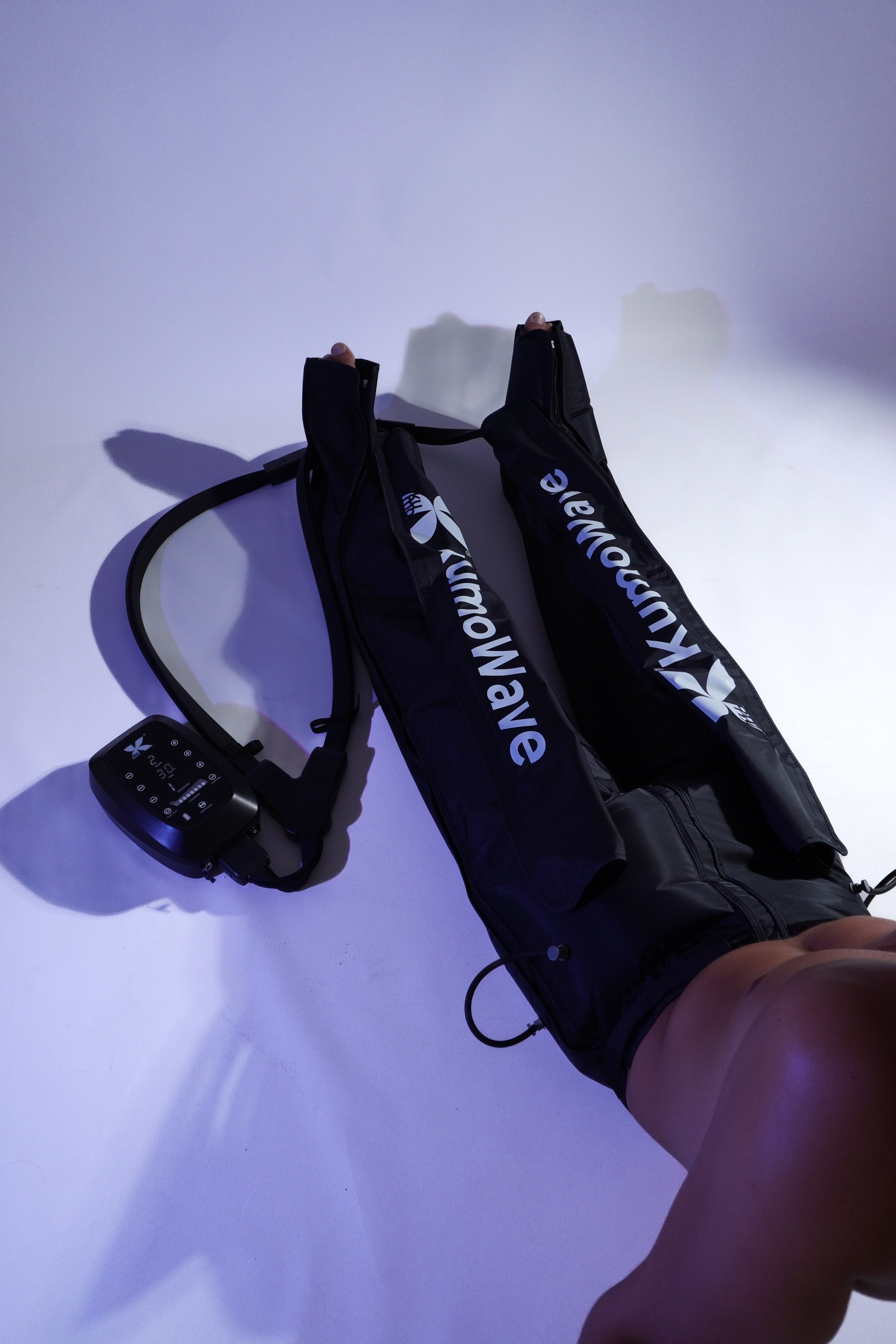
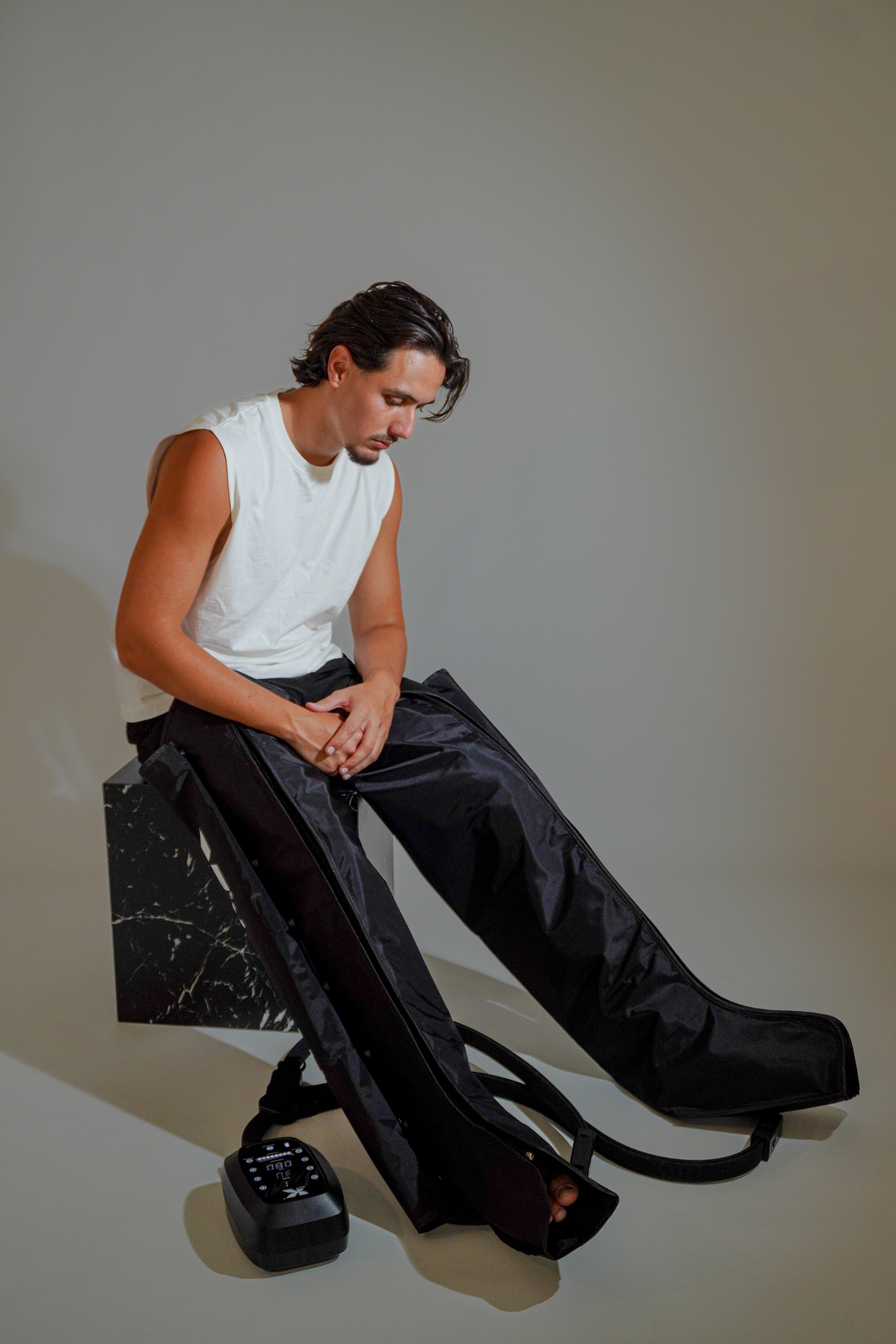
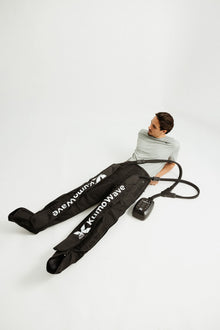
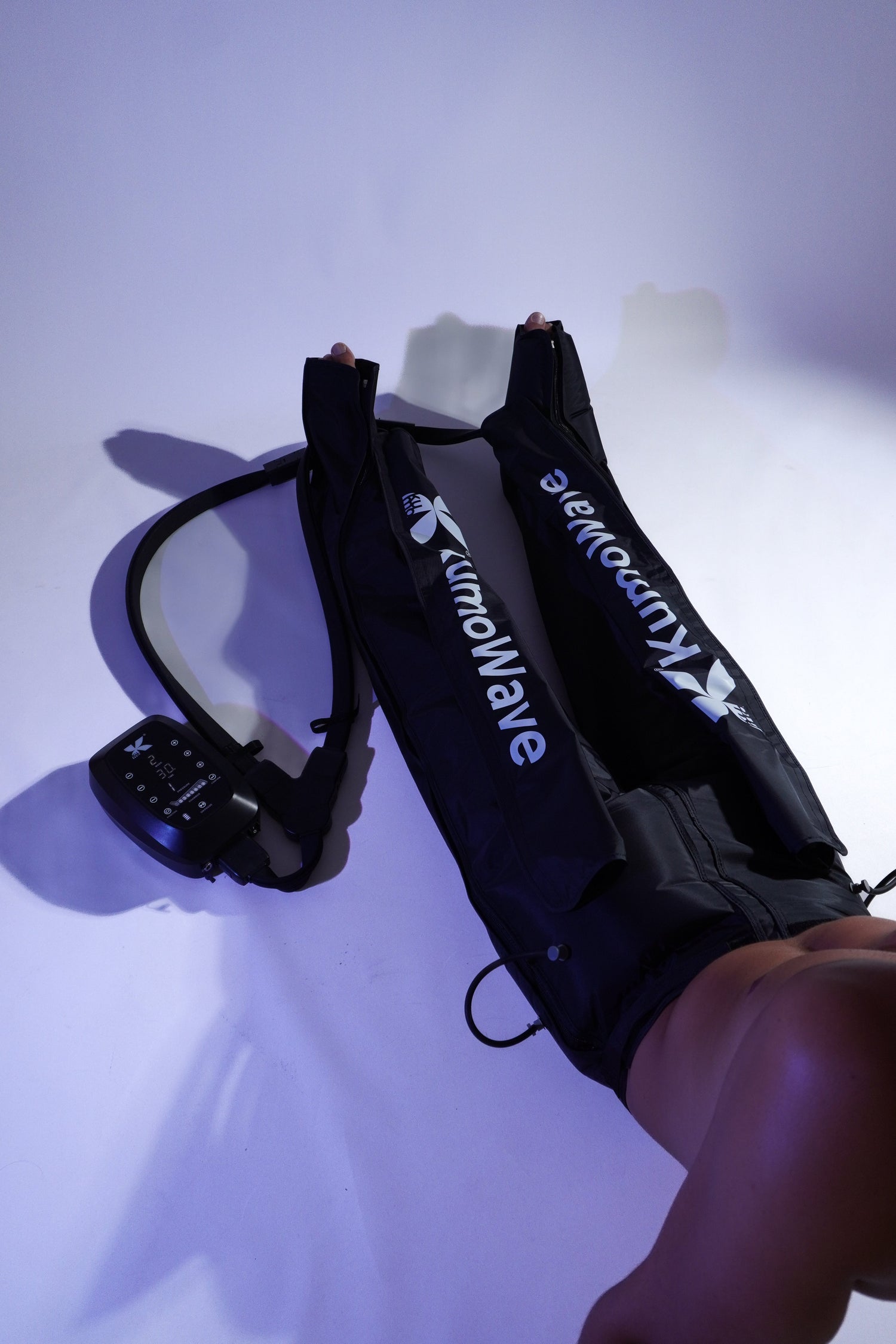
Compression therapy boots apply sequential compression to the legs and, according to available literature, promote venous return, reduce the sensation of heavy legs, and improve recovery after exercise in some users. Although not specifically designed to treat contractures, they do help reduce congestion and fatigue in the lower limbs, factors often associated with muscle tension.
If you spend many hours on your feet or experience heaviness in your legs, exploring pressotherapy solutions for leg recovery can be another piece within your overall muscle care strategy.
3. Red light and LED therapy for muscle recovery
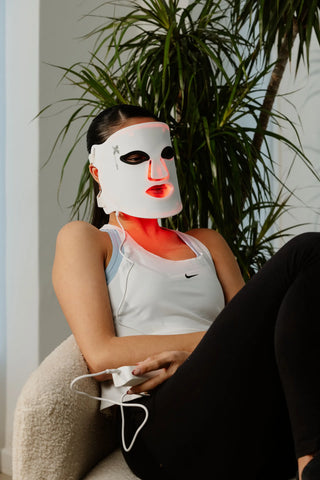
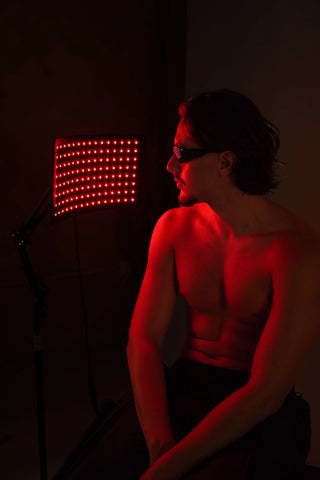
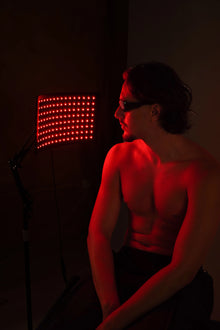
Photobiomodulation (red light and near-infrared light) has been studied in recent years as a tool to improve recovery after intense exertion. A trial published in 2022 showed that applying LED therapy with red (630 nm) and near-infrared (940 nm) wavelengths before intense plyometric exercise improved muscle performance recovery and reduced certain markers of muscle damage compared to a placebo. ( pubmed.ncbi.nlm.nih.gov )
Although the evidence is still emerging and should not be interpreted as a medical treatment, integrating LED light therapy devices aimed at muscle recovery and rest can be an additional tool for those seeking to optimize their well-being and reduce the feeling of overload after repeated efforts.
Practical daily routine to prevent muscle contractures
To ensure that all of the above doesn't remain theoretical, here's a simple proposal that you can adapt to your reality:
- In the morning (5–10 minutes): gentle neck and shoulder mobility, posterior chain stretching (hamstrings and calves) and 1–2 minutes of deep breathing.
- During the day (every hour): get up from your chair, walk for 1–2 minutes, do 10 shoulder circles and 5 neck retractions.
- Before exercise: 8–10 minutes of progressive warm-up and 2–3 specific mobility exercises for the area you tend to overload the most.
- After exercise: gentle stretching (20–30 seconds per muscle group), adequate hydration and, if desired, a few minutes of massage (manual or with a device) on the worked area.
- Before going to sleep: 5 minutes of light stretching, avoid intense screen time, and take care of your posture in bed.
Frequently asked questions about muscle contractures
What can I do at home when I already have a muscle strain?
If the discomfort is mild or moderate and there are no signs of serious injury (bruising, significant swelling, loss of strength), you can start with relative rest (avoiding movements that increase the pain), applying gentle local heat (electric blanket, warm shower), and performing very gentle and progressive stretches, without pushing to the point of intense pain. A light massage, either by hand or with a massage gun at low intensity, can help relax the area. If the pain is very intense, appears suddenly, or does not improve within 48–72 hours, it is advisable to consult a healthcare professional.
Is it normal to have muscle contractions almost every day?
Experiencing occasional muscle tension is common, but daily or very frequent muscle contractions should not be considered normal. This usually indicates underlying factors such as a sedentary lifestyle, poor ergonomics, high stress levels, lack of sleep, or poorly planned training. In these cases, it's crucial to review your habits (posture, physical activity, hydration, rest) and, if the problem persists, seek physiotherapy or medical advice to rule out other causes. Prevention involves addressing the root of the problem, not just relieving the symptoms.
What exercises are best to prevent neck and back strain from working in an office?
Gentle mobility and postural strengthening exercises work very well for the neck and upper back. For example: cervical retractions (tucking your chin back), upper trapezius stretches (tilting your head to one side while keeping the opposite shoulder down), shoulder mobility exercises (wide backward circles), and thoracic extensions with your back supported by the chair back. Combining these with overall strength training (resistance band rows, planks, glute and core exercises) helps keep the spine more stable and less prone to strain.
When should I see a doctor for a muscle strain?
You should seek medical attention if the pain appears suddenly and is very intense, if there is obvious swelling, redness, or significant local heat, if you notice weakness, tingling, or numbness in the area, or if the discomfort does not improve at all within a few days despite basic measures (relative rest, heat, gentle stretching). It is also advisable to consult a doctor if the muscle contractions are recurrent in the same spot or are accompanied by other systemic symptoms (fever, weight loss, general malaise), as there could be an underlying cause that requires specific investigation.
So what now?
Preventing muscle contractures isn't about making a drastic change overnight, but rather about integrating small habits: moving more, maintaining good posture, staying hydrated, sleeping better, and respecting recovery time. If you want to go a step further and make recovery part of your lifestyle, you can explore the pressotherapy, LED light therapy, and percussion massage solutions available at the KUMO store, designed to support your daily well-being.
If you have specific questions about which tool best suits your needs or how to integrate it into your routine, you can contact the team through the KUMO contact page for personalized guidance.
KumoWave pressotherapy
Choose your at-home pressotherapy
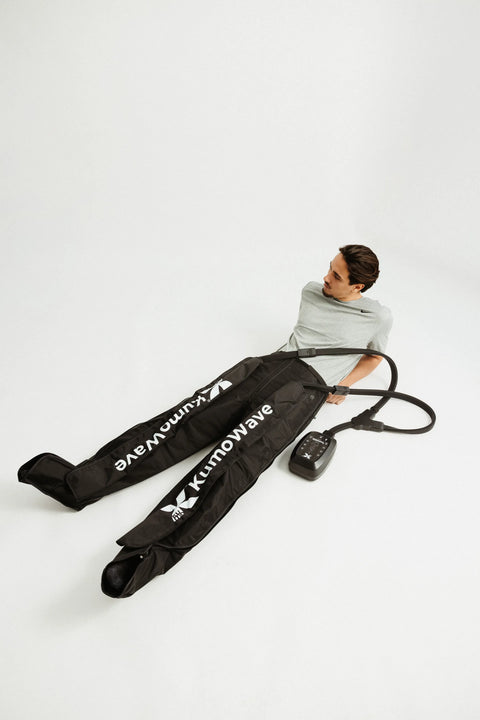
KumoWave Elite – Pressotherapy Pants
Full-coverage trousers. Ideal for lipedema, fluid retention and intensive use.
€799,00 €999,00
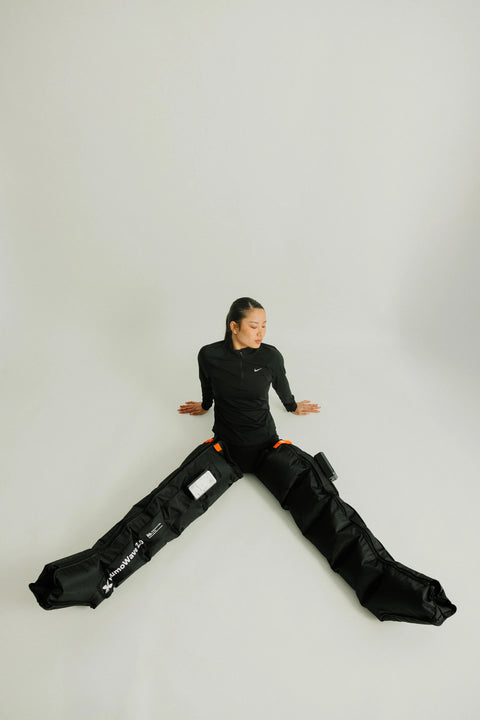
KumoWave 2.0 - Wireless Pressotherapy
Wireless, lightweight boots. Perfect for daily use and recovery.
€499,00 €599,00