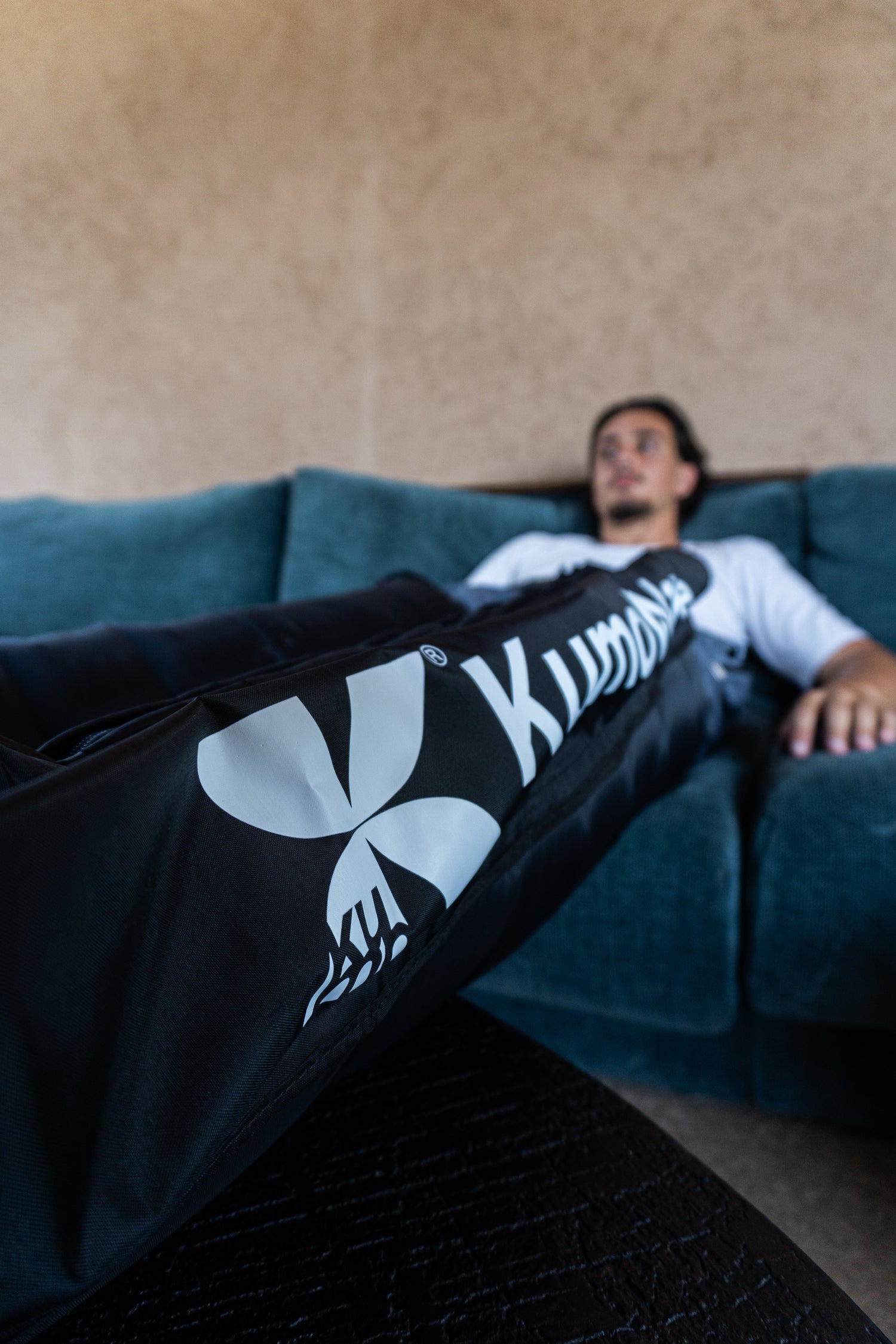
Lymphatic drainage: frequency, duration and results, without beating around the bush.
If you're wondering how often to do it, how long a session lasts, and what changes you can expect, here's a clear guide. For general well-being and tired legs, 1–2 sessions per week of 30–60 minutes are usually sufficient; for sports recovery, 2–3 sessions during weeks of high activity; and for lymphedema or post-operative recovery, the protocol is determined by a professional (intensive phases of 3–5 days per week followed by maintenance). Typical results include an immediate feeling of lightness and a gradual reduction of swelling over days or weeks, depending on the goal and consistency.
Pressotherapy at home
End the day with light legs
★★★★★ 4,8/5 · rated by verified customers
KumoWave pressotherapy boosts circulation and helps drain fluid with sequential compression, in 20-minute sessions at home.
- Boosts circulation and helps drain fluid
- Chamber-based compression, adjustable to you
- Sequential compression that mimics manual drainage
€799,00€999,00
−10% on your 1st order when you subscribe to the newsletter

In a little while
- 1–2 sessions/week for wellness and mild fluid retention; 30–60 minutes each.
- 2–3 sessions/week at peak training times; combine with mobility, hydration and rest.
- Lymphedema and post-surgery: individual plan guided by a specialist, with an intensive phase and maintenance.
- Changes you will notice: less heaviness, better mobility and a stable perimeter after several sessions.
- Signs of needing adjustment: If pain, redness, or excessive tiredness occurs, reduce dosage or consult a doctor.
What is lymphatic drainage and how does it work?
Manual lymphatic drainage (MLD) is a gentle, rhythmic massage technique that promotes the return of lymph to the lymph nodes, helping to eliminate fluids and metabolic waste. Unlike deep tissue massage, it prioritizes light, directional movements, from proximal to distal, to first "clear" the drainage pathways. Clinical literature describes its use in lymphedema and in the management of post-surgical edema as part of therapies combined with compression and gentle exercise. You can learn more about what it is and its benefits in the Cleveland Clinic guide.
The lymphatic system plays a key role in immunity and fluid balance. Its flow depends on movement, diaphragmatic breathing, and pressure variations; that's why walking, deep breathing, and getting enough sleep also help it function properly. Here's a general explanation of the system from the Lymphatic Education & Research Network.
Personalized protocol · included with your purchase
Want us to tell you how to use it in your case?
With your purchase, our experts prepare a personalized usage protocol for your case: sport, circulation, fluid retention, pregnancy or lipedema.
Message us on WhatsAppOur experts reply · no obligation
Expected benefits and what the evidence says
Well-being, tired legs and recovery
Many people seek lymphatic drainage due to heaviness or swollen ankles at the end of the day or after long journeys. In these cases, manual lymphatic drainage (MLD) can provide immediate subjective relief and improve mobility by reducing mild fluid retention. In athletes, some reviews indicate that gentle massage and pneumatic compression can support perceived recovery after intense exertion, although specific evidence regarding performance is limited and inconsistent. As a foundation, maintain habits that support venous/lymphatic return: walking, movement, and restful sleep.
Lymphedema and post-operative period (always with supervision)
In secondary lymphedema, manual lymphatic drainage (MLD) is part of complex decongestive therapy along with bandaging/compression, exercise, and skin care, according to the consensus of the International Society of Lymphology (2020). The Cochrane review (
- It indicates a modest benefit of manual lymphatic drainage (MLD) when added to compression in certain subgroups, with variable results between studies, so its use should be individualized and objective outcomes monitored (Cochrane ). The NHS offers practical guidelines for self-care and combination therapy.
Important: In medical conditions (lymphedema, post-surgery, advanced venous insufficiency), the plan must be established by a physiotherapist or doctor, with follow-up and objective measurements.
−10%on your first order when you join the newsletter
We send you the code instantly. No spam.
Recommended frequency according to objective
Well-being and mild retention
- Frequency: 1–2 times/week. During periods of retention (heat, travel), temporarily increase to 2–3 sessions for 2–3 weeks.
- Maintenance: 1 session every 1–2 weeks once the feeling of lightness has stabilized.
- Complements: walk 20–30 minutes daily, brief leg raises and 2–3 deep diaphragmatic breaths every hour.
Athletes and training weeks
- Frequency: 2–3 sessions/week in demanding weeks; reduce to 1/week in unloading weeks.
- Timing: 20–40 minute sessions on high-load days or post-competition to relieve perceived stiffness.
- Smart sum: mobility, hydration, sleep (7–9 h) and nutrition. Review the WHO physical activity recommendations.
Post-operative period and lymphedema
- Intensive phase: 3–5 days/week for 2–6 weeks, always as prescribed by a specialist.
- Maintenance: 1–2 sessions/week plus self-management (compression, exercises, skin care).
- Reference resources: NHS guidelines and the ISL 2020 consensus.
Self-care at home: daily support
- Diaphragmatic breathing 5 minutes, 1–2 times/day.
- Joint mobility of ankles, knees and hips.
- Hydration and active breaks in sedentary jobs.
- Recovery technology: pneumatic compression and massage solutions can complement your daily care. Discover Kumo 's recovery philosophy.
Recommended frequency and duration according to objective
| Aim | Suggested frequency | Duration per session | Plan duration |
|---|---|---|---|
| Well-being/lightness | 1–2/week | 30–60 min | 4–6 weeks + maintenance |
| Athletes (peak workload) | 2–3/week | 20–40 min | According to the competitive calendar |
| Mild retention/sedentary lifestyle | 1–2/week | 30–45 min | 6–8 weeks + daily habits |
| Post-operative/lymphedema | 3–5/week (intensive f.) | 30–60 min | 2–6 weeks + maintenance (professional) |
How long does a session last and how is it structured?
A typical session lasts between 30 and 60 minutes . It begins by preparing proximal areas (neck, supraclavicular area, armpit, or groin, depending on the area), continues with gentle drainage and traction maneuvers from distal to proximal, and ends with breathing exercises and self-care recommendations. For sports recovery or general wellness, 20–30 minute versions focused on the legs are usually sufficient. In lymphedema, specific protocols are used and supplemented with compression and therapeutic exercises, as recommended by the NHS and the Cleveland Clinic.
Results: what to expect and how to measure them
Immediate and medium-term changes
- Immediate: feeling of lightness, less visible sock marks, better range of motion.
- Weeks: stabilization of perimeters, less stiffness at the end of the day, better perceived recovery.
- In lymphedema/post-surgery: gradual volume reduction when combined with compression, exercise, and skin care, with clinical follow-up. See ISL 2020 consensus.
How to objectively measure improvement
- Perimeter measurements at fixed points (e.g., 10 cm above the malleolus), 2–3 times/week.
- Photos taken under the same lighting conditions and time of day.
- Heaviness scale 0–10 at the end of the day.
- Sleep and energy record. NHS self-care guide.
Safety: contraindications and warning signs
Lymphatic drainage is gentle, but it's not for everyone. Avoid it or consult a doctor first if you have:
- Acute infection, fever, or cutaneous cellulitis.
- Recent or suspected deep vein thrombosis.
- Decompensated heart failure or severe kidney failure.
- Active cancer without medical approval in the treated area.
- Uncontrolled hypertension or high-risk pregnancy (prior consultation).
The American Cancer Society and the Cleveland Clinic offer lists of precautions. Signs of overuse or poor response include pain, redness, increased local warmth, or marked fatigue afterward. If these occur, stop treatment and consult a doctor.
How to enhance the effect with habits and technology
- Periodic movement: active breaks and short walks.
- Diaphragmatic breathing: 3–5 deep cycles every hour.
- Hydration and salt according to your needs.
- Graduated compression and skin care where appropriate, following NHS guidelines .
- At-home technology support: Short routines of pneumatic compression or gentle massage can be integrated into your week to enhance your recovery. Discover how Kumo integrates aesthetics, technology, and performance into daily recovery at Kumo Balance .
Frequently Asked Questions
How many sessions do I need to notice changes?
For general well-being and mild fluid retention, many people report relief from the first or second session, with consolidation occurring after 4–6 weeks of 1–2 sessions per week. In sports recovery, 2–3 sessions during loading weeks help reduce perceived heaviness. In lymphedema or post-surgery, the response is more gradual and depends on the complete treatment plan (including compression and exercise), typically involving intensive phases of 2–6 weeks according to NHS guidelines and the 2020 ISL consensus.
Can I have lymphatic drainage during pregnancy?
Gentle drainage can relieve heavy legs during pregnancy, but it should only be performed by trained professionals with medical authorization if there is an obstetric risk. Avoid it if there are signs of preeclampsia, thrombosis, or infection. Start with conservative measures: walking, briefly elevating your legs, and diaphragmatic breathing. Any additional therapy should be coordinated with your midwife or obstetrician. The priority is maternal and fetal safety and ruling out medical causes of edema.
How does manual lymphatic drainage differ from pressotherapy?
Manual lymphatic drainage (MLD) is a very gentle, directional manual technique focused on opening lymphatic pathways and guiding the lymphatic fluid. Pressotherapy uses sequential pneumatic compression to promote venous/lymphatic return in the legs or arms. Both aim to relieve swelling and heaviness, but their sensations and protocols differ. For wellness and recovery, they can be complementary; for pathology (lymphedema, post-surgery), the choice and parameters should be determined by a professional according to guidelines such as those of the NHS .
Does lymphatic drainage help with cellulite?
It can temporarily improve the appearance of cellulite by reducing fluid retention and promoting microcirculation, but it is not a specific treatment for cellulite. To maintain changes, it should be combined with regular exercise, strength training, a balanced diet, and good sleep habits. Evidence on sustained improvements in cellulite with manual lymphatic drainage (MLD) alone is limited; the best results usually come from multimodal programs and consistent lifestyle changes.
What scientific evidence supports its use?
- A Cochrane review (
- It found modest benefits to adding manual lymphatic drainage (MLD) to compression in some cases. For wellness and sports, the evidence is emerging and heterogeneous; in practice, the priority is to monitor personal outcomes (circumference, symptoms) and adjust the frequency.
To remember
- 1–2 sessions/week for wellness; 2–3 in weeks of sports load.
- In pathology, professional guidelines with intensive and maintenance phases.
- Sessions of 30–60 minutes, with a soft and directional focus.
- Measure progress: perimeters, photos, and weight scale.
- Prioritize safety: respect contraindications and warning signs.
- Integrate habits and technological support to maintain results. Start building your recovery routine with Kumo .
KumoWave pressotherapy
Choose your at-home pressotherapy
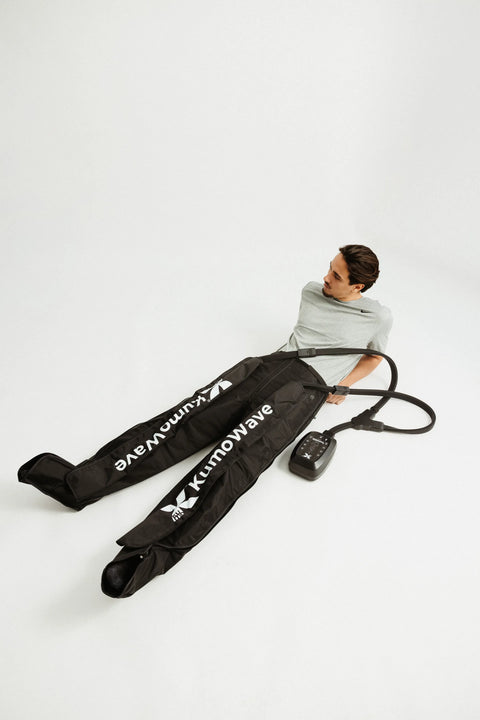
KumoWave Elite – Pressotherapy Pants
Full-coverage trousers. Ideal for lipedema, fluid retention and intensive use.
€799,00 €999,00

KumoWave 2.0 - Wireless Pressotherapy
Wireless, lightweight boots. Perfect for daily use and recovery.
€499,00 €599,00