
They are not the same.
Facial lymphatic drainage aims to reduce facial swelling and relieve visible fluid retention in a small, delicate area; body lymphatic drainage works on larger areas, such as legs, arms, or abdomen, and is usually more suitable when there is edema or lymphedema. The choice changes depending on the cause, the affected area, and the actual goal of the treatment.
Pressotherapy at home
End the day with light legs
★★★★★ 4,8/5 · rated by verified customers
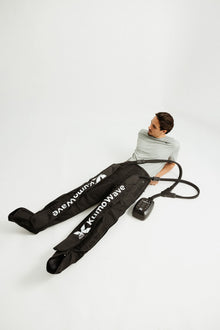
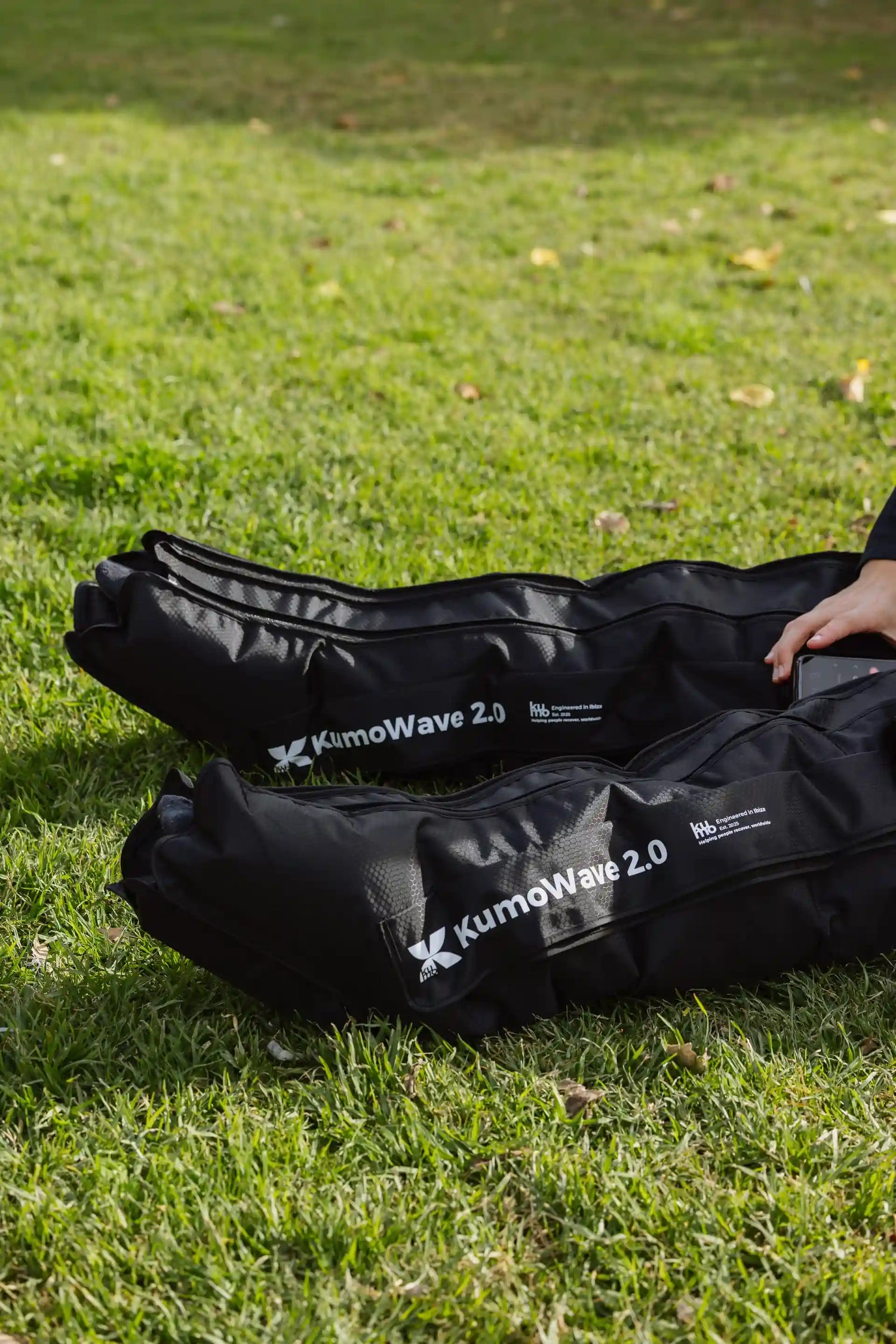
KumoWave pressotherapy boosts circulation and helps drain fluid with sequential compression, in 20-minute sessions at home.
- Boosts circulation and helps drain fluid
- Chamber-based compression, adjustable to you
- Sequential compression that mimics manual drainage
€799,00€999,00
−10% on your 1st order when you subscribe to the newsletter

If you want a clear basis before deciding, what lymphatic drainage is and how it works explains the general logic; here we go a step further to compare face and body without mixing techniques that are not applied in the same way.
What is lymphatic drainage and why does it change depending on the area?
In a clinical setting, manual lymphatic drainage is a gentle and specific maneuver often integrated into complex decongestive therapy along with compression, exercise, and skin care. The 2023 consensus of the International Society of Lymphology also notes that the approach must be individualized because the evidence and response change depending on the area and the cause of the edema. (isl.arizona.edu)
Personalized protocol · included with your purchase
Want us to tell you how to use it in your case?
With your purchase, our experts prepare a personalized usage protocol for your case: sport, circulation, fluid retention, pregnancy or lipedema.
Message us on WhatsAppOur experts reply · no obligation
This explains why the face is not treated the same way as the legs: the face has small structures, specific drainage points, and more sensitive skin; the body, on the other hand, usually requires a broader and often more technical strategy. To better understand the body context, you can also review abdominal lymphatic drainage, where the working logic is different from facial drainage.
Facial lymphatic drainage: when it makes the most sense
On the face, the goal is usually to reduce swelling, puffiness, and localized edema, especially after oral, maxillofacial, or orthognathic procedures. As described in the Cleveland Clinic clinical guide on lymphatic drainage, the facial variant can promote circulation and relieve the sensation of a "heavy" face; furthermore, surgical literature has studied its use for postoperative edema and pain.
The facial technique requires very little pressure. A clinical sheet from Sanford Health for manual drainage of the head and neck details an order that begins with the neck and shoulders and then moves to the ears, jaw, chin, and face, always with a very light touch. This sequence matches what oncology centers also teach for head and neck drainage.
on your first order when you join the newsletter
We send you the code instantly. No spam.
Therefore, facial drainage is usually more suitable when there is morning swelling, under-eye bags, facial congestion, or recovery after surgery on the mid and lower face. If this is your case, the specific approach of facial lymphatic drainage for swelling and dark circles can also help you.
Body lymphatic drainage: when it is more advisable
On the body, the main goal is usually to reduce edema in the legs, arms, chest, or abdomen, or to support lymphedema management. The ISL 2023 places complex decongestive therapy as a two-phase program that combines skin care, gentle manual drainage, exercise, and compression; in addition, it indicates that drainage can be valuable in areas that are difficult to compress, such as the breast, head, and neck.
In practice, body drainage is chosen more when there are heavy legs, persistent swelling, recovery after major surgery, or the need for maintenance in chronic edema. In lymphedema related to breast cancer, the evidence shows nuances: the Spanish Cochrane review reported that adding drainage to compression bandaging reduced edema by an additional 7.11%, and a 2022 meta-analysis found improvements in lymphedema incidence (RR 0.58) and pain (SMD -0.72). (cochrane.org)
MLD is safe and may offer additional beneficial effects over compression bandaging for edema reduction.
This idea summarizes the key point well: body drainage is most beneficial when it is part of a well-indicated plan, not when used as an isolated solution.
Key differences between the two
The difference is not just the area: the objective, sequence, and intensity change. The face requires shorter, more superficial maneuvers; the body usually requires a more global approach and, in many cases, is part of a compression and exercise strategy.
Quick comparison
| Aspect | Facial | Body | Clinical Basis |
|---|---|---|---|
| Objective | Reduce facial swelling, soften puffiness and localized edema. | Reduce volume, heaviness, and fluid retention in large areas. | |
| Technique | Very light and superficial movements, working the neck, ears, jaw, chin, and face. | Gentle maneuvers over larger regions, within a phased plan if lymphedema is present. | |
| Frequent use | Morning swelling, under-eye bags, and postoperative facial recovery. | Lymphedema, heavy legs, swollen arms, and postoperative body edema. | |
| Ideal context | Areas where compression is difficult or uncomfortable. | Cases where it is advisable to combine drainage with compression, exercise, and skin care. |
In summary, facial drainage has a very local and delicate logic; body drainage is conceived more as part of a broad decongestive plan. This difference explains why it is not advisable to copy techniques from one area to another without adapting the sequence and pressure.
How to choose according to the objective
- Choose facial drainage if the main problem is in the face, jaw, periorbital area, or upper neck, and you are looking for gentle decongestion.
- Choose body drainage if you notice heavy legs, swollen arms, abdominal edema, or diagnosed lymphedema.
- Prioritize professional assessment if the swelling appeared after surgery, is accompanied by pain, or persists longer than expected.
- Do not copy a generic routine without adapting it, because the order of work changes according to the area and the clinical objective.
If the swelling appeared after an intervention, the approach changes and it is advisable to review postoperative lymphatic drainage before improvising a routine.
For domestic and preventive use, the at-home lymphatic drainage guide can be a good starting point when the case is mild and there is no specific medical indication.
Can they be combined in the same routine?
Yes, and sometimes it is the most logical when there is facial and body edema at the same time, or when recovery affects several areas. The practical sequence usually begins by "opening" the most proximal drainage pathways and then working on the congested area; in head and neck materials, Sanford Health and Memorial Sloan Kettering describe an order that begins at the neck, shoulders, and drainage points before moving to the jaw, ears, chin, and face. This is a useful inference for practice, not a universal recipe.
When the objective is corporal, the combination with compression and exercise usually weighs more than the isolated maneuver; therefore, if the plan includes several areas, it is advisable to respect the phase and the indication of the professional supervising the case.
FAQ
What are the differences between facial and body lymphatic drainage and in which cases should one or the other be chosen?
The main difference lies in the area, depth, and objective. Facial drainage is mainly used to reduce facial swelling, soften puffiness, and alleviate mild or postoperative edema in the face and neck. Body drainage is more oriented towards the legs, arms, torso, or abdomen when there is heaviness, fluid retention, or lymphedema. If the swelling is localized in the face, it usually makes more sense to choose facial drainage; if it affects limbs or several areas, body drainage is usually the best basis.
When is facial lymphatic drainage more appropriate than body lymphatic drainage to reduce postoperative swelling?
It is more appropriate when surgery primarily affects the face, jaw, mouth, or neck, as occurs in oral, maxillofacial, or orthognathic procedures. In these cases, recent literature has evaluated facial drainage to reduce edema and discomfort, and head and neck clinical guidelines emphasize a very gentle and localized sequence. If the operation was in another area of the body, body drainage, integrated into a broader plan, is usually a better fit. (pubmed.ncbi.nlm.nih.gov)
How does the lymphatic drainage technique differ in the face compared to the body and what maneuvers are used in each area?
On the face, very light, short, and superficial movements are used, with prior preparation of the neck, shoulders, and drainage points such as the ears and jaw. On the body, the maneuver is still gentle, but it usually works on larger areas and, if lymphedema is present, it is integrated with compression, exercise, and skin care. The big difference is that the face requires precision and minimal pressure, while the body calls for a more global and phased strategy.
What specific benefits does facial lymphatic drainage offer compared to body lymphatic drainage, and for which situations is it most effective?
Facial drainage typically excels in situations of morning swelling, under-eye bags, facial congestion, and recovery after facial procedures. It can provide a quicker sensation of "decongestion" because it works on a small and very visible area. Body drainage, on the other hand, is more useful when the goal is to reduce edema in the legs, arms, or abdomen, or to manage lymphedema that requires ongoing care. Effectiveness depends less on one being "better" and more on it being well-indicated for the correct area.
Is it possible to combine facial and body lymphatic drainage, and in what sequence is it recommended to perform it according to the aesthetic or medical objective?
Yes, they can be combined if the objective justifies it. A logical approach is to start with the proximal drainage areas and then treat the most congested area; in the head and neck, this usually means the neck, shoulders, and drainage points before reaching the face. In the body, the combination usually works best if it is part of a program with compression and exercise, especially when there is lymphedema or persistent edema. The exact sequence should be adapted to the case and, if there is surgery, follow professional guidance.
What's next?
If you want to read from the beginning, start with when it is advisable to have lymphatic drainage and what benefits it provides; if you prefer a more practical routine, review the safe at-home version. And if you are looking for a global approach to wellness and recovery, visit Kumo Balance.
KumoWave pressotherapy
Choose your at-home pressotherapy
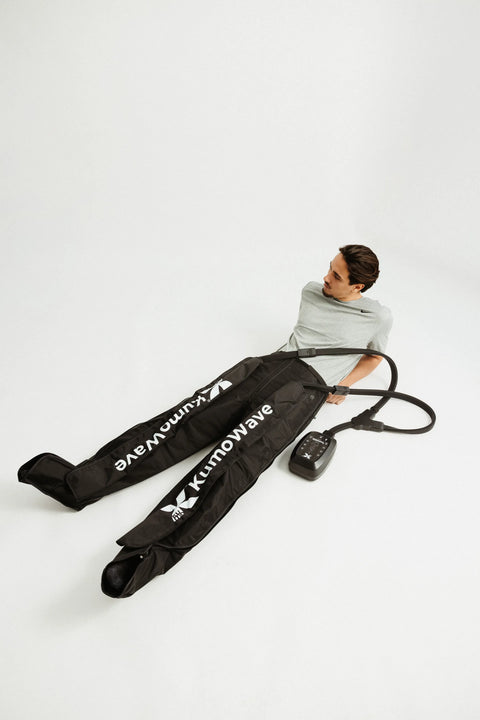
KumoWave Elite – Pressotherapy Pants
Full-coverage trousers. Ideal for lipedema, fluid retention and intensive use.
€799,00 €999,00
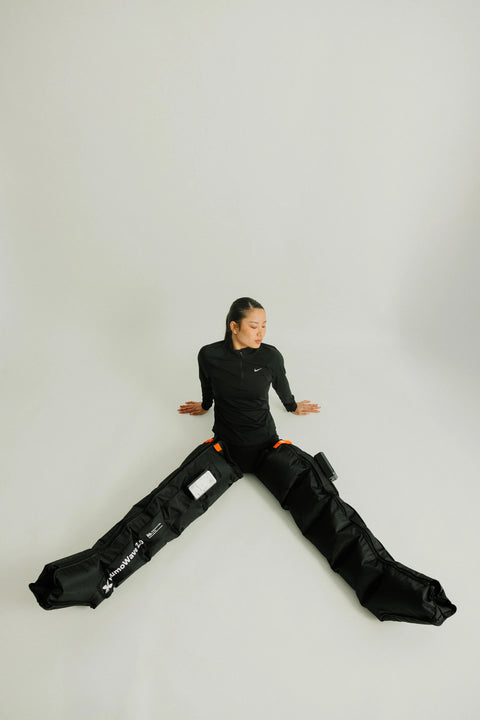
KumoWave 2.0 - Wireless Pressotherapy
Wireless, lightweight boots. Perfect for daily use and recovery.
€499,00 €599,00