
Design is everything.
A recovery center isn't built with equipment alone; it's designed as a complete experience where architecture, operations, and technology work together to make the client feel better from the moment they walk in until they leave. In this practical guide, you'll see what zones you need , how to streamline client flow to avoid friction, and how to elevate the perception of quality with a premium experience aligned with Kumo 's philosophy.
Red & infrared light
Recover faster, at home
★★★★★ 4,8/5 · rated by verified customers
The KumoLux panel supports muscle recovery with full-body red and infrared light.
- 660 nm red + 850 nm infrared light
- Full-body muscle recovery
- Clinically validated biohacking protocols
€399,00€499,00
−10% on your 1st order when you subscribe to the newsletter

Guiding principle: the best layout is the one that reduces decisions (for the client and the team), shortens journeys, protects privacy, and makes hygiene evident.
1) The key areas (and what each one is for)
Before drawing walls, define the center's "program": what happens, in what order, and with what level of privacy. These are the areas that typically support efficient operation and a premium perception.
Personalized protocol · included with your purchase
Want us to tell you how to use it in your case?
With your purchase, our experts set up your red and infrared light sessions for your sport and goal.
Message us on WhatsAppOur experts reply · no obligation
Entrance and reception area (the first impression)
The reception area is not “just a counter”: it’s where the pace is set , stress levels are reduced, and it’s confirmed that the customer is in the right place. Good design here means fewer questions, shorter queues, and greater punctuality.
- Clear welcome point (without the customer having to "guess" where to go).
- Small but comfortable waiting area (better short and well managed than large and noisy).
- Discreet check-in for personal data (avoid discussing sensitive information within earshot of others).
Assessment area / brief consultation (uncomplicated customization)
If your offering is premium, personalization is part of the product. There's no need to medicalize the space: a quiet area is sufficient for recording the client's objective, basic history, preferences , and operational contraindications for the service.
- Comfortable chair, side table, neutral lighting.
- Acoustic privacy (real door or separation, not just a curtain).
- Storage for single-use consumables and cleaning materials.
Guided recovery area (1:1 or semi-private)
It is the heart of the center when you offer guided sessions: gentle mobility, myofascial release, breathing, and safe use of tools.
on your first order when you join the newsletter
We send you the code instantly. No spam.
- Stable stretcher or bench.
- Space to explain and demonstrate (without intruding on the customer).
- Quick access to cleaning between shifts.
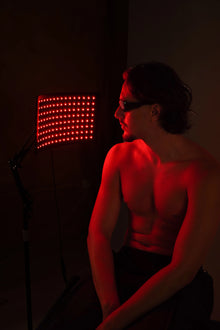
LED zone / photobiomodulation (light as a “treatment”)
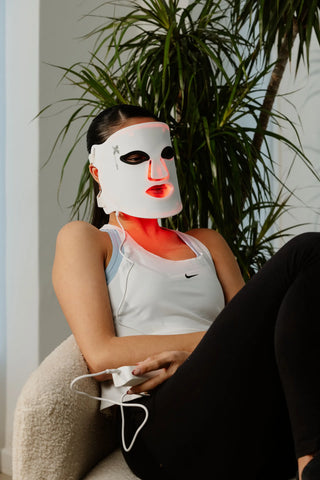
If you integrate light therapy , the treatment area must be consistent: ambient lighting control, privacy, and a simple protocol for both the team and the client. Scientific evidence on photobiomodulation (PBM) is active and growing; reviews and trials report potential effects on recovery-related variables (e.g., delayed onset muscle soreness), although results depend on parameters, population, and study design. You can review literature on PubMed and open-access articles such as recent reviews. (PMCID: PMC12286287, 2025)
For equipment, you can structure this area around LED light therapy solutions, maintaining a clear narrative: technology, ritual and comfort.
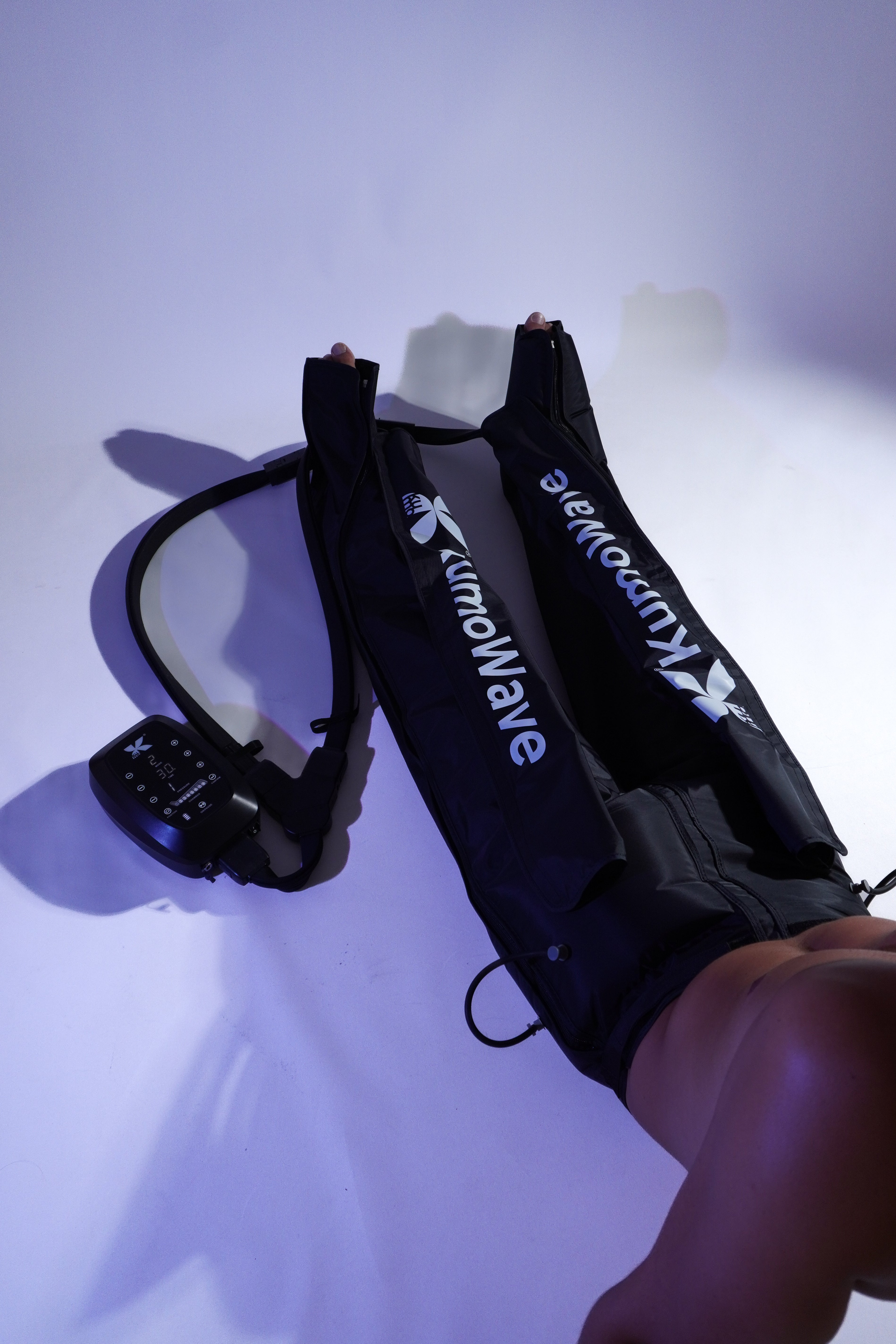
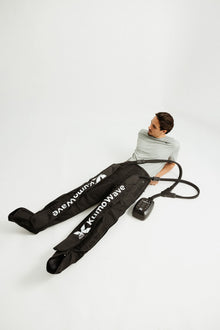
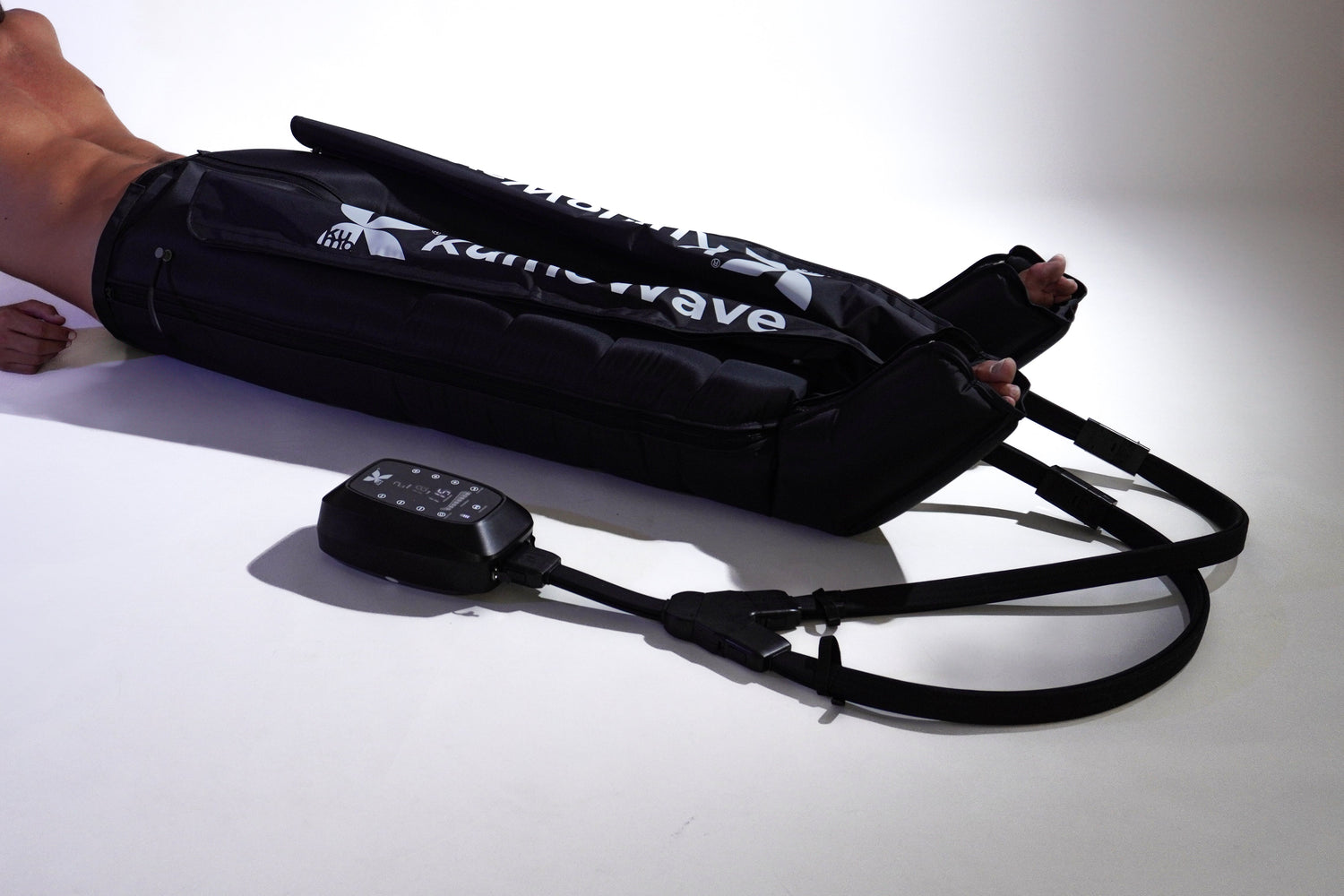
Pressotherapy zone (fast rotation, “premium” feel)
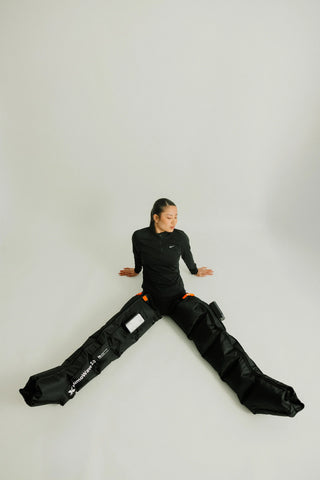
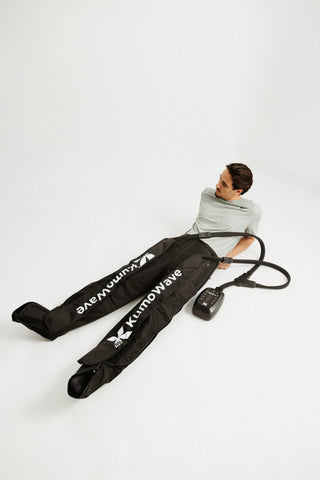
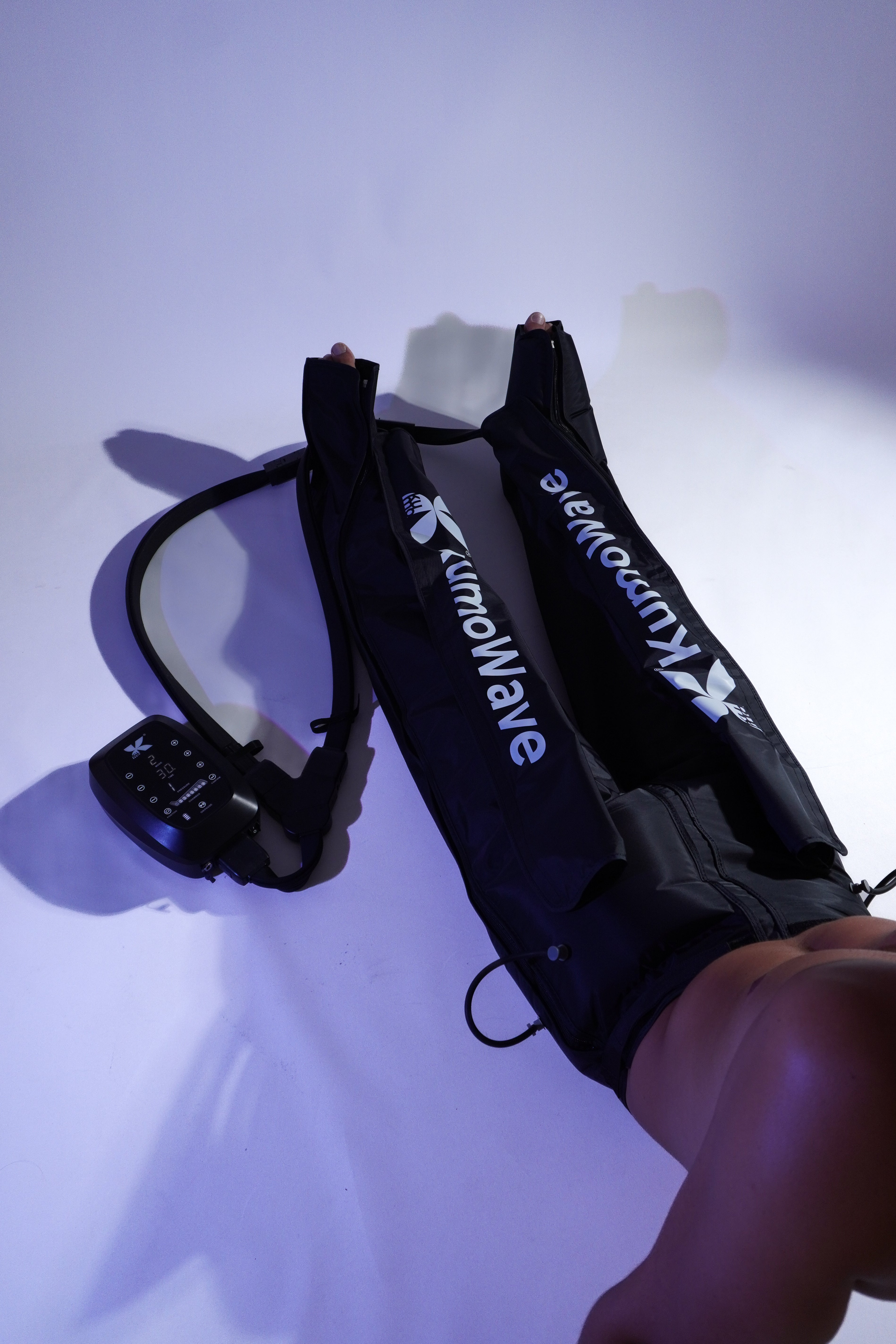
Intermittent pneumatic compression boots are used in sports and wellness contexts; literature reviews (e.g., critical analyses in sports rehabilitation) have explored their relationship with exercise-induced muscle injury variables and perceived recovery, with results that depend on the protocol and type of effort. (J Sport Rehabil, 2021)
Operationally, it's an excellent area for:
- Parallel sessions (multiple stations) without losing calm.
- “Passive recovery” while the staff prepares for the next stage.
- Link the experience to a ritual (sound, light, temperature).
If you want to integrate the product in a way that is consistent with the brand, link this area to the pressotherapy collection and standardize the cleaning between clients (see hygiene section).
Safe self-application zone (massage gun, mobility, stretching)
A self-service area reduces staff workload but requires clear boundaries: simple signage, time limits, recommended body areas, and visible contraindications. Evidence on percussion devices such as massage guns has been reviewed in systematic reviews; potential effects on flexibility/range of motion and some recovery variables are reported, highlighting the need for sound judgment and prudent use. (Systematic review, 2023)
To maintain consistency with Kumo, this area can be articulated with a percussive massage device such as KumoPulse Air , always accompanied by a micro-protocol of use (duration, pressure, areas to avoid).
Changing rooms, bathrooms and “transition zone”
The transition is part of the luxury: coat racks, a bench, a mirror, clean dispensers, neatly arranged towels, and an intuitive path to the treatment area. If the client doesn't know where to leave their belongings, they perceive disorganization, even if the treatment is excellent.
Back-of-house (what the customer doesn't see, but determines the service)
To make the center premium during peak hours, you need a solid back office:
- Textile and consumables warehouse (separating clean/dirty).
- Hygiene point : sink, gloves, cloths, authorized disinfectants.
- Technical room if there is equipment with specific electrical/ventilation requirements.
2) Customer flow: from “chaos” to a simple choreography
Designing the flow isn't about decoration: it's about minimizing waiting times, confusion, and uncertainty. A useful tool is the service blueprint (a visual map of the service showing what the customer sees and what happens behind the scenes). (General concept)
Recommended flow (no crossings and with privacy)
- Arrival → immediate welcome (even if there is a 1–2 minute wait).
- Check-in → session confirmation and preferences.
- Transition → leaving belongings and preparing body/mind.
- Block 1 (passive) → pressotherapy or guided breathing.
- Block 2 (technology) → LED / red light as proposed.
- Block 3 (exit) → simple recommendations + pressure-free rebooking.
Practical rules to avoid friction
- Separate entrance and exit if the premises allow it (or, at the very least, separate routes with signage).
- Doors and hallways that do not require "asking permission" to pass through.
- Operational buffers : plan reset times (cleaning, changing textiles, ventilation) as part of the schedule, not as "extra".
3) Premium experience: what you feel, not what is promised
In recovery, “premium” doesn’t mean restocking items: it means control . Control of the sound, the light, the smell, the touch, and the information the customer receives.
Privacy: visual, acoustic, and data
The customer relaxes when they don't feel watched. Prioritize:
- Real separations between workstations (solid screens, acoustic panels, doors where necessary).
- Discreet check-in (avoid saying personal details out loud).
- “Silent” signage: short instructions, pictograms, one place to read.
Acoustics: functional silence
The WHO has published indoor noise recommendations (e.g., guideline values for bedrooms and hospital environments) that serve as a design reference when the goal is rest: low levels promote sleep and recovery. (WHO, 2011) Historical WHO guideline values for indoors, such as 30 dB LAeq in bedrooms and limits for maximum nighttime events, are also cited. (Summary of guideline values)
Without turning your center into a "hospital", you can apply the approach: less reverberation, fewer door knocks, fewer cross conversations.
Light: coherence between zones
- Reception : brighter and clearer light (clarity, orientation).
- Recovery : warm and uniform light, without “hard spots”.
- LED Zone : Total control of ambient light for a consistent and repeatable experience.
Micro-details that enhance perception
- Textiles without a strong detergent smell.
- Clear surfaces (visual cleanliness communicates hygiene).
- A 30-second “starting ritual” (breathing, brief explanation of the session's objective).
4) Safety, hygiene and environmental comfort (without improvisation)
A premium center is also a reliable center: clear protocols, maintenance, and clean air. Here, it's best to rely on official guidelines rather than "inventing" rules.
Indoor air and ventilation: designing for health and operation
The EPA has updated its guidance on ventilation and indoor air quality strategies to reduce the spread of respiratory viruses (ventilation, filtration, supplemental purification, and best practices). (EPA, 2024) Additionally, its IAQ management approach (profiles, plans, and checklists) is helpful for daily operations. (EPA, updated 2025)
In spaces where there is a turnover of people, plan the air as another "resource": define who checks filters, when it is recorded, and what you do if there are complaints of smell or a feeling of stuffy air.
"Purge" time between clients: use charts, not intuition
If your facility uses enclosed rooms for sessions (for privacy or controlled lighting), air exchange rates impact the removal time of airborne contaminants. The CDC publishes a reference table (ACH vs. time for 99% and 99.9% removal). For example, at 12 ACH, it is estimated to take 23 minutes for 99% and 35 minutes for 99.9%. (CDC, 2024)
It is not necessary to "copy" hospital standards, but it is necessary to adopt the method: define assumptions, measure and record to maintain constant quality.
Cleaning and disinfection: repeatable protocols
For disinfection, rely on health recommendations and manufacturer instructions. The CDC summarizes good cleaning and disinfection practices for equipment and surfaces, emphasizing the importance of following instructions and using appropriate products. (CDC)
And even if you're not a pedicure salon, the EPA's "step-by-step" approach illustrates a critical point: clean first, disinfect next, and respect contact times . (EPA)
Accessibility: that “premium” also be inclusive
In the U.S., ADA accessibility standards include minimum widths and turning spaces that help design more comfortable routes for everyone. For example, an accessible route is cited with a continuous width of 36 inches and turning spaces of 60 inches in diameter in certain cases. (ADA Standards)
Even if your center is outside the US, this logic improves flow: fewer bottlenecks, more security, better experience.
5) How to integrate Kumo technology by zones (without a “showroom effect”)
Premium technology isn't showcased: it's orchestrated . The goal is for the client to understand "what's happening" in a single sentence and for the operation to be consistent for the team.
LED Zone: Simple narrative + environmental control
- Message : “Light session to support your recovery and well-being.”
- Environment : controlled ambient light, stable temperature, privacy.
- Operation : start/end checklist and cleaning of the point of contact.
Position this area near the back-of-house to replenish supplies without crossing paths with customers. For brand consistency, leverage Kumo's selection of LED solutions to maintain a consistent experience standard.
Pressotherapy: efficient rotation with a “cabin” feel
- Separate workstations (even if with partitions) to reduce cross-talk.
- One support unit per station: wipes, protector, user guide.
- Short route to a cleaning point.
Design the pressotherapy area as a "plug-and-play" zone, ideal for first visits and for clients with little time, integrating Kumo's logic into pressotherapy .
Massage gun: safe, guided and risk-free station
To maintain safety and consistency, create a “station” with 3 layers:
- Instruction (30 seconds): light pressure, recommended areas, when to stop.
- Application (2–6 min): by muscle groups, without focusing on painful points.
- Hygiene (1 min): Cleaning of printheads/surfaces according to instructions.
If the station is based on a specific device, centralize the standard with KumoPulse Air and make general contraindications visible (e.g., do not use on wounds, sensitive areas or acute pain, and consult a professional if there are medical conditions).
6) Operational design checklist (which prevents failures during peak hours)
- Staff routes : from the warehouse to each area without crossing the customer experience.
- Reset between shifts : textiles, disinfection, waste, restocking.
- Air management : filters, ventilation, incident logging (EPA/CDC references).
- Signage : minimal, consistent, located where decided (not where "it looks nice").
- Privacy : critical points (consultation, LED, booths) without sound leaks or glances.
7) Reference table: zones, objective, requirements and premium details
Design matrix for a recovery center
| Area | Main objective | Technical requirements | Details that elevate the experience | Kumo integration (examples) |
|---|---|---|---|---|
| Reception | To guide and reduce stress | Clear circulation, privacy at check-in | “Visual cleanliness”, minimal signage | Brand narrative: well-being + technology |
| Brief query | Frictionless personalization | Acoustic privacy, neutral lighting | Initiation ritual (30 s) | Routine recommendation by objectives |
| LED / PBM | Consistent technology session | Ambient light control, cleaning between clients | Quiet environment, stable temperature | LED light therapy equipment |
| Pressotherapy | Scalable passive recovery | Separate workstations, hygiene protocol | Low music, blankets, lumbar support | Pressotherapy boots |
| Self-application (percussion/mobility) | Autonomy with security | Visible instructions, cleaning of accessories | Mirror, accessory holder | Station with KumoPulse Air |
| Back-of-house | Uninterrupted operation | Clean/dirty warehouse, disinfection point | Zone reset carts | Consistency of the service standard |
FAQ: Frequently asked questions when designing a recovery center with Kumo
What are the minimum areas I need to offer a premium recovery experience?
As a foundation, define: a reception area (for orientation), a brief consultation area (for personalization), at least one "technological" zone (e.g., LED lighting), a scalable zone (e.g., for pressotherapy), and a robust back-of-house system for hygiene and restocking. The premium experience emerges when these zones are connected with a logical, seamless flow. If you integrate technology, design each room for repeatable use (same routine, same cleaning, same privacy). This way, the client perceives consistent quality, not just a matter of luck depending on the day.
How do I avoid waiting and bottlenecks during rush hour?
The key is to design the service as a sequence with buffers: a brief check-in, transition (belongings), a passive block (pressotherapy), and a technological block (LED), concluding with a quick exit. This prevents the client from having to return to reception mid-route. Operationally, schedule reset intervals (for textiles, disinfection, and ventilation) within the service hours. For enclosed rooms, use references such as the ACH table and CDC elimination times to plan intervals based on sound judgment, not intuition.
What hygiene should I apply to equipment used repeatedly (boots, heads, surfaces)?
Apply a simple and repeatable protocol: first, clean (remove visible dirt), then disinfect with the appropriate product, respecting the contact time indicated on the label. CDC guidelines emphasize following manufacturer instructions and using disinfectants suitable for surfaces/equipment. In practice, this means: a checklist for each area, a stock of consumables at the point of use, and a log of incidents. The primary goal is not to "smell like disinfectant," but to convey control, order, and safety.
How do I integrate LED light therapy without it looking like a "gadget"?
Design the LED zone as a room with intention: ambient light control, privacy, and a one-sentence explanation (“light session to support your well-being and recovery”). Avoid cluttering the space with technical signage; instead, standardize a ritual: set up, begin, support, end, and clean up. If you also offer products from the LED therapy collection, maintain visual consistency (materials, colors, lighting) so that the technology is perceived as a natural part of the space, not as an exhibit.
So what now?
If you're designing (or redesigning) your center, prioritize flow and operation first, then style: that's how luxury endures. To integrate a premium recovery experience with cohesive technology, explore the Kumo ecosystem on the official website , and if you need guidance, request information through the contact page.

Red & infrared light
KumoLux Panel – Red and Infrared LED Panel
★★★★★ 4,8/5 · rated by verified customers
- 660 nm red + 850 nm infrared light
- Full-body muscle recovery
- Clinically validated biohacking protocols
€399,00€499,00· pay in installments with seQura or Klarna