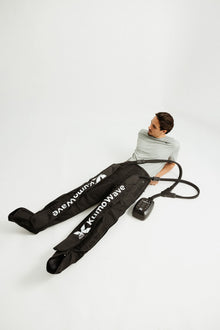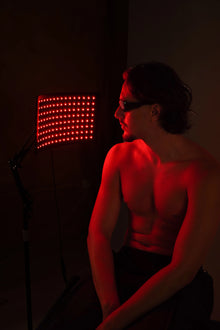

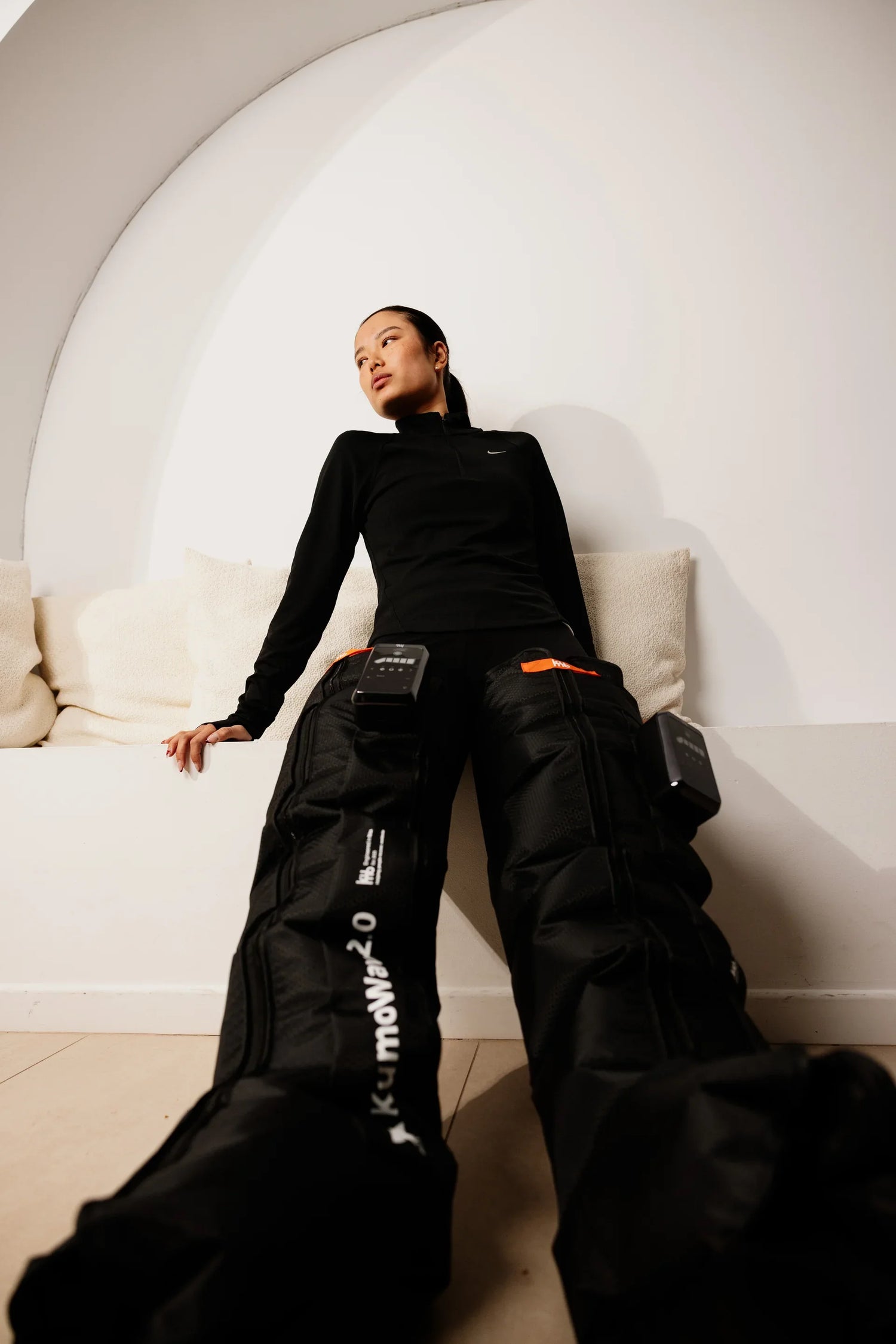
The right pressure is instantly noticeable.
If you're using compression stockings or compression therapy boots, the big question is always the same: am I applying the right pressure, or am I overdoing it? In this guide, you'll learn to identify this with 7 clear, easy-to-check signs, and how to adjust the intensity with safety and common sense criteria.
Pressotherapy at home
End the day with light legs
★★★★★ 4,8/5 · rated by verified customers
KumoWave pressotherapy boosts circulation and helps drain fluid with sequential compression, in 20-minute sessions at home.
- Boosts circulation and helps drain fluid
- Chamber-based compression, adjustable to you
- Sequential compression that mimics manual drainage
€799,00€999,00
−10% on your 1st order when you subscribe to the newsletter

At Kumo, we understand recovery as a habit: technology, well-being, and performance can coexist if you listen to your body and respect the basics (comfort, circulation, and skin).
What "adequate pressure" means (and why it matters)
Pressure is "adequate" when it achieves its goal (relief, circulatory support, and recovery) without generating alarm signals (pain, numbness, color changes, deep marks, irritation).
Personalized protocol · included with your purchase
Want us to tell you how to use it in your case?
With your purchase, our experts prepare a personalized usage protocol for your case: sport, circulation, fluid retention, pregnancy or lipedema.
Message us on WhatsAppOur experts reply · no obligation
In compression, mmHg (millimeters of mercury) is often used. For example, in the field of compression stockings, common ranges include 8–15, 15–20, 20–30, 30–40 mmHg, among others (according to UW Medicine clinical education). If the use is for a medical reason, a professional should indicate the level. For sports or wellness use, it's recommended to start gently and adjust based on sensation.
- Guide to common stocking levels: UW Medicine – Compression Stockings (PDF).
- Informative article with ranges and comfort recommendations: Yale Medicine – Compression Socks.
Presotherapy and pneumatic compression: the essentials in 2 minutes
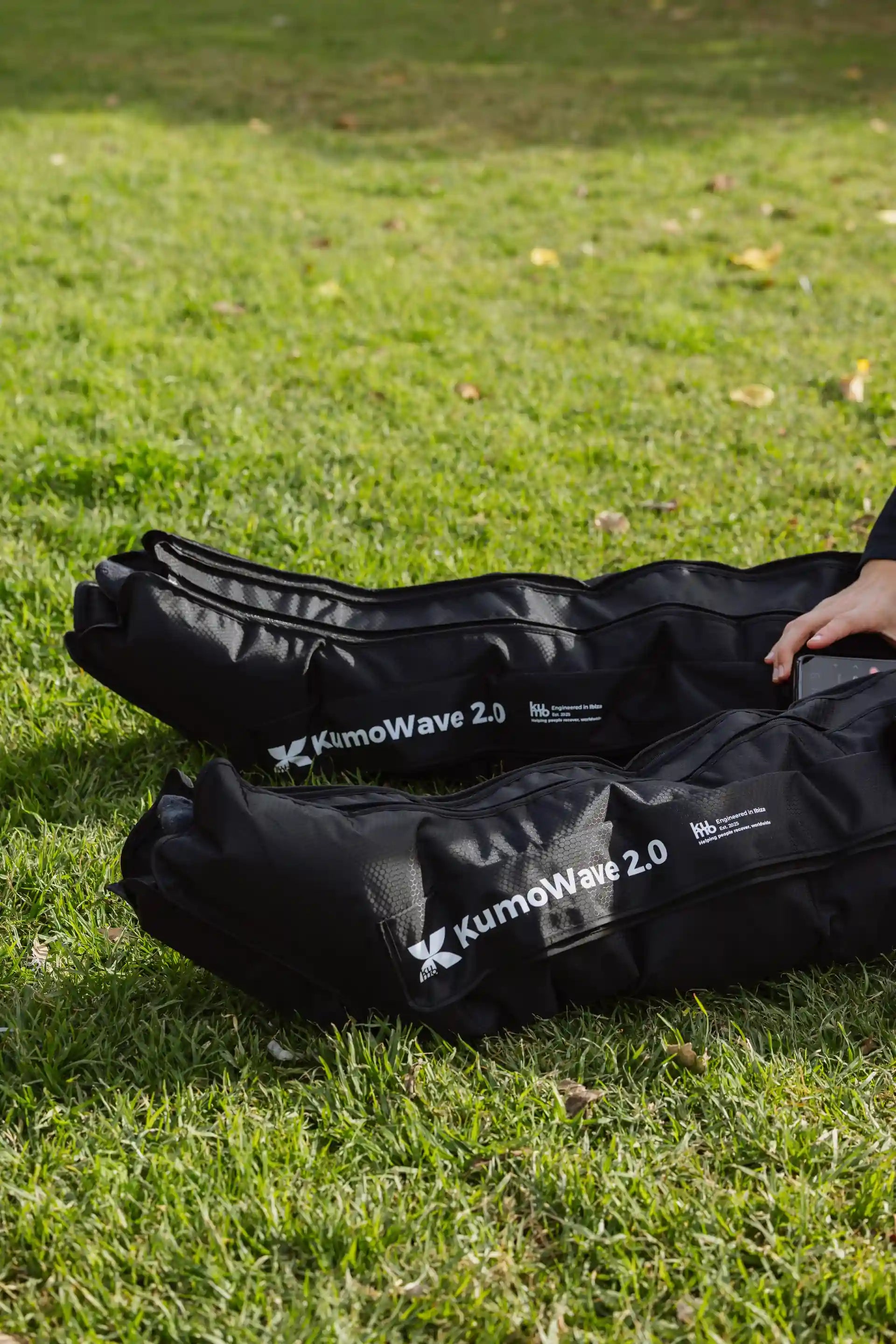
Presotherapy (often based on intermittent pneumatic compression) uses chambers that inflate and deflate to create cyclical pressure in the legs. In clinical settings, these systems are used to support circulation and, in certain hospital contexts, help prevent deep vein thrombosis (DVT). The typical sensation is described as a massage, with inflation/deflation cycles that can repeat every 20 to 60 seconds (according to Cleveland Clinic).
To understand the mechanism (without turning this into a medical indication), you can consult:
on your first order when you join the newsletter
We send you the code instantly. No spam.
- Cleveland Clinic – Intermittent Pneumatic Compression (IPC) (reviewed in 2023).
- Johns Hopkins Medicine – IPC Devices.
Important: that a technology exists in a clinical context does not mean that any home use is "treatment." In wellness, the focus is on a safe sensation, consistency, and recovery.
Safety first: when not to "play" with pressure
Before discussing signals, it's important to clarify the basics: there are situations where compression (stockings, bandages, or pneumatic compression) may be inappropriate or require supervision. For example, an international review/consensus on risks and contraindications (published in 2021) cites contraindications such as severe peripheral arterial disease (e.g., ABPI < 0.6), severe heart failure (NYHA IV), or severe diabetic neuropathy with loss of sensation, among others.
- 2021 Consensus (includes IPC): Phlebolymphology – Risks/contraindications of compression (PDF).
- Clinical summary (updated January 31, 2026) on compression and precautions: NCBI/StatPearls – Venous Insufficiency.
- Example of a list of contraindications and stopping criteria in IPC: NHS – Intermittent pneumatic compression (PDF).
Golden rule: compression can be “intense,” but it should not hurt or cause numbness, or worrying changes in the toes (intense cold, bluish color, etc.).
How to tell if the pressure is adequate: 7 clear signs
1) It feels firm, but it doesn't hurt (or "throb")
The number one sign is very simple: adequate pressure is perceived as a firm hug or a compressive massage, but not as pain. If acute pain, a "stinging" sensation, intense cramping, or an unpleasant throbbing appears, it's usually too much pressure or a poor fit.
Useful reference: Johns Hopkins indicates that the cuff should feel snug, but should not hurt, and it should usually be possible to place a finger between the cuff and the leg for a correct fit.
2) There is no tingling or numbness during the session
Persistent tingling, numbness, or loss of sensation are signs that something is wrong (excessive pressure, folds, incorrect size, "unevenly distributed" compression, or nerve sensitivity). IPC documents mention stopping treatment if sudden numbness or pain appears, and clinical compression guides recommend seeking advice if you notice numbness/tingling in your toes.
In practice: if you notice tingling that doesn't resolve when you lower a level, stop and check adjustment/position.
3) Your toes maintain normal color and temperature
Adequate pressure does not compromise distal perfusion. Signs such as bluish toes, colder than usual, or striking color changes are clear alerts to reduce intensity or stop and check.
Clinical compression guides (NHS) include as signs to consult: bluish toes, increased coldness, unusual pain, or strange swelling in the toes.
4) The skin is left without deep marks or a "tourniquet effect"
It's normal for mild and temporary marks to appear (especially with seams or velcro), but they should not be deep, painful grooves or persist for too long. In stockings or boots, folds and wrinkled material can concentrate pressure at one point and cause discomfort.
Practical advice: when putting on the system, smooth out the fabric and avoid creases. NHS inform insists on not folding or wrinkling the material when using compression.
5) After the session, you feel lightness (no "reaction" or strange discomfort)
In use aimed at recovery, a sign of adequate pressure is that when you finish, you notice lighter legs or less feeling of heaviness, without residual pain. If you end up with a new discomfort (localized pain, strong irritation, electric sensation, or burning), it's usually better to reduce the intensity next time and check placement.
The key is not "how much it squeezes," but how it leaves you 10–30 minutes later.
6) The sensation is uniform and progressive (without pinching points)
With well-applied compression, the sensation should be homogeneous and controlled. If you notice a specific point that "pinches" behind the knee, over the ankle, or on the instep, it usually indicates:
- fabric fold or poor placement,
- non-optimal size,
- intensity too high for your current tolerance.
In medical compression, a pressure logic is sought (for example, in graduated stockings: more distal pressure and less proximal). In presotherapy, the equivalent is to prevent an area from receiving "all the load" due to a poor fit.
7) No general alarm symptoms appear (shortness of breath, chest pain, dizziness)
Although rare, any worrying general symptom (e.g., chest pain, shortness of breath, or sudden dizziness) is a reason to stop and seek medical attention. IPC documents include these signs as criteria for stopping use.
This sign is not to "scare" you, but to make it clear what is not normal.
Quick adjustment table: what each sign means and what to do
| Sign | What it usually indicates | What to do (simple and safe) |
|---|---|---|
| Firm but without pain | Tolerable and useful intensity | Maintain the level and observe how you feel at the end |
| Tingling/numbness | Excessive pressure, fold, compression point | Lower intensity, reposition, smooth; if it persists, stop |
| Bluish or very cold toes | Compromised distal circulation | Stop, remove, check adjustment; consult if it recurs |
| Deep marks | Concentrated pressure or incorrect size | Reduce pressure and correct folds/velcro |
| Lighter and better feeling post-session | Well-dosed stimulus | Repeat consistently, without increasing out of "ego" |
| Pinching at specific points | Poor positioning or wrinkles | Reposition and smooth; avoid folding the material |
| Shortness of breath / chest pain | Alarm signal | Stop and seek medical attention |
How to adjust pressure without guessing: practical method in 4 steps
- Start with the lowest "useful" level. The goal is not to "squeeze hard," but to achieve a pleasant and constant sensation. In compression, going too fast usually leads to discomfort and abandonment.
- Do a 30-second check: color/temperature of toes, absence of tingling, and no pinching point.
- Only increase if you meet all 7 signs. If everything is fine and you want more intensity, increase one level and check again. If any "too much" sign appears, go back.
- Evaluate the "after." Adequate pressure usually leaves a feeling of lightness. If it leaves you with irritation or new pain, lower it for the next session.
Common mistakes that make pressure "feel bad" (and how to avoid them)
- Wrinkles or folds: they concentrate pressure. Solution: smooth the material and avoid folding it (consistent with NHS inform recommendation).
- Increasing intensity to "feel something": it's better to feel good than to feel a lot. Useful pressure doesn't need pain.
- Ignoring nerve signals: tingling/numbness is not a "normal effect" that you have to put up with.
- Not checking the adjustment: even with low pressure, poor placement can generate uncomfortable points.
Smart recovery with Kumo: how presotherapy fits into a complete routine
If your goal is well-being and performance, compression can be another piece of the puzzle. At Kumo, we work on recovery with complementary tools:
- For tired legs: explore the presotherapy collection and prioritize comfortable and constant pressure.
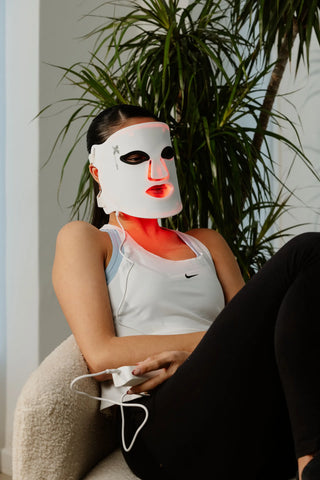
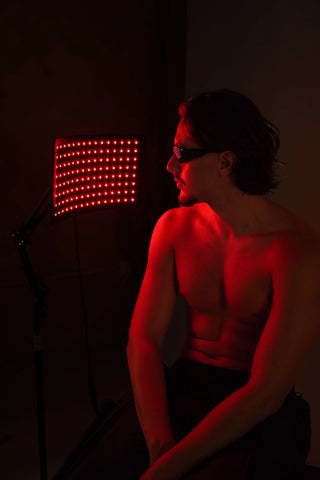
- To support rest and muscle recovery: LED light therapy (including red light) is a common complement in recovery routines.
- To release localized tension: a massage gun like KumoPulse Air can help you target specific points without needing to increase global pressure in the legs.
If you are not sure which option best suits your routine, you can write to us from the contact page.
Frequently Asked Questions (FAQ) about pressure and use with Kumo
What pressure should I use with Kumo presotherapy boots if I am a beginner?
As a practical rule, start with the lowest level that feels "useful" (a compressive massage sensation) and check the signs: no pain, no tingling, toes with normal color/temperature, and no deep marks. In clinical settings, it's emphasized that the cuff should feel snug but not painful (Johns Hopkins), and that compression should not cause neurological symptoms. If you feel lighter and without extra discomfort afterwards, you're on the right track. If in doubt, keep the level low for a few days before increasing.
Is it normal for Kumo presotherapy to leave marks on my skin?
Mild and temporary marks can appear, just like with tight socks: they are not necessarily a problem if they disappear quickly and don't hurt. What is not a good sign are deep grooves, localized pain, intense irritation, or marks that coincide with creases/wrinkles. In compression, poor placement can concentrate pressure at one point. The solution is usually simple: reposition, smooth the material, and lower one level. If there is also tingling, numbness, or color changes in the toes, it's best to stop and check.
How long should I use Kumo presotherapy to notice less heavy legs?
There is no single valid figure for everyone, because it depends on your sensitivity, activity (many hours standing, sports, travel) and the pressure level. Instead of chasing minutes, use a more reliable criterion: quality of response. If you notice lightness afterwards and no signs of excess appear (pain, numbness, cold/bluish toes), you can repeat regularly. In wellness compression, consistency is usually more important than intensity. If your objective is medical (significant edema, venous pathology, etc.), it is appropriate to follow professional guidance.
Can I combine Kumo presotherapy with red LED light or with a massage gun?
Yes, it is usually a logical combination if you use it with a recovery focus: presotherapy provides a general compressive massage sensation, while LED light is integrated into wellness-oriented routines and the massage gun helps treat specific areas of tension. The order may vary, but a conservative guideline is to avoid "overloading" the tissue: if you notice sensitivity, reduce intensity or separate sessions. At Kumo, you can see options for LED light therapy and localized massage with KumoPulse Air to complete your routine.
What signs indicate that the pressure is too high and I should stop?
The clearest signs are: pain, tingling or numbness, bluish toes, colder than usual, or a point that "pinches" persistently. Clinical guidelines (NHS) mention signs such as numbness, bluish toes, or more severe than usual pain as reasons to consult, and IPC documents consider stopping if there is sudden numbness or pain. If any worrying general symptom appears (e.g., shortness of breath or chest pain), stop use and seek medical attention.
What now?
If you want to make recovery a sustainable habit, start with the essentials: safe, comfortable, and consistent pressure. Discover the options of presotherapy boots and complete your routine with LED light solutions or localized massage. And if you need guidance to choose or adjust your use, contact us here.
KumoWave pressotherapy
Choose your at-home pressotherapy
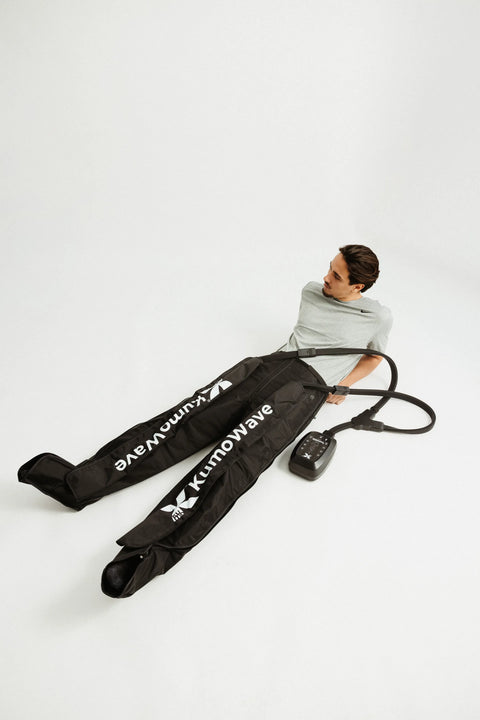
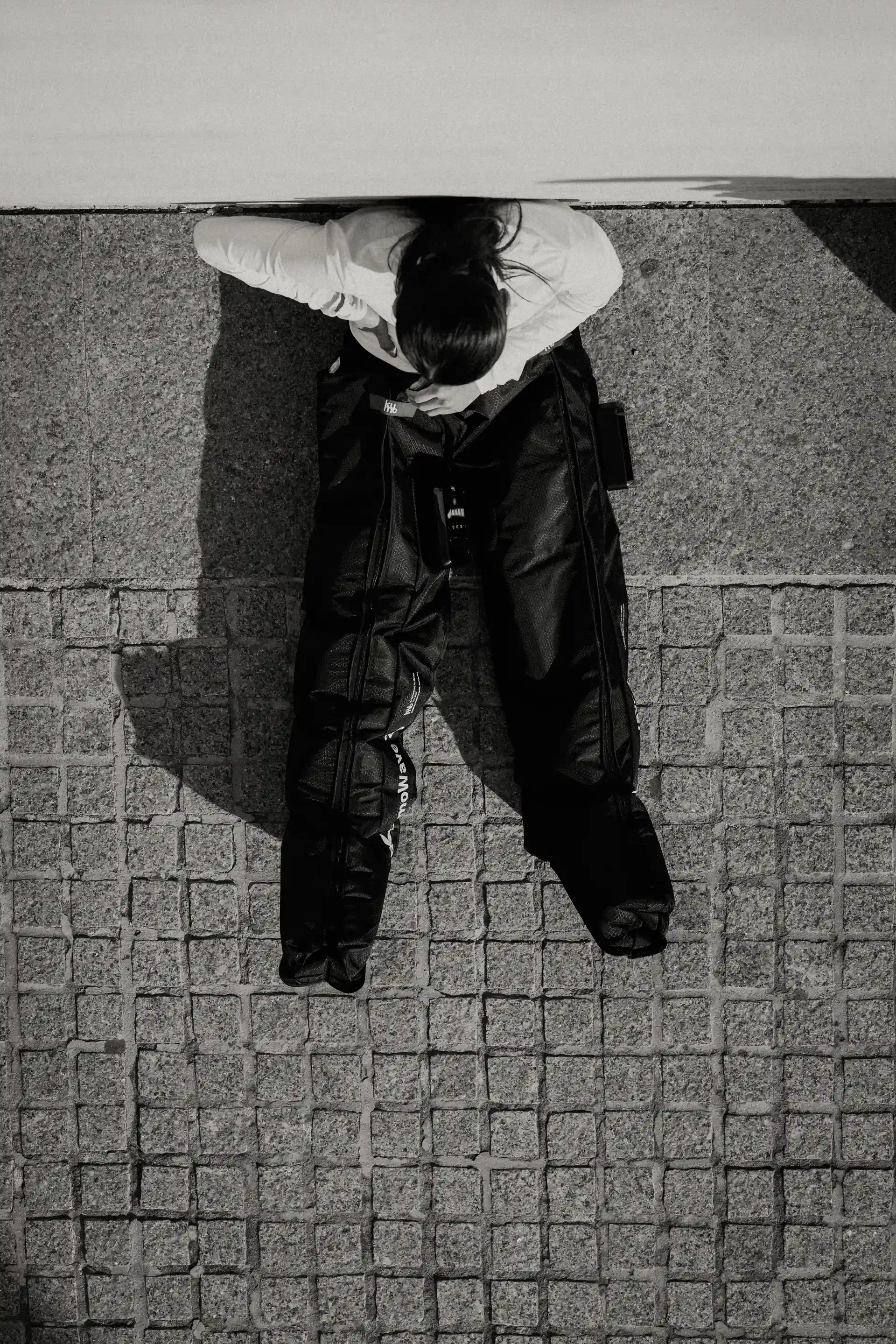
KumoWave Elite – Pressotherapy Pants
Full-coverage trousers. Ideal for lipedema, fluid retention and intensive use.
€799,00 €999,00
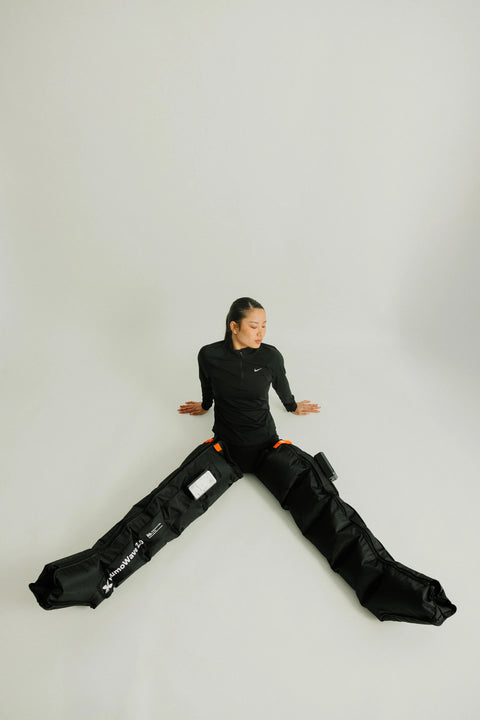
KumoWave 2.0 - Wireless Pressotherapy
Wireless, lightweight boots. Perfect for daily use and recovery.
€499,00 €599,00