What exactly is facial collagen?
The “invisible structure” that supports your face
Collagen is the most abundant structural protein in our body and makes up about 70% of the dry mass of the skin. ( pmc.ncbi.nlm.nih.gov ) In the face, it forms a mesh of fibers in the dermis that acts as an internal scaffold: it gives firmness, volume, and resistance to the skin, and coordinates with elastin and hyaluronic acid to keep it flexible and hydrated.
When we talk about facial collagen, we're referring to the network of fibers present in the skin of the face, neck, and décolleté. Its quality and quantity largely determine the appearance of wrinkles, sagging, pores, and radiance.
Facial red light
Bring your skin back to life
★★★★★ 4,8/5 · rated by verified customers
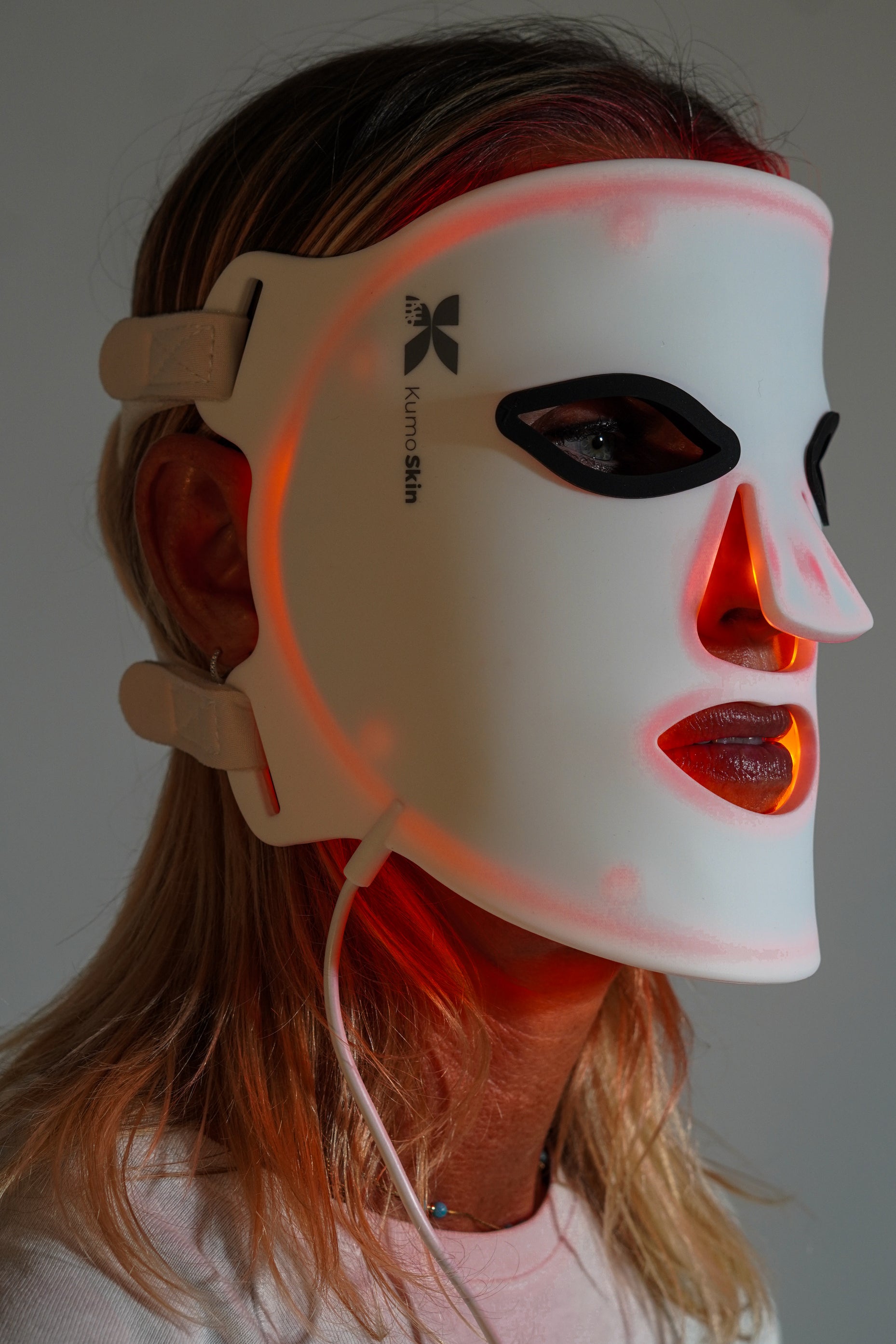
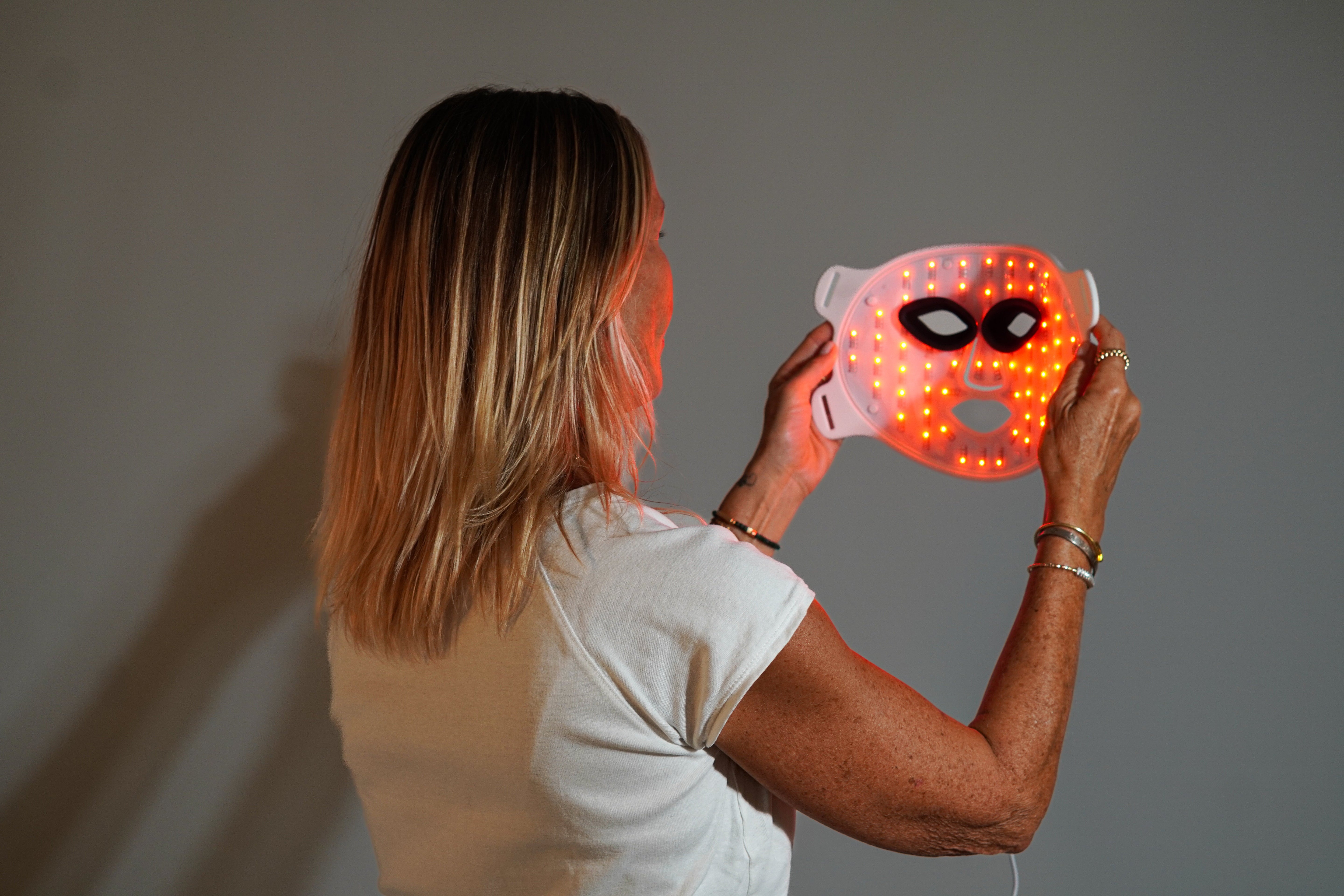
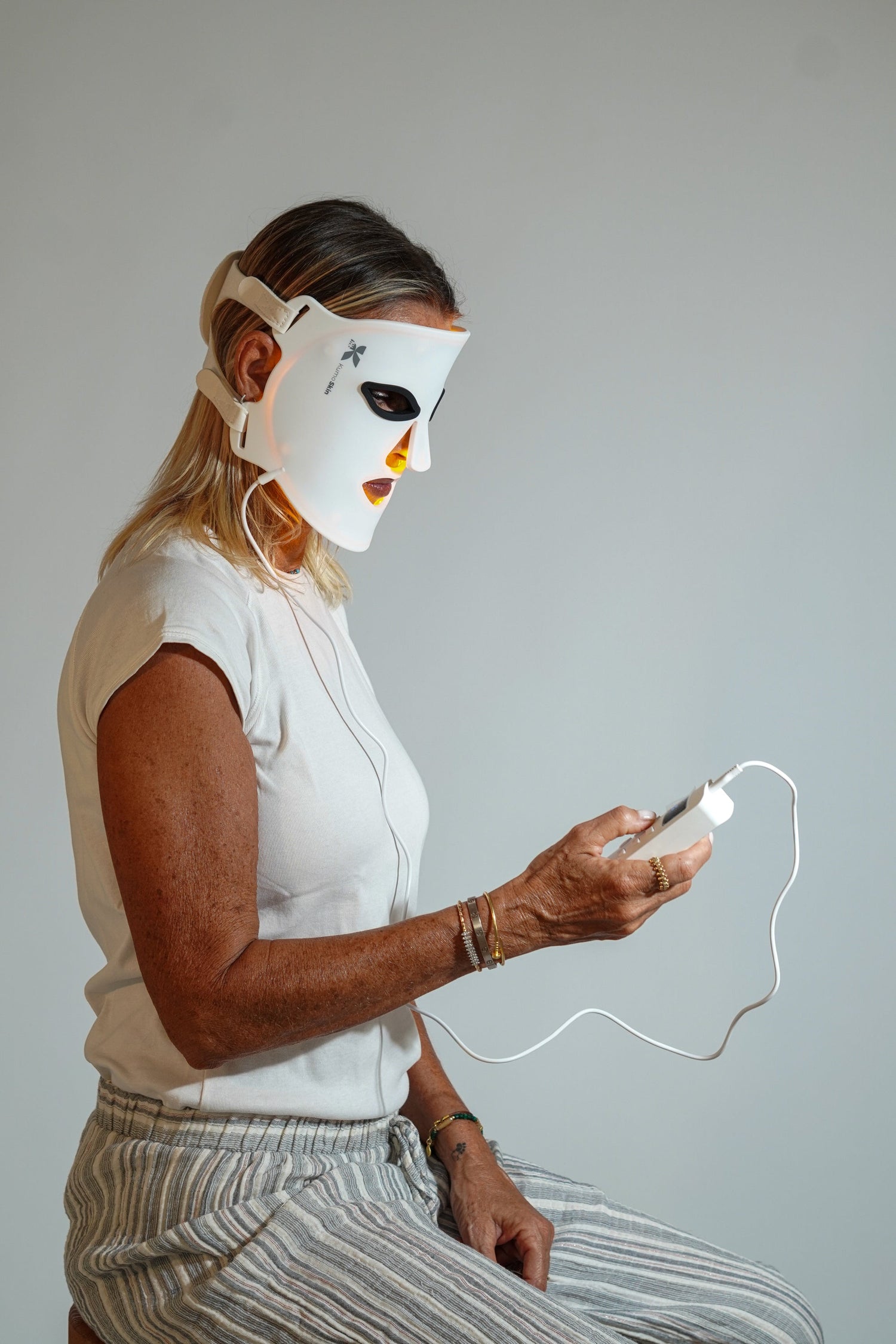
The KumoSkin LED mask helps repair and calm your skin in short sessions at home.
- 250 LEDs in flexible medical silicone
- Red light to boost collagen and glow
- 4 lights: red, infrared, blue and yellow
€299,00€429,00
−10% on your 1st order when you subscribe to the newsletter

Types of collagen most present in the skin
The skin is predominantly affected by:
- Type I collagen : provides mechanical resistance, it is the most abundant in the dermis.
- Type III collagen : thinner, associated with elasticity and the tissue repair phase.
Both form bundles of fibers that are organized as a "support tissue". When these fibers fragment or become less dense, the skin loses its structure and wrinkles, folds, and loss of contour appear.
Personalized protocol · included with your purchase
Want us to tell you how to use it in your case?
With your purchase, our experts prepare the ideal LED protocol for your skin type and goal (acne, wrinkles, dark spots...).
Message us on WhatsAppOur experts reply · no obligation
How facial collagen ages
Natural loss with age
From adulthood onward, collagen production in the skin begins to decline gradually. Classic studies in human skin show that dermal collagen content can decrease by about 1% per year throughout adulthood. ( pmc.ncbi.nlm.nih.gov ) This does not mean that the skin "collapses" suddenly, but rather that a noticeable structural loss accumulates each decade.
In addition to producing less collagen, the collagen that remains tends to be more fragmented and disorganized, reducing its ability to support the skin from within.
Factors that accelerate collagen degradation
Beyond the biological clock, several lifestyle factors damage or disrupt facial collagen:
on your first order when you join the newsletter
We send you the code instantly. No spam.
- Ultraviolet (UV) radiation : the sun fragments type I collagen fibers and alters the extracellular matrix, a phenomenon known as photoaging. ( michibinmedicine.org )
- Tobacco : promotes oxidative stress and vasoconstriction, reducing the supply of oxygen and nutrients to the skin.
- Pollution and blue light : generate free radicals that activate enzymes that degrade collagen (metalloproteinases).
- Excess sugars : glycation of proteins hardens and makes collagen fibers less functional.
- Lack of sleep, chronic stress and sedentary lifestyle : hinder nighttime tissue repair processes and worsen microcirculation.
Therefore, caring for facial collagen is not just a matter of cosmetics: it also involves protecting yourself from the sun and adopting habits that reduce inflammation and oxidative stress.
Main benefits of healthy facial collagen
Firmer skin with fewer wrinkles
A dense, well-organized collagen network acts as a "natural filler," keeping the skin firm and providing a gentle lifting effect. When this network degrades, the dermis thins and the following appear:
- Pronounced expression lines around the eyes and mouth.
- Deeper wrinkles on the forehead and between the eyebrows.
- Sagging skin on cheeks, facial oval and neck.
Many effective anti-wrinkle strategies (retinoids, laser, microneedling, red light) act precisely on the synthesis and organization of dermal collagen.
Texture, luminosity and a more uniform tone
Facial collagen also influences how light reflects on the skin's surface. A more compact dermal matrix:
- It makes the skin surface more even, smoothing the appearance of pores.
- It contributes to better microcirculation, which gives a more even tone and less dull appearance.
- It facilitates a better distribution of water in the dermis, supporting overall hydration.
That's why, when facial collagen is improved, many people notice not only fewer wrinkles, but also "juicier" and more luminous skin.
Myths and truths about facial collagen
Will any cream "with collagen" do?
Creams containing collagen can improve surface hydration and comfort, but topical collagen doesn't penetrate intact into the dermis: its molecule is too large to cross the skin barrier. That's why dermatologists often prioritize ingredients that stimulate the body's own collagen production (such as retinoids) over formulas that only include it as a marketing ploy. ( realsimple.com )
This does not mean they are useless, but their main effect is moisturizing, not "filling" wrinkles from within.
Drinkable collagen: what science says
In recent years, numerous clinical trials of oral collagen peptides have emerged. A 2023 systematic review analyzing 26 randomized trials (1,721 participants) found significant improvements in skin hydration and elasticity compared to placebo, although some heterogeneity and bias were observed across the studies. ( pubmed.ncbi.nlm.nih.gov )
Several independent trials with low molecular weight hydrolyzed collagen also show moderate wrinkle reduction and increased elasticity after 8–12 weeks of daily supplementation. ( unboundmedicine.com ) Even so, they are not miracle solutions and should be seen as a complement, not a substitute for sun protection and topical care.
How to effectively stimulate facial collagen
1. Daily sun protection: the foundation of everything
UV radiation is one of the main causes of type I collagen fragmentation and photoaging. ( michibinmedicine.org ) The American Academy of Dermatology recommends using a broad-spectrum sunscreen with SPF 30 or higher daily, reapplying it every two hours if there is prolonged exposure. ( aad.org )
A recent study in the Journal of the American Academy of Dermatology showed that almost 97% of dermatologists consider mineral sunscreen one of the most important products for preventing wrinkles, on par with retinoids. ( womenshealthmag.com ) In short: without consistent sun protection, any attempt to stimulate facial collagen is a long shot.
2. Retinoids and vitamin C: classics with plenty of evidence
Retinoids (vitamin A derivatives such as tretinoin or retinol) are among the best-studied active ingredients for reducing wrinkles. Scientific reviews indicate that they increase the production of type I collagen and decrease the activity of enzymes that degrade it, improving wrinkle depth after 3–6 months of regular use. ( health.harvard.edu )
Topical vitamin C is a potent antioxidant that helps neutralize free radicals and acts as a cofactor in collagen synthesis. Dermatological guidelines recommend effective concentrations (around 10–20%) in stable formulas, ideally in the morning, always accompanied by sunscreen. ( prevention.com )
When combined appropriately (for example, vitamin C in the morning and retinoids at night), they can be a solid foundation for any pro-collagen routine.
3. Red light therapy and LED masks
Red light therapy or photobiomodulation uses wavelengths in the red and near-infrared range (approximately 600–850 nm) to stimulate mitochondria and fibroblasts, the cells that produce collagen and elastin. ( aarp.org )
A controlled trial with 136 volunteers treated twice weekly with LED light between 611–650 nm or 570–850 nm for 30 sessions found significant improvements in intradermal collagen density, skin roughness, and wrinkles compared to the control group. ( pmc.ncbi.nlm.nih.gov ) Another study with 660 nm LEDs showed an increase of about 31% in type I procollagen and an 18% reduction in an enzyme that degrades it (MMP-1), as well as a decrease in wrinkle depth after 12 sessions. ( pubmed.ncbi.nlm.nih.gov )
Articles aimed at the general public emphasize that the evidence is promising but still limited by the small size of many studies and the lack of standardization of parameters (dose, wavelength, time). ( aarp.org ) That is why it is key to choose devices with clinical data and use parameters recommended by professionals.
In the KUMO universe, LED light therapy is integrated into masks and devices designed to promote skin regeneration and recovery, using wavelengths in the red and near-infrared ranges inspired by these studies. They are not a substitute for medical treatment, but can be an additional tool to support the skin's natural repair processes.
4. Lifestyle and recovery: sleep, movement, breathing
Facial collagen also responds to how we treat the rest of our body. Some key strategies:
- Restful sleep : During the night, the release of hormones involved in tissue repair increases.
- Regular exercise : improves microcirculation and the supply of oxygen and nutrients to the skin.
- A diet rich in quality protein, fruits and vegetables : provides amino acids (glycine, proline) and antioxidants necessary to synthesize collagen.
- Stress management : Excess cortisol can promote chronic inflammation and damage connective tissue.
Recovery technologies, such as pressotherapy or percussive massage, can help optimize circulation and muscle relaxation, creating a more favorable systemic environment for tissue repair, including the skin.
5. Medical treatments for facial collagen
When structural damage is significant, dermatologists resort to procedures that create controlled micro-lesions or intensely stimulate fibroblasts:
- Fractional lasers and radiofrequency : induce collagen remodeling through controlled heat.
- Microneedling : triggers a dermal repair response that increases collagen synthesis.
- Hyaluronic acid fillers : In addition to providing immediate volume, recent studies have observed that they can improve collagen organization in photo-aged skin. ( michibinmedicine.org )
These procedures should always be assessed and performed by qualified professionals, who adjust the plan to the specific needs of each skin type.
Comparative table of strategies for caring for facial collagen
| Strategy | Main mechanism | Level of evidence | Indicative frequency | Approximate investment |
|---|---|---|---|---|
| Daily sun protection | It prevents the degradation and fragmentation of collagen by UV radiation. | Very high (international dermatological guidelines). | Every day, all year round. | Low-medium (depending on the product and reapplication). |
| Topical retinoids | They increase collagen synthesis and reduce enzymes that degrade it. | Very high (decades of clinical studies).( pmc.ncbi.nlm.nih.gov ) | Alternate nights at first; then continuous use. | Media (dermocosmetics or prescription). |
| Serum Vitamin C | Antioxidant, cofactor in collagen production. | High (trials and expert consensus). ( prevention.com ) | Every morning, under sunscreen. | Average. |
| Red light therapy (LED) | It stimulates mitochondria and fibroblasts, increasing dermal collagen. | Moderate-high (promising controlled trials).( pmc.ncbi.nlm.nih.gov ) | 1–3 times per week for several weeks; then maintenance. | Variable (devices at home vs. consultation). |
| Healthy lifestyle | Reduces oxidative stress and provides systemic support for tissue repair. | High (multiple studies on skin aging). | Daily (sleep, exercise, diet, not smoking). | Low-medium. |
| Medical procedures (laser, microneedling, fillers) | They remodel the dermis and improve collagen architecture. | Clearance for well-selected indications. ( michibinmedicine.org ) | Series of sessions + maintenance according to medical criteria. | Discharge (specialized medical procedures). |
Facial collagen, performance and recovery: the KUMO approach
Collagen is not only key to the skin's appearance, but also to the integrity of tendons, ligaments, and muscles. In this sense, KUMO 's philosophy unites aesthetics, technology, and performance: by optimizing the body's overall recovery , a more favorable physiological environment is created for tissues—including facial skin—to repair themselves efficiently.
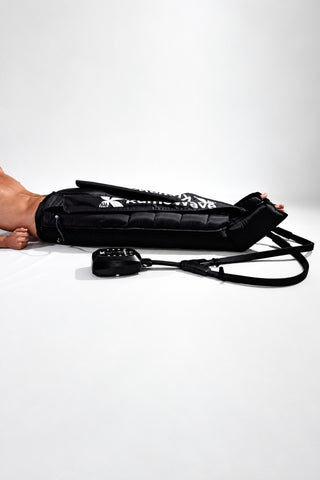
Compression boots help activate circulation and drainage in the legs, which can contribute to better overall oxygenation. Massage guns promote deep muscle relaxation, reducing tension and accumulated stress. Combined with LED light therapy aimed at skin regeneration, they form an ecosystem of tools to make recovery a way of life.
Frequently asked questions about facial collagen
At what age does facial collagen begin to decline?
Studies in human skin indicate that dermal collagen content begins to decline noticeably from adulthood onward, and that this loss remains relatively constant (approximately 1% per year throughout adulthood). ( pmc.ncbi.nlm.nih.gov ) In practice, many people begin to notice visible changes in firmness and texture from age 30–35, especially if they have had significant unprotected sun exposure. However, the rate of loss varies depending on genetics, lifestyle, and sun protection, so it is advisable to start pro-collagen habits (sunscreen, antioxidants, gentle retinoids) in your thirties.
Do collagen supplements really work for facial skin?
Scientific evidence on oral collagen has advanced in recent years. A 2023 systematic review analyzing 26 controlled trials found that supplementation with hydrolyzed collagen significantly improved skin hydration and elasticity compared to placebo, although with some variability and risk of bias across studies. ( pubmed.ncbi.nlm.nih.gov ) Individual trials with low-molecular-weight collagen peptides also showed moderate wrinkle reduction and improved barrier function after 8–12 weeks of continuous use. ( unboundmedicine.com ) Even so, its effect is complementary: it does not replace sun protection or well-designed topical treatments.
Which dermatological treatments are most effective for restoring facial collagen?
Among the most scientifically supported treatments are prescription retinoids (such as tretinoin), which increase the production of type I collagen and reduce its degradation, with clinical improvements in wrinkles within 3–6 months. ( pmc.ncbi.nlm.nih.gov ) Fractional lasers , radiofrequency , and microneedling are also noteworthy, as they induce controlled remodeling of the dermis. Hyaluronic acid fillers can also improve collagen architecture in photoaged skin, in addition to adding volume. ( michibinmedicine.org ) The choice depends on the degree of damage, skin tone, and acceptable recovery time, and should therefore be individualized with a dermatologist.
Is at-home LED light therapy safe for stimulating collagen?
Studies using red and near-infrared LED light devices have shown increases in collagen density and improvements in fine wrinkles and texture after several weeks of treatment, with a generally very good safety profile when appropriate parameters are used. ( pmc.ncbi.nlm.nih.gov ) Expert articles clarify, however, that many trials are small and that not all devices on the market use the same wavelengths or energies, so results may vary. ( aarp.org ) It is important to follow the manufacturer's instructions, protect your eyes, and, if you have any doubts or skin conditions, consult a dermatologist beforehand.
How long does it take to notice an increase in collagen in the face?
Collagen remodels slowly, so results are never immediate. With topical retinoids, visible improvements in wrinkles and texture are usually seen within 3 to 6 months, with optimal results around 6–12 months of continued use. ( health.harvard.edu ) In red LED light studies, typical protocols involve 2–3 sessions per week for 10–15 weeks before assessing changes in collagen density and skin roughness. ( pmc.ncbi.nlm.nih.gov ) The most effective approach is to combine several strategies (sun protection, topical actives, and technologies such as LED) and maintain them over time, recognizing that prevention is as important as correction.
So what now?
If you want to improve or protect your facial collagen, the first step is to ensure a solid foundation: daily sun protection, a well-designed topical routine, and recovery habits that promote overall body repair. From there, you can consider integrating supporting technologies such as KUMO LED light therapy , pressotherapy, or percussive massage into a wellness and performance plan. To resolve specific questions about which of these solutions best suits you, you can contact the team through the KUMO contact page or consult your trusted dermatologist.

Facial red light
KumoSkin Mask – LED Facial Mask
★★★★★ 4,8/5 · rated by verified customers
- 250 LEDs in flexible medical silicone
- Red light to boost collagen and glow
- 4 lights: red, infrared, blue and yellow
€299,00€429,00· pay in installments with seQura or Klarna