Edematous cellulite can indeed be improved.
This is a presentation where the skin appears dimpled, padded, and feels heavy because the fluid retention and altered microcirculation components are more dominant. Cellulite is very common, benign, and more visible in women; recent literature also links it to edema and changes in subcutaneous tissue. If you want to better understand your case, you can start with this guide on types of cellulite and how to recognize yours or see how it fits into a wellness routine with Kumo Balance's at-home recovery technology. (mayoclinic.org)
Pressotherapy at home
End the day with light legs
★★★★★ 4,8/5 · rated by verified customers
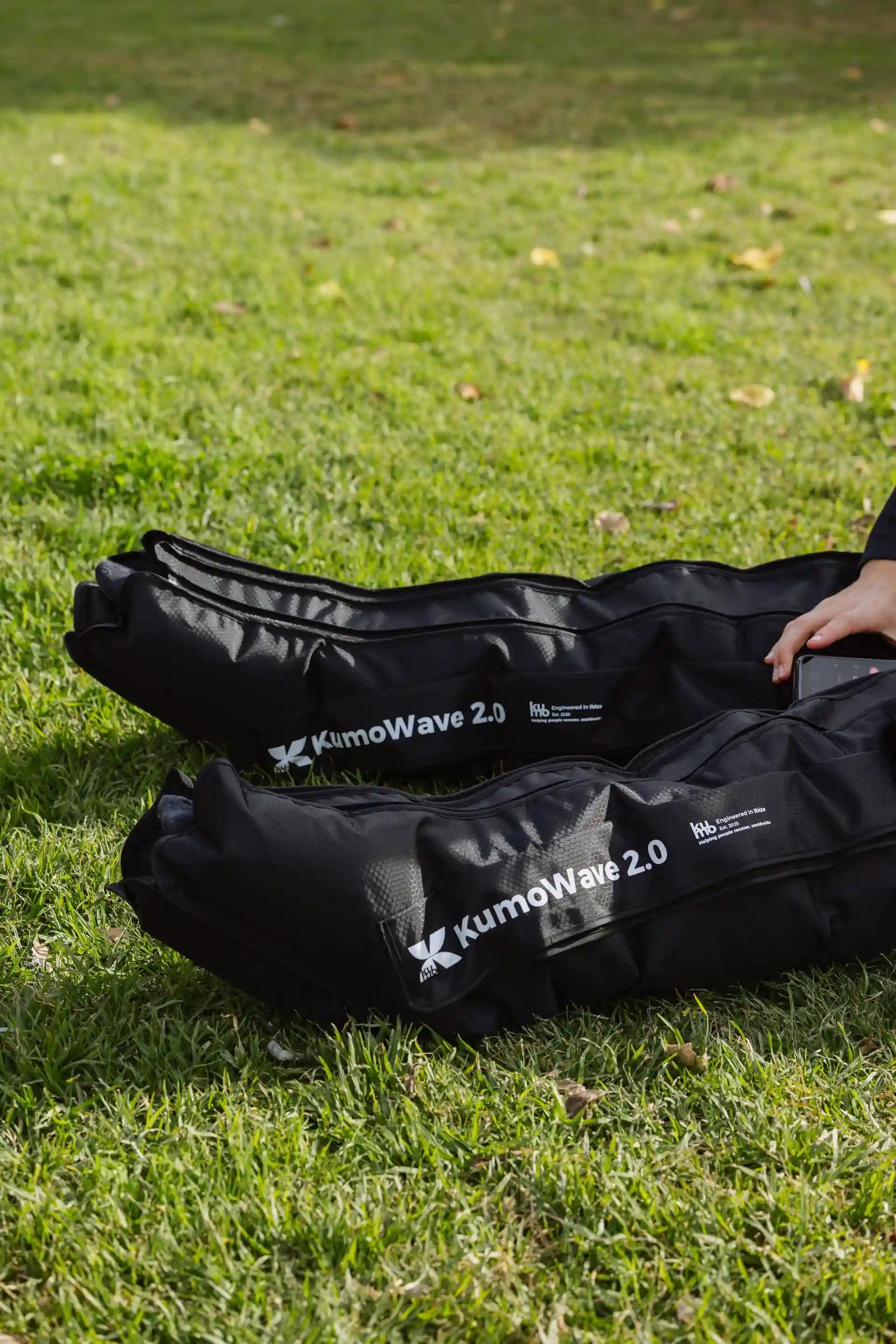
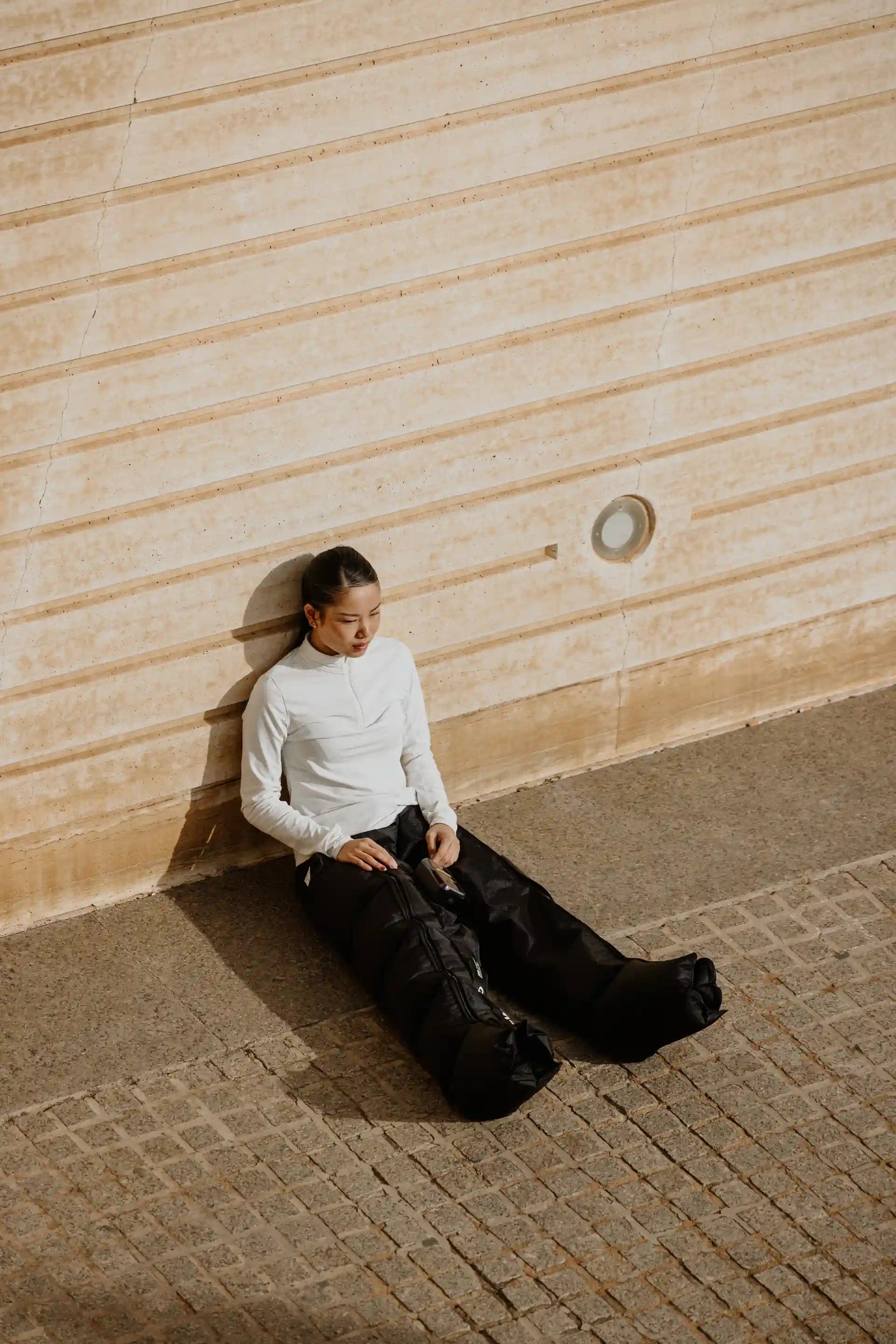
KumoWave pressotherapy boosts circulation and helps drain fluid with sequential compression, in 20-minute sessions at home.
- Boosts circulation and helps drain fluid
- Chamber-based compression, adjustable to you
- Sequential compression that mimics manual drainage
€799,00€999,00
−10% on your 1st order when you subscribe to the newsletter

Important: it should not be confused with infectious cellulitis of the skin, which usually causes redness, heat, pain, and fever, and requires medical evaluation. (nhs.uk)
What exactly is edematous cellulite?
In aesthetic practice, cellulite is usually described by its consistency and the weight of the edema. A 2023 review categorizes it into hard, flaccid, oedematous, and mixed forms, which helps to understand why some skin looks softer and more changeable, and others more compact. The edematous form often fluctuates more throughout the day, worsens with heat, excess salt, or many hours of standing, and can cause a clear feeling of heavy legs. (aestheticcosmetology.com)
Personalized protocol · included with your purchase
Want us to tell you how to use it in your case?
With your purchase, our experts prepare a personalized usage protocol for your case: sport, circulation, fluid retention, pregnancy or lipedema.
Message us on WhatsAppOur experts reply · no obligation
It is also worth remembering that cellulite is not simply "fat." The AAD notes that removing fat does not always change cellulite, and Mayo reminds us that even thin people can have it. In other words, its origin mixes tissue structure, age, hormones, genetics, and fluid retention. (aad.org)
Why it appears
- Genetics and hormones. Mayo indicates that skin structure and fat distribution type greatly influence it, and that cellulite is especially common in women after puberty. (mayoclinic.org)
- Microcirculation and edema. Harvard explains that leg swelling is often due to abnormal fluid accumulation and that salt, heat, alcohol, or prolonged standing can worsen it. (health.harvard.edu)
- Reduced muscle tone. The AAD reminds us that having more muscle makes the skin look firmer and smoother, so exercise helps make cellulite less visible. (aad.org)
- Age and elasticity changes. Over time, the skin loses firmness, and the texture becomes more noticeable. Weight gain can accentuate it, but does not explain all cases. (mayoclinic.org)
How to differentiate it from fibrous cellulite and lipedema
If the texture confuses you, consider three clues: the edematous form changes more throughout the day, the fibrous form usually feels firmer and less mobile, and lipedema tends to be bilateral, painful, with relatively unaffected feet. To delve deeper into the more compact texture, you can review the guide on fibrous cellulite; to compare it with a pathology often confused with cellulite, the lipedema guide is very useful. (topics.consensus.app)
Quick guide table
| Trait | Edematous Cellulite | Fibrous or Compact Cellulite | Lipedema |
|---|---|---|---|
| Texture | More swollen, padded, and variable throughout the day. (health.harvard.edu) | Firmer and less mobile when pinched. (topics.consensus.app) | Leg disproportion, pain, and often less affected feet. (nhs.uk) |
| What worsens it | Heat, salt, alcohol, and prolonged standing. (health.harvard.edu) | Can coexist with edema, but the texture is usually more fixed. (aestheticcosmetology.com) | Often requires medical evaluation to confirm diagnosis and rule out other conditions. (nhs.uk) |
Which treatments offer the best balance between efficacy and realism?
The most sensible strategy is to combine edema control, improved muscle tone, and, if you're looking for a greater aesthetic change, medical procedures with partial but real evidence. Results usually improve appearance, not erase it forever. (aad.org)
−10%on your first order when you join the newsletter
We send you the code instantly. No spam.
Table of treatments and what you can expect
| Approach | What it can provide | Main limitation |
|---|---|---|
| Exercise and strength training | More muscle can smooth the skin and make cellulite less visible. (aad.org) | Works best as a consistent foundation rather than an isolated solution. (aad.org) |
| Compression, elevation, and sodium control | Helps when the edema component is significant. (health.harvard.edu) | Reduces heaviness, but does not "erase" cellulite. (health.harvard.edu) |
| Creams with caffeine or retinol | Can modestly smooth if used daily. (aad.org) | The change is usually subtle and requires consistency. (aad.org) |
| Acoustic wave, radiofrequency, and laser | Studies show they can reduce appearance and temporarily improve texture. (aad.org) | Often require multiple sessions and results are not always long-lasting. (aad.org) |
| Subcision and vacuum-assisted release | Acts on fibrous bands and can offer more lasting results. (aad.org) | Must be performed by a professional and is still a medical procedure. (aad.org) |
| Massage and drainage | Can be useful for the feeling of heaviness when edema is present. (nhs.uk) | Aesthetic improvements are often variable and, in many cases, temporary. (aad.org) |
A 2023 clinical review in PubMed summarizes that advanced interventions with the most promise include physical or acoustic subcision, radiofrequency, and injectable biostimulators. The AAD adds that acoustic wave, subcision, and vacuum-assisted release are among the options with the best visible results in studies, although the benefit may be partial. (pubmed.ncbi.nlm.nih.gov)
If you want to compare manual and compression approaches, this analysis of anti-cellulite massage vs. pressotherapy can help you decide what best suits your goal. (nhs.uk)
At-home routine for an edematous component
When edema causes heaviness, the daily routine matters more than it seems. Harvard insists that walking, ankle movements, leg elevation, and sodium reduction can relieve swelling, while the NHS includes compression, exercise, and skin care as the basis for managing edema and lymphedema. (health.harvard.edu)
- Move frequently. Interrupting long periods of standing or sitting helps prevent venous return from stagnating. Walking, swimming, or cycling are useful options. (health.harvard.edu)
- Watch your salt intake. Less sodium means less tendency to retain water. (health.harvard.edu)
- Elevate your legs. Resting with your legs above your heart can reduce the feeling of heaviness. (health.harvard.edu)
- Use compression when appropriate. Compression is a common tool in the control of edema and lipedema; if you suspect the latter, the NHS recommends medical evaluation. (nhs.uk)
- Hydrate and protect your skin. Maintaining a healthy skin barrier helps prevent cracks, irritation, and infections. (health.harvard.edu)
If you want a more applied roadmap, you can use this complete at-home anti-cellulite routine as a starting point. (health.harvard.edu)
In cases of suspected lipedema, the NHS recommends exercise, healthy weight, and compression as part of conservative management, and a 2025 systematic review in women with lipedema places the non-surgical approach precisely around lifestyle modifications, compression, and manual drainage. (nhs.uk)
When to seek medical help
- If swelling appears in only one leg. Asymmetry is a warning sign because it can indicate infection, thrombus, or injury. (health.harvard.edu)
- If the change is sudden. Sudden inflammation warrants review. (health.harvard.edu)
- If there is redness, heat, pain, or fever. This could be infectious cellulitis and not aesthetic cellulite. (nhs.uk)
- If you experience shortness of breath or chest pain. Seek urgent care. (health.harvard.edu)
- If swelling does not improve within a few days. The NHS recommends evaluation when legs, ankles, or feet remain swollen after several days. (nhs.uk)
FAQ
What is edematous cellulite and why does fluid retention occur in the legs?
Edematous cellulite is the variant in which edema, heaviness, and microcirculation changes are more prominent than in other types. Fluid tends to accumulate in the lower parts of the body due to gravity, and this is more noticeable with excess salt, heat, alcohol, or prolonged standing. It is not an infection, but it is a sign that it is advisable to mind habits and, if swelling is significant, rule out medical causes. (pmc.ncbi.nlm.nih.gov)
How to distinguish edematous cellulite from fibrous cellulite and what are the clinical signs of each?
The edematous form usually changes more throughout the day, is associated with a feeling of heavy legs, and improves when retention decreases. The fibrous or compact form usually feels firmer, less mobile when pinched, and has a more fixed texture. If there is also symmetrical leg swelling, pain, and relatively unaffected feet, the condition is more similar to lipedema than to simple cellulite. To avoid confusion, pay attention to texture, symmetry, and how it evolves throughout the day. (topics.consensus.app)
Which treatments, including aesthetic approaches and physical therapies, have proven most effective for edematous cellulite?
The options with the most evidence-based support are acoustic wave, radiofrequency, subcision, and vacuum-assisted release, because they act on the fibrous bands that mark the skin. When there is a lot of edema, compression, movement, and drainage also help reduce heaviness. Still, most results are partial and require several sessions or continuity. The most realistic approach is to aim for visible improvement, not total and permanent elimination. (aad.org)
What exercises, diets, and lifestyle habits help improve circulation and reduce edema in edematous cellulite?
Walking, swimming, cycling, and strength training help muscles better pump blood and lymph; this can make the skin appear firmer. Regarding diet, reducing sodium, avoiding excessive alcohol, and maintaining a healthy weight can reduce fluid retention. Active breaks if you spend many hours sitting or standing, as well as elevating your legs and taking care of skin hydration, also help. The goal is to improve circulation and make edema less visible. (aad.org)
What are the warning signs that require urgent medical attention if I have edematous cellulite?
Seek urgent help if swelling appears suddenly, affects only one leg, is accompanied by redness, heat, pain, or fever, or if you also notice shortness of breath or chest pain. These signs no longer fit with simple aesthetic cellulite and may indicate infection, thrombus, or another medical cause. If the swelling does not improve within a few days, it is also advisable to have it evaluated. It's better to be safe than sorry and overlook a significant problem. (health.harvard.edu)
What next?
If you want to move from theory to practice, start with the complete at-home anti-cellulite routine and, if you're interested in adding sequential compression as wellness support, explore at-home pressotherapy with KumoWave. The goal is simple: less heaviness, better circulation, and skin that looks and feels more cared for. (health.harvard.edu)
KumoWave pressotherapy
Choose your at-home pressotherapy
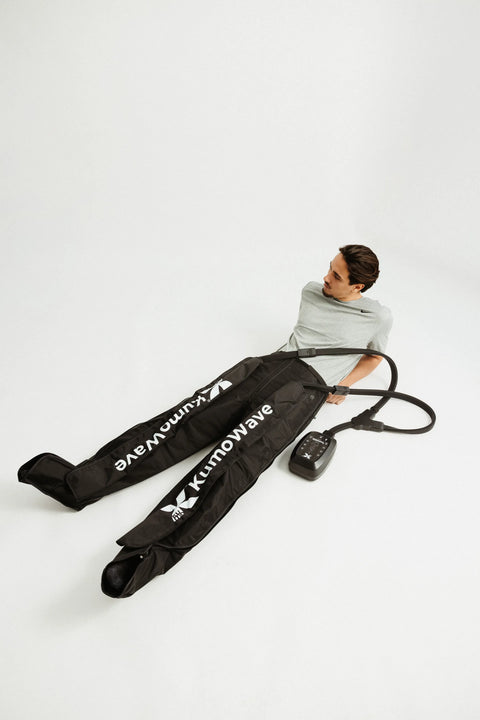
KumoWave Elite – Pressotherapy Pants
Full-coverage trousers. Ideal for lipedema, fluid retention and intensive use.
€799,00 €999,00
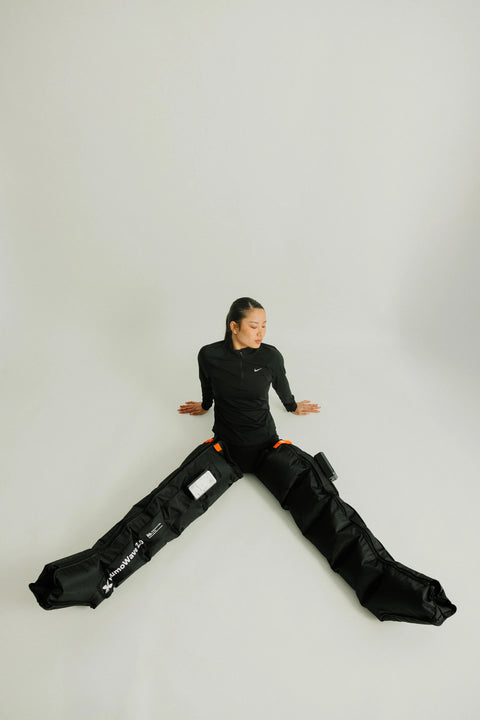
KumoWave 2.0 - Wireless Pressotherapy
Wireless, lightweight boots. Perfect for daily use and recovery.
€499,00 €599,00