The lymphatic system and your legs: why it matters
Pressotherapy boots can be great allies for your lymphatic system.
The lymphatic system is a network of vessels and nodes that collects excess fluid and waste products from the tissues and returns them to the bloodstream. It also plays a key role in the immune response. When this system becomes overloaded or damaged, swelling (edema), a feeling of heaviness, and, in more advanced cases, chronic lymphedema can occur.
Pressotherapy at home
End the day with light legs
★★★★★ 4,8/5 · rated by verified customers
KumoWave pressotherapy boosts circulation and helps drain fluid with sequential compression, in 20-minute sessions at home.
- Boosts circulation and helps drain fluid
- Chamber-based compression, adjustable to you
- Sequential compression that mimics manual drainage
€799,00€999,00
−10% on your 1st order when you subscribe to the newsletter

Various international estimates indicate that between 140 and 250 million people live with lymphedema worldwide, making it a genuine public health problem. ( lympheo.com ) This burden is often concentrated in the lower limbs, precisely where pneumatic compression boots act.
In this context, it's no coincidence that recovery technologies like pressotherapy are increasingly being integrated into programs for prevention, edema management, and athletic performance. At KUMO , this vision translates into bringing professional-grade technologies to the home environment, always with a responsible and evidence-based approach.
Personalized protocol · included with your purchase
Want us to tell you how to use it in your case?
With your purchase, our experts prepare a personalized usage protocol for your case: sport, circulation, fluid retention, pregnancy or lipedema.
Message us on WhatsAppOur experts reply · no obligation
What exactly are pressotherapy boots?
From medical compression to domestic boots
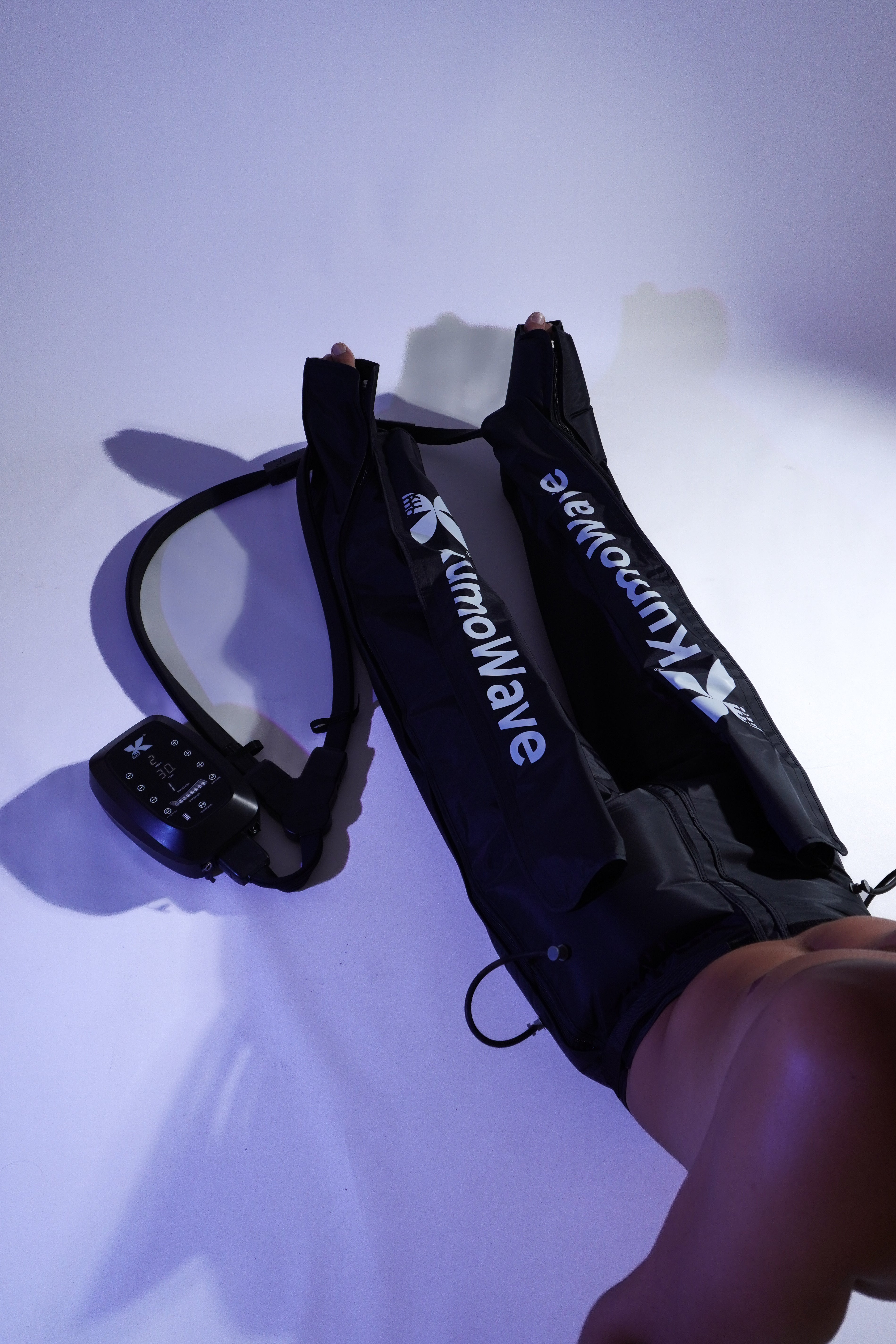
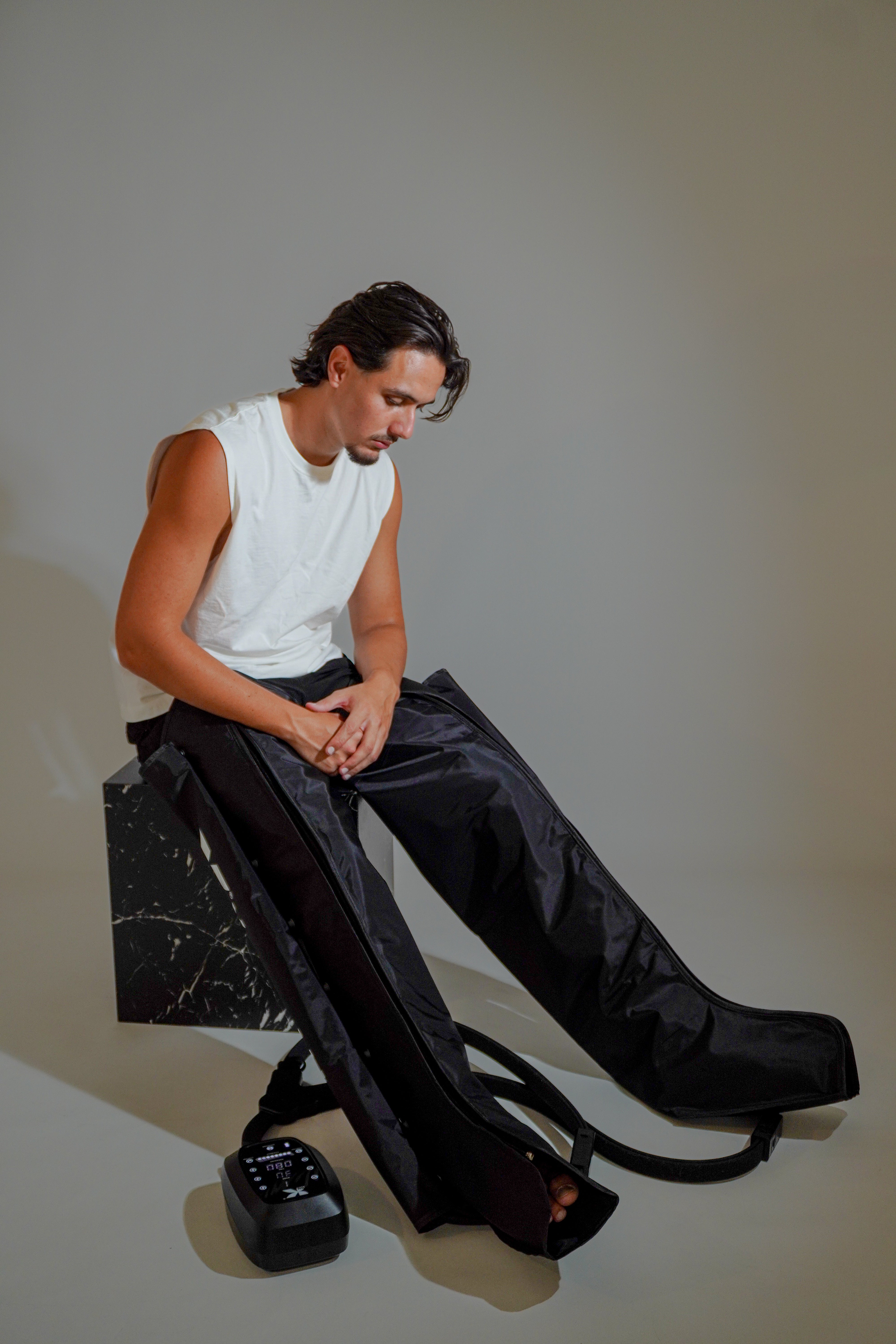
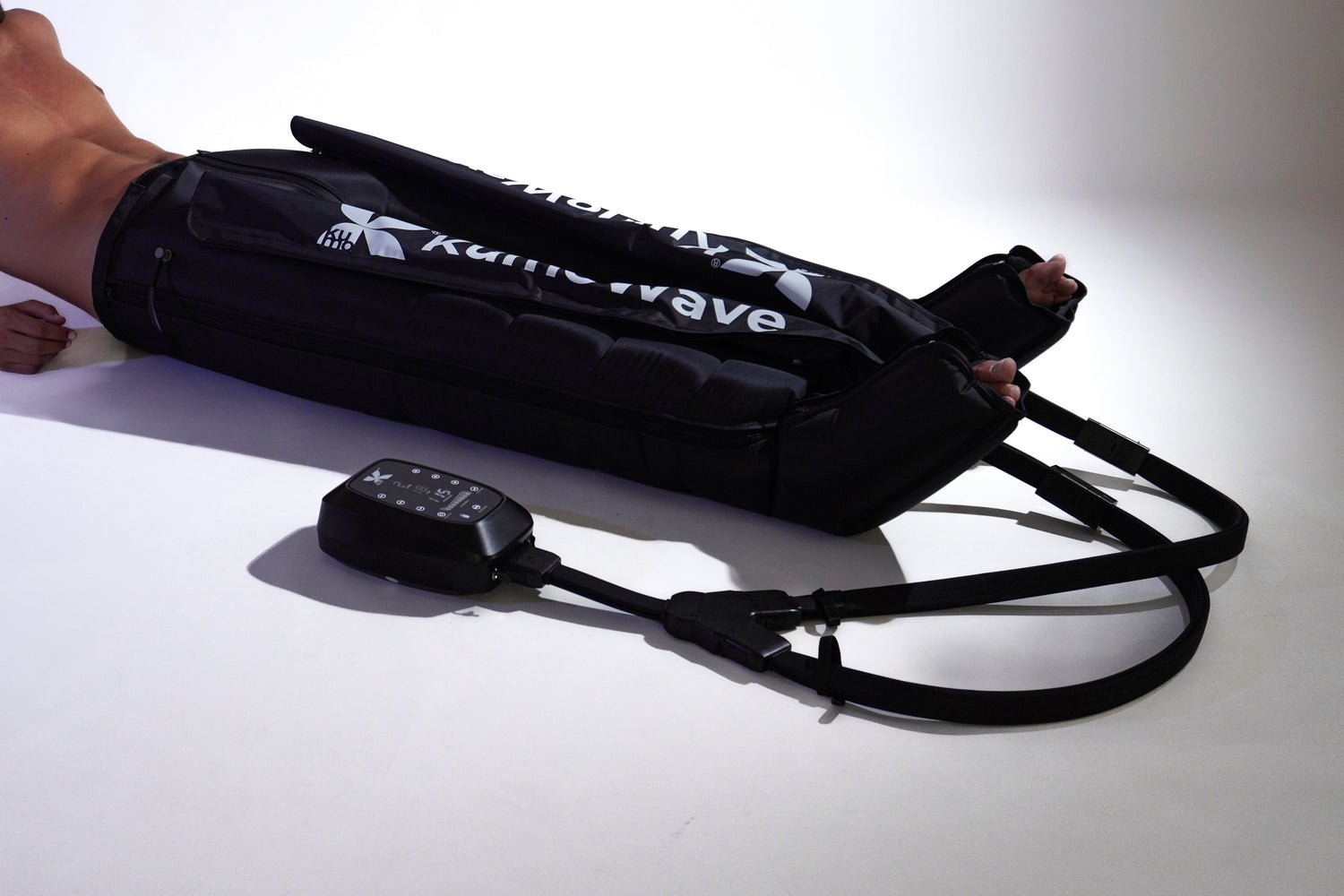
Compression boots are intermittent pneumatic compression (IPC) devices. They consist of one or more air chambers that surround the legs (and sometimes hips or feet). A compressor fills and empties these chambers in rhythmic cycles, applying controlled pressure from the foot to the thigh.
In the hospital setting, CPI has been used for decades to improve venous return, reduce the risk of deep vein thrombosis, and help manage complex edema. ( en.wikipedia.org ) Modern home versions use lower pressures and gentle sequential programs, designed for regular, self-managed sessions.
How they act on venous and lymphatic return
The logic is simple but powerful:
on your first order when you join the newsletter
We send you the code instantly. No spam.
- The distal chamber (near the foot) swells, compressing soft tissues and vessels.
- This pressure pushes blood and lymph towards more proximal segments (towards the groin).
- The chambers deflate and the cycle repeats, mimicking the muscle pumping action of walking.
Imaging studies using lymphography and fluorescence techniques have shown that this type of sequential compression can promote the formation of "fluid channels" in the tissue, facilitating the drainage of fluid accumulated in lymphedema of the lower limbs. ( pubmed.ncbi.nlm.nih.gov ) It is not about creating new lymphatic vessels, but about mechanically helping to mobilize fluid that would otherwise remain stagnant.
Potential benefits of compression boots for the lymphatic system
Relief from tired and swollen legs
Those who spend many hours standing or sitting often describe heavy legs, ankles marked by socks, and a feeling of tightness at the end of the day. This type of mild edema usually improves with leg elevation, movement, and, in many people, with regular sessions of gentle pneumatic compression.
In patients with lower limb lymphedema, an observational study with more than one year of follow-up showed that the use of pneumatic compression several times a week reduced ankle and calf circumference and decreased episodes of cellulitis and ulcers, with high subjective satisfaction. ( pubmed.ncbi.nlm.nih.gov ) Although these data come from a clinical context, they illustrate the potential of this technology to improve symptoms associated with lymphatic stasis.
Support in the management of lymphedema (always under medical supervision)
In established lymphedema, the standard treatment is comprehensive decongestive therapy (CDT), which combines compression bandages or garments, manual lymphatic drainage, exercise, and skin care. ( pubmed.ncbi.nlm.nih.gov ) Recent guidelines and consensus statements position intermittent pneumatic compression as a complementary therapy , especially useful in people with reduced mobility or difficulty maintaining the maintenance program. ( pubmed.ncbi.nlm.nih.gov )
It is important to understand that compression therapy boots:
- They do not cure lymphedema.
- They should be integrated into a comprehensive plan designed by a lymphology specialist or expert physiotherapist.
- They require prior evaluation to rule out contraindications (e.g., severe arterial disease or advanced heart failure).
In moderate-to-severe lymphedema, various expert panels recommend sequential pneumatic compression as an additional aid to control volume and symptoms, always with individualized parameters. ( provider.bcbssc.com )
Muscle recovery and athletic performance
In the sports world, compression boots have become popular among athletes seeking to accelerate recovery between intense training sessions. Although scientific evidence is more abundant regarding clinical edema than athletic performance, the mechanism—improving venous return and metabolite clearance—is the same.
Most available studies indicate improvements in subjective sensations (less heaviness, less post-exertion pain) and in some volume parameters, but the effects on objective performance (times, power) are more heterogeneous. This reinforces the idea of viewing pressotherapy as one component within a comprehensive recovery strategy that includes sleep, nutrition, and active movement.
Table of common uses and sensations
| Main objective | How can pressotherapy help? | Key precautions |
|---|---|---|
| Heavy legs due to sedentary or standing work | Improved venous and lymphatic return, reduced feeling of bloating at the end of the day. | Use low-medium pressures and combine with active breaks and leg elevation. |
| Recovery after intense training | It promotes the drainage of metabolites and muscle relaxation, improving post-exertion comfort. | It does not replace active cooling or adequate sleep; avoid excessive pressure. |
| Lymphedema of lower limbs (under medical supervision) | It complements decongestive therapy, helping to maintain or reduce limb volume. ( pubmed.ncbi.nlm.nih.gov ) | Always with professional guidance, individual adjustment of pressure and duration, and monitoring of the skin. |
| Chronic venous edema | They can be used as part of an approach to severe venous insufficiency, improving symptoms and ulcer healing in some cases. ( pubmed.ncbi.nlm.nih.gov ) | Requires prior vascular assessment and clinical follow-up; do not use on ulcers without medical supervision. |
| General well-being and relaxation | The sensation of rhythmic massage promotes relaxation and the perception of "light" legs. | Do not use as a substitute for medical evaluation when persistent symptoms or pain are present. |
How to incorporate compression therapy boots into your routine
Before you begin: when to consult a professional
Although modern compression boots are designed to be safe, compression is not suitable for everyone. An international consensus on the risks and contraindications of medical compression states that it should be avoided in cases of: severe peripheral arterial disease, advanced heart failure (NYHA IV), allergy to the material, severe diabetic neuropathy, and situations with a high risk of skin injury. ( phlebolymphology.org )
Furthermore, various policies and clinical guidelines advise caution or contraindicate pneumatic compression in the presence of:
- Edema due to decompensated heart failure.
- Deep vein thrombosis or active thromboembolism.
- Local infections (cellulitis, phlebitis) or poorly controlled open wounds. (medpolicy.ibx.com)
If you have a history of cardiovascular disease, diabetes with complications, recent vascular surgery, or a diagnosed lymphedema, the recommendation is clear: consult your doctor or a specialized physiotherapist first .
Indicative duration, pressure and frequency
There is still no absolute consensus on the “perfect dose” of pressotherapy, but a systematic review of 16 studies on lymphedema suggests that many effective protocols use:
- Sessions of 45–60 minutes .
- Pressures between 30 and 60 mmHg in sequential programs.
- Several days a week, for weeks or months. ( pubmed.ncbi.nlm.nih.gov )
For an active person without known vascular pathologies, some professionals recommend starting with:
- 20–30 minutes per session, 2–3 times per week.
- Low-medium pressure, increasing only if it feels comfortable.
- Always respecting the device manufacturer's instructions.
In lymphedema or other pathologies, the frequency and parameters must be individualized by the specialist, within the framework of complete decongestive therapy.
Combining pressotherapy with other recovery tools
The health of the lymphatic system depends on more than just compression. Guidelines on comprehensive decongestive therapy emphasize the importance of combining compression, active movement, manual techniques, skin care, education, and self-care . ( pubmed.ncbi.nlm.nih.gov )
In a wellness routine, it can make sense to combine:
- Pneumatic compression therapy after training or at the end of the day to relieve leg fatigue, for example with new generation compression therapy boots such as those in the specific range from KUMO .
- Gentle movement (walking, joint mobility) before or after the session to activate the “muscle pump”.
- Light technologies for muscle recovery and skin care, such as red and near-infrared spectrum LED light therapy , which some studies associate with better tissue repair and less post-exercise muscle soreness (evidence is still emerging).
- Myofascial work on specific muscle groups with a percussion massage gun , which complements but does not replace lymphatic drainage.
- Adequate hydration and restful sleep are essential for the overall recovery of the body.
The key is to see each tool as a partial support, not a complete solution. A good recovery plan feels sustainable over time and adapts to your individual needs.
Safety, contraindications and common mistakes
Who should not use compression therapy boots without supervision
In general, it is recommended to avoid the autonomous use (without prior professional assessment) of compression boots in the following situations:
- Severe peripheral arterial disease (critical ischemia, very low ankle-brachial index). ( phlebolymphology.org )
- Advanced or decompensated heart failure.
- Recent deep vein thrombosis or pulmonary embolism.
- Active skin infections, cellulitis, or uncontrolled wounds. (medpolicy.ibx.com)
- Severe diabetic neuropathy with loss of sensation in feet and legs.
- Intense or unexplained pain in the limb.
- High-risk pregnancy, unless explicitly indicated by the medical team.
In all these cases, any type of compression should be assessed and monitored within a healthcare setting.
Warning signs during a session
Stop the session and consult a healthcare professional if you notice the following during or after using the boots:
- Sharp, stabbing, or rapidly worsening pain.
- Intense numbness, persistent tingling, or loss of sensation.
- Marked redness, extreme paleness or bluish coloration of the fingers.
- Difficulty breathing, chest tightness, or severe dizziness.
- Appearance of blisters, wounds or worsening of the skin condition.
Although serious complications are rare when compression is indicated and applied correctly, monitoring sensations and skin is essential to maintain a high safety profile. ( phlebolymphology.org )
Common mistakes that reduce its effectiveness
Some common mistakes worth avoiding:
- Choosing an inappropriate size , which creates creases, pressure points, or areas without effective contact.
- Using excessive pressure "because it feels stronger" can be counterproductive and increase the risk of discomfort or injury. ( pubmed.ncbi.nlm.nih.gov )
- Being very irregular : an isolated session has less impact than consistent use integrated into the week.
- Entrusting everything to the machine and neglecting basic factors such as daily movement, body weight, or skin care.
- Ignoring persistent symptoms (pain, progressive increase in volume, changes in color), which always warrant medical evaluation.
Frequently asked questions about compression boots and the lymphatic system
How many times a week can I use compression boots for lymphedema?
Clinical studies on lymphedema have frequently used 45–60 minute sessions several days a week, often 5 days a week during intensive phases, and then less frequently for maintenance. ( pubmed.ncbi.nlm.nih.gov ) However, the optimal schedule depends on the stage of lymphedema, whether you wear compression bandages or stockings, and any other medical conditions you may have. Therefore, it is recommended that your doctor or lymphatic therapist determine the frequency as part of a comprehensive decongestive therapy program. Avoid increasing the "dose" on your own without supervision.
Do compression boots replace manual lymphatic drainage?
No. Manual lymphatic drainage (MLD), along with compression, exercise, and skin care, is part of comprehensive decongestive therapy, which remains the gold standard for lymphedema management. ( pubmed.ncbi.nlm.nih.gov ) Intermittent pneumatic compression is considered a complementary tool that can help maintain or enhance results, especially in patients with reduced mobility. In some studies, adding compression boots to MLD has not shown clear advantages in terms of volume reduction, while in others, symptomatic benefits have been observed. ( ncbi.nlm.nih.gov ) Ideally, a practitioner should combine both techniques based on your individual needs.
What pressure is recommended for compression therapy boots?
Most research protocols and expert recommendations use pressures between 30 and 60 mmHg in sequential programs for limb lymphedema. ( pubmed.ncbi.nlm.nih.gov ) Very high pressures, especially above 80–100 mmHg, can increase the risk of discomfort, worsening of proximal edema, or tissue damage, and are therefore not recommended for home use without specific medical advice. In individuals without diagnosed vascular disease, starting at the lower end of the range and gradually increasing the pressure as tolerated is a prudent strategy. Always adhere to the manufacturer's limits and the recommendations of your healthcare professional.
Is it safe to use pressotherapy at home if I spend many hours sitting down?
For healthy individuals without known vascular disease or major risk factors, at-home compression therapy can be a useful tool for relieving the feeling of heavy legs associated with a sedentary lifestyle. Intermittent pneumatic compression is also used in hospital settings to prevent thrombosis in immobilized patients, although in that context it is done under supervision and with specific protocols. ( nice.org.uk ) If you have a history of thrombosis, heart problems, or significant risk factors, it is advisable to consult a doctor beforehand. And, in all cases, compression therapy should be accompanied by active breaks and changes of posture throughout the day, not replace them.
Do compression boots help after varicose vein or cancer surgery?
In clinical practice, pneumatic compression is used to support thrombosis prevention and edema management after surgery, but always with protocols defined by the medical team. ( pubmed.ncbi.nlm.nih.gov ) In the case of varicose vein surgery, lymphadenectomies, or cancer treatments, the venous and lymphatic anatomy may have changed significantly. Therefore, it is essential that your surgeon or lymphatic specialist determine if you can use compression boots, with what parameters, and from what postoperative stage. Using them on your own initiative in the immediate postoperative period is not recommended.
So what now?
If you want your lymphatic system to work in your favor, compression boots can be a great support, provided they are integrated into an active lifestyle and, in cases of medical condition, within a plan prescribed by professionals. At KUMO, we focus on making recovery simple, aesthetically pleasing, and technologically advanced, so it becomes a natural part of your daily routine. If you have any questions about which type of device best suits your goals or health situation, we invite you to contact our team through the contact page and discuss your case carefully before taking the next step.
KumoWave pressotherapy
Choose your at-home pressotherapy
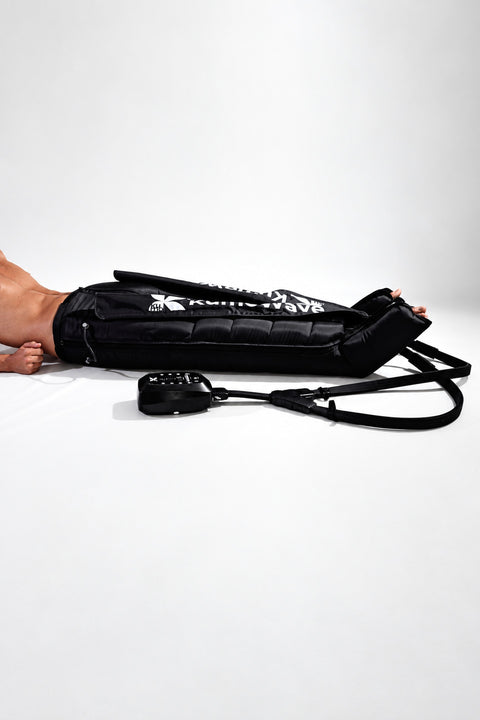
KumoWave Elite – Pressotherapy Pants
Full-coverage trousers. Ideal for lipedema, fluid retention and intensive use.
€799,00 €999,00
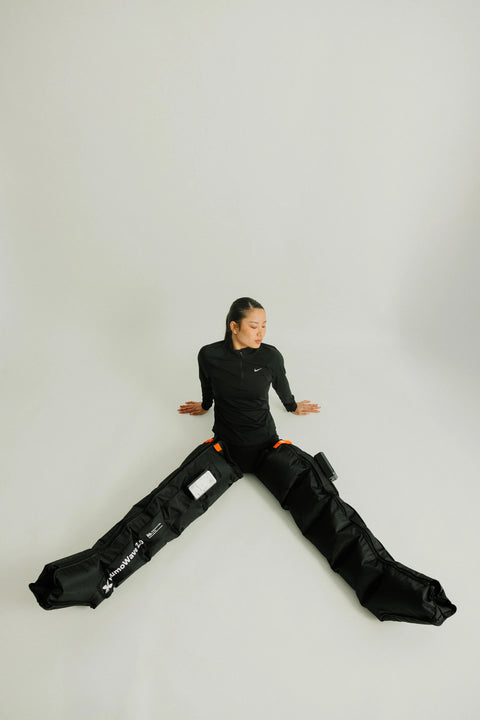
KumoWave 2.0 - Wireless Pressotherapy
Wireless, lightweight boots. Perfect for daily use and recovery.
€499,00 €599,00