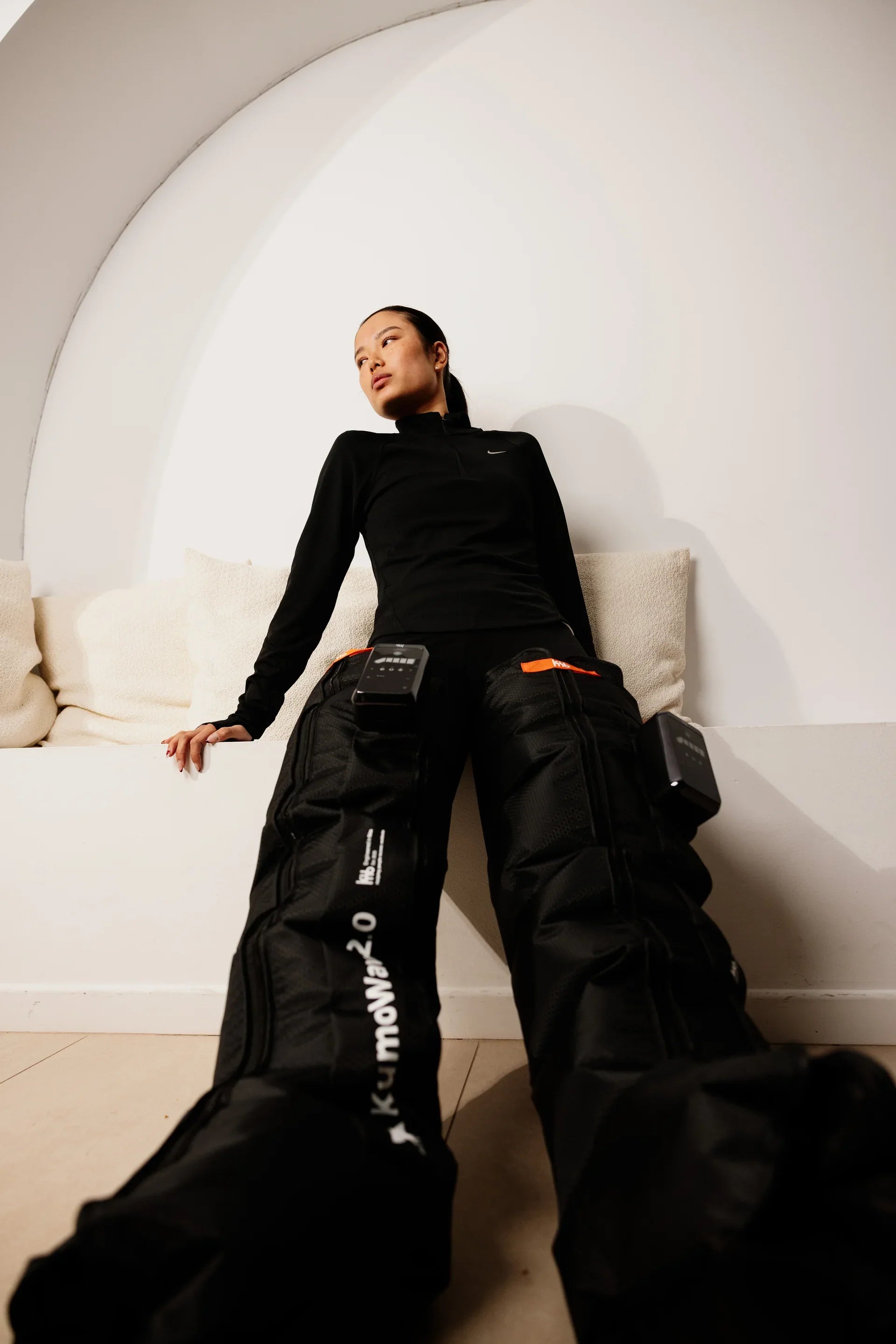
Pressotherapy can indeed help. The strongest evidence focuses on edema, lymphedema, and the feeling of heavy legs; for cellulite and sports recovery, the results are more variable and less conclusive.
In simple terms, we're talking about intermittent pneumatic compression: a system that alternates pressure and decompression to promote venous return and lymphatic drainage. This explains why it's often of interest for fluid retention, leg overload, or inflammation, although not all uses have the same scientific backing. (pmc.ncbi.nlm.nih.gov)
Pressotherapy at home
End the day with light legs
★★★★★ 4,8/5 · rated by verified customers
KumoWave pressotherapy boosts circulation and helps drain fluid with sequential compression, in 20-minute sessions at home.
- Boosts circulation and helps drain fluid
- Chamber-based compression, adjustable to you
- Sequential compression that mimics manual drainage
€799,00€999,00
−10% on your 1st order when you subscribe to the newsletter

What is pressotherapy and how does it work?
Pressotherapy applies air through sequential chambers to compress the limb in an orderly fashion, typically from distal to proximal. This pattern can help move interstitial fluid, reduce edema, and enhance the work of the venous pump when movement alone is insufficient.
That's why it's not just understood as an "aesthetic" tool, but as a form of mechanical support that can be useful in specific venous and lymphatic contexts. If you want to review the technical basis in more detail, you can read our basic guide on what pressotherapy is and how it works.
Personalized protocol · included with your purchase
Want us to tell you how to use it in your case?
With your purchase, our experts prepare a personalized usage protocol for your case: sport, circulation, fluid retention, pregnancy or lipedema.
Message us on WhatsAppOur experts reply · no obligation
Benefits of pressotherapy with better scientific backing
Science does not paint pressotherapy as a universal solution, but rather as a useful tool in well-defined scenarios. In the following summary, you'll see which benefits are best supported and which expectations should be adjusted.
Quick summary of benefits, evidence, and expectations
| Benefit | What the evidence shows | What you can expect |
|---|---|---|
| Edema and lymphedema | A 2024 meta-analysis on pressotherapy and lymphedema found improved volume in the 4 weeks following treatment, with a weaker effect after discontinuation. | This is the use with the clearest backing, especially as a complement to a comprehensive plan. |
| Heavy legs and fluid retention | Sequential compression can reduce edema and promote lymphatic drainage and venous return. | It usually improves the feeling of heaviness and swelling, especially if the problem is functional and not structural. |
| Sports recovery | A 2024 systematic review and meta-analysis on sports recovery concluded that IPC is popular but still lacks strong scientific support. | It can serve as a complement, but should not be considered the main component of recovery. |
| Cellulite | The 2025 systematic review of cellulite treatments analyzed 24 randomized trials with 2084 patients and concluded that no treatment is definitively established. | It can change the appearance due to the fluid component, but it doesn't correct the structure of cellulite by itself. |
1. Edema and lymphedema
In this field, the evidence is the most consistent. The benefit appears to depend on using reasonable protocols: in the 2025 review, the best responses were associated with pressures ≤40 mmHg, treatments lasting more than 2 weeks, and short evaluation windows. In practice, this suggests that consistency matters more than isolated sessions. (pubmed.ncbi.nlm.nih.gov)
This is also one of the reasons why pressotherapy integrates well with other compression and lymphatic care approaches. If you are interested in an applied view of home use, you can review how a session is developed on the legs.
on your first order when you join the newsletter
We send you the code instantly. No spam.
2. Heavy legs and feeling of relief
When the main complaint is heaviness, sequential compression can help displace fluid and reduce tissue tension. This does not mean it resolves the underlying cause in all cases, but it can provide symptomatic relief, especially if the discomfort appears at the end of the day, with standing work, or with limited mobility.
3. Recovery between workouts
Pressotherapy is widely used in sports because it is comfortable and non-invasive. Even so, the 2024 review on sports recovery was cautious: there are promising signs, but no strong evidence that it clearly accelerates all recovery markers. The best interpretation is to view it as a complement for better rest, leg relief, and maintaining a routine, not as a substitute for sleep, nutrition, or well-programmed training.
If you want to delve deeper into this practical approach, the most common frequency and session time may be helpful.
4. Cellulite: realistic results
Cellulite is not just "retained fluid." The most recent systematic review describes it as a frequent and bothersome condition, but with treatments that are still not standardized and short follow-ups in many studies. Therefore, if pressotherapy helps, it usually does so partially and temporarily, not as a definitive solution.
“none are definitively established”.
In other words: there may be a visual improvement if edema decreases, but it should not be sold as a cure for cellulite. If you are looking for a more honest explanation of its limitations, you can read what it can and cannot do against cellulite.
How to use it for realistic results
The dosage is not universal. A home study on lower limb lymphedema prescribed 1 hour per session, twice a day, for 4 weeks; another recent review observed better results when treatment lasted more than 2 weeks. This does not create a single "recipe," but it does provide a clear idea: regularity weighs heavily. (pubmed.ncbi.nlm.nih.gov)
In practice, pressotherapy usually works best when integrated into a sustainable and well-planned routine. If you are in doubt between different usage formats, manual or mechanical pressotherapy can help you according to your objective.
- Start with moderate sessions if you have never tried it, to assess your skin and leg tolerance. (pmc.ncbi.nlm.nih.gov)
- If the goal is edema or lymphedema, consistency usually matters more than seeking extreme pressures.
- If swelling is unilateral, sudden, or painful, a medical cause must first be ruled out.
Risks, contraindications, and warning signs
Well-indicated medical compression is usually safe, but it is not harmless. An international consensus on risks and contraindications of medical compression reminds us that serious events are rare when contraindications and correct placement are respected. Even so, there are profiles for whom pressotherapy should be avoided or evaluated with great caution.
- Active or suspected deep vein thrombosis requires medical evaluation before using any pneumatic compression. (pmc.ncbi.nlm.nih.gov)
- Severe heart failure, severe peripheral arterial disease, and other major circulatory disorders can make compression unsuitable.
- Acute skin infections, material allergies, and certain neuropathies increase the risk of injury or local worsening.
In short, do not use it to "try your luck" if swelling appears for the first time, if there is intense pain, heat, redness, or if you notice a striking asymmetry between both legs. In those cases, the priority is not drainage: it is to rule out a vascular or infectious cause.
FAQ
What is pressotherapy and what exactly is it used for according to science?
Pressotherapy is a form of intermittent pneumatic compression that inflates and deflates air chambers to promote venous return and lymphatic drainage. Science best supports it for edema and lymphedema, where it can reduce volume and improve the feeling of heaviness. However, for goals such as cellulite or sports recovery, the benefit exists but is less consistent and depends heavily on the context, protocol, and consistency.
Pressotherapy helps improve circulation and lymphatic drainage. What are its long-term benefits according to the evidence?
Yes, it can help, but the long-term benefit is not automatic. For lymphedema, a 2024 meta-analysis observed improvement within 4 weeks after treatment, although some of the effect diminished after discontinuation. Another 2025 review found better results with treatments lasting more than 2 weeks and pressures ≤40 mmHg. In practice, this suggests that pressotherapy works better as a maintenance tool than as a sole solution.
Does pressotherapy help reduce cellulite and fluid retention in the legs and thighs?
For fluid retention, yes, it can help when the problem is related to edema or slow venous/lymphatic drainage. For cellulite, the answer is more cautious: recent evidence indicates that no treatment is definitively established and that studies tend to have short follow-ups. Therefore, the improvement some people notice is usually more visible on swelling than on the actual structure of cellulite.
What are the contraindications and risks of pressotherapy, and who should not use it?
The main precautions are active or suspected deep vein thrombosis, severe heart failure, severe peripheral arterial disease, skin infections in the treated area, material allergies, and certain neuropathies. Consensuses on medical compression indicate that serious complications are rare, but largely depend on proper patient selection and correct device use. If there is sudden pain, heat, or unilateral swelling, a medical problem must first be ruled out.
How long does a pressotherapy session last, and how many sessions are recommended to see results?
There is no single guideline. In clinical studies, protocols of 30 to 60 minutes have been used, and a home trial for lower limb lymphedema used 1 hour twice a day for 4 weeks. The 2025 review also suggests that treatment works best when it lasts more than 2 weeks. It is most sensible to think of pressotherapy as a cumulative process: a single session can provide relief, but consistency is what usually consolidates changes.
What now?
If you want to delve deeper, start with home pressotherapy solutions and complete your reading with the operating guide or the most common frequency and session time. Then, return to Kumo Balance's homepage to explore the rest of the project with a clearer vision.
KumoWave pressotherapy
Choose your at-home pressotherapy
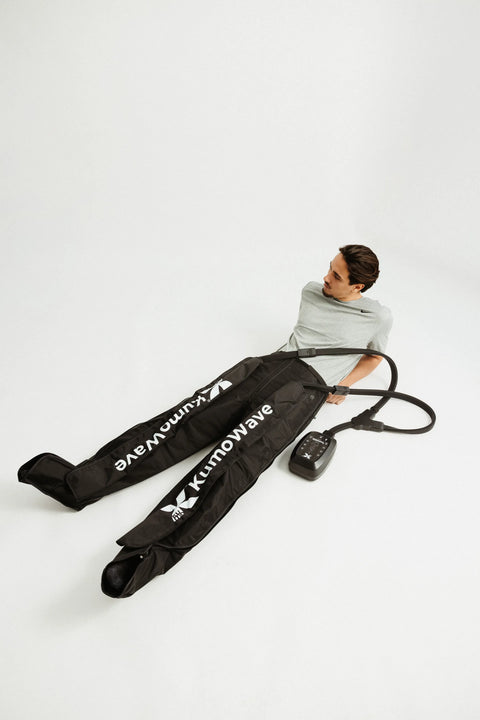
KumoWave Elite – Pressotherapy Pants
Full-coverage trousers. Ideal for lipedema, fluid retention and intensive use.
€799,00 €999,00

KumoWave 2.0 - Wireless Pressotherapy
Wireless, lightweight boots. Perfect for daily use and recovery.
€499,00 €599,00