
Hormonal acne can indeed be better controlled at home. LED light can be a supportive addition, but the best results come when combined with a gentle routine, consistency, and realistic expectations. (aad.org)
In Kumo Balance's recovery and well-being approach, facial LED technology fits in as a practical ritual to support the skin without resorting to aggressive steps. If you're starting out, first understanding how a facial LED mask works will help you use it more wisely. (aad.org)
Facial red light
Bring your skin back to life
★★★★★ 4,8/5 · rated by verified customers
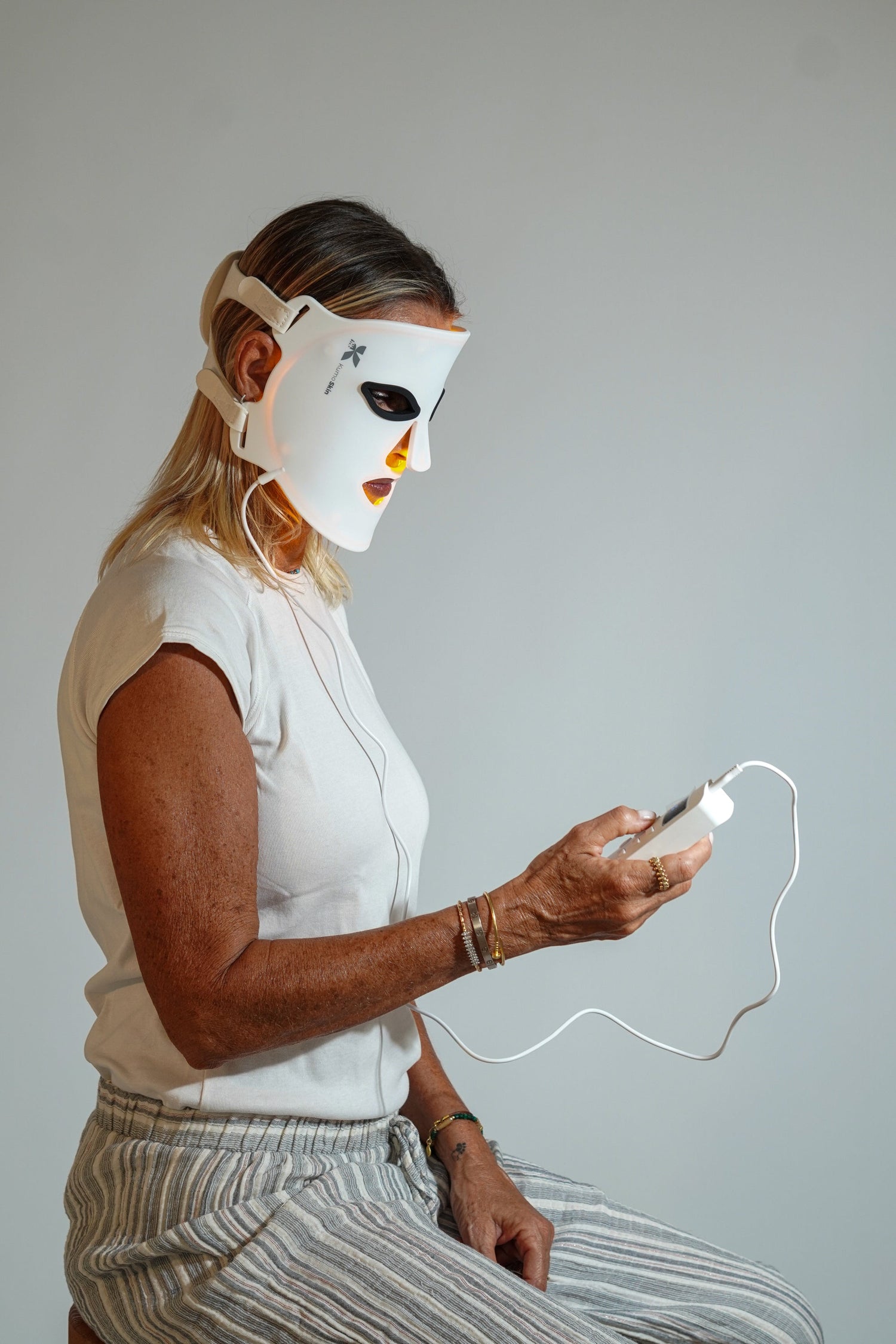
The KumoSkin LED mask helps repair and calm your skin in short sessions at home.
- 250 LEDs in flexible medical silicone
- Red light to boost collagen and glow
- 4 lights: red, infrared, blue and yellow
€299,00€429,00
−10% on your 1st order when you subscribe to the newsletter

What is hormonal acne and why does it appear?
Acne appears when sebum and dead skin cells clog follicles, and inflammation makes the breakout more visible. In adults, especially women, hormonal changes can continue to influence and cause breakouts to reappear after adolescence. Stress is not usually the primary cause, but it can worsen it. (medlineplus.gov)
Therefore, treating hormonal acne at home isn't just about "drying out pimples": it's about reducing inflammation, avoiding irritating the skin barrier, and maintaining habits that don't fuel the breakout cycle. When acne is painful, leaves marks, or doesn't respond to basic care, it's advisable to move from a home routine to a medical evaluation. (medlineplus.gov)
Personalized protocol · included with your purchase
Want us to tell you how to use it in your case?
With your purchase, our experts prepare the ideal LED protocol for your skin type and goal (acne, wrinkles, dark spots...).
Message us on WhatsAppOur experts reply · no obligation
How LED light can help at home
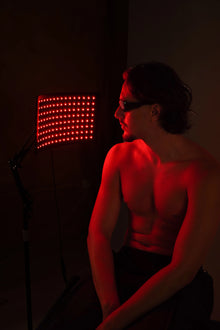
Home LED light is primarily used as support for inflamed lesions. The American Academy of Dermatology explains that blue, red, or combined visible light devices can help with pimples, but they don't effectively resolve blackheads, whiteheads, cysts, or nodules on their own. It also reminds us that home devices are usually less powerful than those used in a clinic. (aad.org)
If you want to delve deeper into the role of each color, the guide to facial LED colors and wavelengths can help you better understand what each light provides before you start. (aad.org)
What each LED light color contributes
| Light color | What it can provide | What it doesn't resolve well | Source |
|---|---|---|---|
| Blue | May help reduce inflamed lesions; in an open study with 30 people, narrow-band blue light of 409-419 nm and eight sessions over 4 weeks improved inflammatory lesions. | Not the best option for blackheads, whiteheads, cysts, or nodules. | (pubmed.ncbi.nlm.nih.gov) |
| Red | Used as a complement in phototherapy plans and can help modulate inflammation; the AAD considers it a common option in light devices. | Is usually not enough on its own to clear all types of acne. | (aad.org) |
| Blue + Red | Some devices combine both colors to simplify the home routine and target inflamed breakouts from two fronts. | The response varies widely and often requires several weeks of consistent use. | (aad.org) |
The available evidence is promising, but not magical. A 2025 systematic review that gathered 160 studies and 8,121 patients concluded that procedural therapies can be useful as a complement, although tolerance and response vary greatly depending on the technique and the person. (pubmed.ncbi.nlm.nih.gov)
on your first order when you join the newsletter
We send you the code instantly. No spam.
If you're looking for a more practical view on results and expectations, the evidence and real results of the facial LED mask help put phototherapy in context without promising miracles. (pubmed.ncbi.nlm.nih.gov)
Key habits that improve results
LED light works best when the skin is not overtreated. A simple, repeatable, and gentle routine reduces the risk of irritation and makes the treatment easier to sustain. If you want to organize your steps, a well-structured facial LED mask routine can serve as a basis. (aad.org)
- Gently cleanse your face twice a day and also after sweating. Overwashing irritates the skin and can worsen breakouts. (aad.org)
- Use non-comedogenic products in makeup, sunscreen, and daily care to reduce the risk of clogged pores. (aad.org)
- Do not rub or over-dry the skin with harsh astringents, alcohol, or aggressive exfoliation. Irritation often worsens acne. (aad.org)
- Do not squeeze pimples, as pushing the contents inward increases inflammation and can leave marks. (aad.org)
- Observe your triggers, especially stress, because it can aggravate breakouts even if it's not the primary cause. (medlineplus.gov)
- Maintain a consistent routine for several weeks before judging results, as acne does not change overnight. (medlineplus.gov)
How to use a home LED device without irritating the skin
Before you begin, also review common mistakes in home facial phototherapy to avoid sabotaging your routine with easy-to-correct details. (aad.org)
- Apply the light to clean, dry skin. Remove makeup, sweat, and cream residue so that the session is more even and the skin is not occluded. (aad.org)
- Follow the device manual. The AAD indicates that some home devices are used twice a day and, in some cases, for 30 to 60 minutes for 4 to 5 weeks, although not all devices are programmed the same way. (aad.org)
- Do not seek more intensity than necessary. Home devices are less powerful than clinic ones, and more use does not automatically equate to better results. (aad.org)
- Stop the session if you notice persistent irritation. Red light therapy appears safe in the short term, but it can cause mild discomfort or temporary irritation, and it is not recommended with the same freedom if you are taking medication that increases light sensitivity. (aad.org)
- Think of LED as a complement. Phototherapy can help, but it rarely completely replaces a broader strategy if acne is persistent. (aad.org)
What results to expect and in what timeframe
With hormonal acne, patience matters. MedlinePlus indicates that the response to treatments usually takes 6 to 8 weeks, and the AAD adds that with light therapies, the best changes are often seen weeks after finishing the cycle, not instantly. (medlineplus.gov)
In practice, the most realistic expectation is less inflammation, fewer new breakouts, and somewhat more stable skin. The least realistic is to think that LED alone will eliminate cystic, very painful, or very recurrent acne. In these cases, phototherapy can be a support, but not the core of the treatment. (aad.org)
When acne leaves scars, worsens, or does not improve after several months of basic care, MedlinePlus recommends consulting a professional. In women using combined contraceptives for acne, Mayo Clinic reminds us that the benefit may take several months to notice, so the combination of habits, LED, and medical treatment should be understood as a process, not an express solution. (medlineplus.gov)
When home treatment is not enough
Seek professional help if acne is very painful, if cysts appear, if you see scars, or if the breakout affects you emotionally. It is also advisable to consult when personal care and over-the-counter products do not work after several months. (medlineplus.gov)
The idea is not to abandon the home routine, but to choose wisely when to escalate. LED can coexist with other treatments, but if the problem is already inflammatory, persistent, or leaves marks, medical evaluation significantly changes the prognosis. (medlineplus.gov)
FAQ about hormonal acne, LED light, and key habits
Is at-home blue and red LED light therapy effective for hormonal acne, and what results should be expected?
Yes, it can be useful as support, especially when inflamed lesions predominate. The AAD indicates that blue, red, or combined light devices can help with pimples, but they usually do not resolve blackheads, whiteheads, cysts, or nodules on their own. In clinical studies, improvement is usually seen after several weeks and is not always the same for all people. If your acne is mild to moderate, LED can help; if it is deep or very persistent, it is often insufficient as the sole measure. (aad.org)
What key habits help control hormonal acne and complement at-home LED therapy?
The most helpful habits are gently washing the face twice a day and after sweating, using non-comedogenic products, avoiding rubbing the skin, not squeezing pimples, and maintaining a consistent routine for several weeks. Stress can worsen breakouts, so it's also advisable to monitor how it affects you daily. The key is not to do more, but to do fewer things that irritate the skin. This approach creates better conditions for LED and other care to be more effective. (aad.org)
How to correctly use a home LED device to treat hormonal acne without damaging the skin?
Start with clean, dry skin, follow the device manual, and do not intuitively increase the usage time. The AAD explains that some home devices are used twice a day for 4 to 5 weeks, but the exact guideline depends on the model. If you notice persistent irritation, pain, or extra sensitivity, it is advisable to stop and review your routine. It is also important to remember that "FDA cleared" refers to regulatory safety, not a guarantee of results. (aad.org)
Is it safe to combine at-home LED light treatment with hormonal contraceptives for acne in women?
The consulted sources do not indicate a specific interaction between the two, so the combination is usually understood as complementary support, not a replacement. However, the AAD warns that red light may not be the best option if you are taking medications that increase light sensitivity. Additionally, Mayo Clinic reminds us that combined contraceptives for acne may take several months to show benefit. As a precaution, the combination should be reviewed with a professional if you are also using other treatments. (aad.org)
What LED wavelengths are best for hormonal acne and how long does it take to see improvement?
At home, visible blue light is most associated with inflamed breakouts, and red is often used as a complement; some devices mix both to simplify the routine. An open study with narrow-band blue light of 409-419 nm observed improvement in inflamed lesions after 4 weeks of treatment, and the AAD reminds us that the best results from phototherapy are usually seen weeks later, not immediately. In general, think of a gradual change, rather than a rapid effect. (pubmed.ncbi.nlm.nih.gov)
What now?
If you want to take the next step, start with advanced at-home LED light therapy and return to the Kumo Balance recovery and wellness experience to integrate phototherapy into a coherent, simple, and sustainable routine. (aad.org)

Facial red light
KumoSkin Mask – LED Facial Mask
★★★★★ 4,8/5 · rated by verified customers
- 250 LEDs in flexible medical silicone
- Red light to boost collagen and glow
- 4 lights: red, infrared, blue and yellow
€299,00€429,00· pay in installments with seQura or Klarna