LED masks can indeed help with acne. Specifically, blue and red light are primarily used for mild to moderate inflammatory acne, with gradual results that are highly dependent on consistency. (pubmed.ncbi.nlm.nih.gov)
It's not a miracle treatment: the evidence is stronger for inflammatory lesions than for blackheads, cysts, or nodules, and studies remain heterogeneous. (aad.org)
Facial red light
Bring your skin back to life
★★★★★ 4,8/5 · rated by verified customers
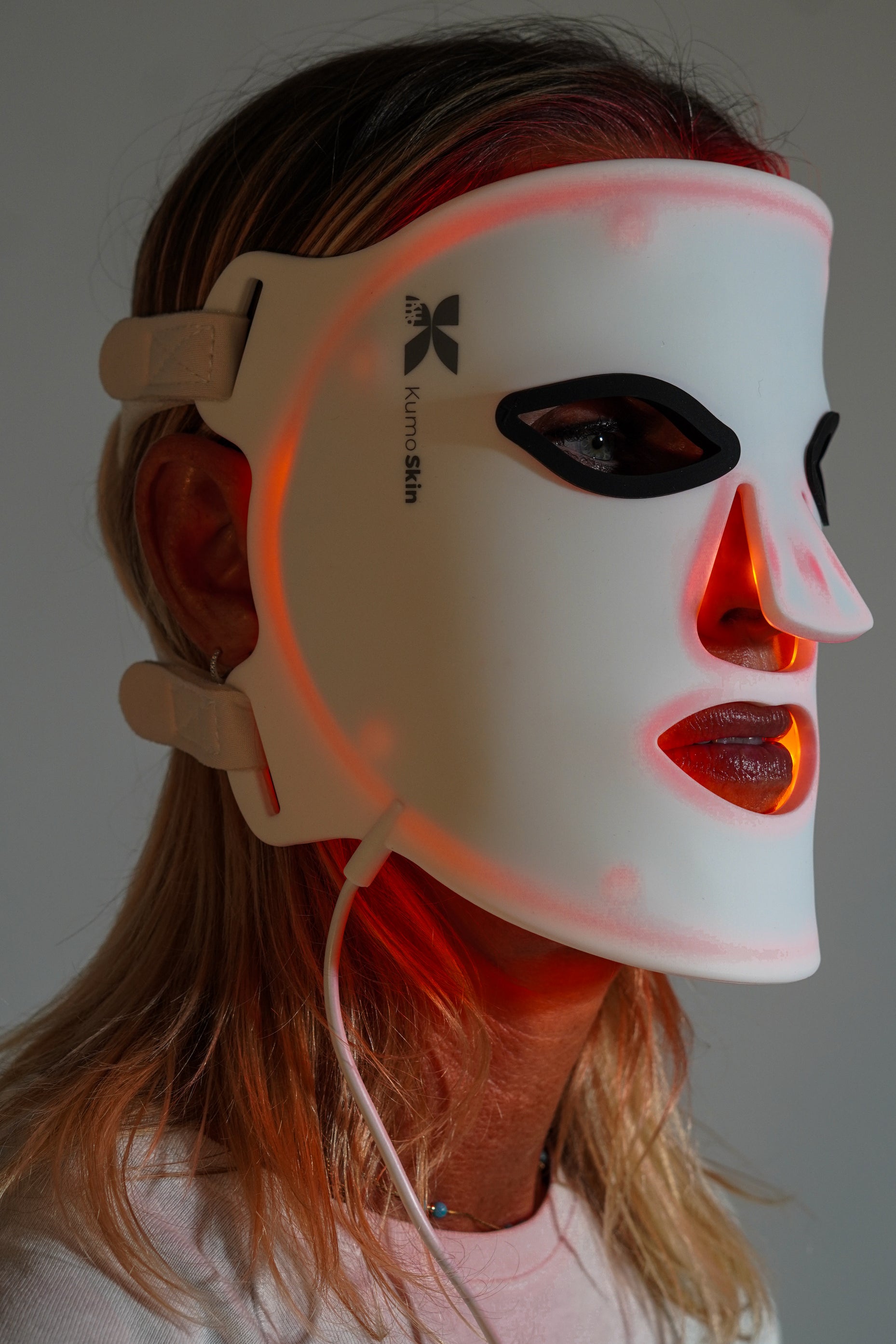
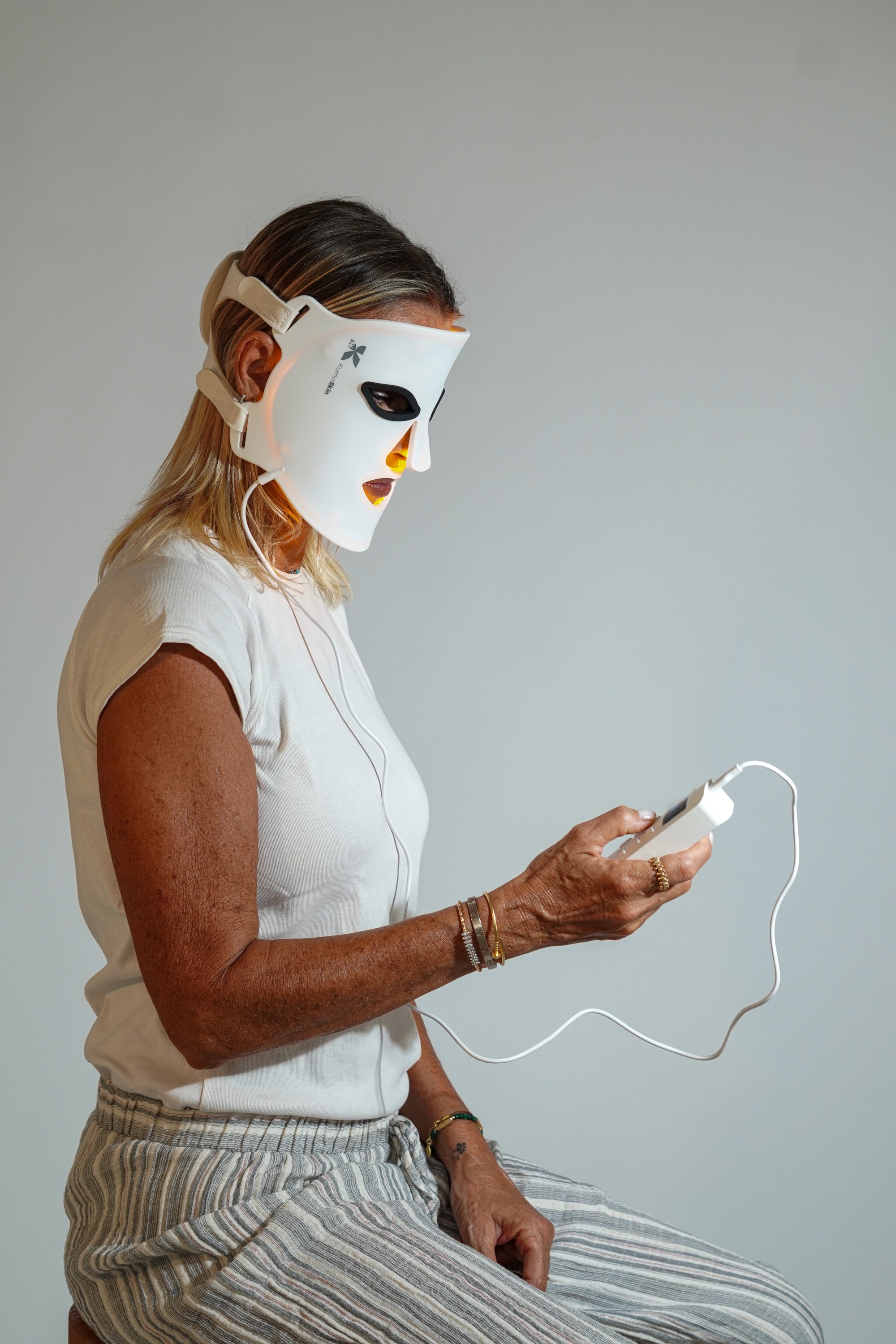
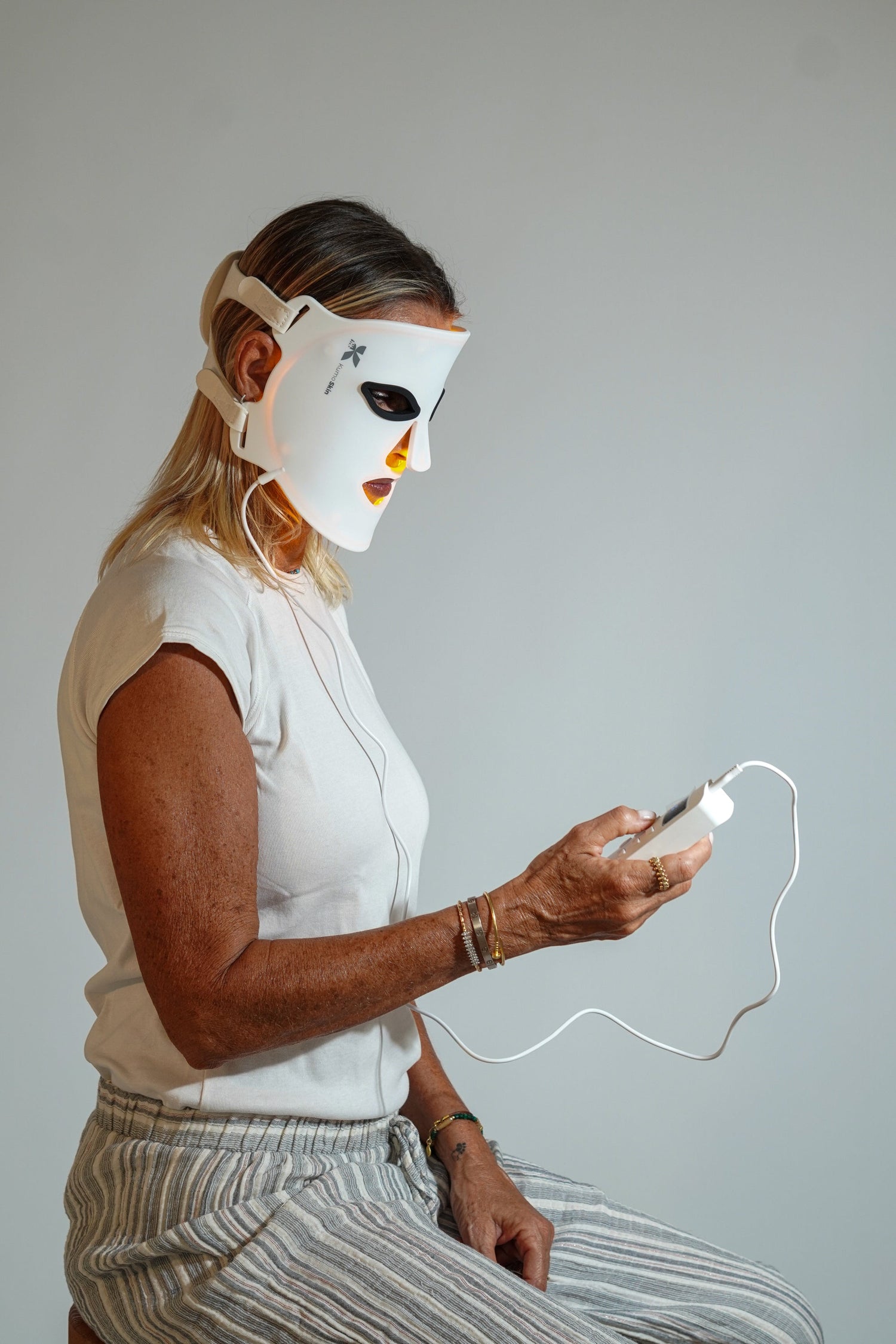
The KumoSkin LED mask helps repair and calm your skin in short sessions at home.
- 250 LEDs in flexible medical silicone
- Red light to boost collagen and glow
- 4 lights: red, infrared, blue and yellow
€299,00€429,00
−10% on your 1st order when you subscribe to the newsletter

What it can and cannot do
If you're starting from scratch, what a facial LED mask is and how it works will provide context. For acne, the best bet is usually for mild to moderate inflammatory breakouts; what it generally cannot resolve on its own are comedones, blackheads, cysts, or nodules.
- Most useful: red pimples, papules, and pustules, where the inflammatory component is more significant.
- Less useful: closed or deep lesions, such as very prominent comedones, cysts, and nodules.
- Best approach: as a complement to a well-thought-out routine, not as the sole strategy.
How LED light works on acne
If you want a quick explanation of the mechanism, how light acts on acne summarizes the core idea: blue light is associated with action on porphyrin produced by C. acnes, while red light is used to modulate inflammation and improve protocol tolerance. This combination also appears in home devices already evaluated by regulators. (pmc.ncbi.nlm.nih.gov)
Personalized protocol · included with your purchase
Want us to tell you how to use it in your case?
With your purchase, our experts prepare the ideal LED protocol for your skin type and goal (acne, wrinkles, dark spots...).
Message us on WhatsAppOur experts reply · no obligation
Blue, red, and combination
- Blue light: this is the most studied when the goal is inflammatory acne, because it is associated with the reduction of the bacterial component and some active lesions.
- Red light: usually valued for its soothing and anti-inflammatory role, as well as a tolerance that in some studies proves better than blue.
- Blue + red: this is a common combination in home-use masks because it seeks to cover both fronts in a single session.
If you're unsure about tones and wavelengths, this guide to facial LED light colors helps you sort out the decision without mixing different objectives.
Practical usage protocol
The protocol is not universal. The AAD guide on lasers and lights for acne notes that some home devices are used twice daily for 30 to 60 minutes for 4 to 5 weeks. An example of an OTC home mask with an acne mode is described in a 510(k) summary for an OTC LED mask for home use with 415 nm blue light and 630 nm red light.
Protocol and realistic timelines
| Usage Window | Practical Approach | What the Evidence Usually Indicates |
|---|---|---|
| 4–5 weeks | Daily or near-daily consistency, depending on the device. | The AAD cites home devices used twice daily for 30 to 60 minutes for 4 to 5 weeks. |
| 8 weeks | Reasonable time to re-evaluate. | A recent study of daily home use found significant reductions in inflammatory and total lesions at 4 and 8 weeks. (pubmed.ncbi.nlm.nih.gov) |
| 12 weeks | Consolidation of response. | In a double-blind home trial, inflammatory lesions decreased by 77% and non-inflammatory lesions by 54% at the end of 12 weeks. |
Before you start
- Look for a device with an explicit acne indication and follow the manufacturer's recommended mode.
- Do not extend sessions on your own: regularity is more important than "doing more time" on a particular day.
- Wear eye protection if the manual requires it.
- For adolescents, it's advisable to review the safe use guidelines for adolescents with acne before making the mask a daily routine.
Real results: what studies say
The most honest reading of the evidence is that improvement can occur, but not always and not for all types of lesions. A 2019 systematic review and meta-analysis compiled 14 trials with 698 participants; it found favorable signals in some studies, but also a high risk of bias and non-significant differences in the overall lesion count at various follow-up points. The 2024 review on home-use LED devices also described promising results, although based on small and heterogeneous studies. review and meta-analysis of home-use LED devices
on your first order when you join the newsletter
We send you the code instantly. No spam.
Furthermore, the AAD reminds us that home devices are typically less powerful than clinic devices, so the realistic goal is a visible and progressive improvement, not an immediate clinical transformation.
In a randomized trial from 2022 comparing red and blue light, overall improvement at 2 weeks was 36.2% with red light and 30.7% with blue light, and red light showed fewer adverse reactions. This data does not make red light "better" for everyone, but it does reinforce the idea that it can be a well-tolerated option for inflammatory breakouts. comparative trial between red and blue light
A double-blind home-use study with blue-red light reported a 77% drop in inflammatory lesions and a 54% drop in non-inflammatory lesions at the end of 12 weeks; in addition, a more recent trial with daily use for 8 weeks also found significant reductions in inflammatory and total lesions at 4 and 8-week check-ups. Translated into practical language: the reasonable window to judge whether an LED mask is working for you is usually between 4 and 12 weeks. home-use trial with blue-red light
Safety, limitations, and contraindications
Safety is a strong point, but not a blank check. The AAD guide on red light safety reminds us that, in the short term, the therapy appears safe, that common side effects are mild, and that "FDA-cleared" refers to safety/regulation, not guaranteed efficacy. It also warns that darker skin may be more sensitive to visible light and develop more persistent hyperpigmentation, and that photosensitizing diseases or medications require caution.
- If you have lupus, another photosensitive condition, or take medications that increase light sensitivity, it's best to seek medical advice before starting.
- If the manufacturer specifies glasses or eye protection, always use it.
- If you notice persistent irritation, stop and review the protocol.
- If you are an adolescent, it is worth reviewing the safe use guidelines for adolescents with acne to adjust expectations and habits.
Frequently asked questions about LED masks for acne
Does an LED mask really work to treat acne?
Yes, but with nuances. LED light can especially help with mild to moderate inflammatory acne and usually works better as a complement than as a standalone solution. The AAD insists that time and consistency matter, and available reviews point to modest, not spectacular, benefits, with still heterogeneous evidence. If you expect clear skin in a few days, you'll probably be disappointed; if you integrate it into a serious protocol, it can be a real help.
What light colors are best for acne in an LED mask?
For acne, blue and red are usually the most interesting. Blue is studied for its relationship with C. acnes and active lesions; red is used more to modulate inflammation and improve tolerance. Many home masks combine both in acne mode, with regulatory examples of 415 nm blue and 630 nm red. The combination doesn't work magic, but it is usually more logical than a poorly chosen isolated color.
How many sessions per week are recommended for an LED mask for acne?
There's no single number. The AAD mentions some home devices used twice daily for 30 to 60 minutes for 4 to 5 weeks, while studies have tested daily or multi-week protocols. The important thing is not to mix times from different devices or extend sessions intuitively. If your mask comes with 10 or 15 minutes, that manual takes precedence over any general average.
What results can be expected from using an LED mask for acne in 8 weeks?
In eight weeks, it's reasonable to expect visible changes, especially in inflammatory breakouts, if the device is appropriate and used regularly. A 2026 trial with daily home treatment already observed significant reductions in inflammatory and total lesions at 4 and 8 weeks. Even so, the response varies greatly among individuals, and deep or comedonal lesions tend to improve less.
Is it safe to use an LED mask at home for acne?
At home, the therapy is usually well-tolerated in the short term. The AAD considers it generally safe, but warns that it's not for everyone: you need to monitor for photosensitivity, medication that increases light sensitivity, possible hyperpigmentation in darker skin tones, and use eye protection if the manufacturer requests it. If you notice persistent irritation, it's advisable to stop and review the protocol.
What now?
If you want to keep refining your routine, start by understanding how the facial LED mask works and what results it can deliver, then return to the Kumo Balance website to continue exploring the site's general approach.

Facial red light
KumoSkin Mask – LED Facial Mask
★★★★★ 4,8/5 · rated by verified customers
- 250 LEDs in flexible medical silicone
- Red light to boost collagen and glow
- 4 lights: red, infrared, blue and yellow
€299,00€429,00· pay in installments with seQura or Klarna