The LED facial light works, but it's not instantaneous.
If your goal is to see smoother (more textured) and more radiant skin, the answer depends less on a "miracle session" and more on consistency and a proper protocol . Clinical studies with red LED and near-infrared light show improvements after 4–5 weeks of treatment, and these changes usually consolidate in the following weeks depending on skin type and frequency of use. For example, in one trial with 76 people, LED light was applied twice a week for 4 weeks , and reductions in wrinkles and increases in elasticity were measured. In another, 36 people received 9 treatments over 5 weeks, with an evaluation at 12 weeks later. (PubMed, 2007; PubMed, 2006)
Facial red light
Bring your skin back to life
★★★★★ 4,8/5 · rated by verified customers
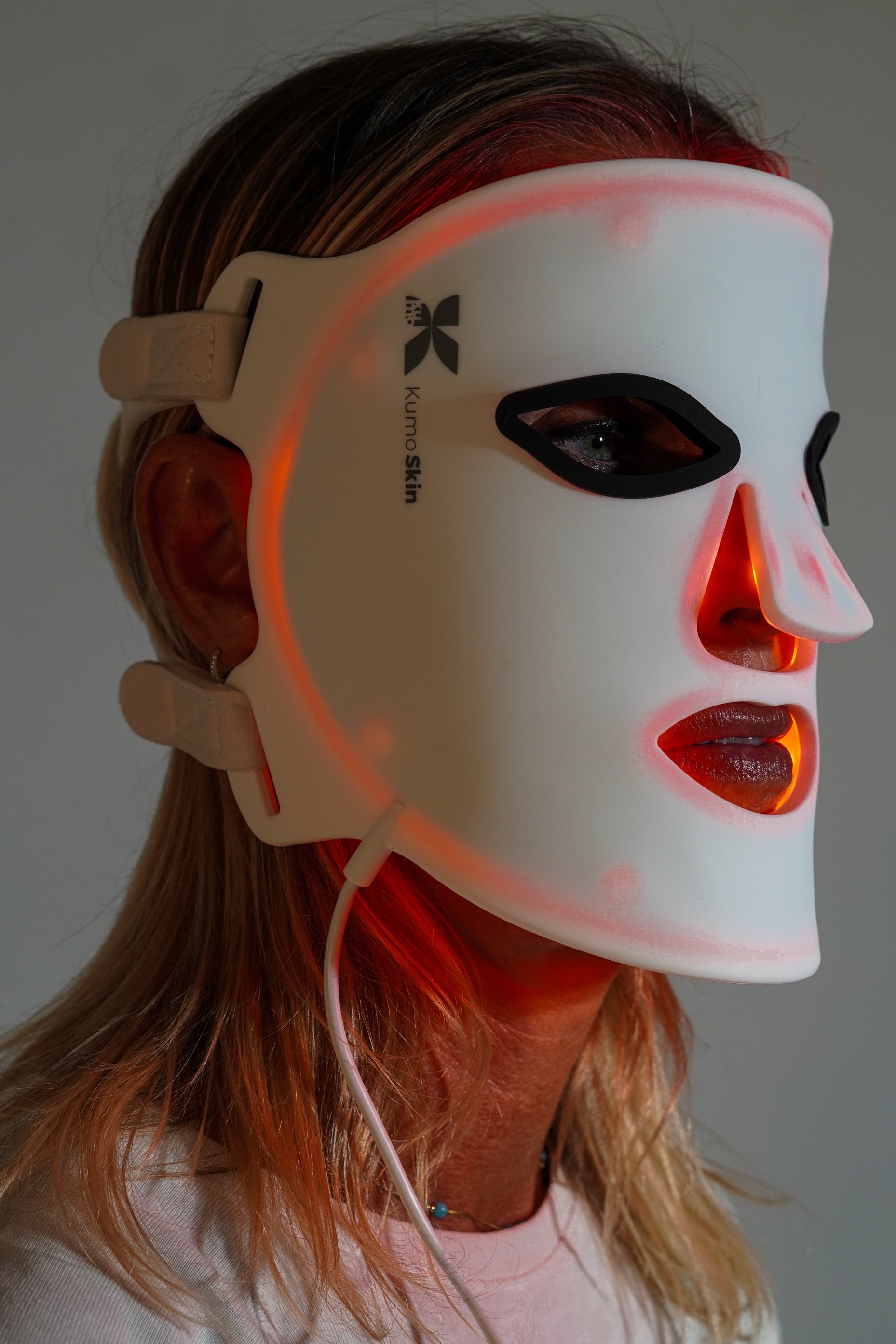
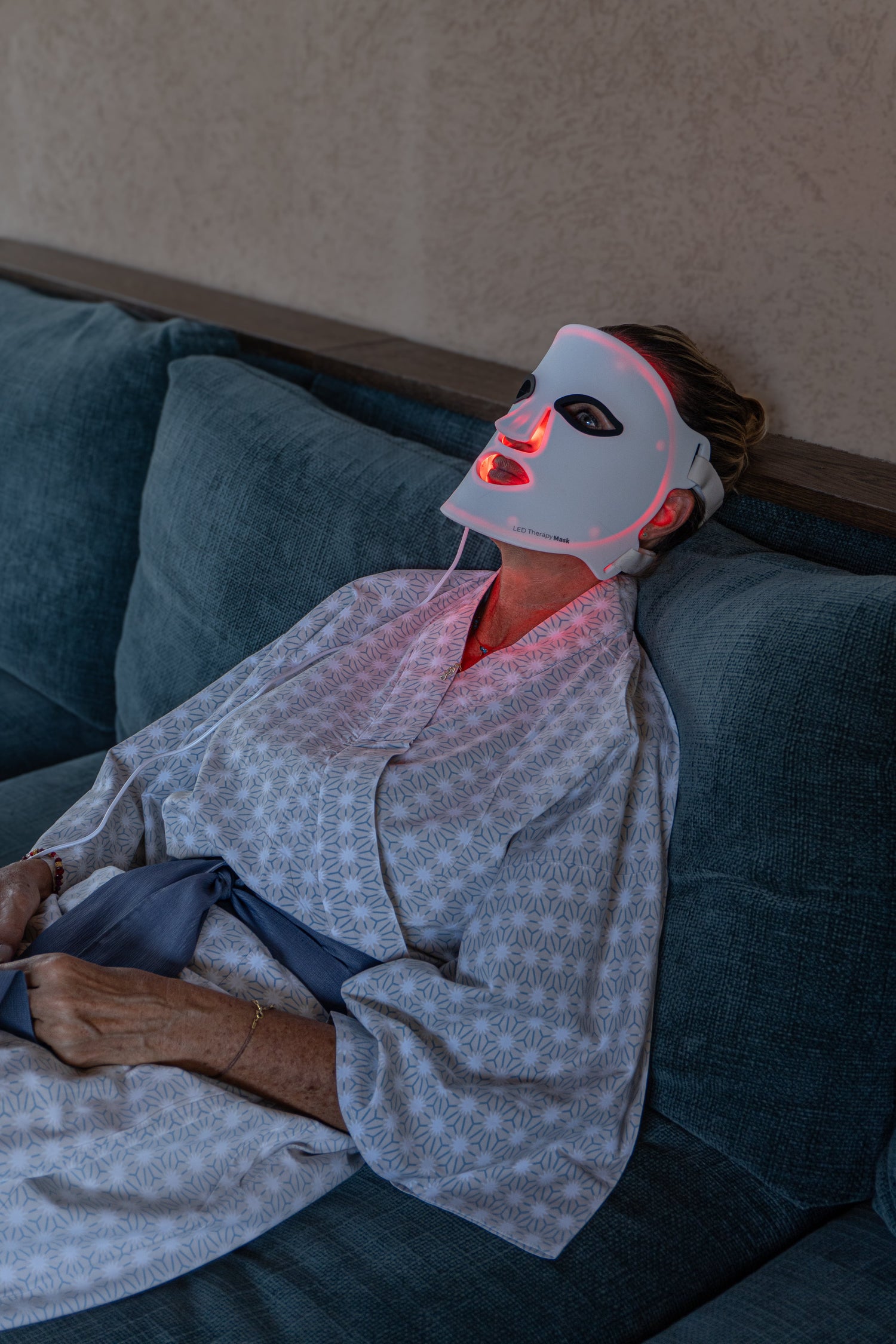
The KumoSkin LED mask helps repair and calm your skin in short sessions at home.
- 250 LEDs in flexible medical silicone
- Red light to boost collagen and glow
- 4 lights: red, infrared, blue and yellow
€299,00€429,00
−10% on your 1st order when you subscribe to the newsletter

At Kumo, a brand focused on premium recovery and wellness technologies, LED therapy is seen as a habit: a tool for ongoing self-care, just like other solutions from the brand designed to improve your daily life (rest, muscle recovery, and self-care routines). You can view the specific LED collection here: Kumo LED light therapy .
What is facial LED light and why does it improve texture and “glow”?
Photobiomodulation: the simple explanation
Most LED masks and facial devices work on a principle called photobiomodulation : non-UV light (it's not tanning) that interacts with the skin and can modulate processes such as inflammation, cellular activity, and signals related to skin repair. The results we often perceive as "improved texture" and "more radiance" usually come from a combination of:
Personalized protocol · included with your purchase
Want us to tell you how to use it in your case?
With your purchase, our experts prepare the ideal LED protocol for your skin type and goal (acne, wrinkles, dark spots...).
Message us on WhatsAppOur experts reply · no obligation
- More even skin tone (less reactive redness, calmer appearance).
- Better hydration and barrier (skin reflects light better when it is more balanced).
- Gradual changes in firmness and elasticity (slower; usually require weeks).
Red, near-infrared and blue: what each one does (broadly speaking)
In skin rejuvenation and texture treatment, clinical literature focuses primarily on combinations of red and near-infrared (NIR) light (e.g., 633 nm and 830 nm), with protocols repeated over several weeks. PubMed (2007)
For acne, blue and/or red LEDs are frequently used. In 2025, a meta-analysis of at-home LED devices concluded that they can be a safe and effective option for mild-to-moderate acne, although further studies are needed to define the “best” universal protocol (lengths, dosage, duration). PubMed (JAMA Dermatology, 2025) Mass General Brigham (2025)
Key idea: With facial LED, what makes the difference is not "making it stronger," but making it consistent and allowing the skin time to respond (weeks, not days).
−10%on your first order when you join the newsletter
We send you the code instantly. No spam.
How many sessions do you need: what the studies show (and how to translate it into your routine)
To talk about “sessions”, it is useful to separate two scenarios: clinical protocols (fewer sessions, more powerful equipment) and home use protocols (more sessions, lower power per session, but a lot of consistency).
In consultation (or clinical-type protocols): 8–9 sessions in ~4–5 weeks
- 2007 study (76 people): half-face treatments, with 2 sessions/week for 4 weeks . Objective improvements were measured (reduction in wrinkles and increase in elasticity, with maximums reported in the abstract). PubMed (2007)
- 2006 study (36 people): 9 treatments over 5 weeks and final evaluation 12 weeks later , with improvements in wrinkles and perceived smoothness/firmness reported by participants. PubMed (2006)
Practical translation: If you follow an "intensive" clinical-style plan, many people begin to notice changes after completing the 4-5 week block . And, importantly, some of the results may continue to improve in the following weeks.
At home (more realistic for most): the “tipping point” usually comes after 6–8 weeks
In well-designed home-based protocols, the frequency is usually higher (e.g., several times per week). A controlled trial (2025) with 60 participants used a device with 630 nm (red) + 850 nm (IRED/NIR) and found significant differences in crow's feet scores at 8, 12, and 16 weeks . PubMed (Medicine, 2025)
Practical translation: If your LED mask is for home use, the most honest thing to do is to consider it a commitment of 8–12 weeks to notice clear changes in texture/luminosity, and 12–16 weeks if you are looking for a more evident change (especially in the periocular area or irregular texture).
Guide table: approximate sessions and what changes are usually perceived
| Moment | Cumulative sessions (approx.) | What is reasonable to notice (texture and luminosity) | What accelerates it |
|---|---|---|---|
| Week 1–2 | 3–10 (depending on frequency) | "Subtle" radiance: calmer, less dull skin if your skin barrier is functioning properly. Texture changes, still slight. | Gentle routine + hydration + avoid over-exfoliating |
| Week 3–5 | 8–20 | More uniform texture and a smoother skin feel. In clinical-type protocols, this is usually where the first "block" (4–5 weeks) ends. 2007 2006 | Consistency (without skipping), daily sun protection |
| Week 6–8 | 18–40 | More visible improvements in texture; the "glow" is usually more stable. In a home-based RCT, differences compared to the control group were observed from week 8. 2025 | High frequency (e.g., 4–5 days/week) if your skin tolerates it |
| Week 12–16 | 36–80 | Consolidation: more even texture, improved skin "quality," and more consistent results. Improvements continued to be seen at 12 and 16 weeks in the 2025 RCT. | Maintain healthy habits (sunscreen, rest, consistent routine) |
How to know if you're on the right track (without obsessing)
To objectively assess texture and luminosity, avoid relying solely on "I look better/worse today." Try this for 8 weeks:
- Comparable photos : same light, same time, same distance, once a week.
- A tactile indicator : notice if the makeup sets better or if the skin feels smoother after washing your face.
- A visual indicator : look at specific areas (cheekbones, forehead, eye contour) instead of the whole face.
How to integrate an LED protocol into your routine (in Kumo style)
The best routine is the one you can stick to. If you're starting out with facial LED light therapy, a simple, skin-friendly structure usually works better than mixing too many active ingredients at once.
A realistic 8-week plan
- Frequency: Follow your device's manual. If in doubt, start with moderate use and gradually increase according to your tolerance (irritation = reduce frequency).
- Order: clean and dry skin → LED session → moisturizer/barrier cream.
- Compatibility: If you use retinoids or exfoliants, avoid applying them just before the session if you notice any sensitivity.
- Consistency: prioritize “fewer sessions, but without skipping weeks.”
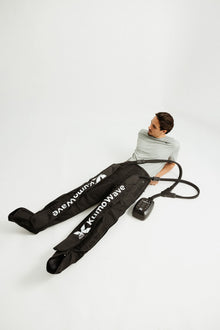
If you'd like to explore LED therapy options within Kumo's wellness and recovery approach, here's the direct link: view Kumo LED devices . And if you're interested in taking recovery beyond facial care (for tired legs, circulation, etc.), you can combine these habits with complementary technologies such as compression boots or muscle release routines with the KumoPulse Air massage gun (always respecting your needs and tolerance).
Factors that (greatly) change the speed of results
- Age and photoaging: the more pronounced the accumulated sun damage, the more important it is to allow time (12–16 weeks) and protect yourself from the sun.
- Skin barrier: If your skin is sensitive, LED light therapy can feel "too much" if you overdo it. It's best to reduce the frequency and increase hydration.
- Consistency: This is the number one factor. Positive trials typically use fixed schedules for weeks. PubMed (2025)
- Realistic expectations: LED gradually improves skin “quality” and fine lines; it does not replace medical procedures when the goal is a dramatic change.
Security: what you should know before adding sessions
Eyes and light: take it seriously
Although LED therapy is generally well tolerated, there are precedents that highlight the importance of eye safety. In Australia, the health authority (TGA) issued a recall (2019) due to the potential risk of eye damage in a susceptible subset (people with certain eye disorders) associated with repeated exposure. TGA (July 17, 2019)
The manufacturer of a popular device at the time also issued a recall statement "out of an abundance of caution," citing a potential risk to individuals with underlying eye conditions or those taking medication that increases photosensitivity. (Official statement - Neutrogena)
Good practices: do not look directly at the LEDs, keep your eyes closed if the design indicates it, and wear eye protection if the manufacturer recommends it.
Photosensitivity, medication and reactive skin
If you take photosensitizing medication or have a condition that is aggravated by light, consult a professional beforehand. In the case of acne, for example, some people combine multiple treatments (topical medications, antibiotics, etc.), and their skin may become more reactive.
What does “FDA cleared” mean on a device?
In the United States, some devices are marketed as “FDA cleared” (via 510(k)). This means that, for their product type, the manufacturer demonstrated substantial equivalence to a legally marketed device within the 510(k) process. This is different from “FDA approved.” For a precise understanding, the FDA itself explains the difference and the correct use of these terms. FDA: “FDA registered/certified” vs. approved/cleared. FDA: Approvals and Clearances
FAQ: Facial LED light and sessions (with Kumo focus)
How many sessions do I need to notice brighter skin with a Kumo LED mask?
In practice, "luminosity" is usually the first subtle change: it can appear within the first 2–4 weeks if you are consistent and take care of your skin barrier. However, clinical trials that measure more objective changes work in blocks of several weeks: for example, 4-week protocols (twice a week) followed by evaluations, or at-home routines where the change is clearly noticeable from week 8 onwards. Therefore, with Kumo, the most sensible approach is to plan an 8-week cycle before judging results.
How many sessions are needed to improve texture (pores, rough skin) with LED light?
- PubMed (
- At home, the most noticeable improvement usually occurs between 6 and 12 weeks, depending on frequency. The key with Kumo (and any LED light) is to maintain a consistent schedule and avoid irritating the skin with too many active ingredients at once.
Can I use Kumo LED light if I also use retinoids or acids?
It's possible, but it's best to be strategic. If your skin is sensitive to retinoids/acids, avoid using them right before your LED session and prioritize hydration and barrier protection afterward. If you notice redness, tightness, or burning, reduce the frequency (or alternate days) until you regain tolerance. The goal is for LED light to be a consistent support, not an "extra" that pushes you toward irritation. And if you're undergoing intensive dermatological treatments, it's wise to consult your dermatologist first.
Does facial LED light therapy help with acne and blemishes, or is it just for "glow"?
- A study on at-home LED devices found reductions in both inflammatory and non-inflammatory lesions, with good overall tolerance, although the authors note that further trials are needed to optimize parameters. (PubMed, JAMA Dermatology)
- Mass General Brigham (
- Regarding "marks," the response is variable: some improve with uniformity and calming, but complex hyperpigmentation may require combined approaches.
What should I do if I don't see any changes with my LED routine after several weeks?
- real constancy (without jumps), (
- Hidden irritation (if the barrier is compromised, the skin looks worse), and (
- Expectations (LED is gradual). If you don't notice anything after 8 weeks, try standardizing photos and sensations, and keep other variables constant (same moisturizer, same sunscreen). If after 12–16 weeks there is still no change, your goal may require a different dermatological approach. If needed, you can contact the Kumo team for usage guidance: contact
So what now?
If you want to make LED light therapy a habit (and not just a one-week experiment), explore Kumo's website and its collection of LED therapy devices . And if your goal is more comprehensive wellness (recovery and performance), you can complement your routine with Kumo's recovery technologies such as compression therapy or muscle release tools like KumoPulse Air . For usage recommendations and specific questions, the most direct channel is the contact form .

Facial red light
KumoSkin Mask – LED Facial Mask
★★★★★ 4,8/5 · rated by verified customers
- 250 LEDs in flexible medical silicone
- Red light to boost collagen and glow
- 4 lights: red, infrared, blue and yellow
€299,00€429,00· pay in installments with seQura or Klarna