
Facial lymphatic drainage to reduce puffiness and dark circles. This guide shows you what it is, how to do it step by step, its real benefits, and when to avoid it.
In short
- A gentle technique that promotes fluid return and microcirculation to reduce swelling and bags.
- Visible results: immediate feeling of lightness; subtle aesthetic changes in 1–3 sessions.
- Key points: very light pressure, direction towards lymph nodes, constant rhythm and deep breathing.
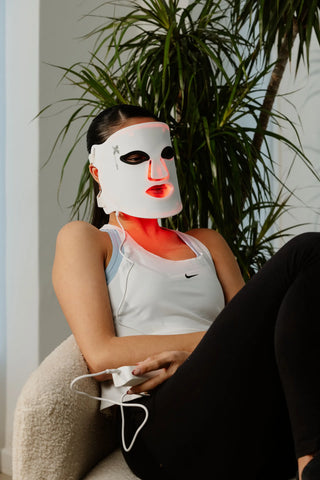
- Useful additions: hydration, less salt, rest, controlled cold and red light.
- Avoid if there is an active infection, thrombosis, decompensated heart problems, or after recent treatments without medical authorization.
What is facial lymphatic drainage and how does it work?
Lymphatic drainage is a set of very gentle manual techniques that stimulate the superficial lymphatic system. In the face, it helps to move excess fluid towards the lymph nodes in the neck and submandibular area, reducing fluid retention and the feeling of a "heavy" face.
Pressotherapy at home
End the day with light legs
★★★★★ 4,8/5 · rated by verified customers
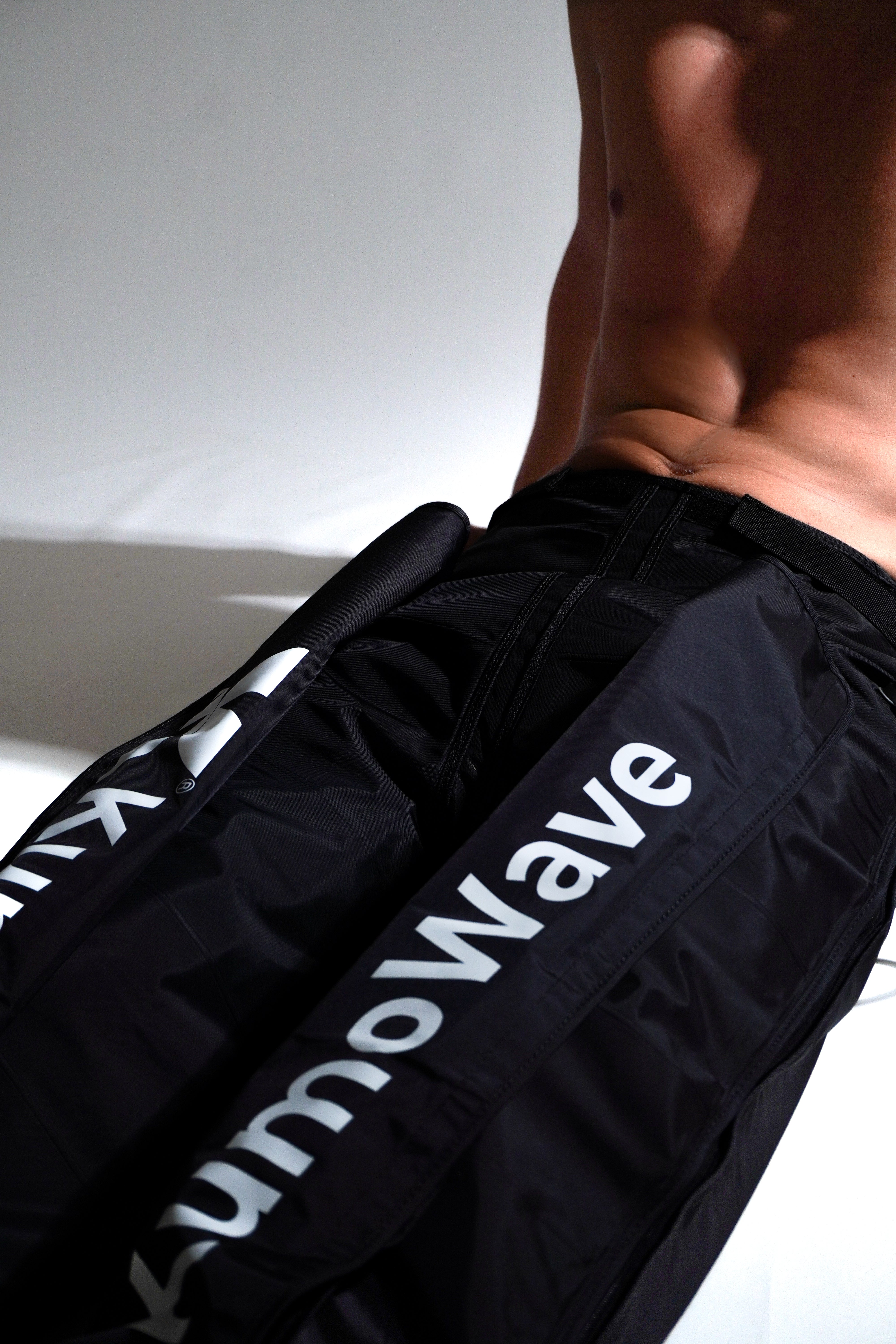
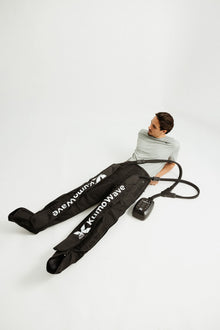
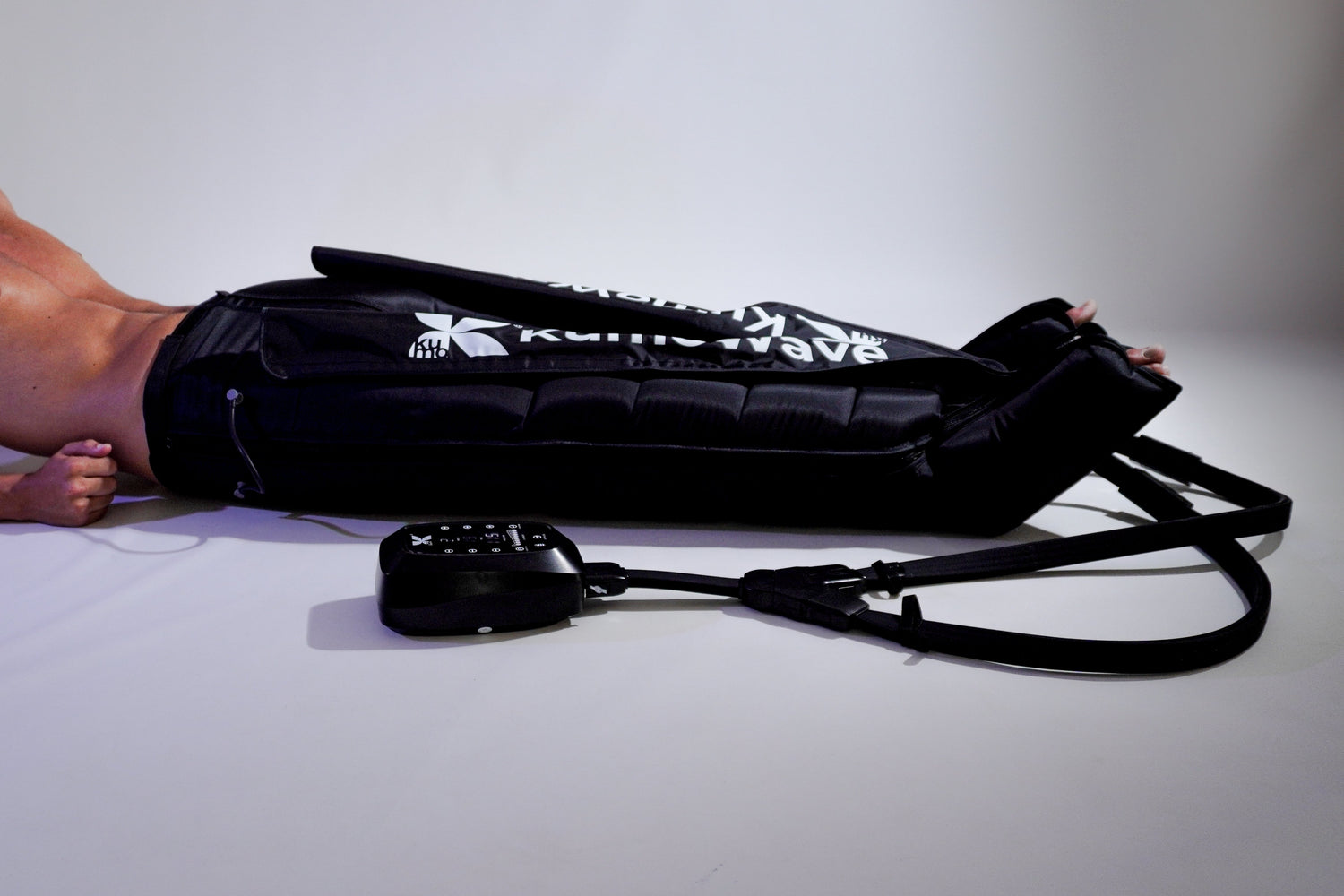
KumoWave pressotherapy boosts circulation and helps drain fluid with sequential compression, in 20-minute sessions at home.
- Boosts circulation and helps drain fluid
- Chamber-based compression, adjustable to you
- Sequential compression that mimics manual drainage
€799,00€999,00
−10% on your 1st order when you subscribe to the newsletter

Unlike a traditional massage, it doesn't aim to knead the muscle or release deep tension. It works on the skin and subcutaneous tissue with slow, light, and targeted strokes. The Cleveland Clinic explains that these techniques can help reduce fluid retention and promote relaxation.
Golden rule: less is more. If you press too hard, you compress capillaries and impede blood flow.
Personalized protocol · included with your purchase
Want us to tell you how to use it in your case?
With your purchase, our experts prepare a personalized usage protocol for your case: sport, circulation, fluid retention, pregnancy or lipedema.
Message us on WhatsAppOur experts reply · no obligation
Benefits: from puffiness to dark circles
Facial swelling and bags under the eyes
Puffy, puffy faces are often caused by fluid retention, allergies, excess salt, or lack of sleep. Lymphatic drainage directs fluid through natural drainage pathways, reducing mild swelling and improving the contour of the cheekbones and jawline. In cases of swelling due to medical causes, always consult a doctor before undergoing lymphatic drainage; the NHS provides an overview of lymphedema and its management .
Dark circles under the eyes: what to do and what not to do
Dark circles under the eyes have multiple causes: pigmentation, hollowing (loss of volume), visible blood vessels, and edema. Drainage can help with "watery" (fluid-filled) dark circles, but it doesn't correct pigmentation or deep hollows. The American Academy of Dermatology details these causes and complementary options.
Brighter skin and relaxation
By improving fluid exchange and reducing tissue pressure, the skin can appear fresher and more even-toned. Furthermore, the slow, rhythmic practice promotes relaxation. To accurately locate the lymphatic drainage points, consult this anatomical reference for the lymphatics of the head and neck .
on your first order when you join the newsletter
We send you the code instantly. No spam.
Is it safe? Indications and contraindications
In general, facial lymphatic drainage is safe when performed with proper technique. You should avoid it or consult a professional if you experience:
- Active skin infections, fever, or oozing rashes.
- Venous thrombosis, decompensated heart failure, or active cancer without medical supervision.
- Recent procedures (fillers, botulinum toxin, surgery). Follow your doctor's guidelines before resuming massage.
For significant or persistent edema, seek clinical evaluation. As a general reference, the Cleveland Clinic and the NHS detail cases where drainage requires caution.
How to do it at home: a step-by-step guide
Before you begin: cleanse your face, apply a drop of serum or light oil to facilitate glide, and sit upright with relaxed shoulders. Keep your breathing slow and nasal.
- Supraclavicular activation
- Using your fingertips, make 5–7 gentle pumping motions just above your collarbones, downwards and slightly outwards. This “opens” the main outlet.
- Neck (from top to bottom)
- Using light strokes, glide from the jawline down to the base of the neck and collarbones. Repeat 5–10 times per side.
- Mandible and submandibular area
- From the chin to the angle of the jaw, and from there down to the neck. Feather-like pressure, slow rhythm, 5–7 repetitions.
- Cheeks
- From the nostril and nasolabial fold towards the ear (preauricular), and from there gently down to the neck. 5–7 passes.
- Eye contour
- Using your ring and middle fingers, drain from the inner corner of your eye, under your eye, towards your temple, and then down in front of your ear to your neck. Above (eyebrow), from the center towards your temple. 5 repetitions.
- Forehead
- From the center of the forehead to the temples, then down the side of the face to the neck. 5–7 passes.
Total duration: 6–12 minutes. If you notice significant redness or pain, you are applying too much pressure.
Tools and technology that enhance results
- Hands and rollers/gua sha: useful if used with minimal pressure and in the correct direction. Avoid "scraping" or overheating.
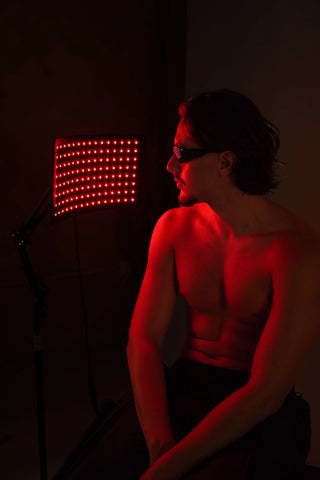
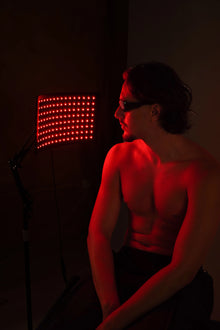
- Red light/LED: Photobiomodulation with red and near-infrared wavelengths may support skin quality and skin recovery; check out this analysis on LED in dermatology ( article in PubMed Central ).
- Massage gun: not for use on the face; it can help relax trapezius muscles and neck (low intensity), facilitating lymphatic return to the chest.
- Habits: Staying hydrated, reducing sodium, and getting enough sleep can ease water retention. The CDC explains recommendations on salt intake .
If you're interested in integrating recovery technology into your daily routine, discover KUMO's approach to wellness and performance at kumobalance.com .
Practical routine: when and how much
- Frequency: 3–5 times per week for maintenance; daily during periods of increased retention (allergies, travel).
- Time of day: morning to "deflate" and activate; night to relax and prepare for rest.
- Duration: 6–12 minutes is enough for the entire face; guided sessions can last 15–20 minutes.
- Combinations: controlled cooling 1–2 minutes before or after, diaphragmatic breathing, and digital breaks if you work with screens.
Expectations and monitoring of results
The immediate changes are usually subtle: less tightness, more defined contours, and a more awake look. To assess progress:
- Take photos with the same lighting and angle (day 1, 7 and 21).
- Record sensations (morning heaviness, pillow imprint).
- Observe how dark circles respond to variations in sleep and sodium levels.
- If there is persistent or asymmetrical swelling, consult a professional.
Lymphatic drainage does not "melt fat" or replace medical interventions; it helps manage fluids and optimize the appearance of tissue.
Quick guide to maneuvers and directions
| Area | Aim | Direction towards lymph nodes | Recommended maneuver | Pressure/Rhythm | Time |
|---|---|---|---|---|---|
| Clavicles | “Open” main exit | Supraclavicular (downward and outward) | Static pumps | Very light, 1–2 s per pump | 30–45 s |
| Neck | Clear the way | From jaw to collarbones | Downward slides | Slow and steady | 1–2 min |
| Jaw | Submandibular drainage | Chin → mandibular angle → neck | U-turn | Feather, 5–7 repetitions | 1 min |
| Cheeks | Reduce edema | Nose wing → preauricular → neck | Fan passes | Slow, 5-7 repetitions | 2–3 min |
| Eyes | Watery bags/dark circles | Tear duct → temple → neck | Taps and swipes | Very soft, ring | 1–2 min |
| Forehead | Decongest | Center → temple → neck | Lateral passes | Constant | 1–2 min |
What the evidence says
The evidence is strong for lymphatic drainage in limb lymphedema, with reviews supporting its use as an adjunct therapy in selected clinical settings (see Cochrane ). In facial aesthetics, studies are more limited, but the fluid mobilization mechanism supports its use for mild edema. For periorbital edema, review this clinical synthesis on StatPearls .
Frequently Asked Questions
How often should I do facial lymphatic drainage to see results?
For cosmetic purposes and to reduce swelling, 3–5 short sessions per week are usually sufficient. On mornings with increased fluid retention (after travel or short nights), a 6–12 minute routine can make an immediate difference. Keep the pressure very gentle and in the correct direction. If you're looking for a more lasting change, combine it with adequate hydration, sodium moderation, and plenty of rest. If persistent or unilateral swelling is present, consult a healthcare professional before increasing the frequency of these sessions.
Does lymphatic drainage eliminate dark circles under the eyes?
It can improve watery under-eye circles associated with fluid retention, but it doesn't correct pigmentation or anatomical hollowing. If your under-eye circles are brownish/blue and don't change with rest or after lymphatic drainage, they're probably due to pigment or visible blood vessels. In these cases, lymphatic drainage is a complement, not the primary solution. The American Academy of Dermatology (AAD) details the causes and options. Consider sun protection, sleep habits, and a dermatological evaluation.
Can I have lymphatic drainage if I have acne or rosacea?
Yes, with adjustments. Avoid inflamed areas or pustules and work around them with minimal pressure to prevent irritation. For rosacea, prioritize very gentle movements, brief controlled cold application, and avoid excessive friction. If there are intense active flare-ups or highly reactive skin, postpone direct drainage and consult your dermatologist. Remember that the goal is not to "rub" but to direct fluids with light, rhythmic strokes.
Does drainage replace medical treatments for edema?
No. Facial lymphatic drainage is a supportive tool for mild edema and overall well-being. Significant, painful, red, or suddenly appearing edema requires clinical evaluation. For general guidance on lymphedema and its management, please refer to NHS information. If you have had surgery or procedures (e.g., eyelid surgery, rhinoplasty), strictly follow your surgeon's timings and guidelines before resuming massage.
Can it be combined with red light or other technologies?
Yes. Red/LED light therapy is dermatologically supported to promote skin regeneration and quality ( see PMC review ). Use it in separate sessions or after gentle lymphatic drainage. Massage guns are not for the face; use low intensities on the trapezius and neck to encourage drainage. Don't forget the basics: hydration and lower sodium intake (see CDC guidelines).
To remember
- Feather pressure, slow movements and direction towards lymph nodes: technique is everything.
- Useful for mild puffiness and bags; limited for pigmentation or sunken dark circles.
- 6–12 minutes is enough; consistency > intensity.
- Boost with hydration, less salt, rest and, if you want, red light.
- Avoid if there is an infection, thrombosis, or recent unauthorized procedures.
Want to make recovery a smart habit? Discover how KUMO integrates aesthetics, technology, and performance at kumobalance.com .
KumoWave pressotherapy
Choose your at-home pressotherapy
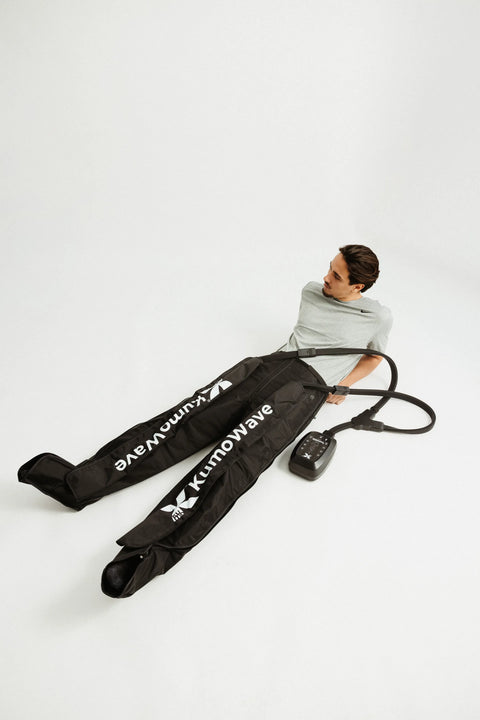
KumoWave Elite – Pressotherapy Pants
Full-coverage trousers. Ideal for lipedema, fluid retention and intensive use.
€799,00 €999,00
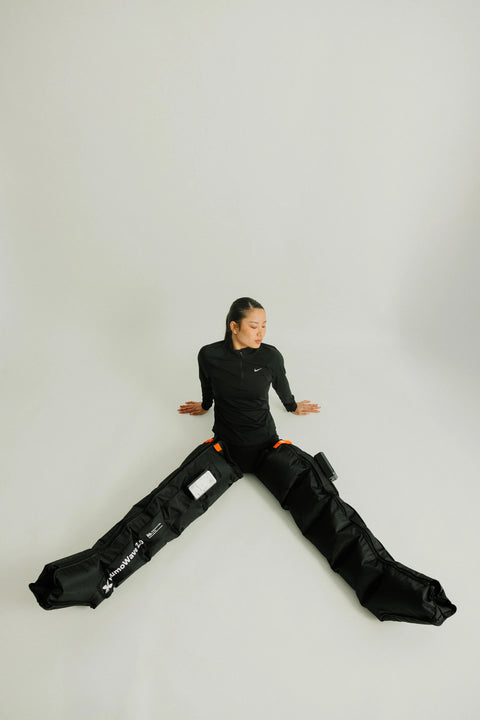
KumoWave 2.0 - Wireless Pressotherapy
Wireless, lightweight boots. Perfect for daily use and recovery.
€499,00 €599,00