What is muscle rest and why does it matter so much?
Muscle recovery is the time your muscle fibers need to repair and adapt after physical exertion. During intense training, micro-tears occur in the tissue, along with local inflammation and neuromuscular fatigue; it is precisely in the hours and days that the body rebuilds that muscle and makes it stronger.
This process explains the famous delayed onset muscle soreness ( DOMS ), a pain that usually appears between 12 and 24 hours after unusual exertion, reaches its peak between 24 and 72 hours, and disappears in 3–5 days in most people. ( physioworks.com.au )
If you don't respect this muscle recovery time, you increase the risk of injury, performance plateaus, and accumulated fatigue. That's why at KUMO we understand recovery as a pillar of performance, not a luxury, and we design technological solutions to integrate it into your daily routine. Discover the KUMO universe .
So, how much muscle rest time is ideal?
There isn't a single figure that applies to everyone, but there are general guidelines supported by science and leading exercise guides. The key variable isn't "how many days without moving," but rather how many hours of recovery the same muscle group needs before it can be subjected to intense activity again .
Strength and hypertrophy training
Guidelines based on the American College of Sports Medicine (ACSM) recommend training each muscle group 2 to 3 days per week, leaving at least 48 hours between strength training sessions for the same muscles. ( eatrightchicago.org )
- Beginner/intermediate level: 48–72 hours of rest before repeating the same muscle group (e.g., leg on Monday and Thursday).
- Advanced level: can approach 48 hours if the volume per session is well planned and sleep and nutrition are optimal.
- Practical sign: if performance clearly drops (fewer repetitions, less weight) or the pain is sharp, you probably haven't fully recovered.
Endurance training (running, cycling, swimming)
In moderate aerobic sessions, muscle recovery is usually faster than in heavy strength training, although long or very intense workouts may require several days:
- Moderate session (30–60 min, comfortable pace): 24 hours is usually enough if you sleep well and there is no intense pain.
- Demanding session (sets, hills, long run): 24–48 h before repeating a similar stimulus for the same areas (e.g. legs).
- Very demanding events (marathon, ultratrail): full recovery may take one or more weeks depending on experience and accumulated workload. ( pmc.ncbi.nlm.nih.gov )
HIIT, CrossFit and high-intensity sports
High-intensity interval training (HIIT, very aggressive WODs, sprints) combines muscular and cardiovascular stress, with a high recovery cost:
- Typical frequency: 2–3 intense sessions per week.
- Recommended rest: 24–72 hours between very hard sessions that involve the same muscle groups.
- Strategy: alternate hard days (heavy strength, HIIT) with easy days (light cardio, mobility, active recovery).
Indicative muscle rest times according to the type of training
| Type of training | Typical intensity | Rest before repeating the same muscle group* | Practical example |
|---|---|---|---|
| Heavy strength (squat, deadlift) | High, few repetitions | 48–72 h | Legs Monday → next intense leg session Thursday |
| Moderate hypertrophy | Medium-high, 8–12 repetitions | 48 hours (up to 72 hours if there is a lot of muscle soreness) | Chest Tuesday → repeat Thursday or Friday |
| Moderate cardio (light jogging, cycling) | Average | 24 h | Easy run Wednesday → another one on Thursday |
| HIIT / intense intervals | Very high | 24–72 h | 400m sets Tuesday → do not repeat until Thursday or Friday |
| Tough competition (marathon, long trail) | Extreme | Days or weeks | Marathon Sunday → gradually return to training in the following weeks |
*These are guidelines for healthy individuals; always adjust according to your feelings, experience, and professional recommendations.
Factors that modify your muscle rest time
Age, level, and injury history
As we age, muscle repair processes slow down. A young, well-trained adult can tolerate 48 hours between intense sessions targeting the same muscle group; an older person or someone returning from injury may need 72 hours longer. International guidelines recommend strength training at least twice a week at any age, but adjusting volume and recovery based on individual tolerance. ( pmc.ncbi.nlm.nih.gov )
Type of exercise: eccentric and muscle soreness
Exercises with a large eccentric component (lowering, plyometric jumps, deadlifts, deep squats) generate more muscle damage and DOMS (delayed onset muscle soreness). The literature shows that this soreness usually appears within 12–24 hours, reaches its peak at 48–72 hours, and subsides in the following days. ( physioworks.com.au )
If the pain is moderate, diffuse, and improves with movement, it's a normal part of the adaptation process. If it's sharp, localized to a specific area, worsens when you put weight on it, or seriously limits your mobility, you should stop training and consult a healthcare professional.
Sleep, stress, and systemic rest
Muscle recovery isn't just about "not going to the gym": it depends heavily on sleep quality and daily stress levels. Consensus guidelines from sleep and health societies recommend that adults sleep at least 7 hours per night; for active people or those who train intensely, the ideal range is often between 7 and 9 hours. ( pmc.ncbi.nlm.nih.gov )
Sleeping less than 7 hours chronically is associated with poorer recovery, more pain, lower performance, and a higher risk of injury and metabolic and cardiovascular diseases.
Nutrition and hydration
Having sufficient energy (carbohydrates), amino acids (proteins), and micronutrients accelerates muscle repair. Rather than an "anabolic window" of minutes, current evidence indicates that what's important for recovery is reaching your daily protein intake spread over several meals during the 24–48 hours following exercise, rather than drinking a shake immediately after training. (washingtonpost.com)
Even mild dehydration worsens the perception of fatigue and delays recovery; maintaining adequate hydration during and after exercise is a simple gesture with a real impact.
How to know if you are getting enough rest
Beyond the days marked in the plan, your body gives clear signals as to whether muscle rest is adequate:
- Performance: You can match or improve weights, repetitions, or paces in similar workouts.
- Muscle sensations: muscle soreness is mild to moderate and decreases; there is no sharp pain or feeling of "locking up".
- General energy: you don't feel like you're dragging yourself through the day, with constant apathy or drowsiness.
- Resting heart rate: is not consistently higher than normal for you (sign of accumulated fatigue).
- Sleep: You fall asleep well, sleep 7–9 hours and wake up relatively rested.
If you notice worse performance, mood swings, irregular sleep, and persistent pain for several days, your body may be asking for a deload cycle or more active rest.
Recovery strategies that enhance muscle rest
Active rest and mobility
Muscle rest doesn't always mean total inactivity. In cases, active rest accelerates recovery.
- Gentle walks of 20–40 minutes.
- Lightweight stationary bike.
- Gentle sessions of mobility and dynamic stretching.
- Low-intensity yoga or Pilates.
This type of light activity increases local blood flow, helps eliminate metabolites, and reduces stiffness without adding further muscle damage.
Sleep hygiene: the most underrated “supplement”
During the deep stages of sleep, key anabolic hormones are released and tissue repair processes are activated. Getting 7–9 hours of quality sleep acts almost as a “recovery tool” as important as the workout itself. ( health.com )
- Maintain regular sleep and wake times.
- Avoid bright screens and intense stimuli in the hour beforehand.
- Create a relaxing ritual (breathing, light reading, gentle stretching).
- Take care of the environment: darkness, relative silence and cool temperature.
Exposure to bright light in the morning and dimming the light at night helps synchronize the internal clock and improve the quality of nighttime rest.
Nutrition to support muscle recovery
Some basic, scientifically backed guidelines for better recovery:
- Ensure sufficient protein intake spread out (e.g., 20–40g of high-quality protein in 3–4 main meals, depending on weight and goals).
- Include complex carbohydrates after intense sessions to replenish glycogen (rice, potato, pasta, legumes, fruit).
- Do not systematically train in a fasted state if you then do not adequately meet your total daily requirements.
- Avoid excessive alcohol, which negatively affects protein synthesis and sleep.
Recovery technologies: red light, pressotherapy and massage
In addition to basic strategies, there are now technologies designed to support muscle recovery. At KUMO, we integrate them into products designed for home use, always as a complement—and not a substitute—for good planning, sleep, and nutrition.
Red light therapy and photobiomodulation
Photobiomodulation (low-intensity red and/or infrared light) has been shown in several trials to reduce certain markers of muscle damage, creatine kinase, and pain perception after intense exercise in athletes, although the results are not uniform and depend heavily on dose, wavelength, and timing of application. ( pubmed.ncbi.nlm.nih.gov )
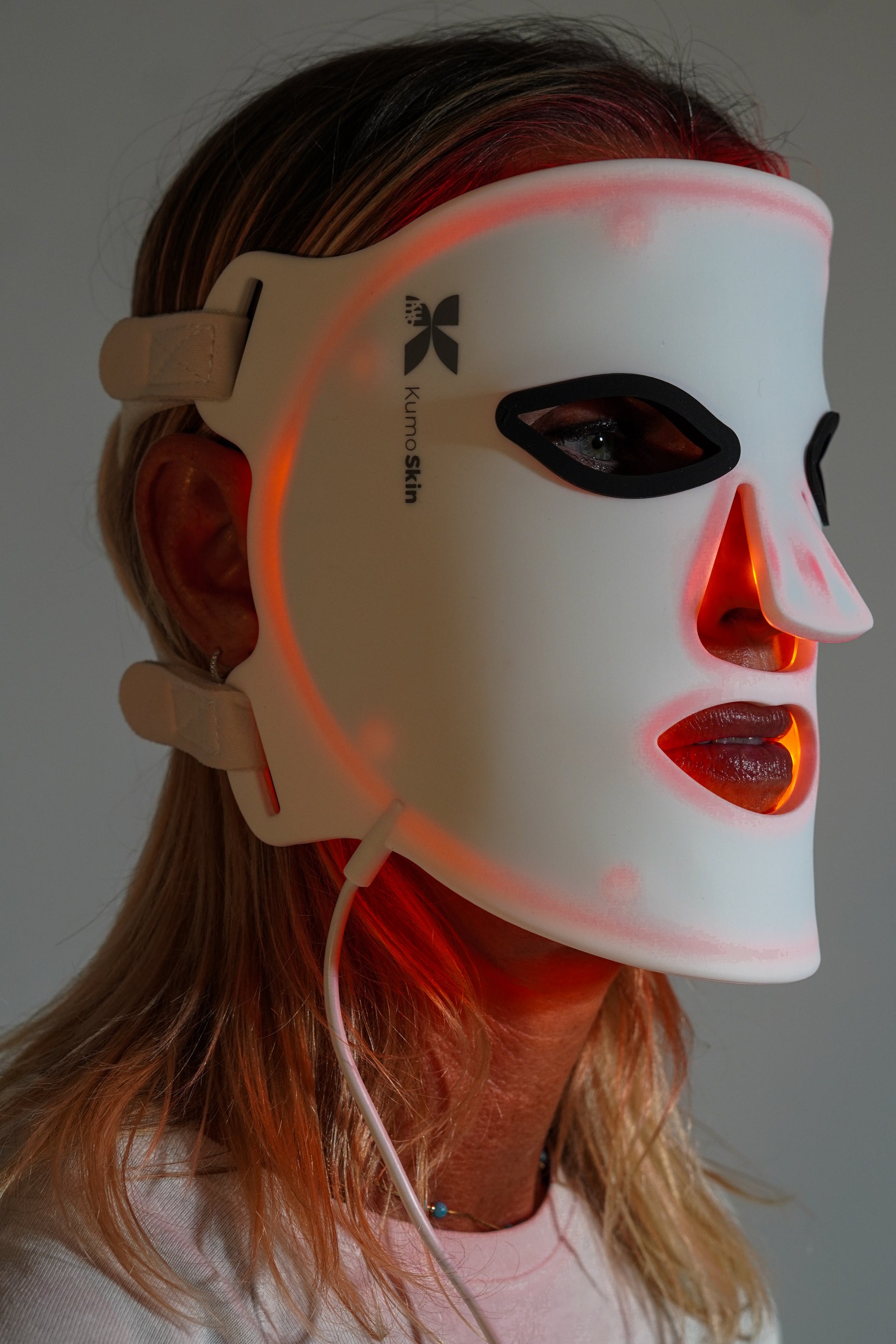
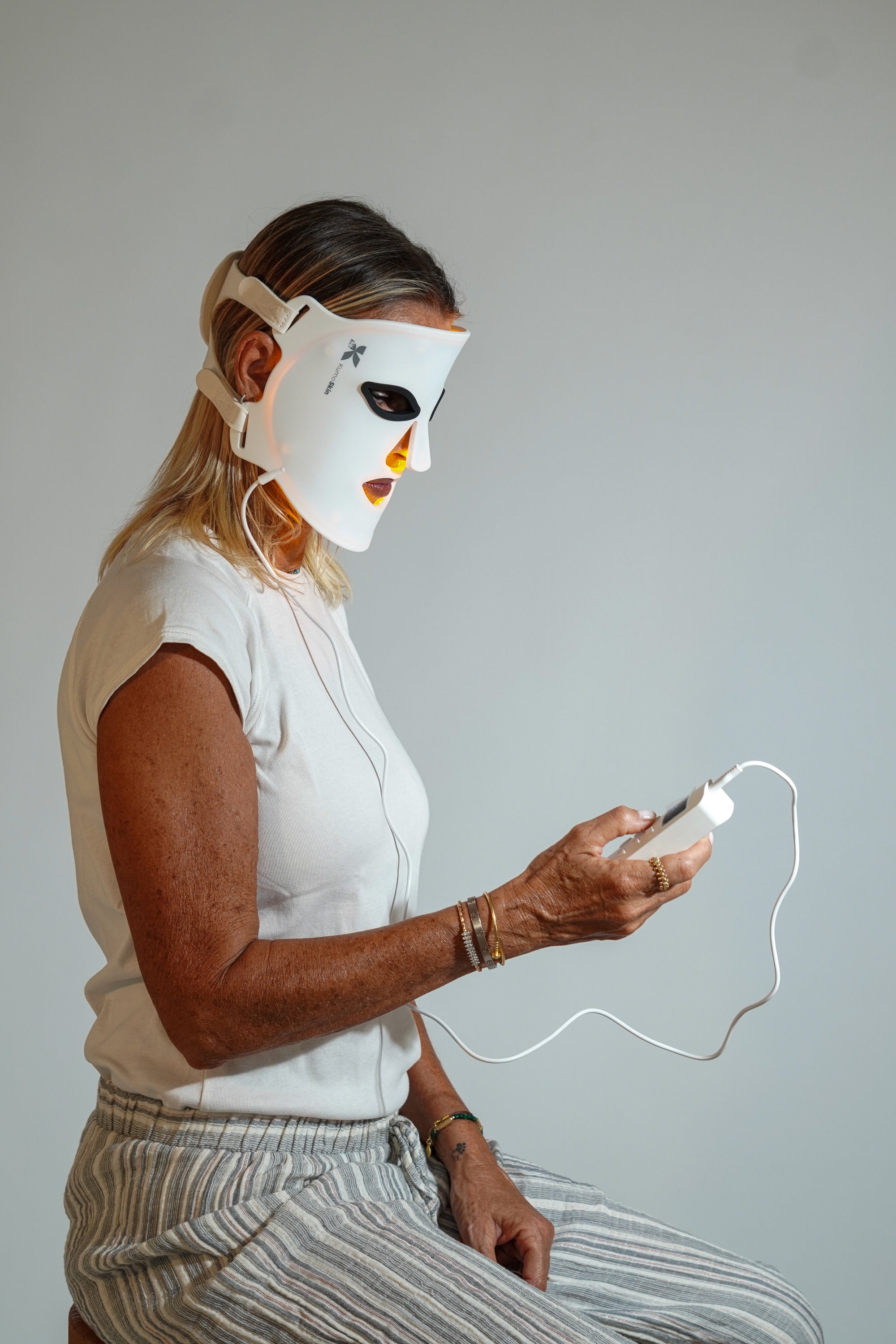
At KUMO, we've incorporated these advancements into our range of LED light therapy devices , designed to fit into short, easy-to-maintain daily routines. They don't replace rest, but can be integrated as an additional tool for muscle care and sleep.
Compression therapy boots for tired legs
Intermittent pneumatic compression boots have become popular among athletes to relieve the feeling of heavy legs. Recent reviews indicate that they increase blood flow and may accelerate the recovery of cardiovascular parameters after intense exertion; however, their effect on subsequent performance and objective markers of muscle damage is variable and is still considered a field of research. ( pubmed.ncbi.nlm.nih.gov )
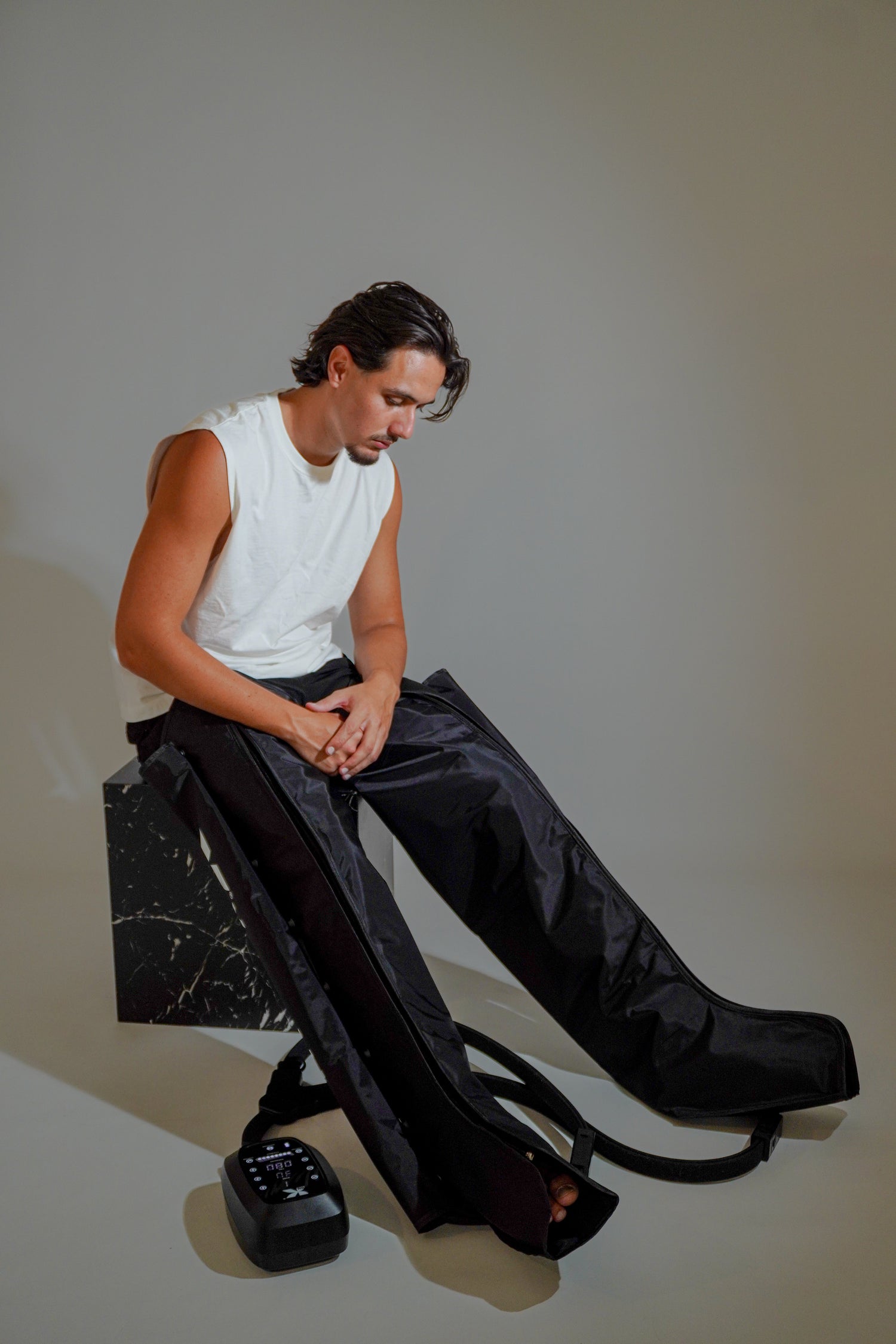
In practice, many people report less heaviness and a greater feeling of "light legs" after using them. If you'd like to incorporate this technology at home, you can explore our KUMO compression boots , designed to combine aesthetics, comfort, and effectiveness.
Massage guns and manual therapy
Evidence on traditional massage shows significant reductions in the intensity of muscle soreness up to 72 hours after intense exertion, although the effect on performance is more modest. ( pubmed.ncbi.nlm.nih.gov )
Regarding massage guns (percussive therapy), studies are more recent and with mixed results: some trials find no clear differences compared to rest, while others suggest that longer sessions may better relieve DOMS than static stretching in active young men. ( pubmed.ncbi.nlm.nih.gov )
Its main advantage is its ease of use at home for relieving tension in specific muscle groups after a workout or at the end of the day. The KUMO Pulse Air massage gun is designed to deliver deep yet adjustable percussion, easily integrating into your recovery routine.
Frequently asked questions about muscle rest
Is it bad to train with muscle soreness?
It depends on the intensity of the muscle soreness. If the pain is mild or moderate, diffuse, and improves with movement, it's usually safe to train, as long as you don't repeat the exact same intense stimulus (for example, another session of heavy squats when your legs are still very sore). Ideally, choose a lighter workout, target a different muscle group, or do some gentle cardio. However, if the pain is sharp, localized, limits your mobility, or clearly worsens with exertion, it's best to stop and consult a professional about the possibility of injury.
How many rest days do I need if I do strength training three times a week?
If you follow a "full body" strength training program three days a week (for example, Monday, Wednesday, and Friday), you are already leaving 48 hours between sessions, which is the minimum interval recommended by ACSM-based guidelines for the same muscle groups. ( eatrightchicago.org )
If your plan focuses on muscle groups (pushing, pulling, legs), ensure each muscle has at least 48 hours of rest before subjecting it to intense work again. If you notice accumulated fatigue, plateaus, or discomfort, you can reduce the volume (sets/reps) or add an extra day of rest or active recovery.
Does active rest count as a muscle rest day?
Yes, as long as the intensity is low or very low for the muscles you worked the hardest the day before. A gentle walk, some mobility exercises, light stationary cycling, or a relaxed yoga session are considered active rest and, in many cases, help you recover better than complete rest by improving blood flow and reducing stiffness. However, don't turn these days into "covert workouts": if you end up panting, with a high heart rate and a feeling of intense exertion, it's no longer rest; it's another workout you'll have to recover from.
Does sleeping more really help muscle recovery?
Yes. Evidence shows that chronically sleeping less than 7 hours is associated with poorer physical performance, more pain, and a higher risk of injury and metabolic disease. ( pmc.ncbi.nlm.nih.gov )
Most active adults benefit from getting 7 to 9 hours of quality sleep. During deep sleep, anabolic hormones are released and essential tissue repair processes take place, allowing muscles to recover from training. If you're in a period of heavy training, competition, or just starting to train more, prioritizing sleep is one of the most powerful strategies for improving muscle recovery.
What should I do if a muscle is still sore after 4 or 5 days?
Typical muscle soreness usually subsides within 3–5 days. If a muscle group continues to be clearly painful beyond this timeframe, or if the pain is sharp, accompanied by visible swelling, bruising, marked weakness, or limitations in everyday activities, it is advisable to stop training that area and consult a healthcare professional (sports physician or physiotherapist). It could be a significant strain, a muscle tear, or another problem requiring specific evaluation and treatment beyond simple muscle rest.
So what now?
The key message is clear: it's better to train a little less and recover properly than to push yourself without rest . Plan your sessions leaving 48–72 hours between intense efforts targeting the same muscle group, take care of your sleep, nutrition, and hydration, and use active recovery strategies and recovery technologies when needed.
If you'd like to take it a step further, you can explore our pressotherapy solutions, LED light therapy , and the KUMO Pulse Air massage gun , designed to integrate recovery into your daily life with style and effectiveness. And if you're unsure which option is best for you, we're available through our contact page to guide you on your journey to a new wellness routine.